Despite Closures, Celebrations Persist

In April 1866 two regiments of Black troops stood in front of the White House as cannons rang out to welcome President Johnson. The crowd offered up three cheers for the President. President Johnson shook hands with onlookers, stepped up, and gave remarks regarding the celebration at hand: marking the 4th anniversary of the end of slavery in the District of Columbia. After the President’s remarks, a crowd estimated at 10,000 watched a procession of nearly 5,000 Black men march to the U.S. Capitol and back to Franklin Square to hear remarks from the Reverend Henry Highland Garnet. This was one of the first large public celebrations of emancipation in Washington DC.

The Emancipation Proclamation went into effect January 1, 1863 and the 13th Amendment was ratified December 6, 1865. But in Washington, DC, slavery ended on April 16, 1862 with President Lincoln’s signature on the District of Columbia Compensated Emancipation Act. 3,100 enslaved DC residents were made free on that day. At the same time, enslavers were compensated by the federal government for ending the institution. This was the first large-scale emancipation of enslaved people by the federal government. It was an important landmark, establishing that the federal government had the authority to end slavery in territories under its jurisdiction; later leading to the Emancipation Proclamation as well as the 13th Amendment. It also remains the only time enslavers were compensated for the dissolution of slavery in the U.S. 3,100 DC residents were emancipated. And 930 petitions for compensation by enslavers were approved over the next 9 months.
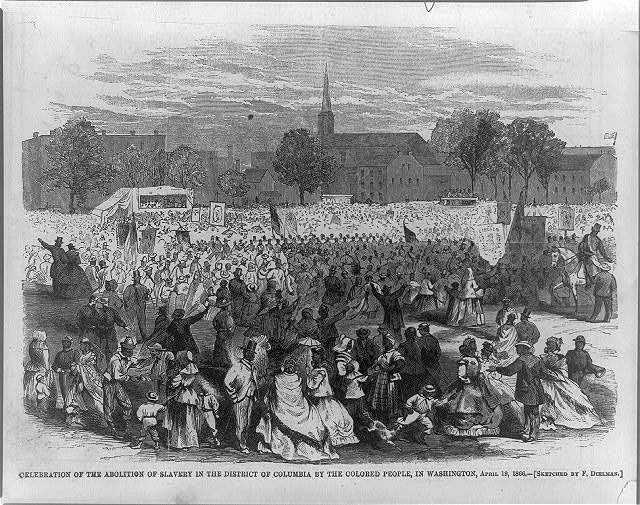
1866 celebration of Emancipation in DC. (Harper’s Weekly)

The large Franklin Park celebration four years later marked the short period of freedom but also called for universal suffrage as well. Full rights and opportunity across the board. Voting, equal protection, free association, religion, speech, equality in public accommodations like housing and schools; the fight for rights continued for more than a century after the Franklin square celebration. 

We still celebrate Emancipation Day here in Washington DC. Emancipation day is an official local holiday in the District of Columbia, typically April 16th. While some government workers have the day off and schools are closed, there are often public celebrations, including a parade and city-sponsored gathering. For decades, that gathering has been held at Freedom Plaza on Pennsylvania Avenue NW. In 2026, the celebration was set to move back to Franklin Park, but not by choice. Freedom Plaza was closed then and is still closed as of today.
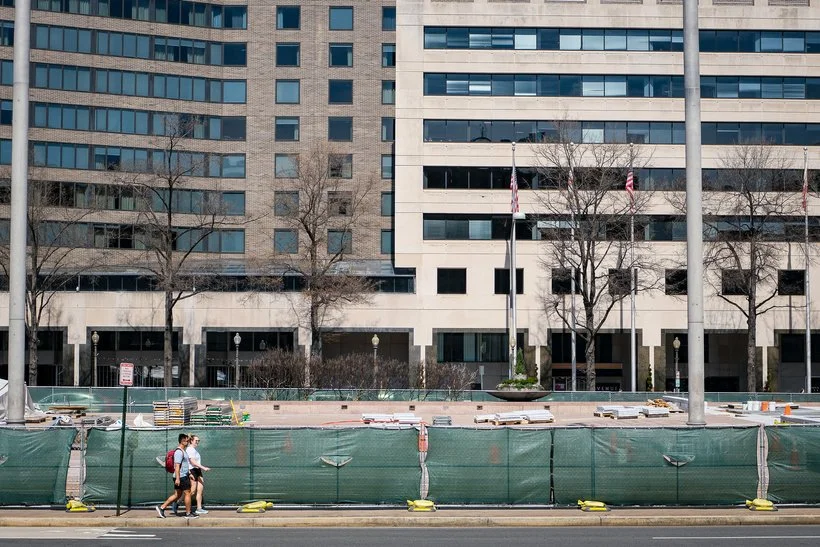
Freedom Plaza closed for the time being.
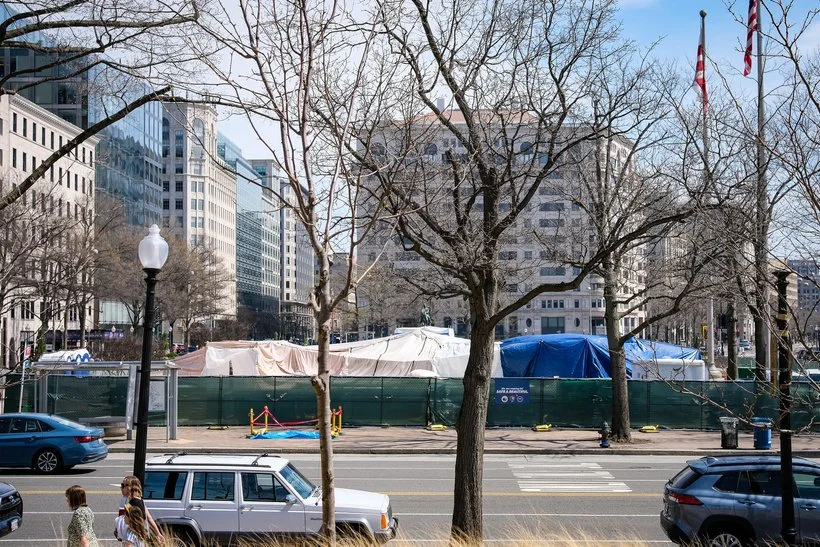
Freedom Plaza is one of an increasing number of public spaces closed as we move into the Spring and Summer seasons in the District of Columbia. Dupont Circle, Malcolm X Park, Freedom Plaza, Lafayette Park, and Logan Circle are all public gathering spaces that have been, are, or will be closed for extended periods of time as a result of an initiative by the name Make the District of Columbia Safe and Beautiful. The initiative came in the form of an executive order in March of 2025. There is an act making its way through Congress that would codify the Executive Order into law and is similarly titled: Make the District of Columbia Safe and Beautiful Act of 2025. After passing in the House, the bill is currently sitting in the Senate. Nevertheless, work continues via the power of the Executive Order issued in 2025.

Among other mandates, the order empowers the Secretary of the Interior to emphasize urban beauty and update maintenance of various public spaces. Many of the public spaces are public commemorations like monuments & memorials, or parks & plazas, especially those with water fountains like Lafayette Park, Malcolm X Park, and Freedom Plaza. The main issue (especially regarding touring) is that when a public space is closed by the task force, little or no notice has been given, and the timelines for work have or will interrupt visitation. Two spaces I utilize on regular tours are closed for the foreseeable future, Lafayette Park and Freedom Plaza. On those tours I use the iPad to show spaces to illustrate elements we would typically visit in person, or reference elements from afar.
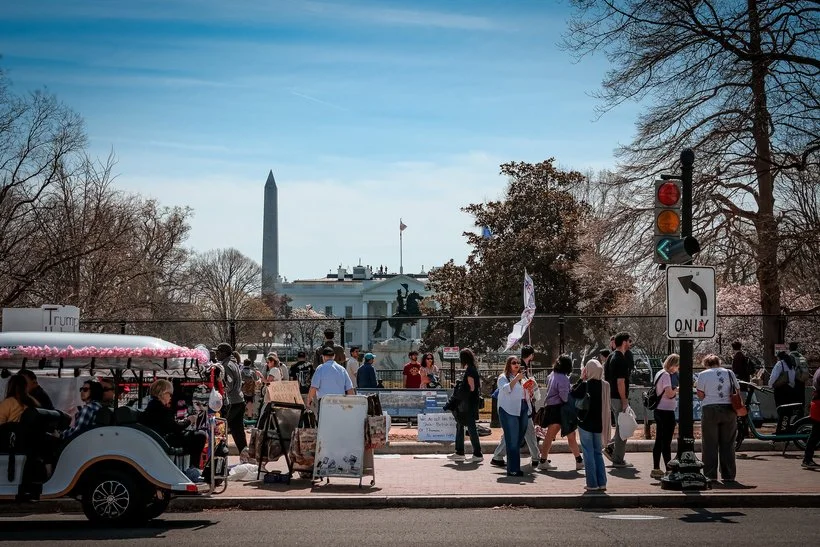
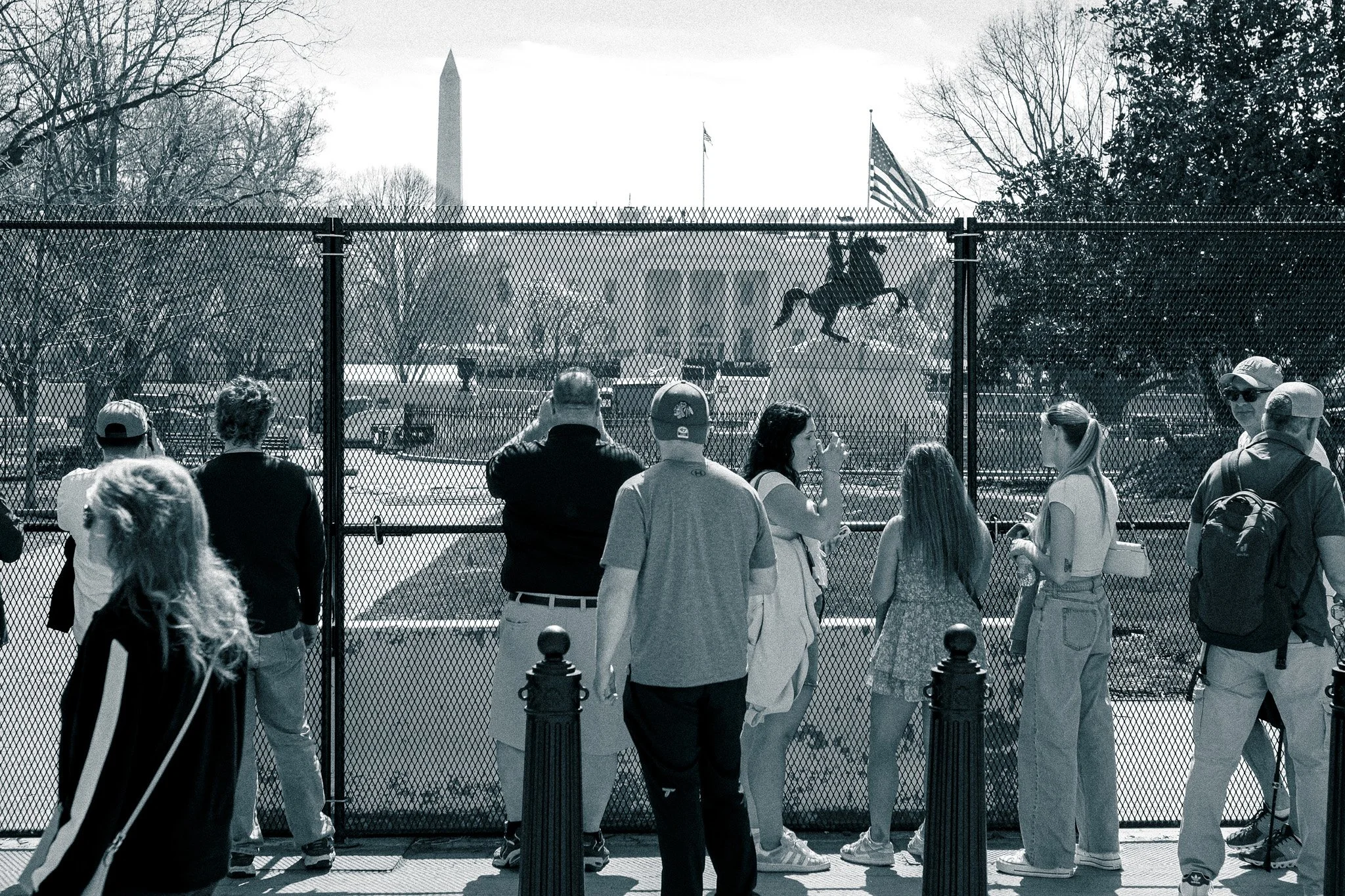
As close as one can get to the White House at the moment.
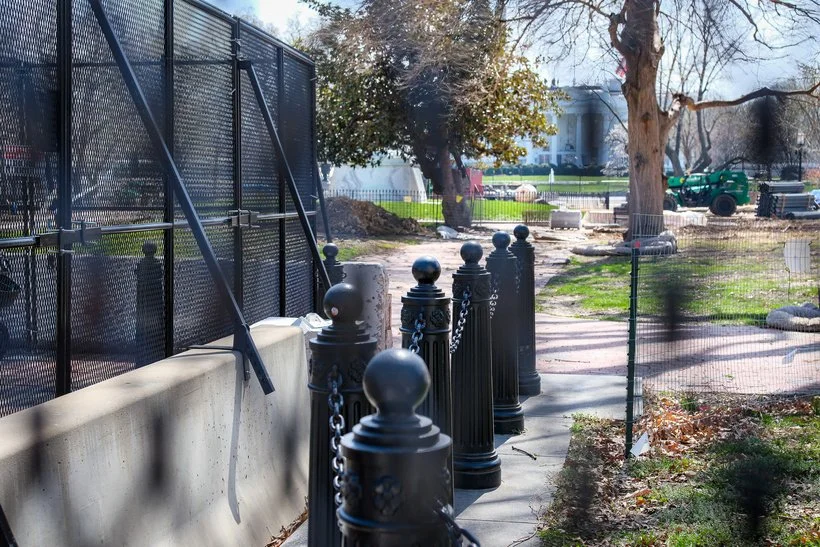
Heavy duty fencing around the White House.

Closing a part of one park for a few weeks would likely go unchallenged, but the closure of multiple open park spaces at the same time, during the busy outdoor and tourist season has drawn some local consternation. Especially in light of other alterations in DC including the erasure of Black Lives Matter Plaza. Lafayette Park, Malcolm X Park, and Freedom Plaza also all have history as places for protest, rallies, and other gatherings for free speech activities. Each of those spaces will have overlapping closure this year including right now. That’s three fewer places to gather, protest, or hold a popular rally.
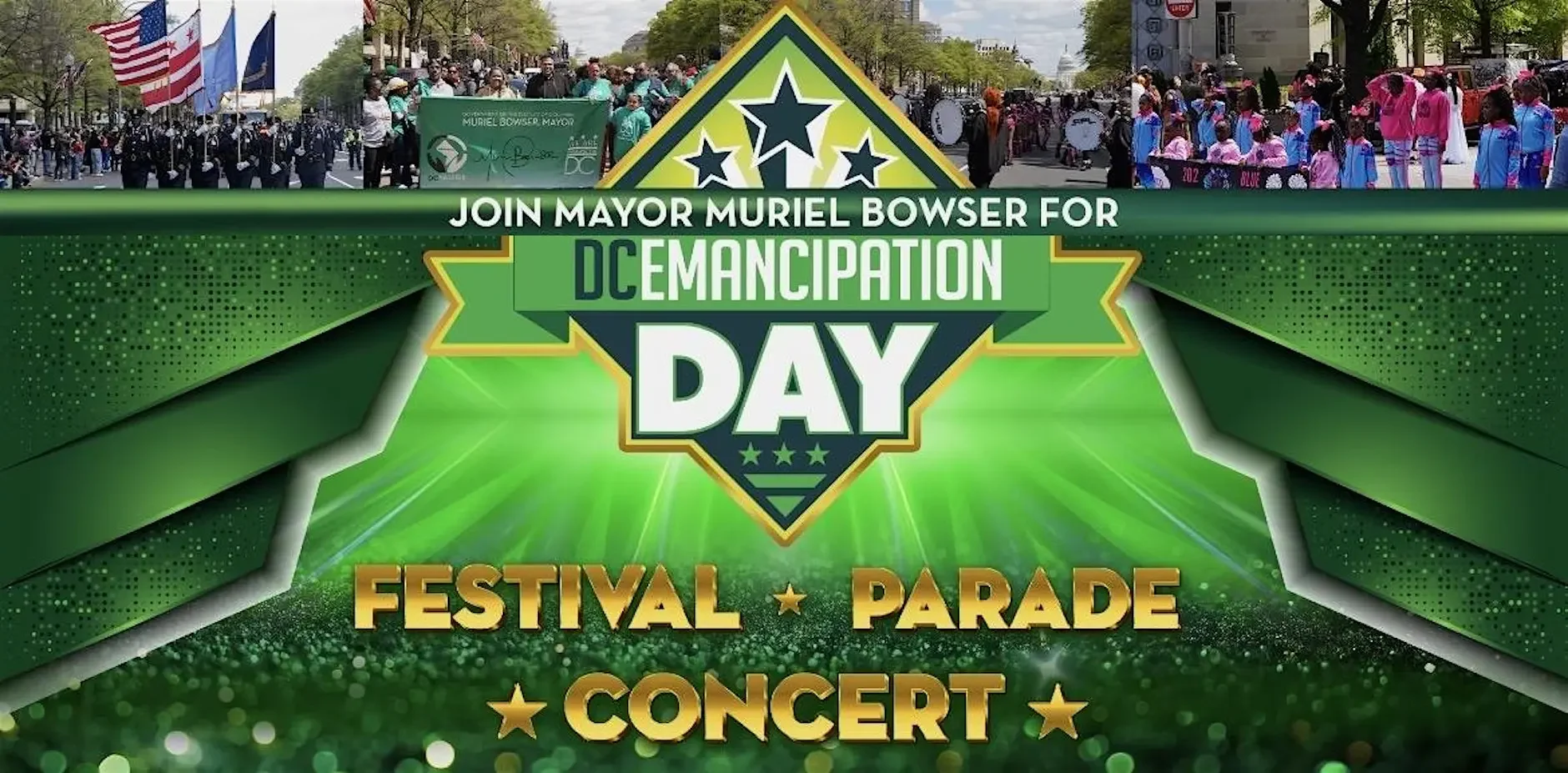
Flyer for the 2026 DC Emancipation Day program (held on April 19).

The 2026 Emancipation Day program was set to be moved back to Franklin Park. However interest far exceeded what the park could potentially hold. So, the official DC Emancipation Day program was held on April 19, but back at Freedom Plaza, specifically, on the streets adjacent to Freedom Plaza. Read more about the program here, but it was an all day event with a short parade and musical portion with national artists like T.I. and Mya (from DC!) and local go-go bands. The program was free.

What can we do when access to public spaces pause? Keep learning!

  • Advocate for more, new public histories. One current chance we have is regarding the redesign of Pennsylvania Avenue. Let the National Capital Planning Commission know your thoughts: https://www.ncpc.gov/initiatives/pennave/

  • Get involved in public history on a deeper level. Attend the DC History Conference this May. I have been before and it a is a blast!: https://conference.dchistory.org/

  • Make your own art or display of public history.

What are other ideas?
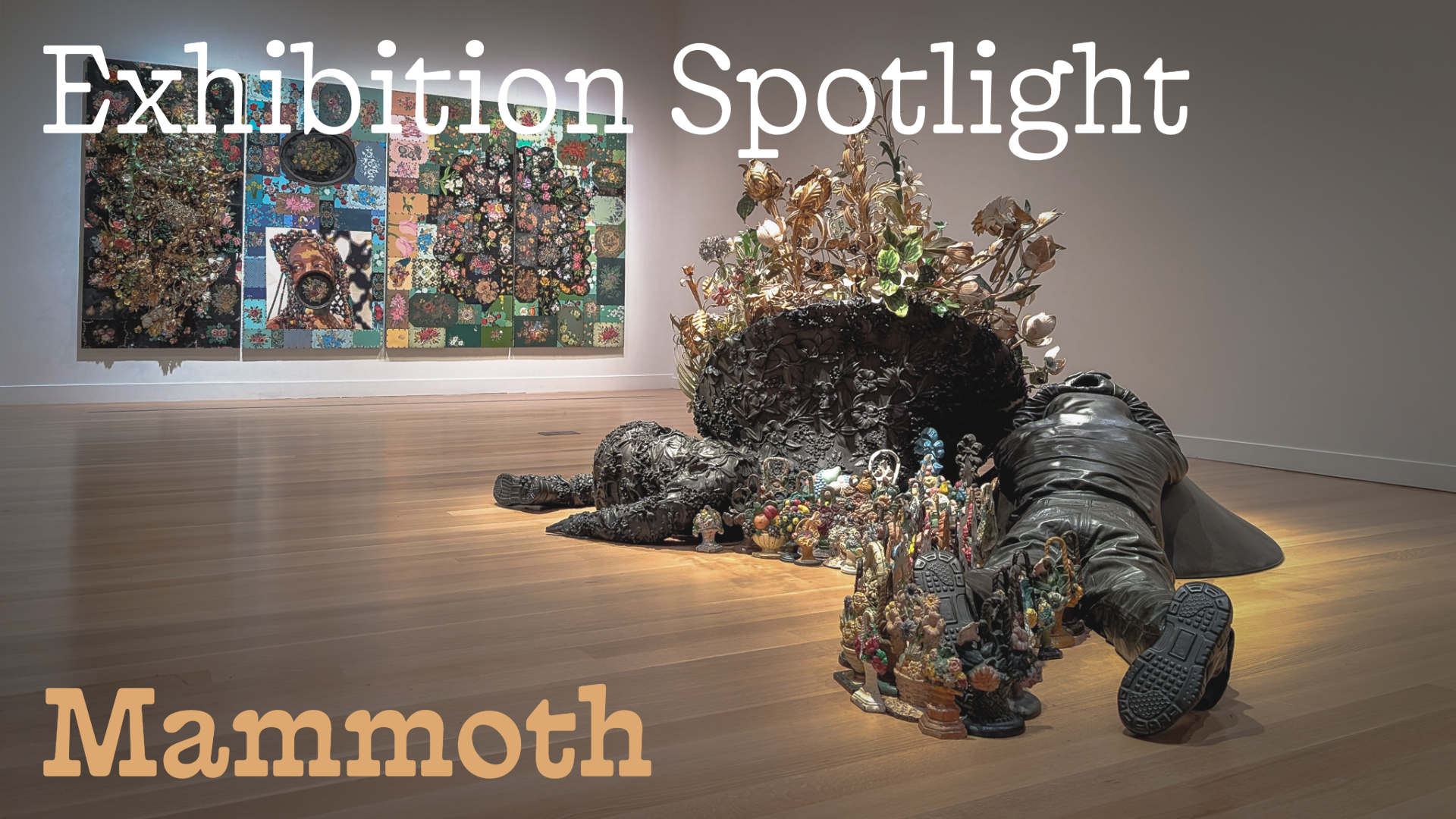
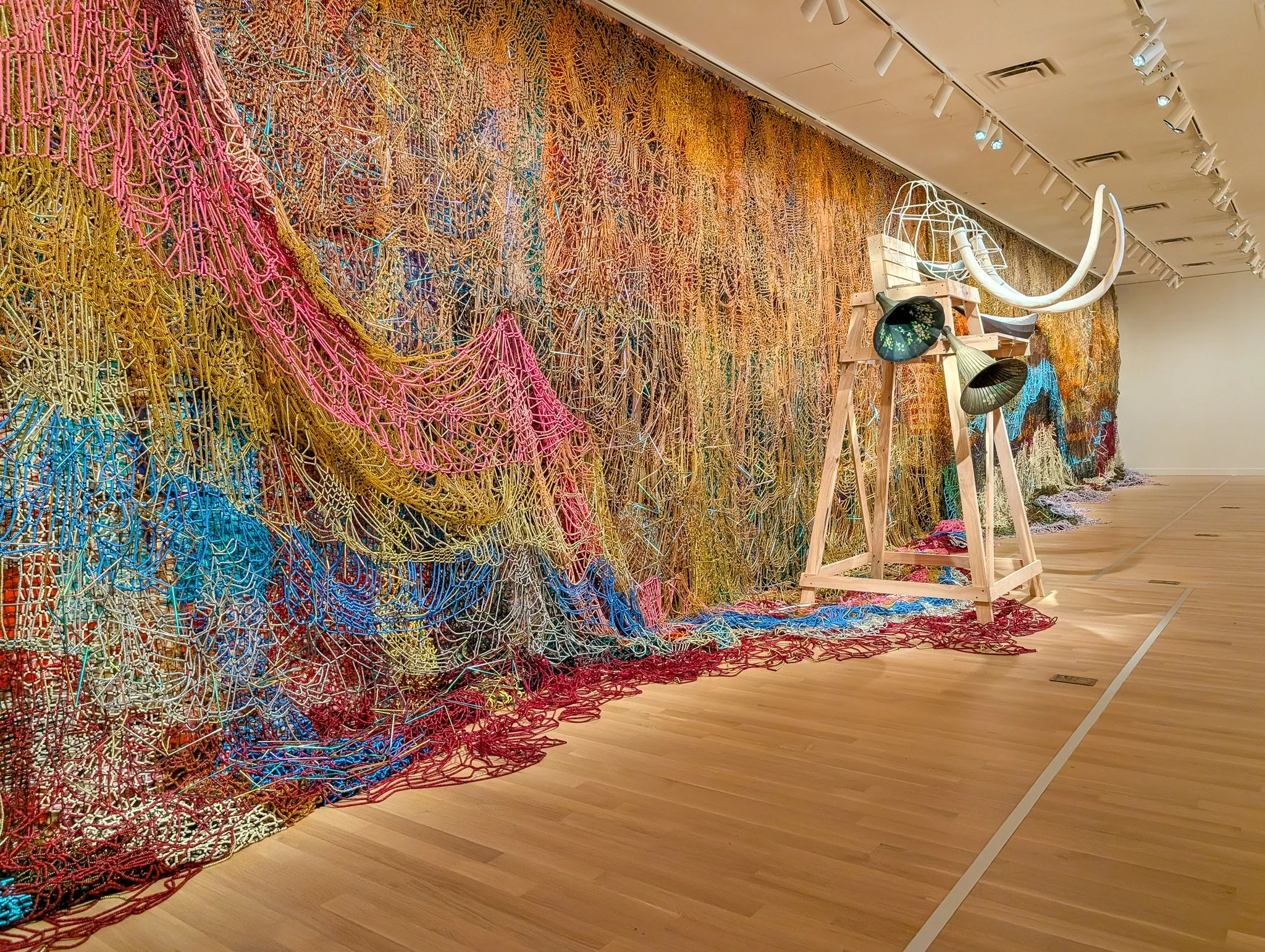
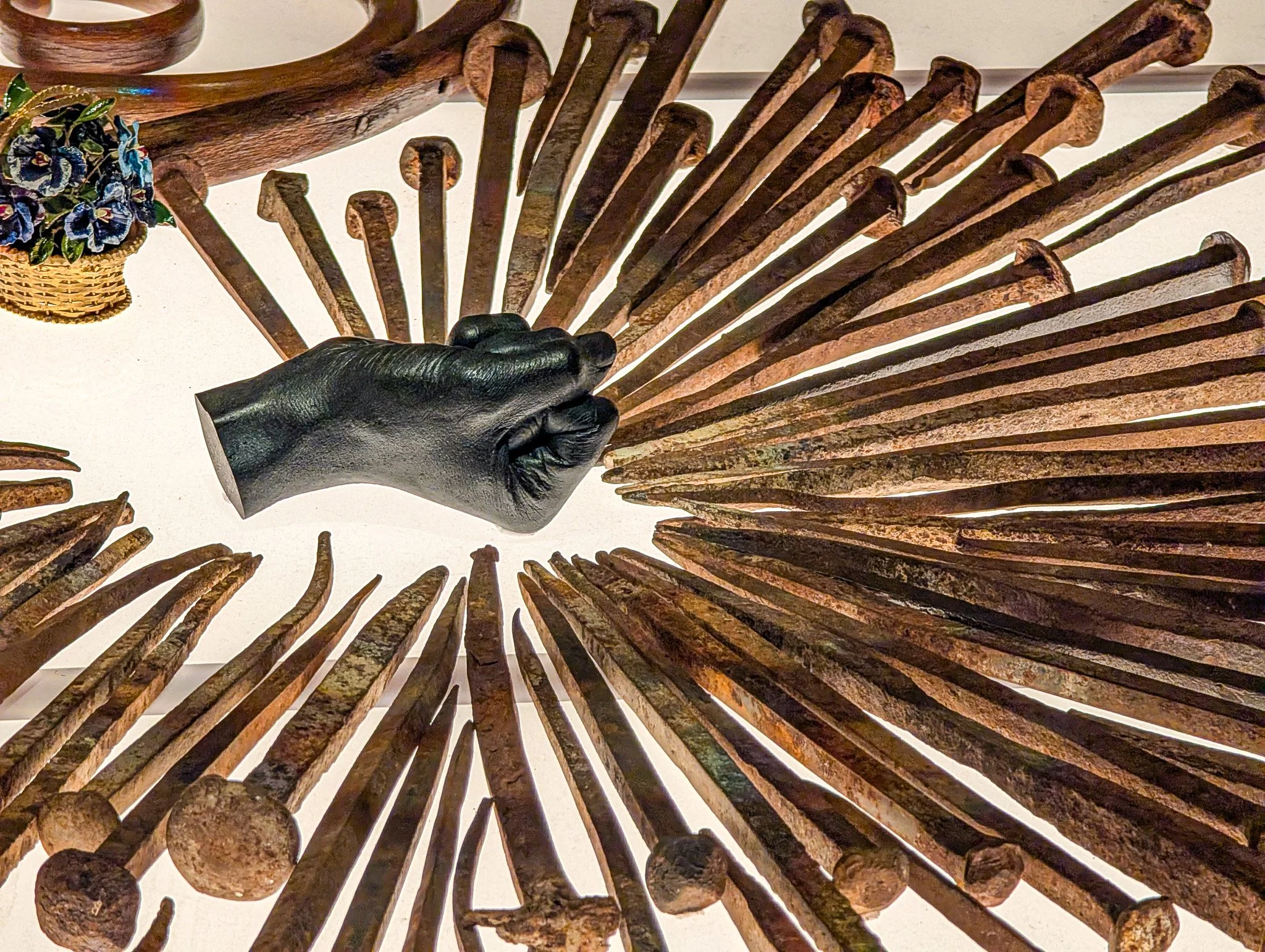
Mammoth: Exhibition Spotlight

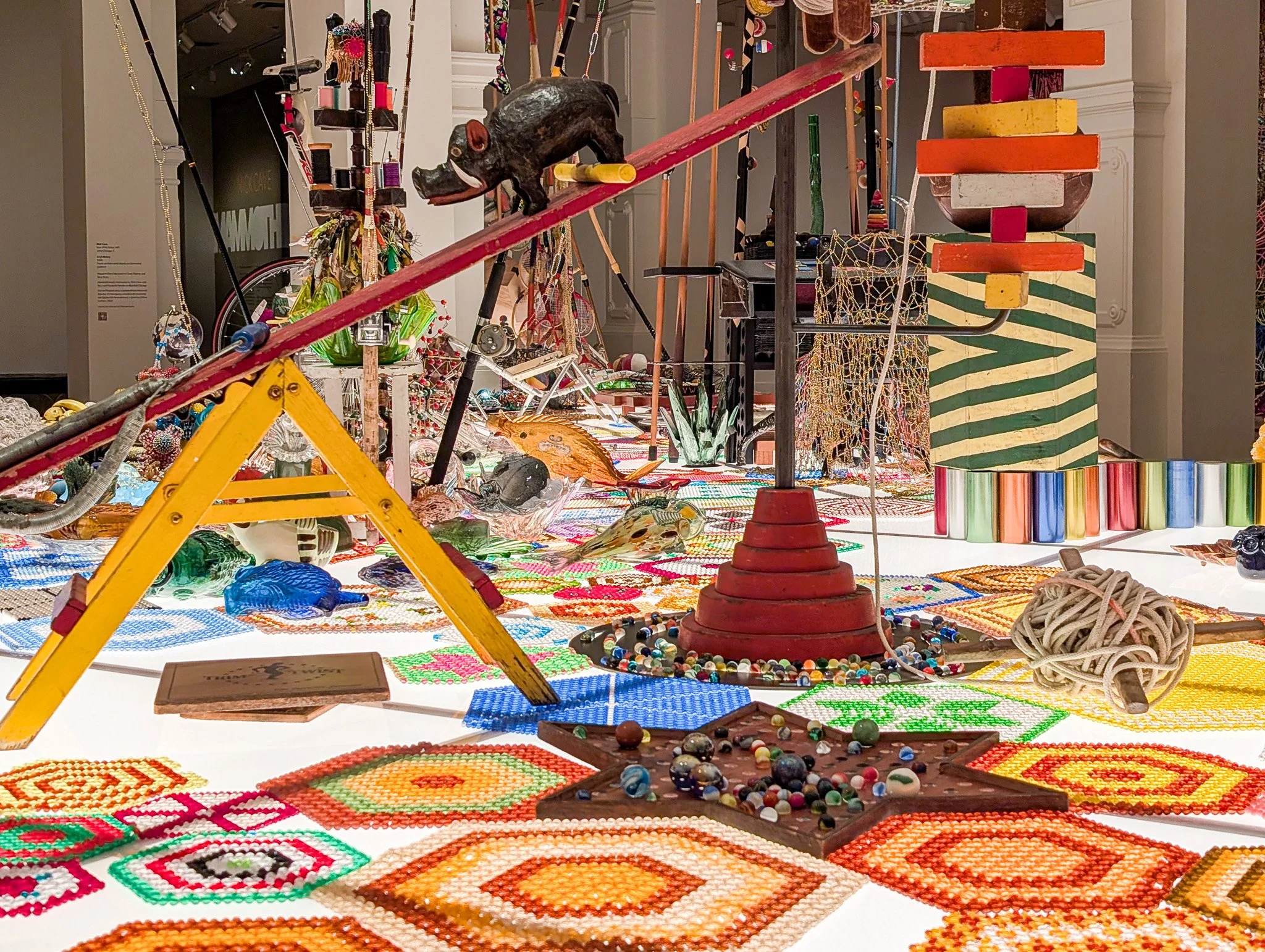
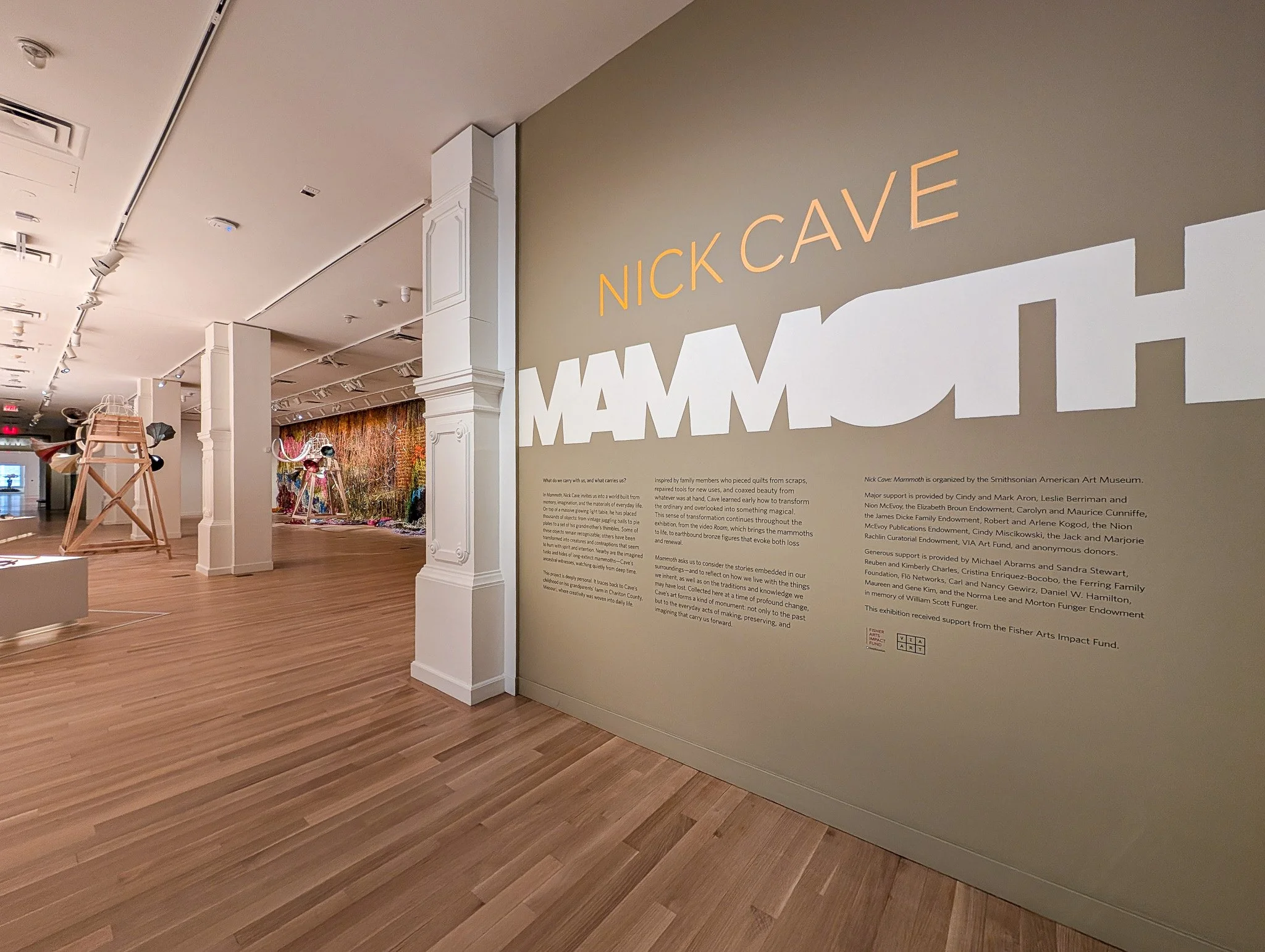
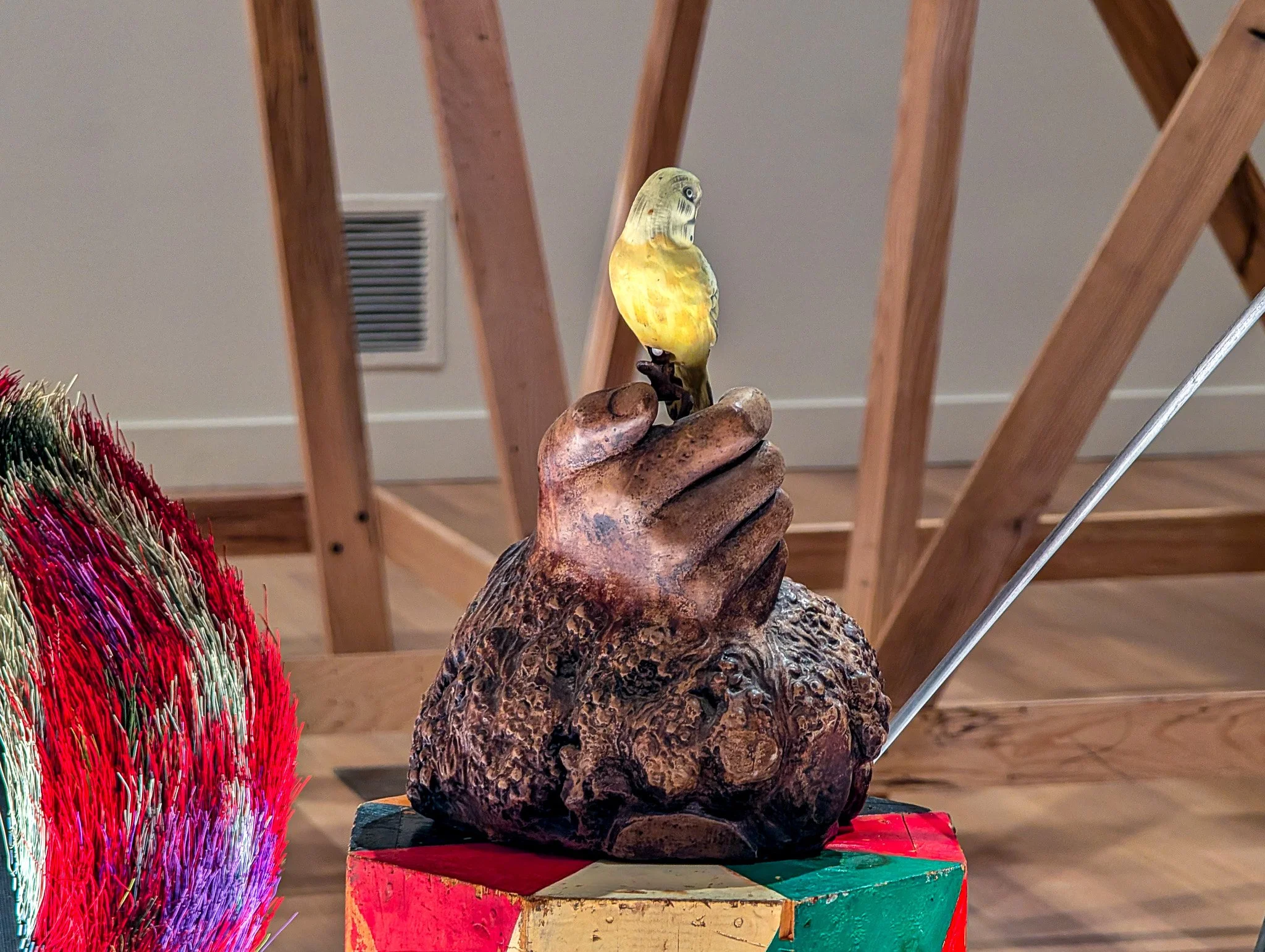
Nick Cave achieved the double of at once overwhelming me and at the same time, stoking my desire to engage further. In a way, this exhibition lived up to the title. Mammoth likely hits you differently depending on how much you know about Nick Cave's art and life. I went in not knowing more than this exhibition had been recommended to me multiple times by multiple people from different parts of my life, and having read reviews from a few national publications. I might now know him a little more having seen and absorbed this work.

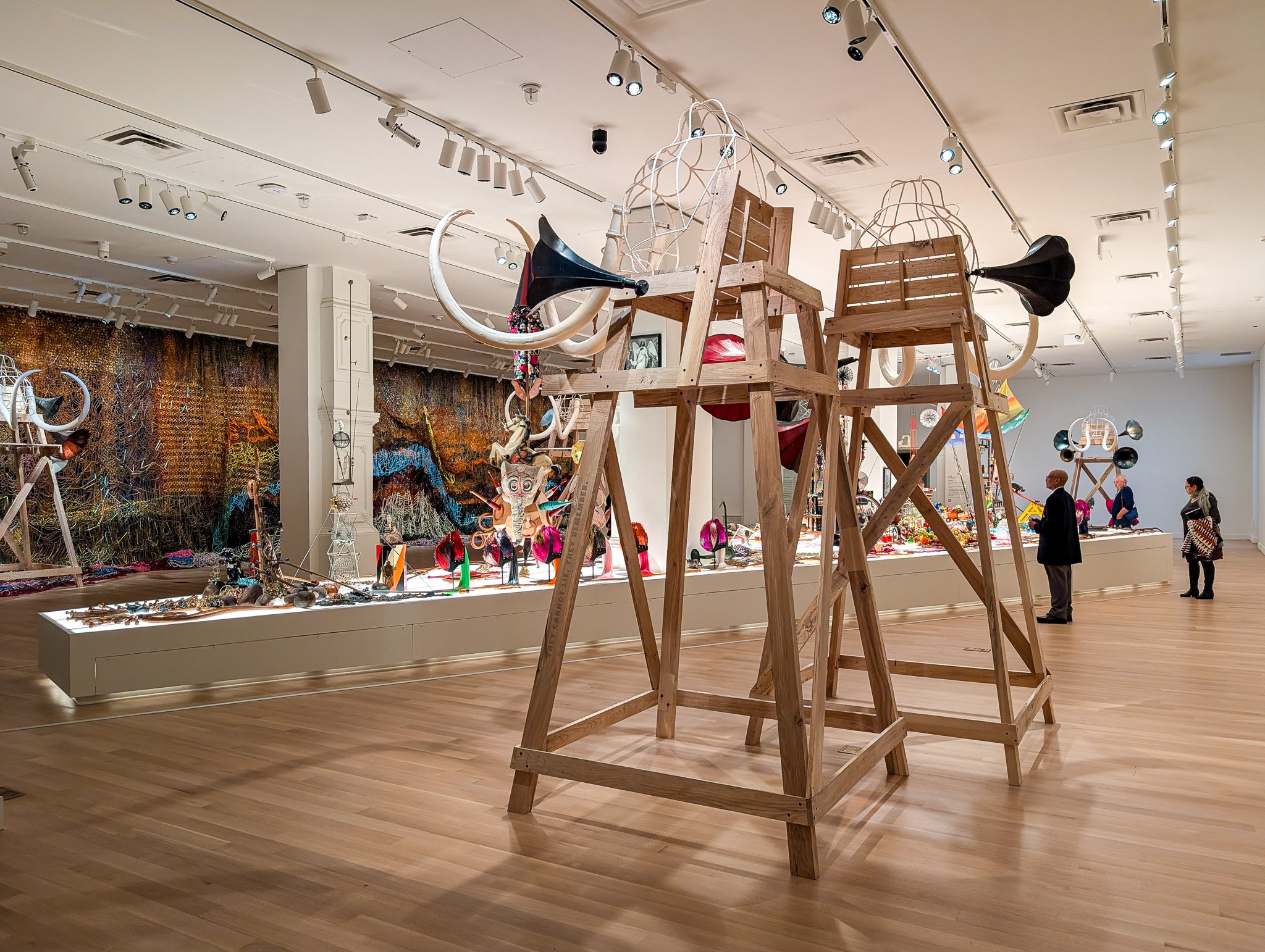
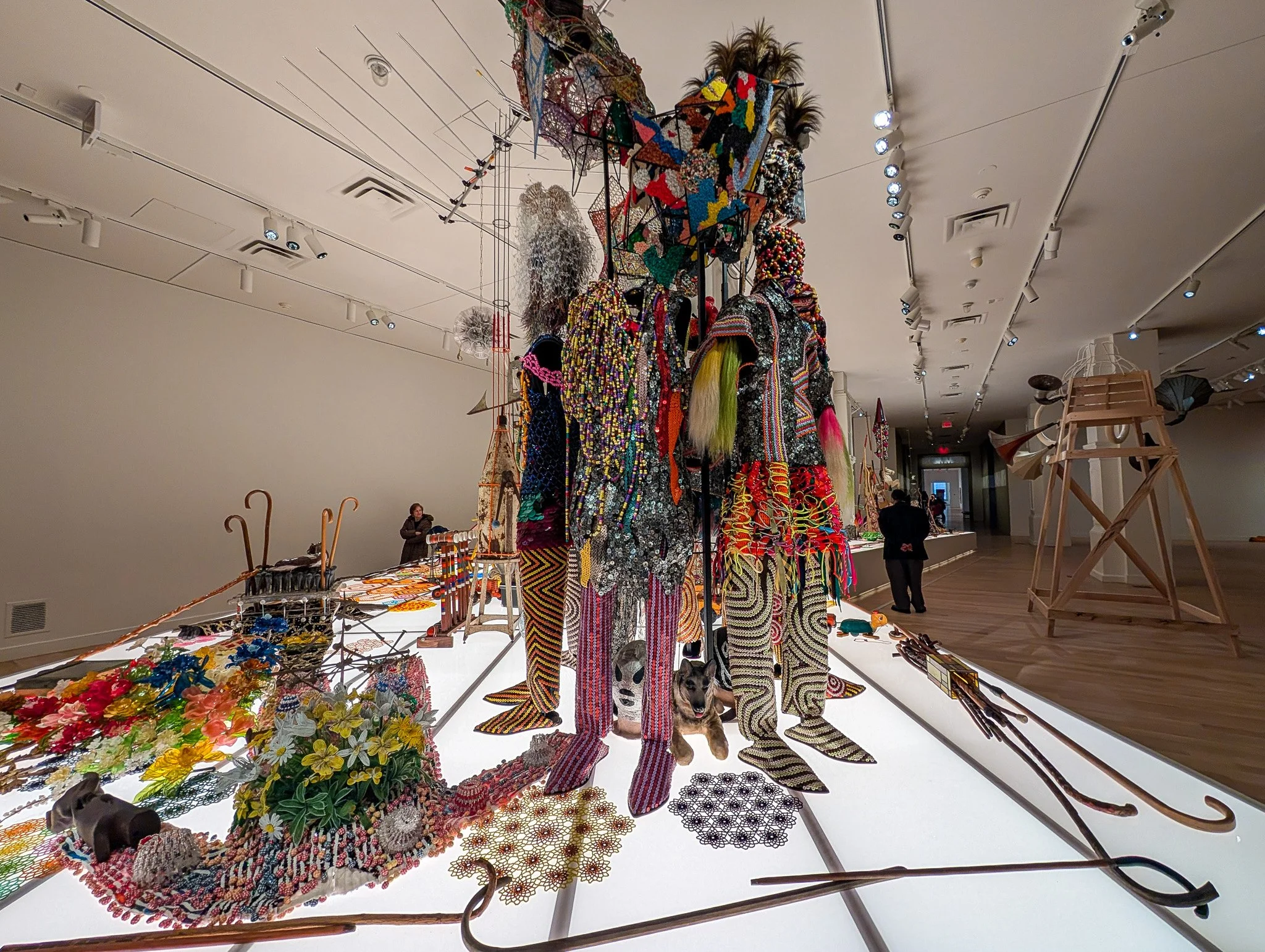
Having this exhibition's main draw (the light table) hosted in a huge open gallery space featuring ethereal lighting, with narrow exits at each end, led me to do what I believe many visitors will; spend a lot of time looking down at the plethora of objects presented on the life-sized light box, perhaps at the expense of the other parts of the exhibition.

To think of the objects on the light box as detritus would mask the value in looking at everyday objects in this way. The exhibition is as much an examination of life at a moment in time as it is a collection of what makes us, us, over the course of an entire lifetime. Or in this case what made Nick Cave, Nick Cave. Toys, tools, textiles, and more -- the light table has it all. The overwhelming part is that there is just too much to observe in a single passing. The desire to engage more is partially fed by the slight chaos. Curiosity gives way to engagement. And questions. Who owned this one? Was that passed down through the family? What is it, exactly?

All the while, the massive mammoth bone structures watch from atop lifeguard-like platforms. Are they judging us for leering? Are they benevolent overseers of the cosmos? Are they watching for mistakes or learning? With consternation or pride?

While the light box is engrossing, the two pieces near the entrance of the exhibition are as powerful. First, a moving image short film of the titular mammoths (people adorned as mammoths) walking/wandering though what appears to be the Chicago landscape.

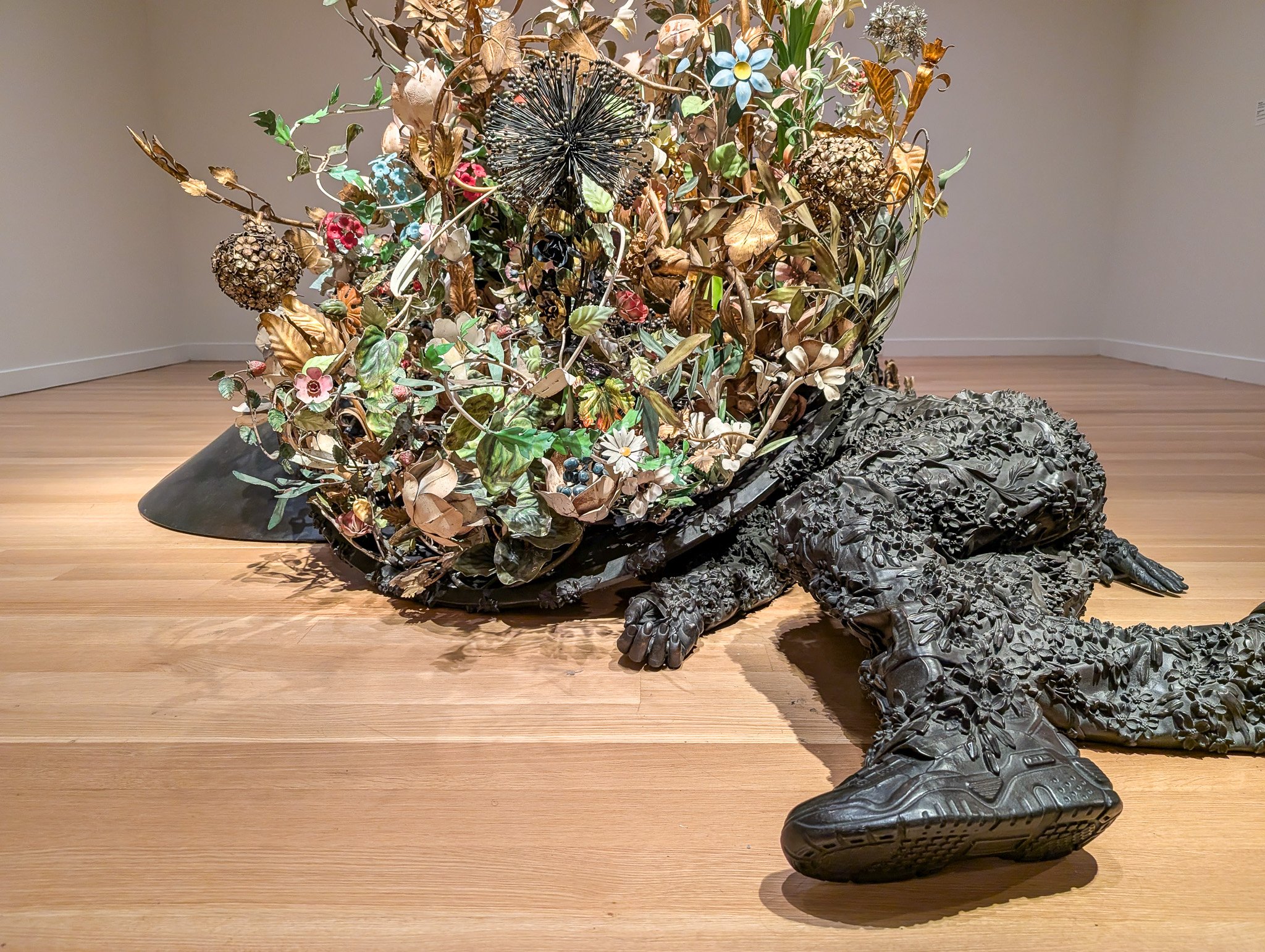
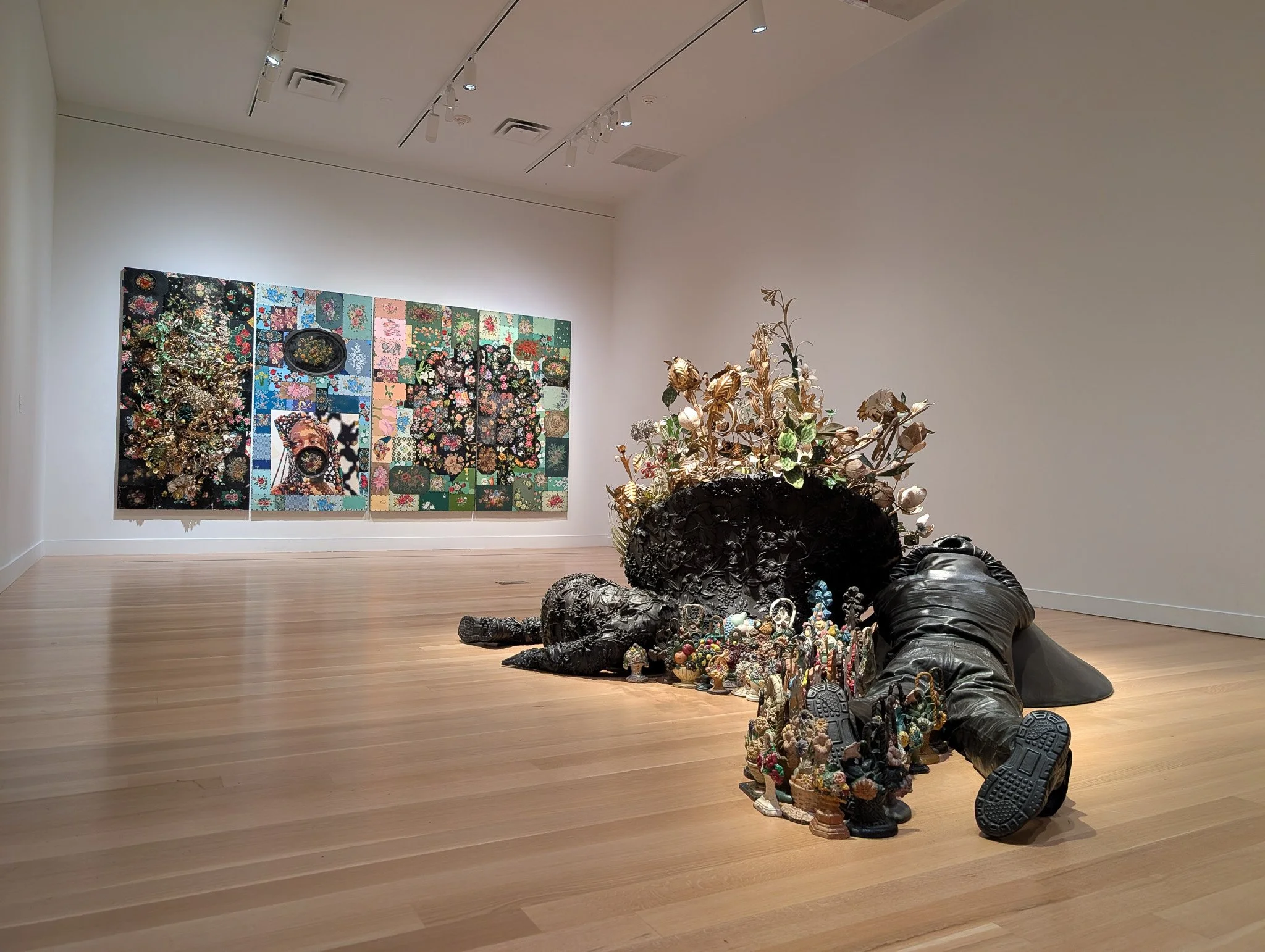
And in what was the most intriguing and slightly disconcerting piece, Amalgam (Plot). Two prone bodies meet on the floor, faces obscured. How did they get there? How long have they been there? Almost presented as another part of the body, flowers rise up along the edges of the prone figures and from the meeting of the two figures. This reminded me of one of the scenes from a dystopian movie where the survivors walk aimlessly among the ruins of a great catastrophe, occasionally coming across a body in the wild. A dark interpretation -- but the door is seemingly left open for rosier thoughts.

Overall, I was really taken with Mammoth. I was prepared to walk in with an open mind., and even then was surprised by the depth and presentation. Sometimes I have trouble connecting to "found art" style exhibitions. I did not write up the Material Witness exhibition showing at Rubell Museum, but perhaps I will. It was chaotic in a different way than Mammoth, but they both share few thematic links. Until then, Mammoth is worth a view! It has plenty of time to breathe, showing at the Smithsonian American Art Museum January 3, 2027.

Youth Movement: Honoring Diamond Teague and Monique Johnson

This month, I am highlighting commemorative works in DC that feature youth. The physical form of commemoration needs not be a statue, although many are. I'm looking to see if a young person is included as part of the commemorative narrative, or that a young person is central to the story of commemoration.

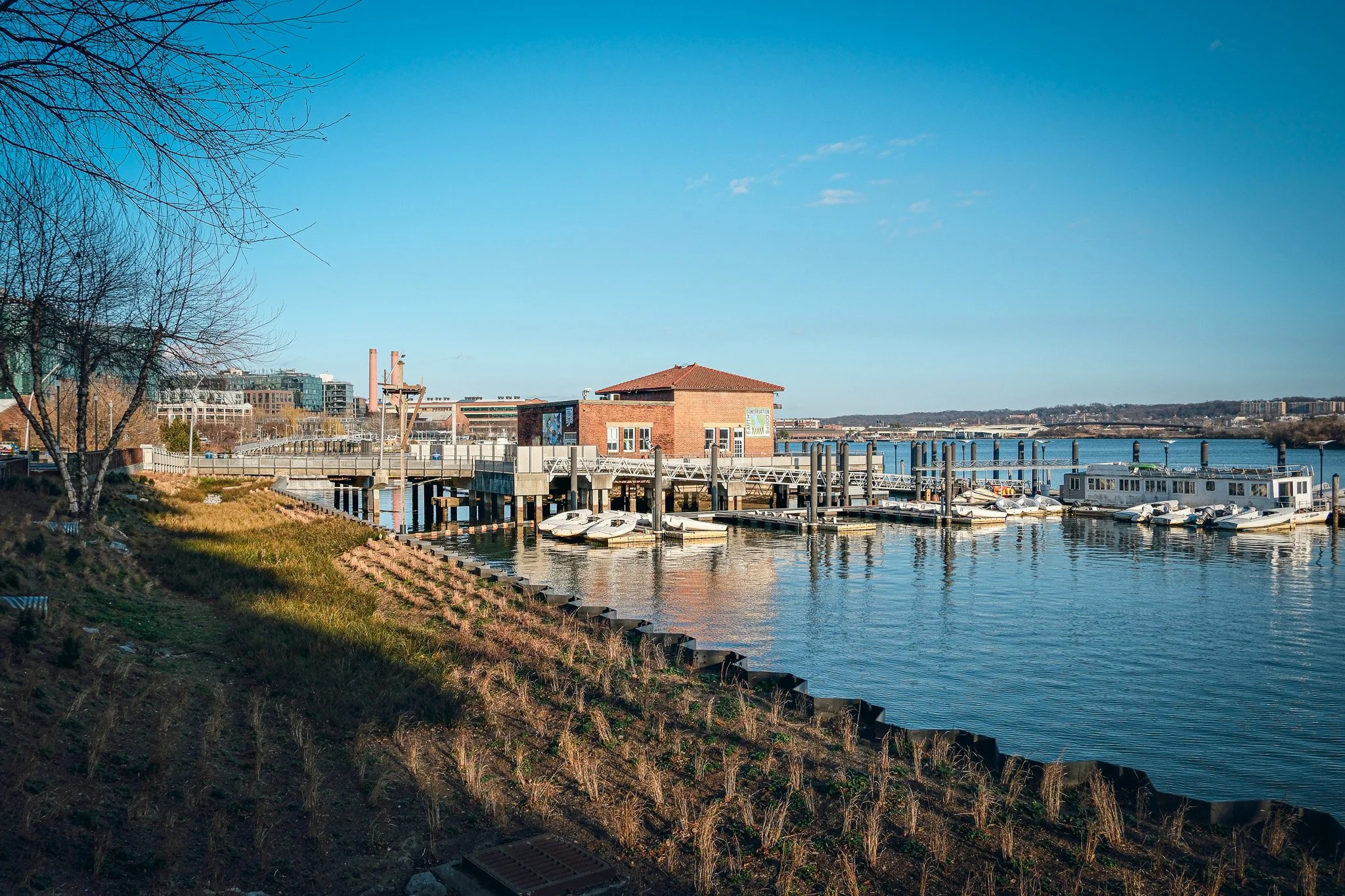
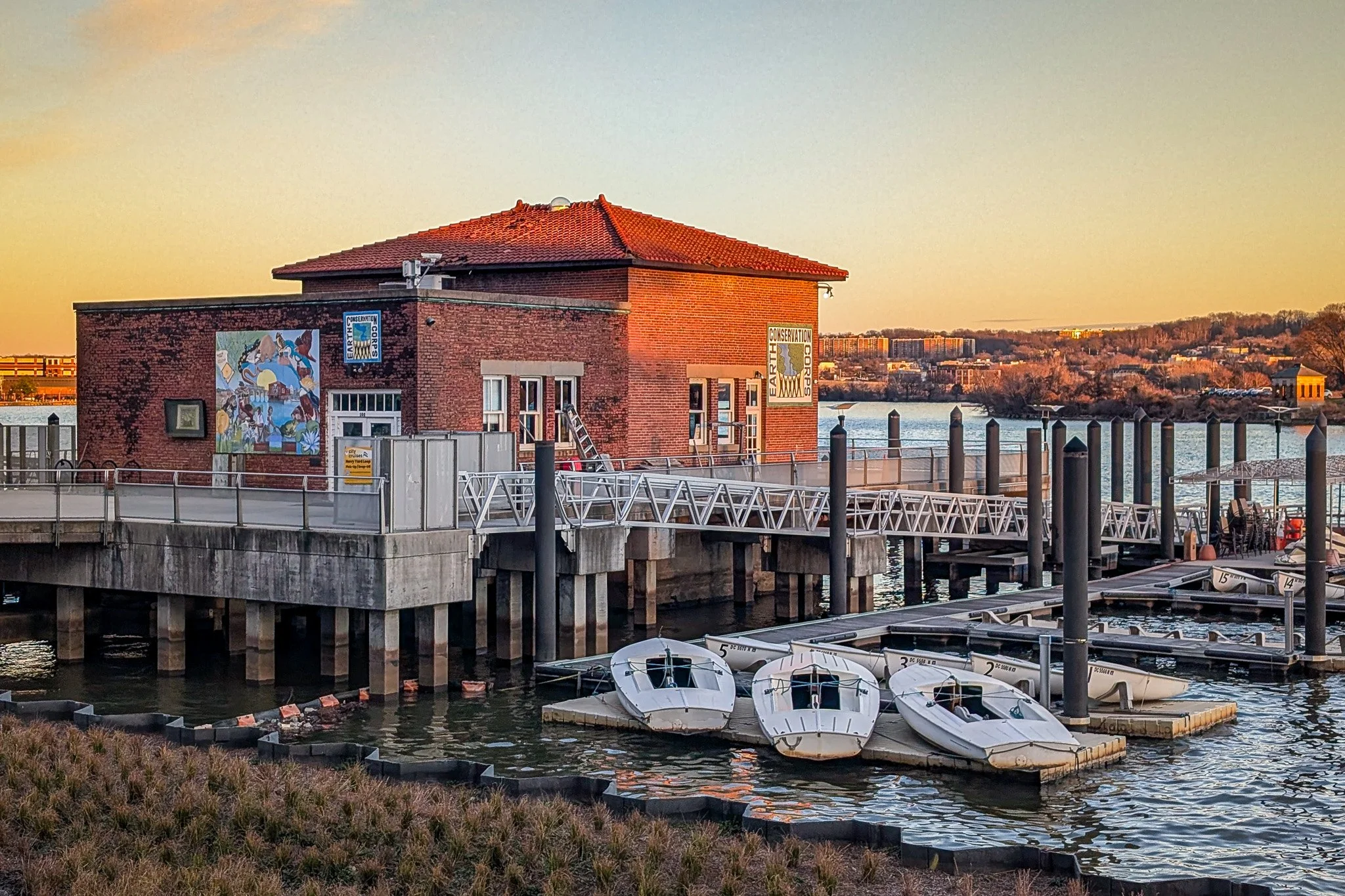
Old pump house converted into a learning center.

Let’s start next to the Anacostia River in Southeast DC, looking at a different type of commemoration. This place honors a young man and a young woman, both who served DC residents by improving the natural environment. Unfortunately, each of their lives was cut short by acts of violence.

On the Anacostia River, the Earth Conservation Corps has had a substantial impact on the health and appearance of the Anacostia River, as well as on the people who work to improve it. The ECC is an AmeriCorps adjacent program that engages DC teens in environmental service projects, almost exclusively centered on rehabilitating the Anacostia River. The Anacostia River intersects with the Potomac River after branching through Prince George's County, Maryland and the eastern part of the District of Columbia. The ECC was technically founded in the late 1980s, but since 1994, it has inhabited an old restored pump house that juts out into the Anacostia River. The pump house is just south of the Navy Yard complex and almost in the shadow of the Frederick Douglass Memorial Bridge.

After making the pump house home in 1994, the ECC has seen tremendous change in the built environment around it over the next 25 years. Dozens of new residential and commercial buildings have risen around the pump house, including adjacent apartment and office buildings as well as the Nationals Park baseball stadium. All the while, hundreds of DC youth have worked on the river, learning about, cleaning, monitoring, and improving the Anacostia little by little. With the work of ECC teens alongside infrastructure and policy advances related to cleaning up the river, we’re at the point that development is now ongoing on both sides of the riverfront. This particular segment of the Anacostia River has become a residential, commercial, and green space destination for area residents.

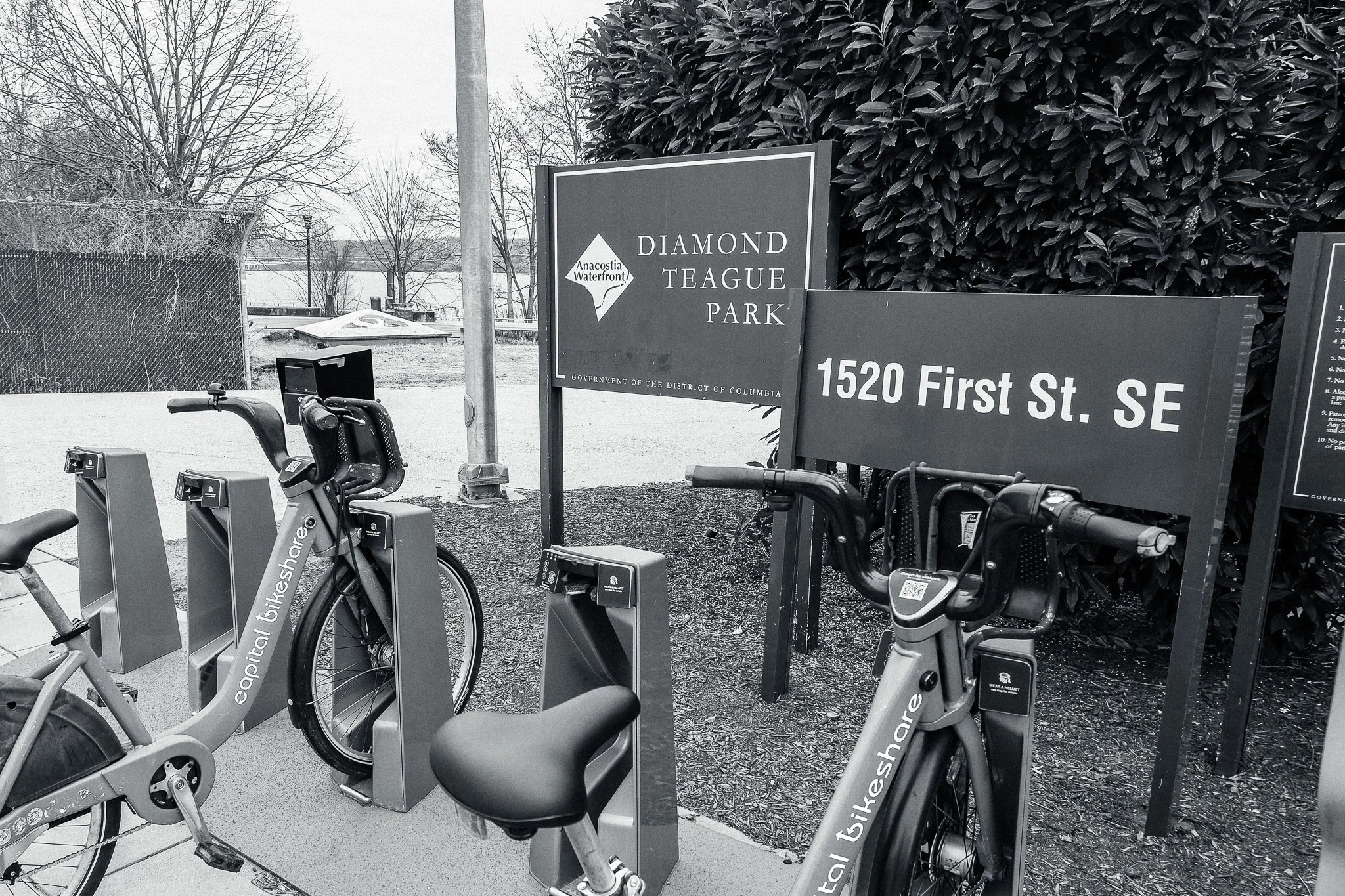
Diamond Teague Park on the Anacostia River.

In between the ECC pump house learning center and the baseball stadium sits Diamond Teague Park. The park was dedicated in 2009 to honor Diamond Teague. Diamond was a teen who grew up in DC and worked in the ECC cleaning up the Anacostia River. Specifically, he worked a seven month program helping to bring the bald eagle, sturgeon fish, and the barn owl back to the river shed. In October 2003 a still unknown person shot Diamond on the front porch of his own home. Diamond died at age 19 years. He was known as one of the hardest working members in the corps and a friend to all. After graduation from the corps, Diamond was set to attend the University of the District of Columbia where he had just been accepted. He would have been attending with a scholarship achieved through his work on the Anacostia River during his ECC AmeriCorps service. Corp members and staff grieved after his death as Diamond's passing seemed to go unnoticed by the city and underreported by the media. It was the student media at the ECC who produced a video tribute shown at Diamond's memorial service. The day after the memorial service the mayor visited with Diamond's mother and ECC members.

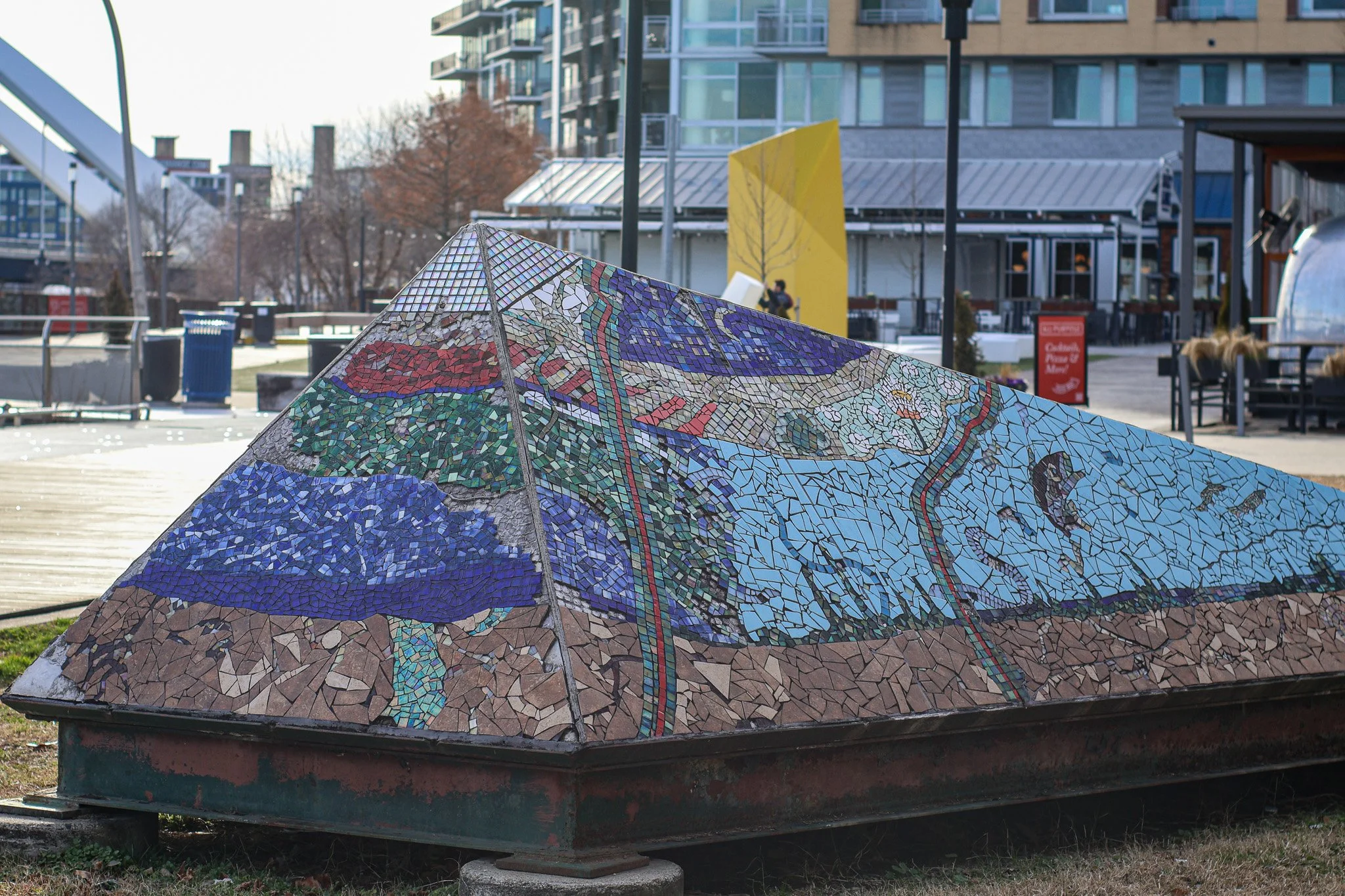
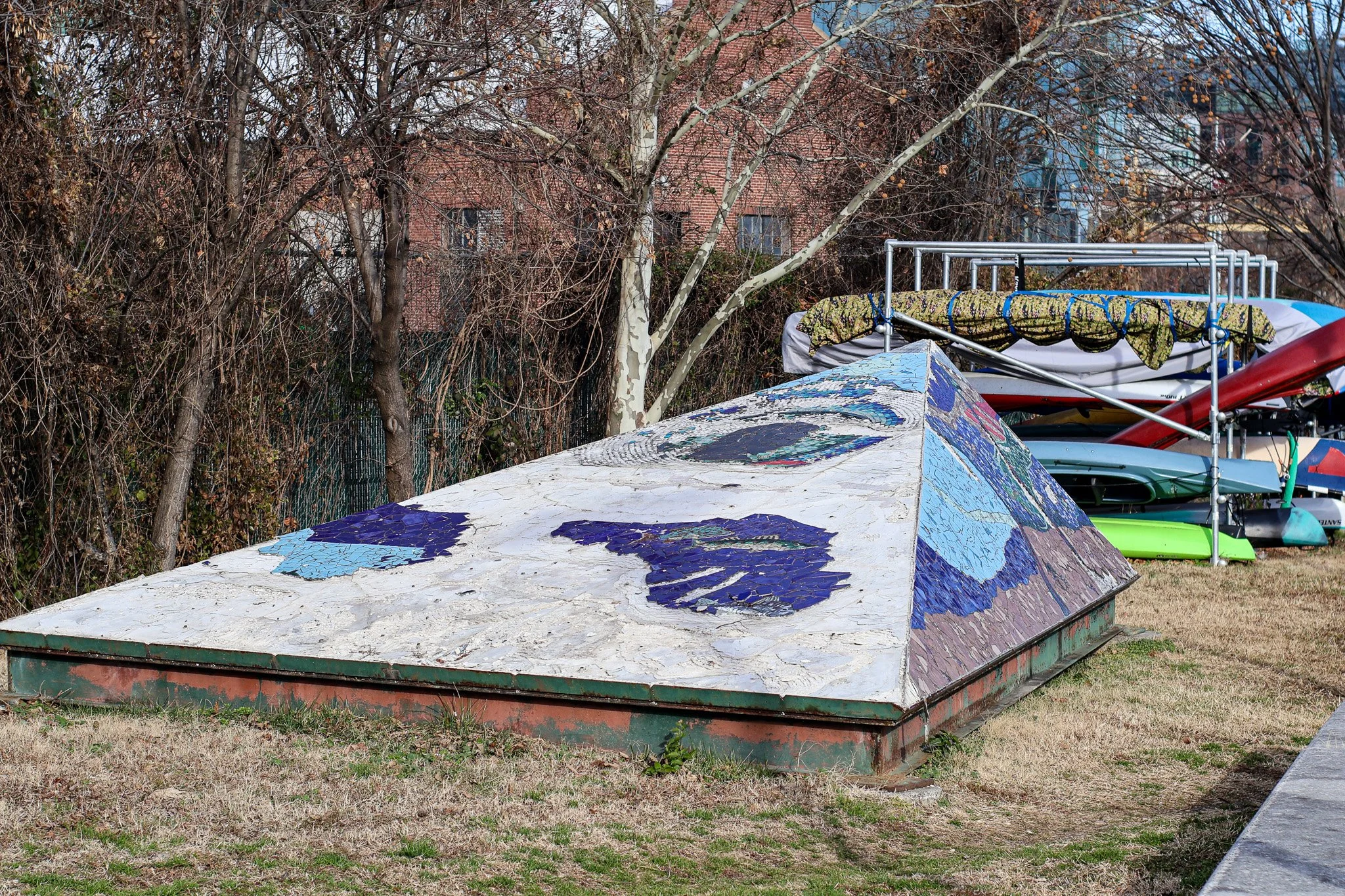
Five years later, a Major League Baseball Park was built across from the ECC pump house, supercharging development around the area. Six years later, in 2009, then DC Mayor Adrian Fenty spoke at the groundbreaking of a new 1 acre park that was officially dedicated to Diamond Teague. Diamond Teague Park includes a new approach to the riverside and the ECC learning center, direct access to the river with a new boat landing, piers for water taxi and kayak access, and acts as a connector between two residential areas along the much improved Anacostia River. A river Diamond himself helped to rehabilitate. The park also incudes a tiled memorial sculpture to Diamond by artist G. Byron Peck, although it has fallen into some disrepair. The area around the park has seen incredible change over the past 15 years, but the commemoration for Diamond Teague remains. There are plans to enhance and enlarge the park with new features and landscaping, but that is tied to future real estate development on the waterfront. More recently, there has been a proposal to restore, preserve, and protect the memorial sculpture to Diamond specifically.

Diamond Teague memorial by artist G. Byron Peck.

Most tiles are missing from the top side.

At the end of Diamond Teague Park is the aforementioned, repurposed pump house. Now renovated and used for programming by the ECC, the pump house is named to honor Monique Johnson, one of the founding Earth Conservation Corps members here in DC. By 1992, Monique had transitioned into a leadership role as a young adult and was on an environmental rehab trip in Texas when a Houston man killed her just days after her arrival. The Earth Conservation Corp group was there ostensibly to help clean up a local bayou, but primarily to be honored by then President Bush as participants in the Thousand Points of Light community service initiative. It was a celebration that did not happen. Monique was lost to us as she was exporting the challenging but important work on DC’s natural environment all the way to better another community in Texas. Yet, violence followed.

Two years later, the old pump house gained a new life as a learning center as well as a new name, the Monique Johnson River Center. Monique was one of the inspired young leaders who helped make that part of the river inhabitable for the Corps as well as all the development that continues through today. ECC members did eventually get to visit the White House in 1999 as invited by then President Clinton and Secretary of the Interior Bruce Babbitt.

Monique Johnson River Center.

Naming buildings and places after people is not new, of course. Place names can be purchased via sponsorship, or as an acknowledgment of philanthropy. We honor people foundational to institutions, or people who are widely admired. Sometimes it's a combination of reasons.

Diamond Teague and Monique Johnson were both foundational to advancing the mission of the ECC, but they also did so in this exact place within the District of Columbia, in service to the people — and flora & fauna— of the District of Columbia. These commemorations are multi-faceted; 1) to remember Diamond and Monique as people, 2) honor their contributions to the organization, and 3) through those contributions, honor their service to the community at large.

Over the past years, the Corps has lost many participants to violence. For anyone enjoying a walk on the rehabilitated riverfront or enjoyed looking over blue heron, turtles, and ducks on the river after a baseball game, much is owed to these teens, young adults, and their educators at ECC. The built and natural environments should not be separated from the human experiences of people who live amongst them. Being able to enjoy the river is important, but so is mitigating the violence that has interrupted so many lives in the city.

Hopefully people encountering Diamond Teague Park and Monique Johnson River Center take a moment to reflect on these commemorations, who the people behind the namesakes were, and how they helped make DC a better place.

Questions I still have:

What do you think about a public nature park as a form of commemoration? What about naming a building after someone?

How do we best honor work that is often unseen like cleaning parts of a creek many will never encounter or improving animal habitats deep into a forest?

How do we reconcile our want to honor the work of people like Diamond and Monique in such a public way only, but only after their deaths?

In what ways can we ensure the next generation are able to access and remain engaged in these types of commemorations?

Learn more:

Read more about the Earth Conservation Corps.
See videos from the dedication of Diamond Teague Park.
ECC Monique Johnson River Center.
2007 interview with a founder of the DC ECC.
2017 write up of the ECC.
Endangered Species, a 2004 documentary on early years of the ECC and the lives of its corps members. Moving, raw, and essential viewing for recent DC history.

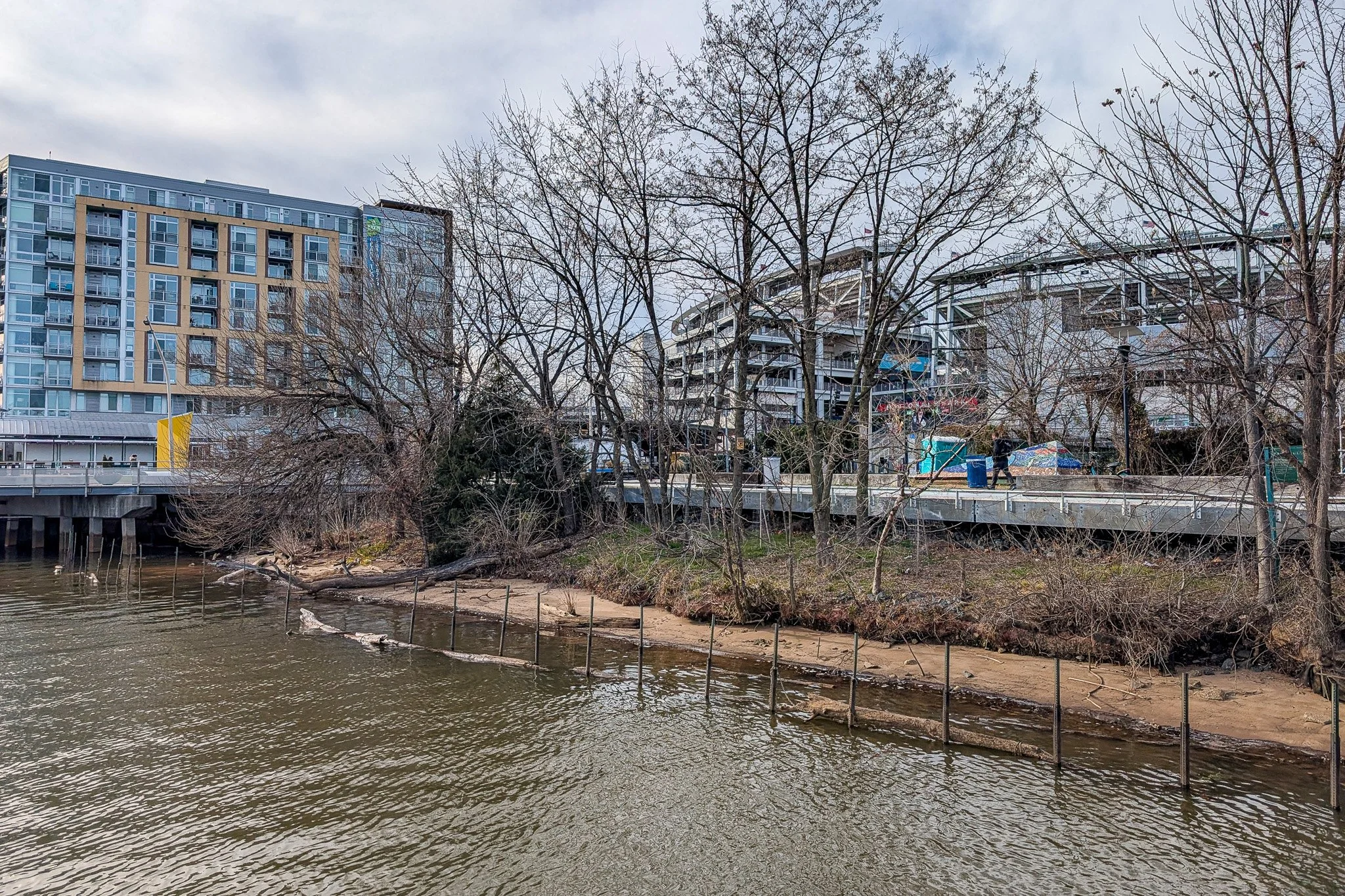
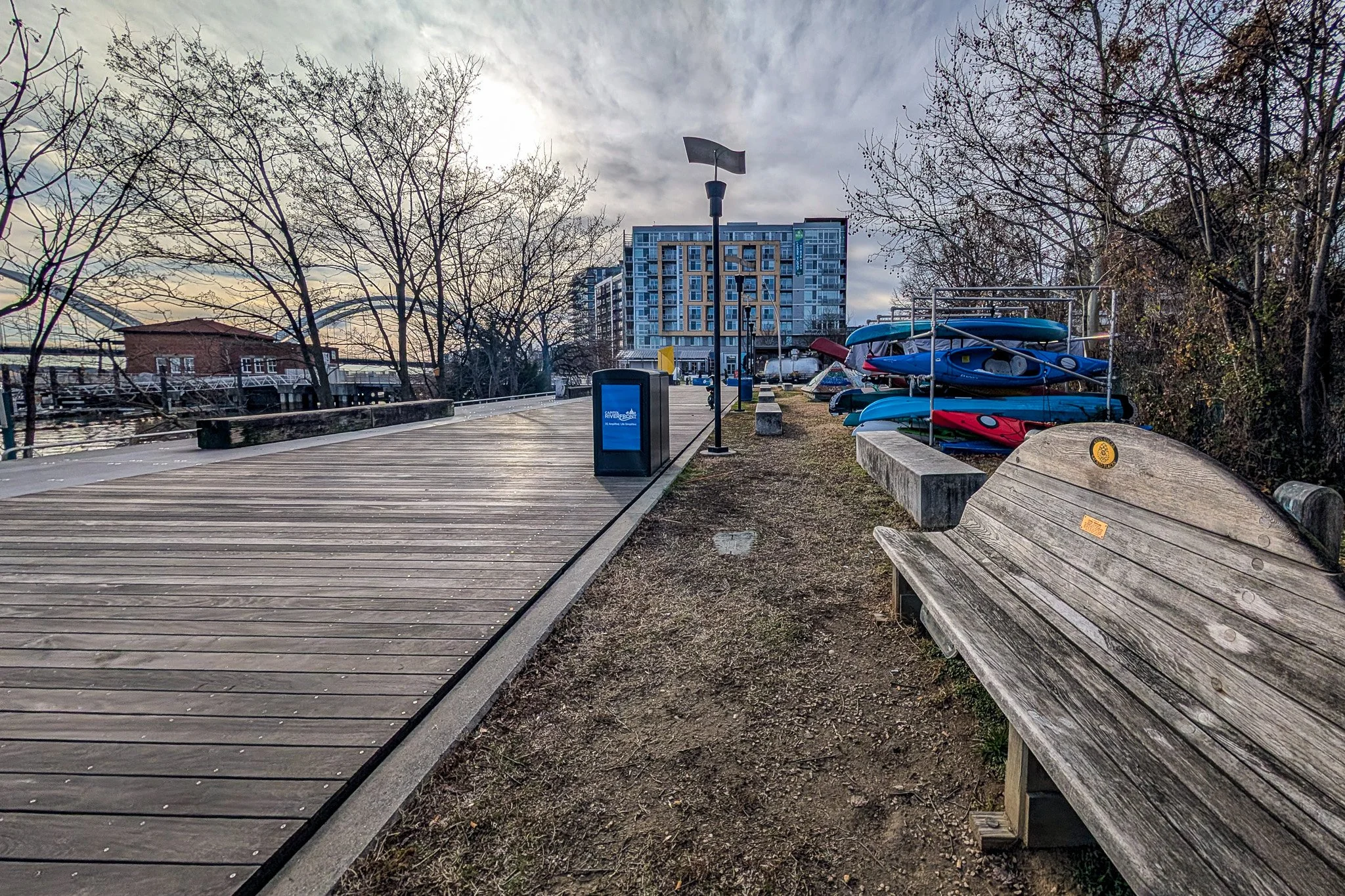
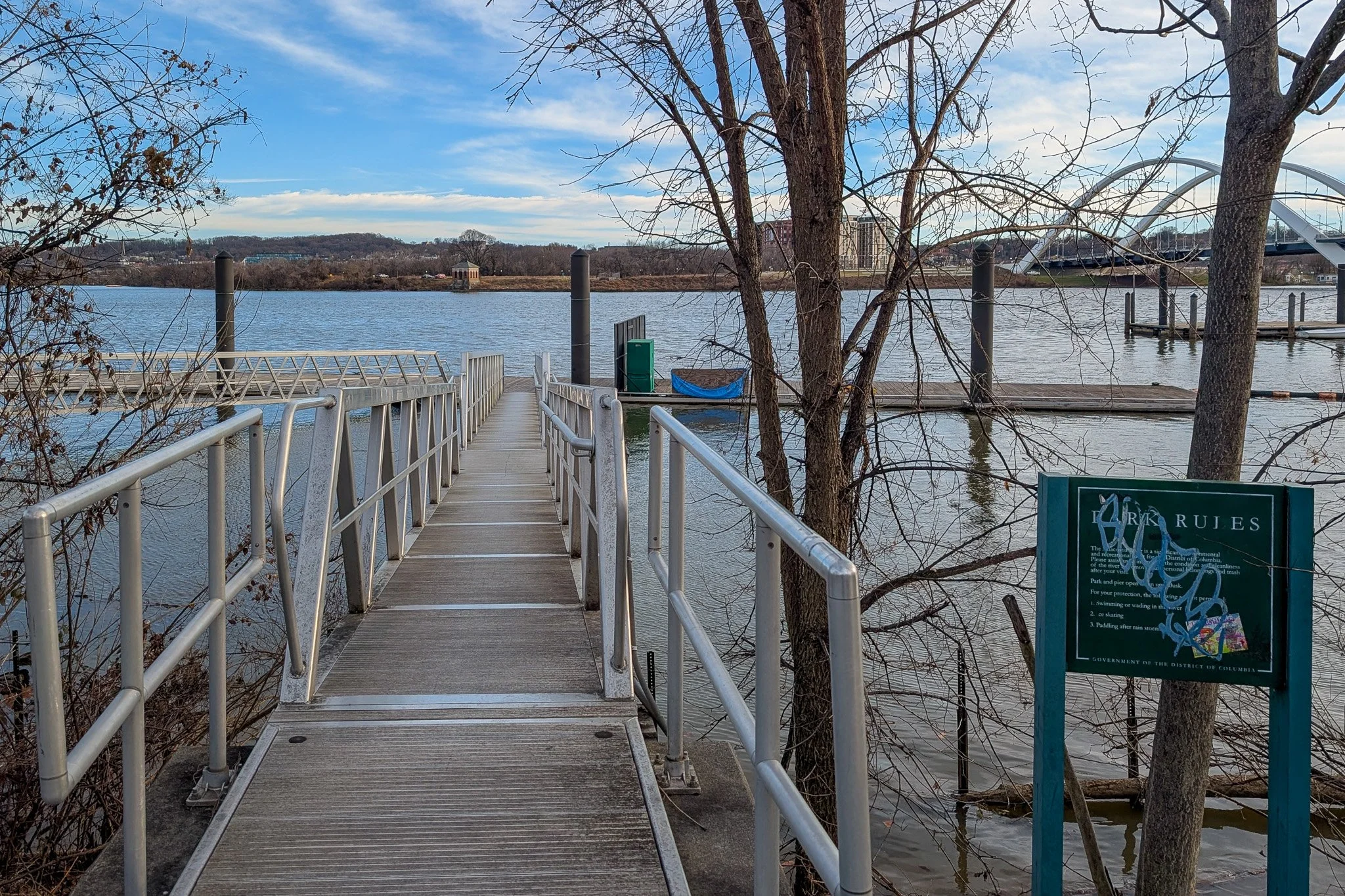
Shoreline of Diamond Teague Park on the Anacostia River. The baseball stadium is not far away.

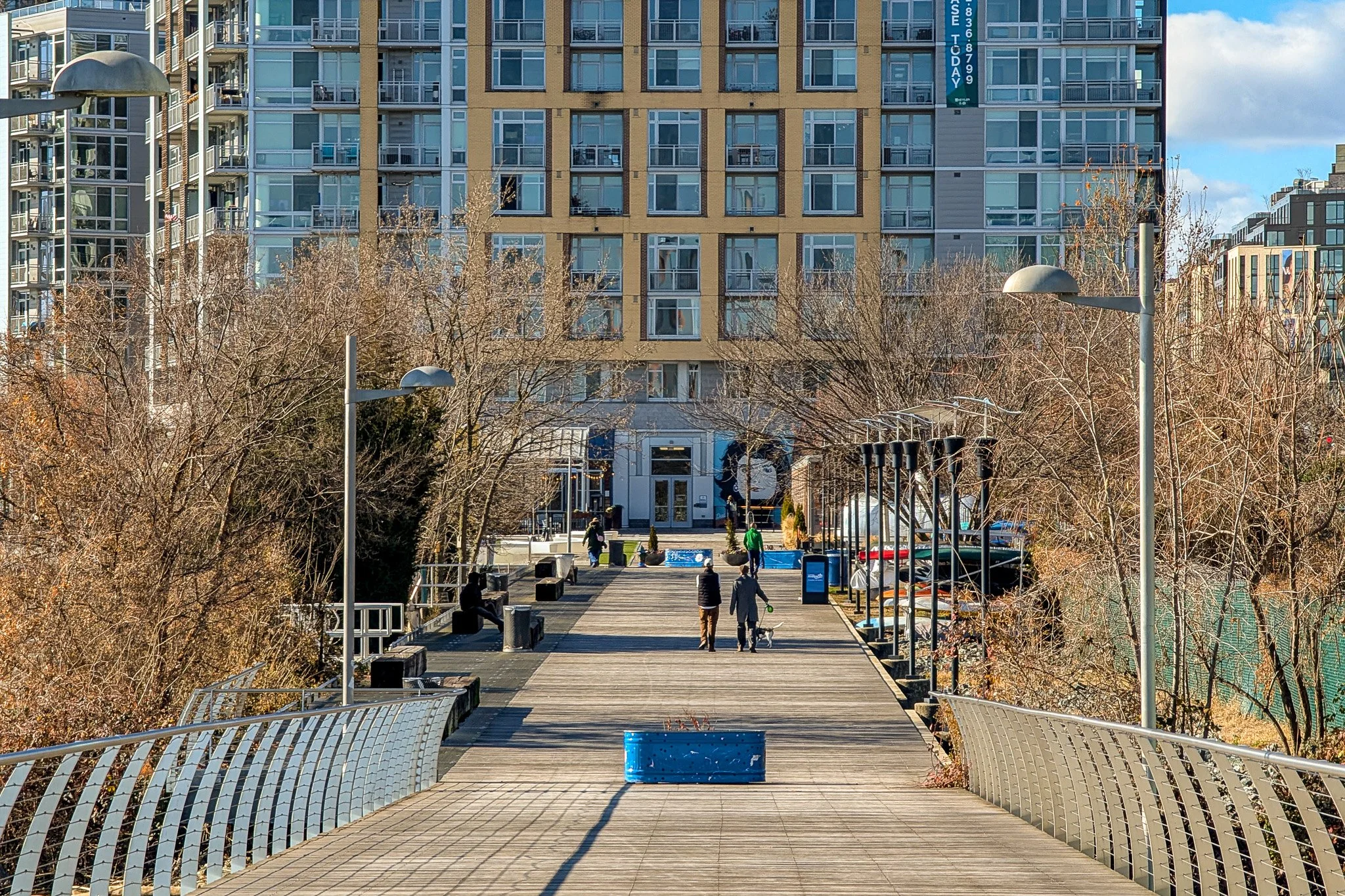
Diamond Teague Park.

Walkway down to floating pier next to the park.

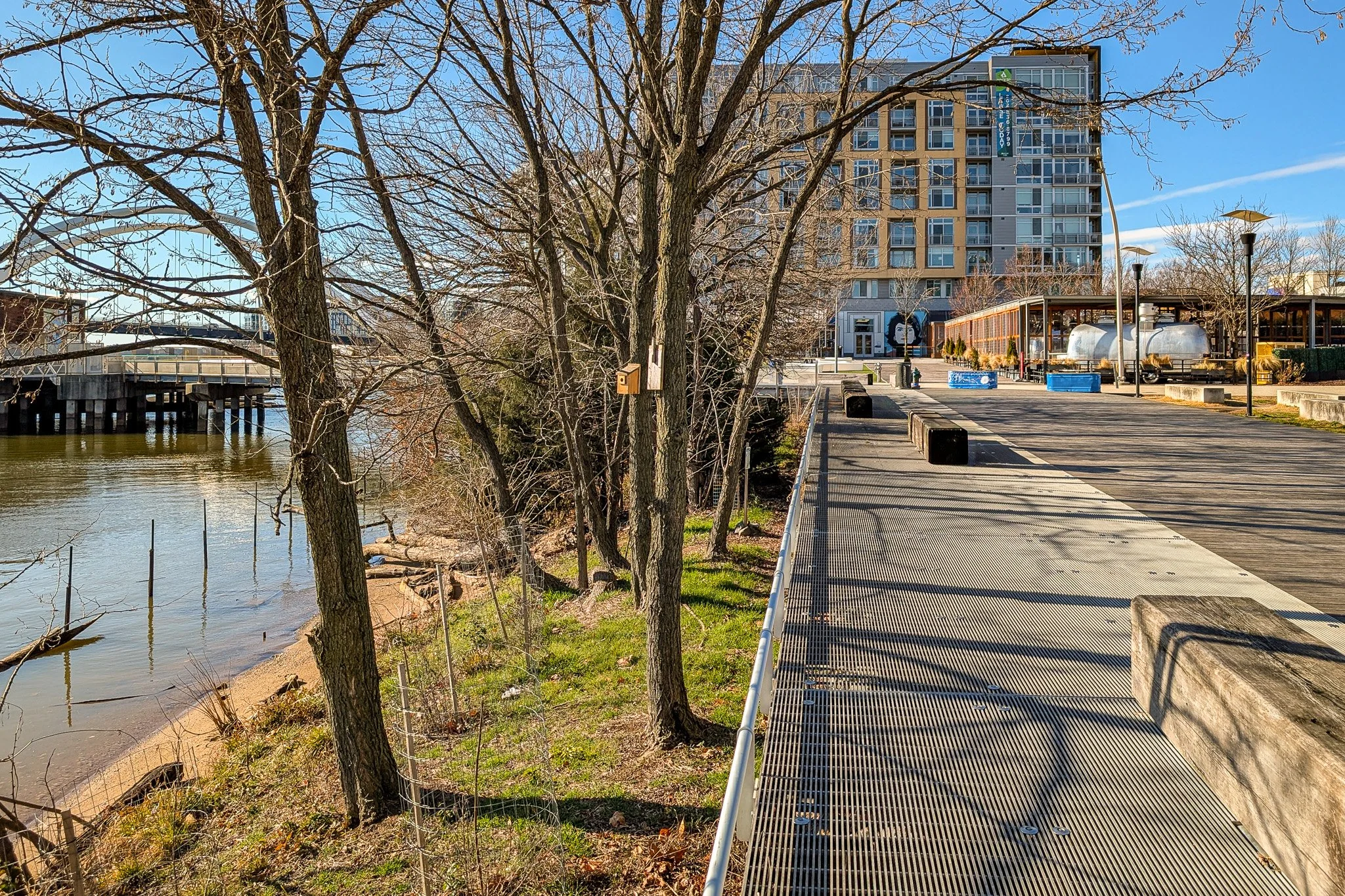
Riverwalk boardwalk leading up to the park.

If you appreciate these examinations of commemoration across the DC memorial landscape, please consider supporting my work on Patreon. There we continue to look at the history, present, and future of commemoration in DC.

Youth Movement: Barbara Johns in the U.S. Capitol

Indeed, children are citizens! Beyond nationality and arbitrary political borders, children are world citizens and have the capacity to both inspire and make change. While they initially experience the environs adults have brought them into, they too can also shape the world. A new statue inside the U.S. Capitol commemorates one of those moments. 

Barbara Johns was just sixteen years old in 1951 when she organized a strike amongst students in Prince Edward County, Virginia. Born in the South, but having lived in New York for some time, Johns was keenly aware of the discrepancies and unequal treatment she and her Black classmates & teachers were living with attending the racially segregated Robert Russa Moton High School. Severely diminished classrooms, a school building with inadequate heating, old & outdated textbooks, no proper labs for the sciences, no gymnasium, no cafeteria; the blatant subpar school experience was clear. Originally the strike was meant to spur action in the school system – build an equally operational school for Black students. But it grew into a much loftier effort that changed education and schooling nationwide. 

Having seen adults previously being rebuffed by the school superintendent, Johns organized a walkout and student strike – as a sixteen year old. 450 students protested for two weeks. When further student-parent conversations with the superintendent resulted in no effort towards change, the NAACP Richmond chapter joined, including lawyer Oliver Hill.

Hill and other NAACP lawyers agreed to challenge the school system if and only if the students agreed to fight on constitutional grounds -- against the separate but equal edict; as opposed to demanding a newer, nicer, but still segregated school for Black students. The students and parents agreed, and the student strike ended, while the legal fight began.  “Separate but equal” segregation was established U.S. doctrine since 1896. Barabra Johns’ protest for true quality started the upending of precedent set in that 1896 case, Plessy v. Ferguson.

Author’s note: As an aside, I grew up in Richmond, Virginia and witnessed Hill receive a number of commemorations in the city. Upon his death, he laid inside the Executive Mansion for public viewing under then governor Tim Kaine.

After the strike, the case that ended up going through the system was Dorothy E. Davis, et. al. v. County Schoolboard of Prince Edward County. While Johns was one of over 100 students to sign an official petition against the school board, Dorothy Davis was the first to sign, therefore her name came to define the case. Davis v. Board was later consolidated with a few other cases before eventually being heard in front of the Supreme Court: Briggs v. Elliott (South Carolina), , Gebhart v. Belton (Delaware), and Bolling v. Sharpe (District of Columbia), and Brown v. Board of Education of Topeka (Kansas). Joined by the others, Brown v. Board became the seminal Supreme Court case that partially overturned the 60 year old Plessy v. Ferguson decision and made segregationist separate but equal provisions unconstitutional.

One moment of protest led to a generation change in how we operate as a society in the United States. 

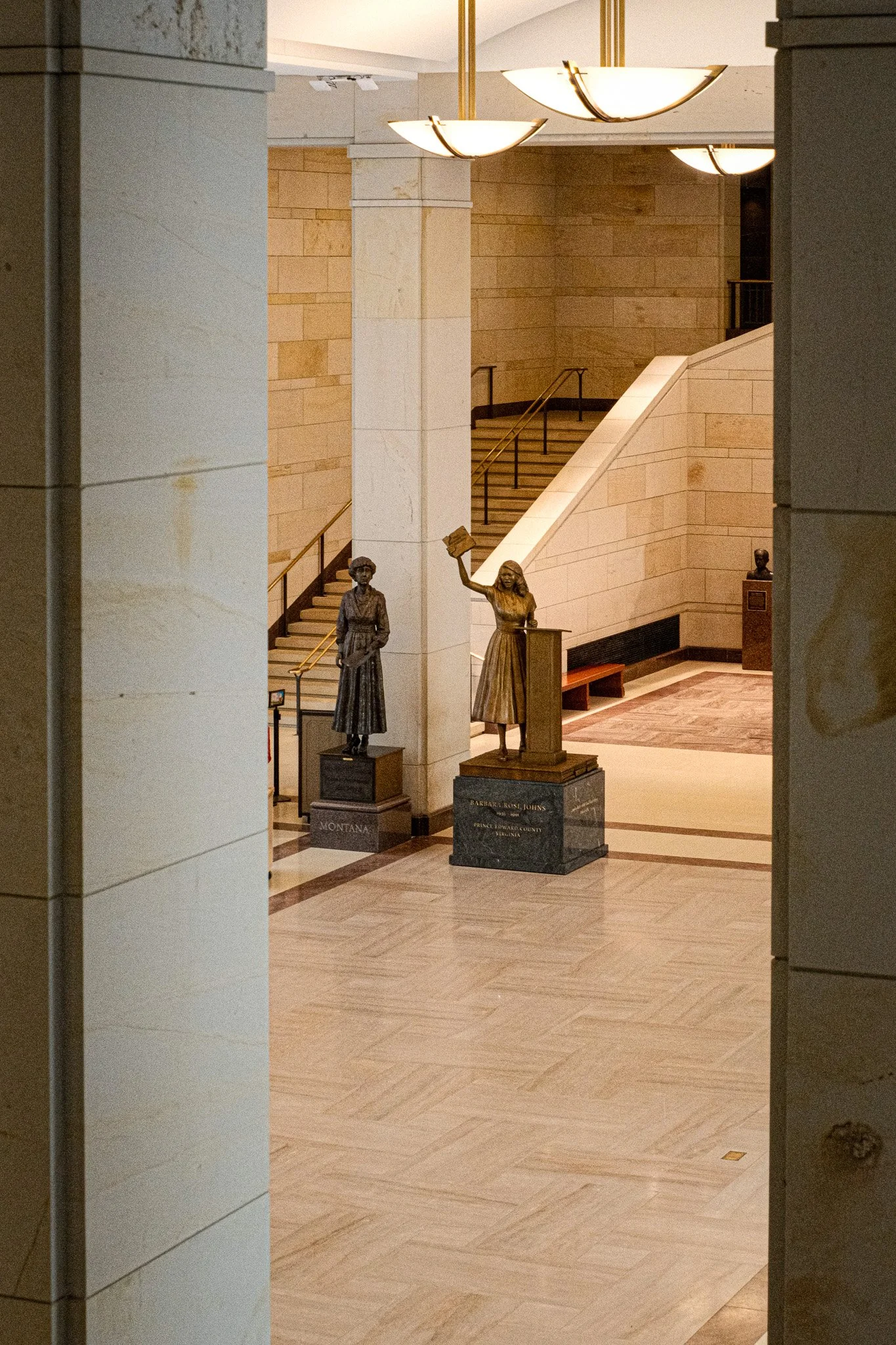
The Barbara Johns statue was offered to Congress to be placed in the Capitol by the Commonwealth of Virginia. Each  of the 50 United States are able to produce and gift two statues to the Capitol National Statuary Collection. Typically these are people important to state's history or U.S. history. Unsurprisingly, one of Virginia’s statues is George Washington. Virginia’s second statue was of Robert E. Lee. Lee’s statue was removed in 2020 and Barbara Johns has come to replace it as of this month. 

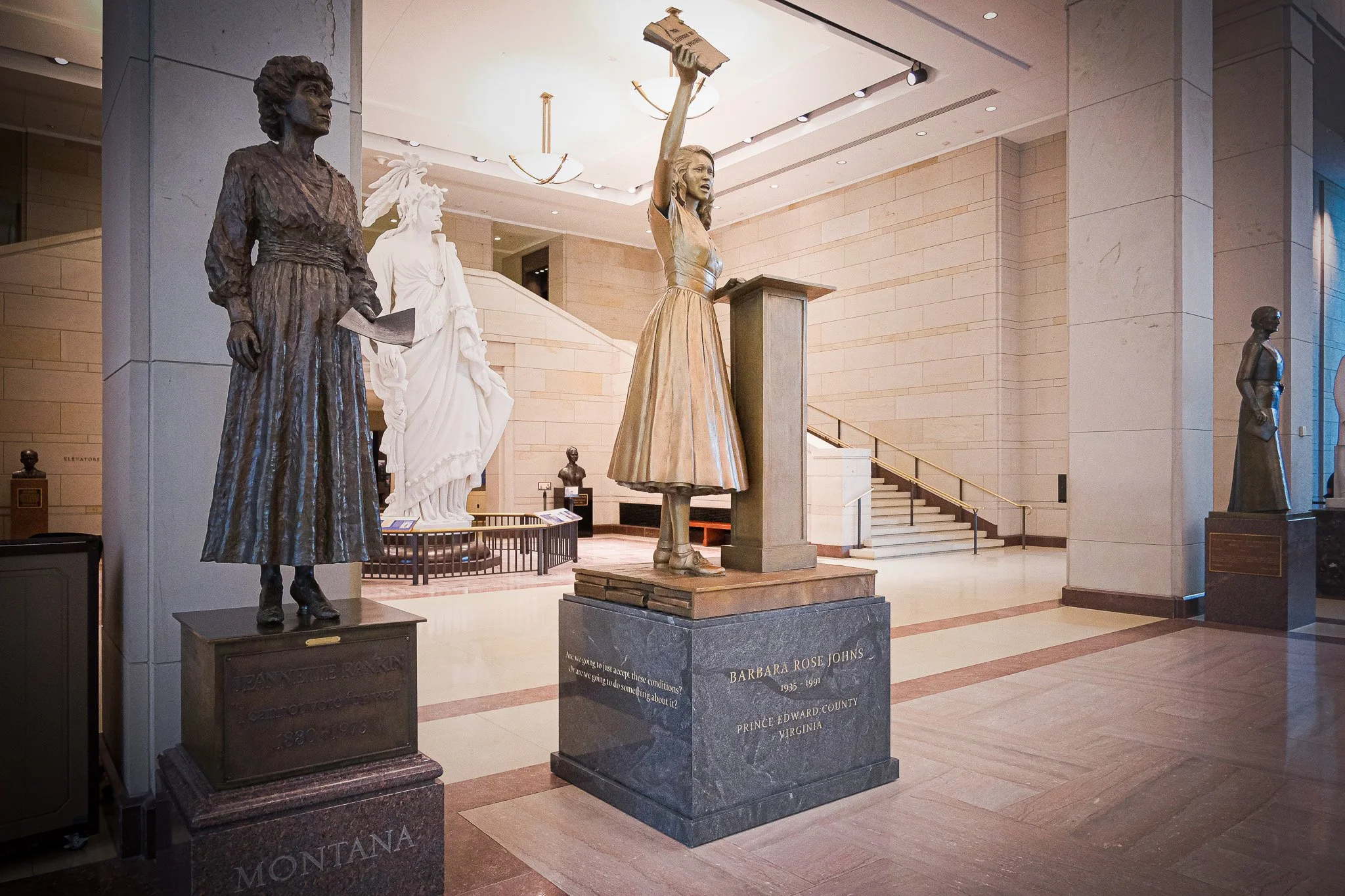
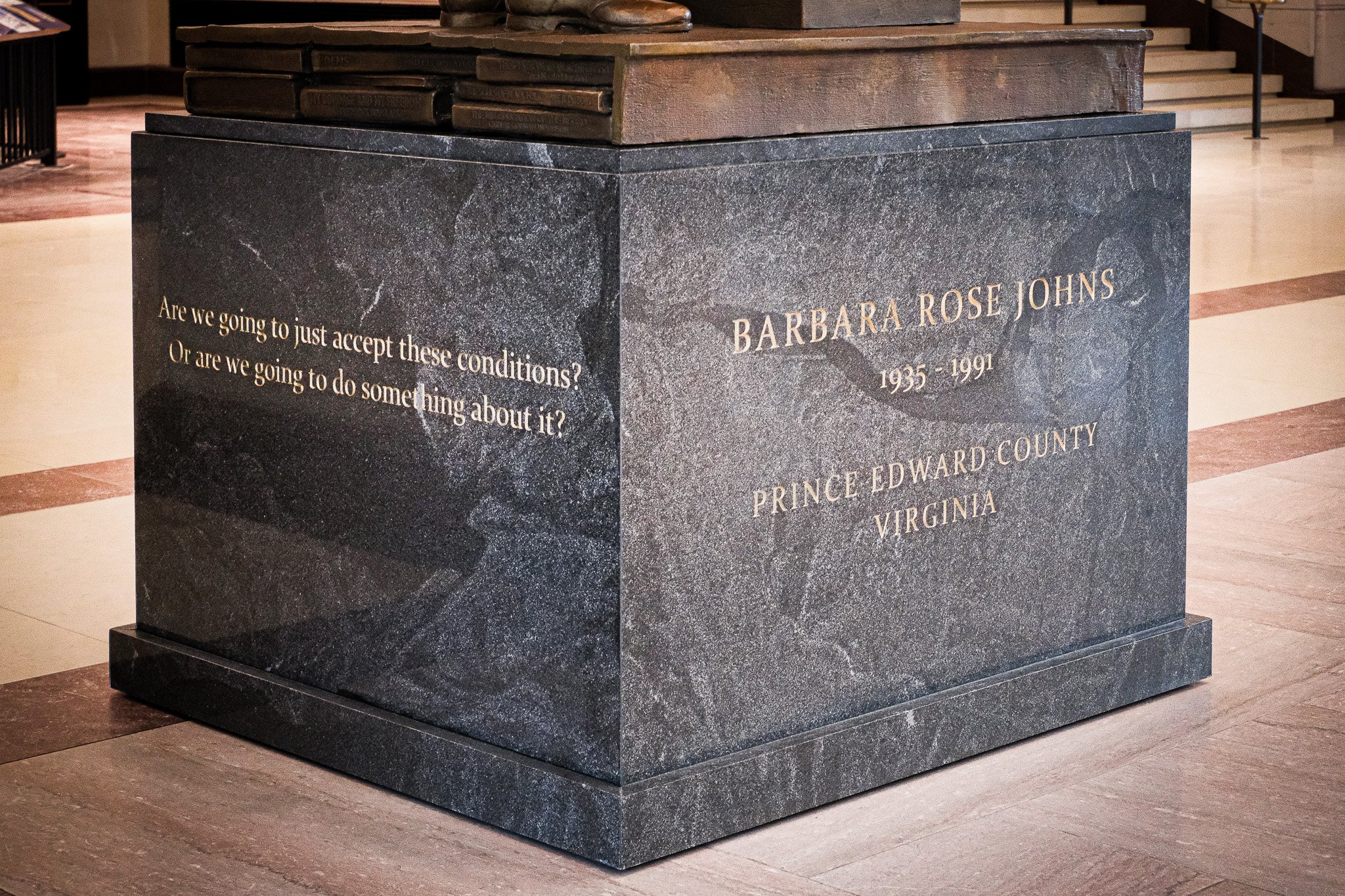
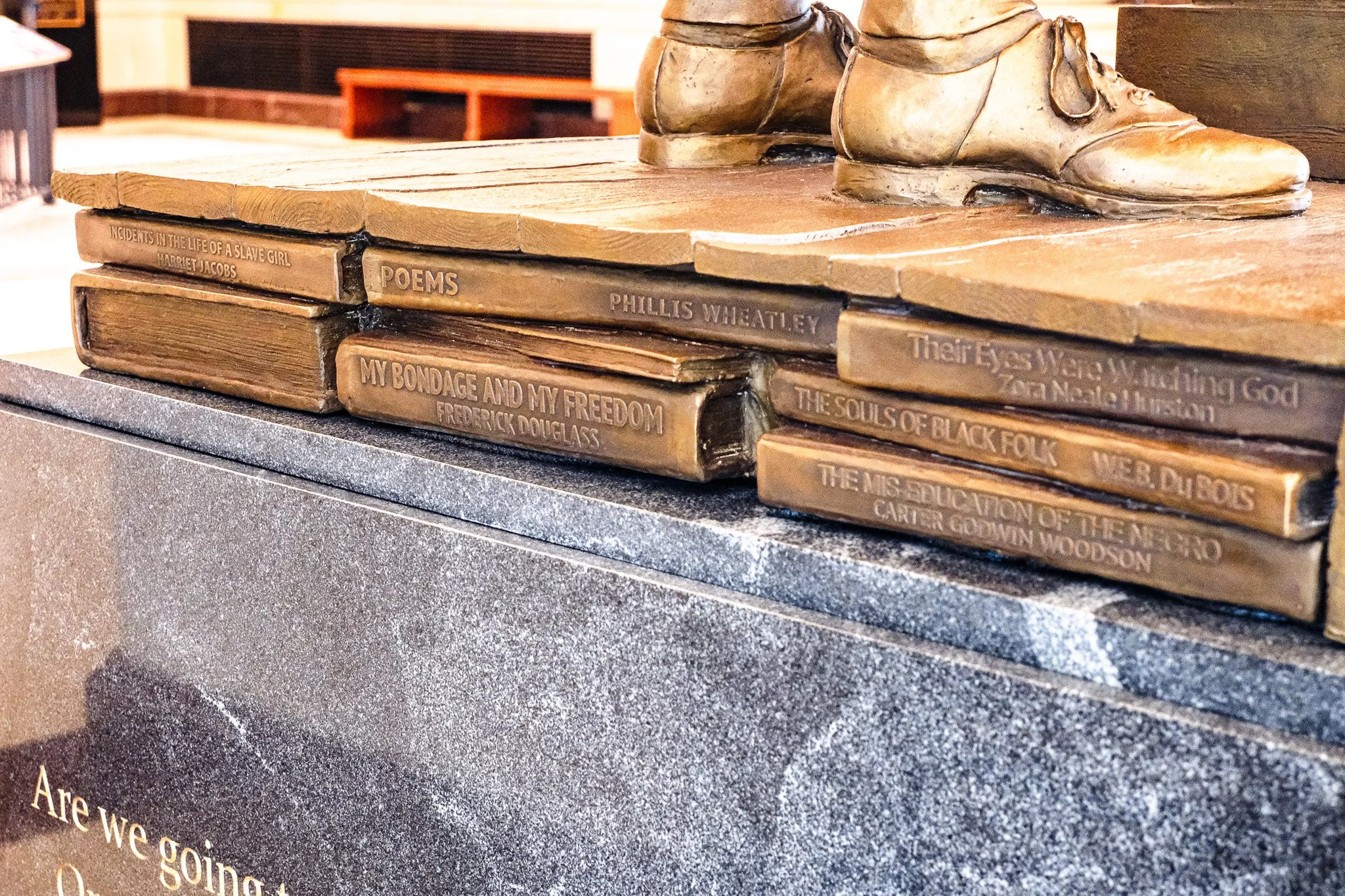
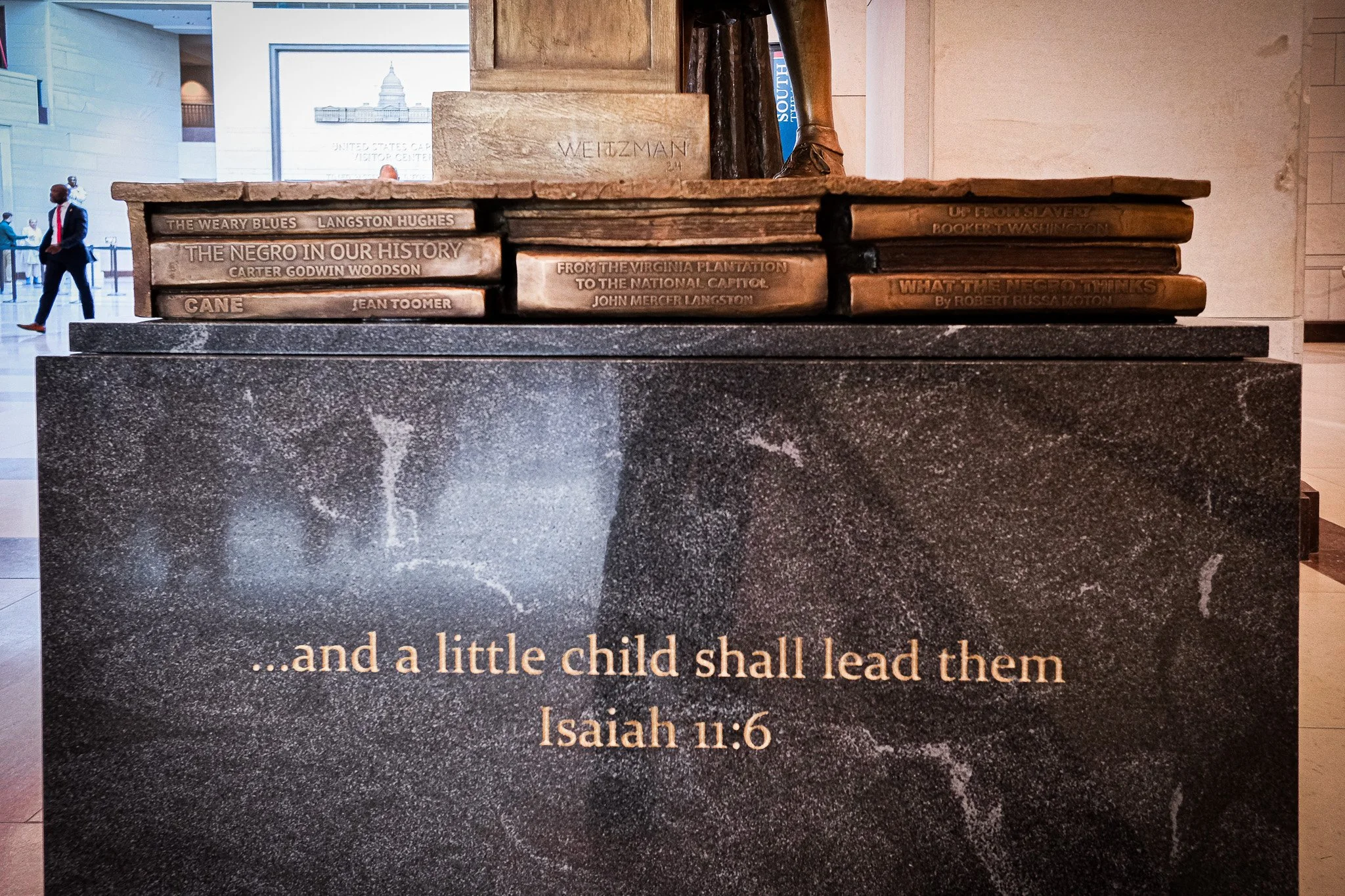
Johns’ statue is of her from the time of the student strike, aged 16 years old. She is depicted rallying other students while holding a textbook, “The History of Virginia.” The book is old and tattered; a used hand-me-down. It’s indicative of what she may have encountered at a school forced to utilize sub-par, second hand materials. Her clothes are typical of what a teen would have worn at the time, including saddle shoes, cuffed socks, and a puffed skirt. Under those shoes: floorboards with books underneath. The sculptor chose to represent Black artists and seminal works that the students at Johns' school may not have had access to, but nevertheless contributed to the through-line of striving for equality and justice. The books underfoot are: 

Incidents in the Life of a Slave Girl by Harriet Jacobs

Poems of Phillis Wheatley

My Bondage and My Freedom by Frederick Douglass

Their Eyes Were Watching God by Zora Neale Hurston

The Souls of Black Folk, The Talented Tenth, and Black Reconstruction in America by W.E.B. Du Bois

The Mis-Education of the Negro and The Negro in Our History by Carter Godwin Woodson

The Weary Blues by Langston Hughes

Cane by Jean Toomer

From the Virginia Plantation to the National Capitol by John Mercer Langston

Up from Slavery by Booker T. Washington

What the Negro Thinks by Robert Russa Moton

Native Son by Richard Wright

Below the books one side of the statue, an apt quote of Barbara Johns: “Are we going to just accept these conditions? Or are we going to do something about it?”

I’m so pleased that we honor Johns as an agent for change and honor her in the moment of change, as a teenaged person. While the statue was briefly in the U.S. Capitol Visitor’s Center, it has been moved to its permanent home, the Capitol Crypt, a vaulted space in the center of the Capitol under the Rotunda. This is typically the first area explored on the official U.S. Capitol tour, which is the best and easiest way to see the statue.

Consider joining the Attucks Adams Patreon where we have continued this conversation, looking at a number of other DC area commemorations featuring young people.

The American Story: Exhibition Spotlight

The National Archives serves an outsized role in our country at this moment. As we grapple as a nation with how and what values drive policy, sentiment, laws, mores, behaviors, and citizen expectations, the documents that are foundational to life in the U.S. are still on display for public scrutiny. 

The Archives calls the collective documents including the Declaration of Independence, Constitution, and Bill of Rights the “Charters of Freedom.” Those three documents are the literal centerpiece of the main Archives building here in Washington, DC. The entire Rotunda and balance of remaining programming & exhibitions in the building –all the way down to ticketing, entrance, and egress–  have been built around access to the Charters of Freedom. But there is so much more to the Archives, especially to the average, non-researching visitor.

Officially, the National Archives and Records Administration (NARA) spans across the country in nearly 40 buildings including the main facility and museum in DC, a much larger archival storage and research facility nearby College Park Maryland, 10 regional archives, and 16 Presidential Libraries. In total, there are nearly 13 billion (13,000,000,000) documents under the purview of NARA. The building most associated with access to documents is the one you've probably visited -- the 1937 Archives building located on Constitution Avenue NW in DC. Aside from the Charters of Freedom, there are typically several other rotating exhibitions open in the museum portion of that building. 

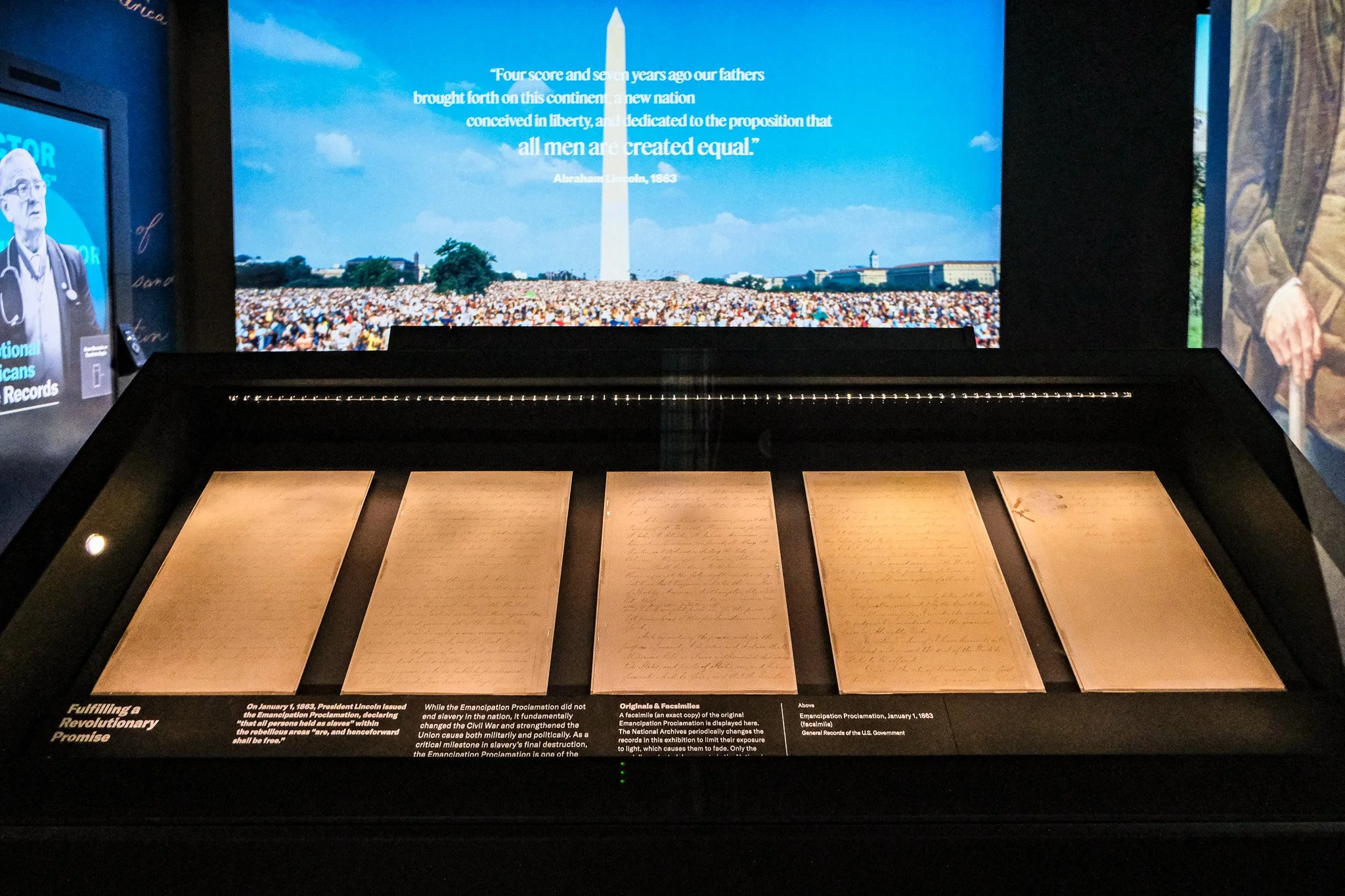
A surprising amount of documents on permanent display were facsimiles; like the Emancipation Proclamation.

The amount of information about each document is astounding. From meaning behind the words to how the parchment was made.

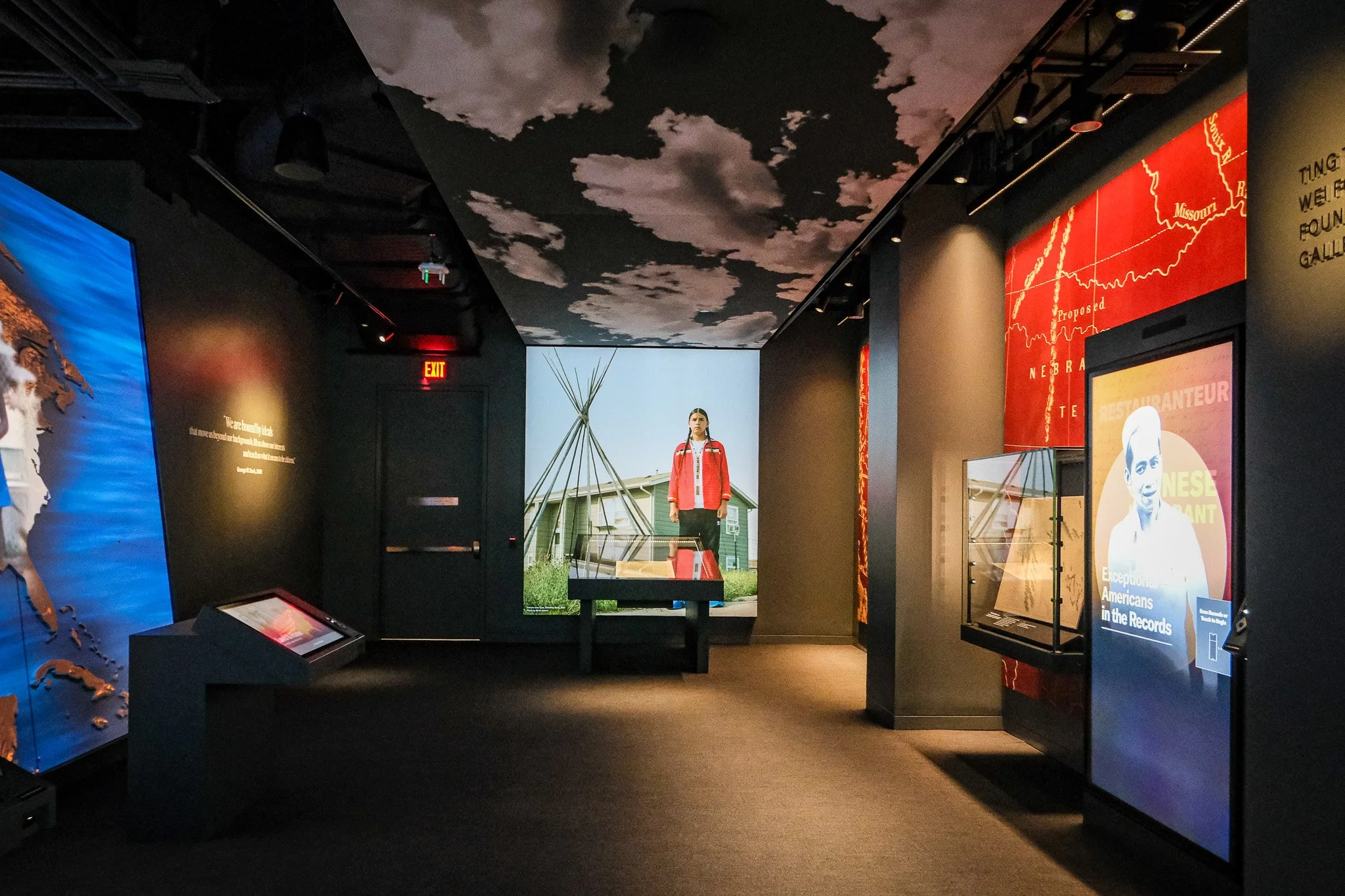
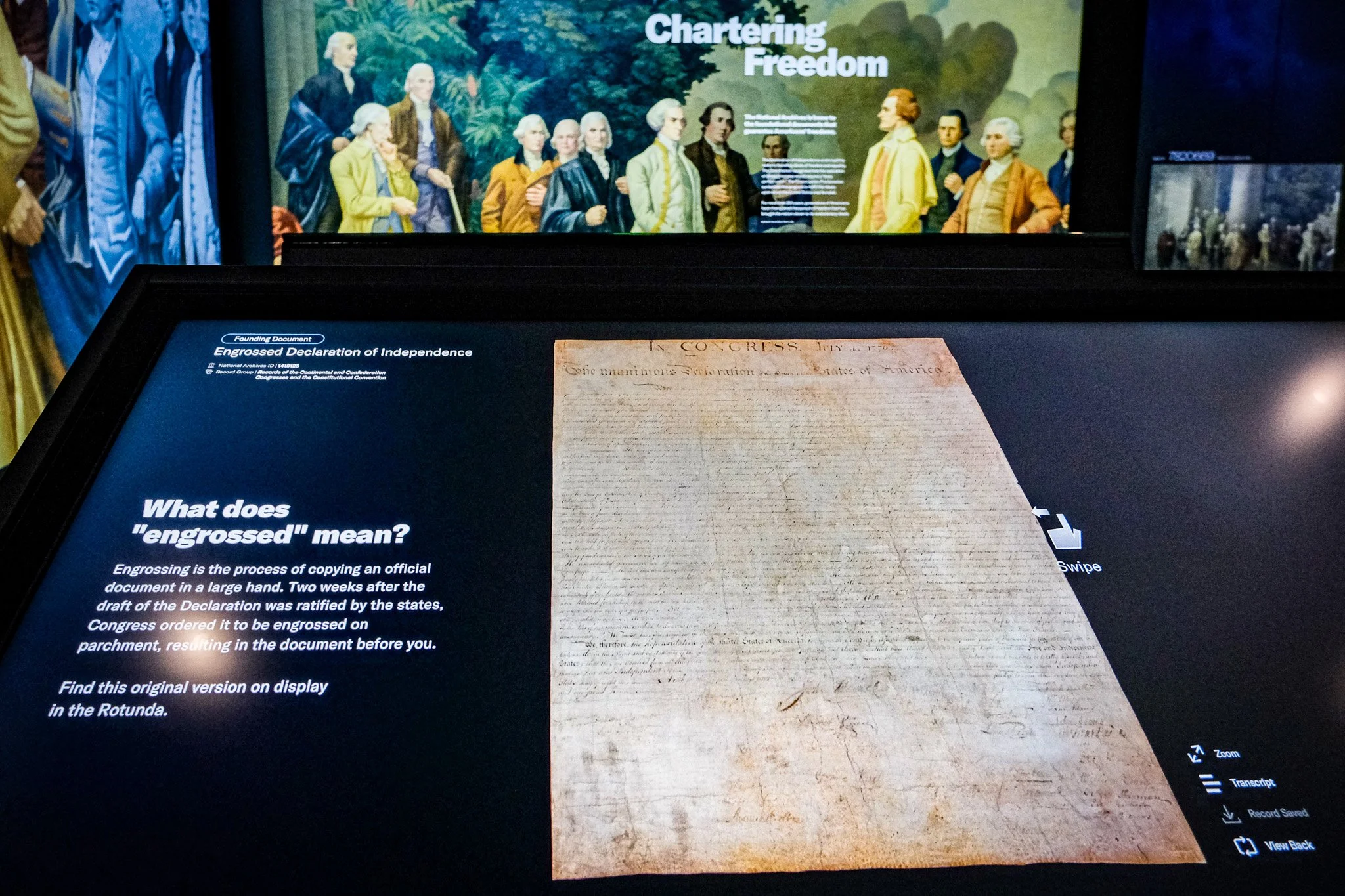
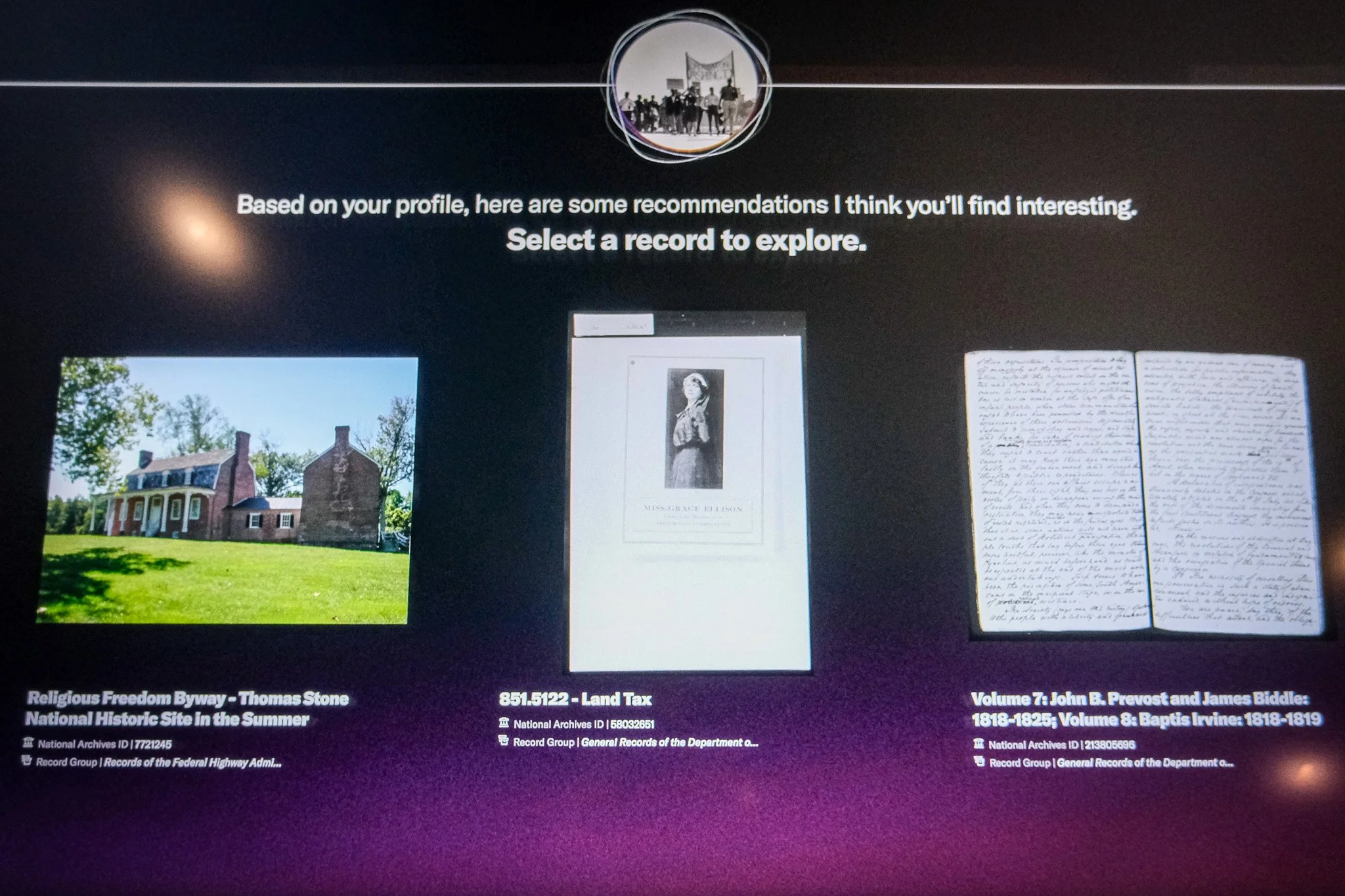
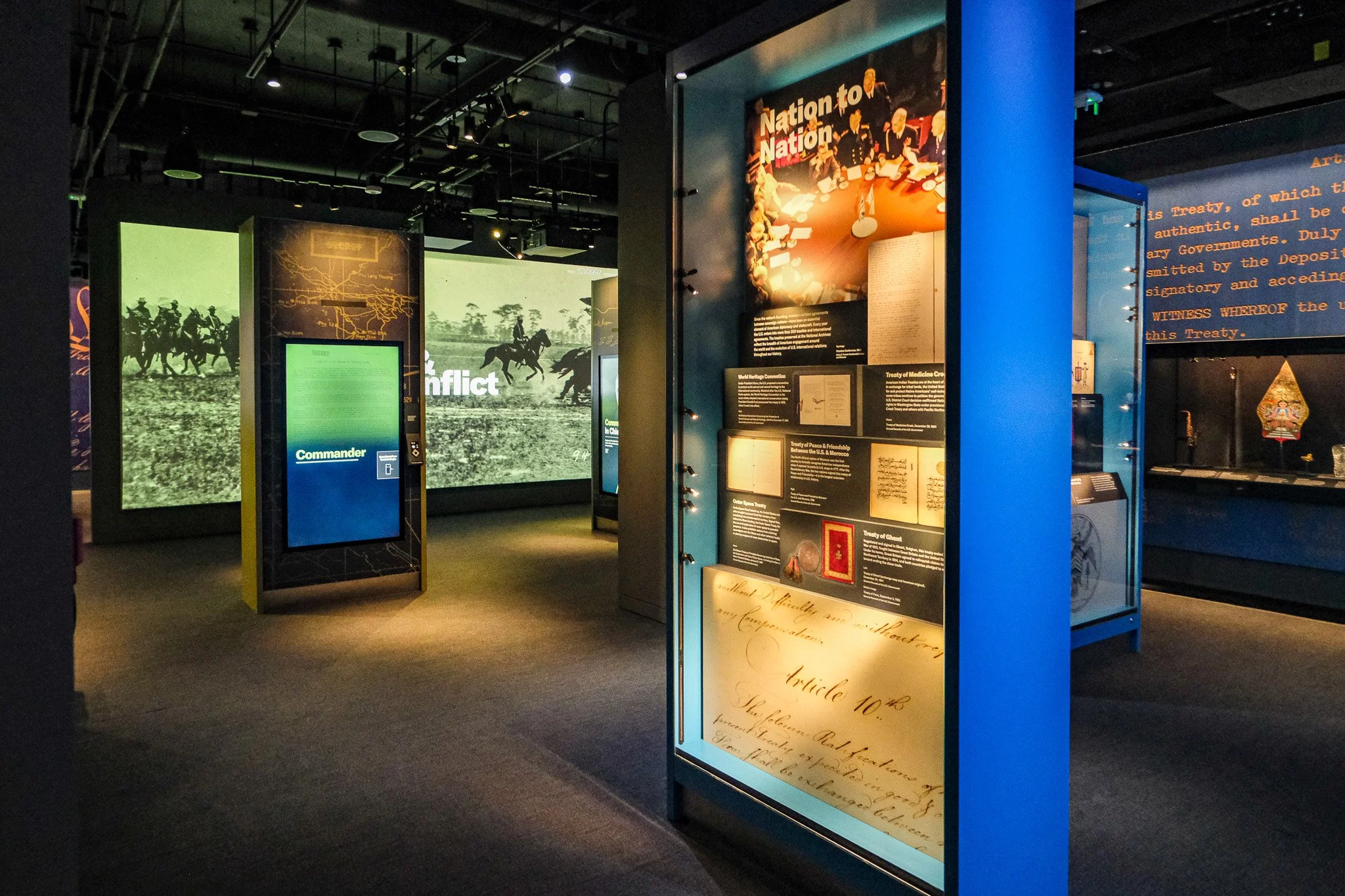
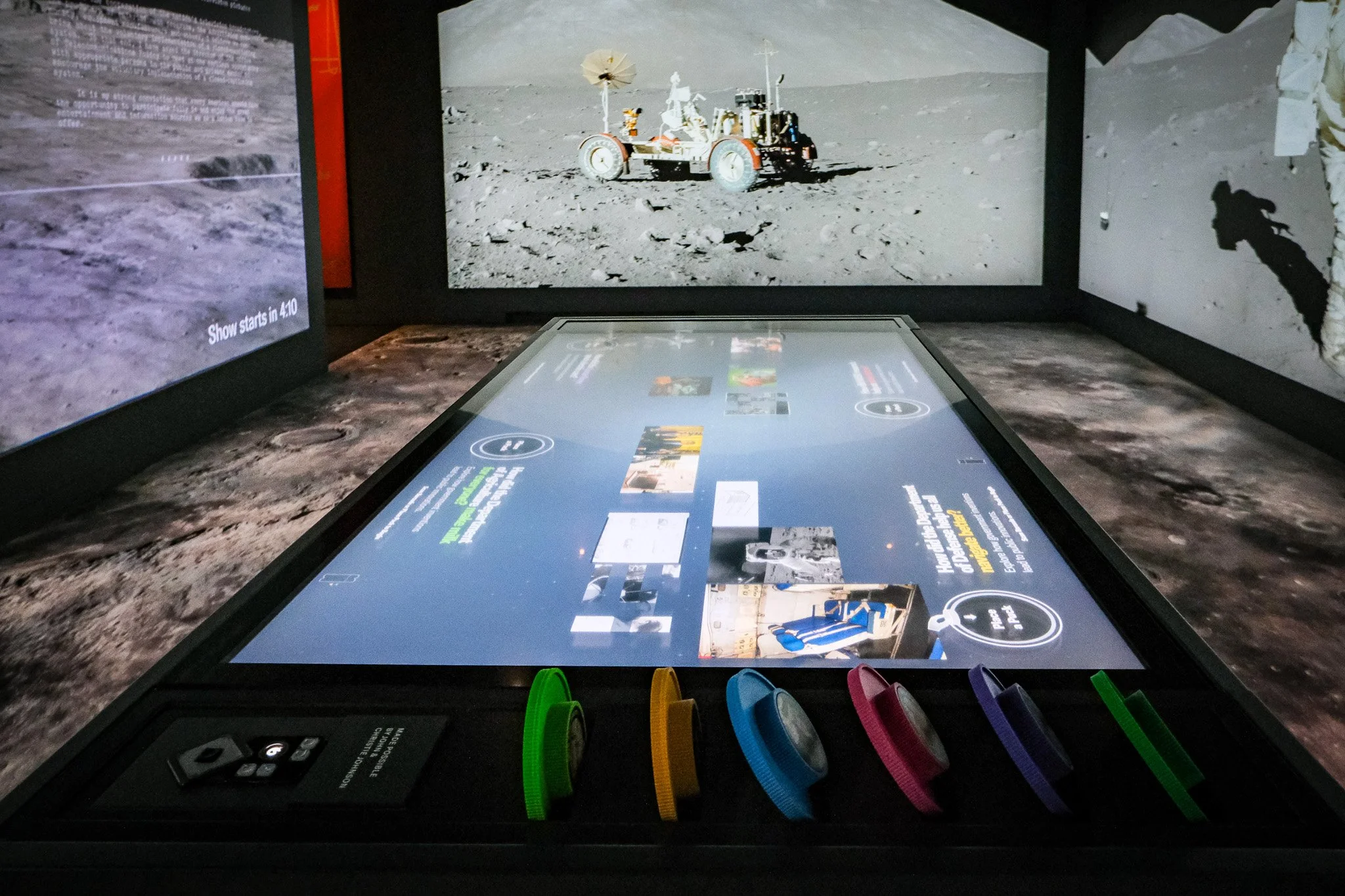
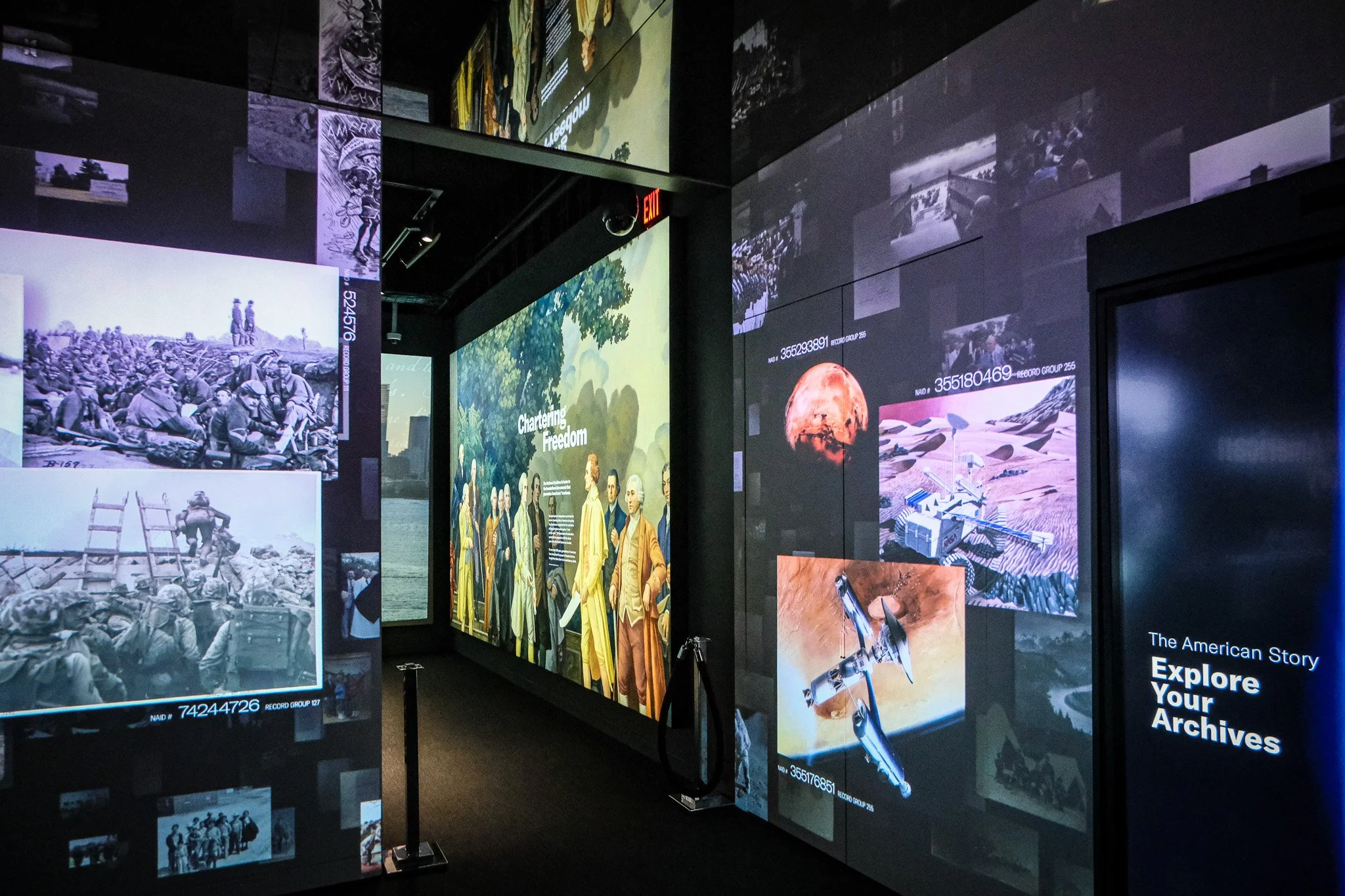
The newest exhibition, “The American Story” is the most forward attempt by the Archives to connect the visiting public to the vast amount of documents it oversees. Using what the Archives themselves have described as an Artificial Intelligence interactive, the main interface in this exhibition is a network screens that suggest documents for you to explore based on a combination of interests that you choose at the start of the exhibition and either the document you’re exploring at that particular station or the theme of the room you are in at the time.

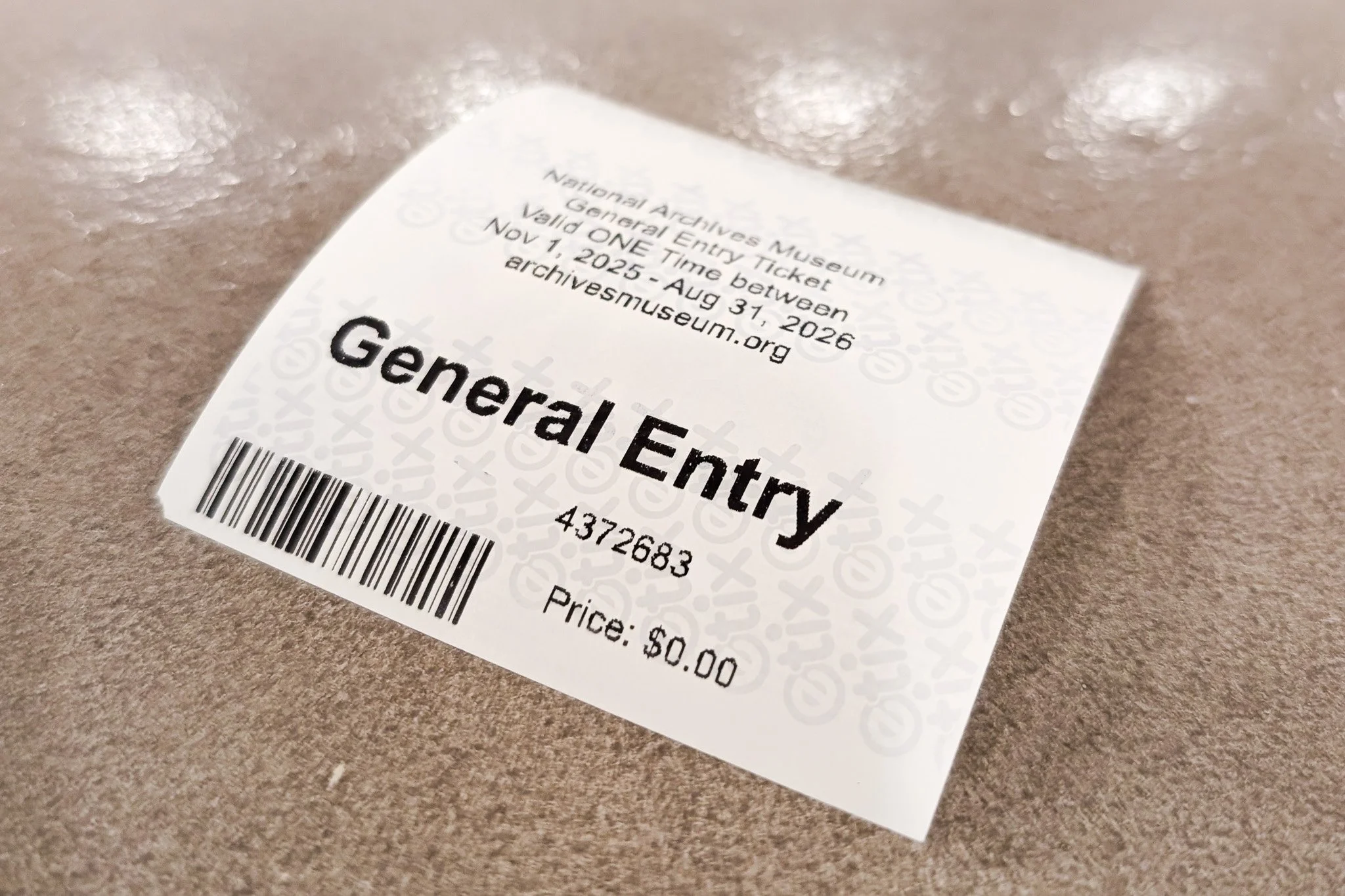
If you wish to keep track of the documents, you can grab a general entry ticket at the desk as you enter the Archives, after exciting security. You then scan that ticket at each touch screen kiosk in the exhibition as you interact along the way. At the exhibition exit, after your last scan, you have the option of navigation to a QR code linked to your personal ticket. There you can bookmark a unique web page on your phone in order to look in detail at all of your saved documents later. Hold on to the ticket! It’s good for the next year and you can return to add more documents to your unique web page. 

Here’s the web page for my last visit: https://archivesmuseum.org/14312293451. You can see which documents I saved in the exhibition in order to look more closely at them later at home.

For example, I saved this annotated draft copy of the Constitution that belonged to George Washington. You are able to see his hand-written notes in the margins! Now I can examine high quality digital files of this and other documents while I am at home. It’s not just an experience to be had inside the museum. 

How did I discover this George Washington related document? When I created my initial profile attached to my ticket, along with basic topical interests like founding documents, I indicated that I wanted to be offered associated items in the form of paper documents, photographs, and maps. These are all digitized of course. So at some point looking through the exhibition, the “AI Archives" program suggested that I save this document, which I did. Now I can bookmark this page in my browser for research purposes or just to relive the experience. Exploring further, I can also see where the actual paper document lives within the Archives system (actually in this same building!). Overall, on this visit I saved 34 documents which live across 6 different archive facilities and 2 presidential libraries. 

It is somewhat random, as many of the suggested documents were not at all linked to the content I was viewing or had very tenuous links to my purported interests. I’m not sure how this “AI” suggestion system is any different than an associated keyword search or metadata match.

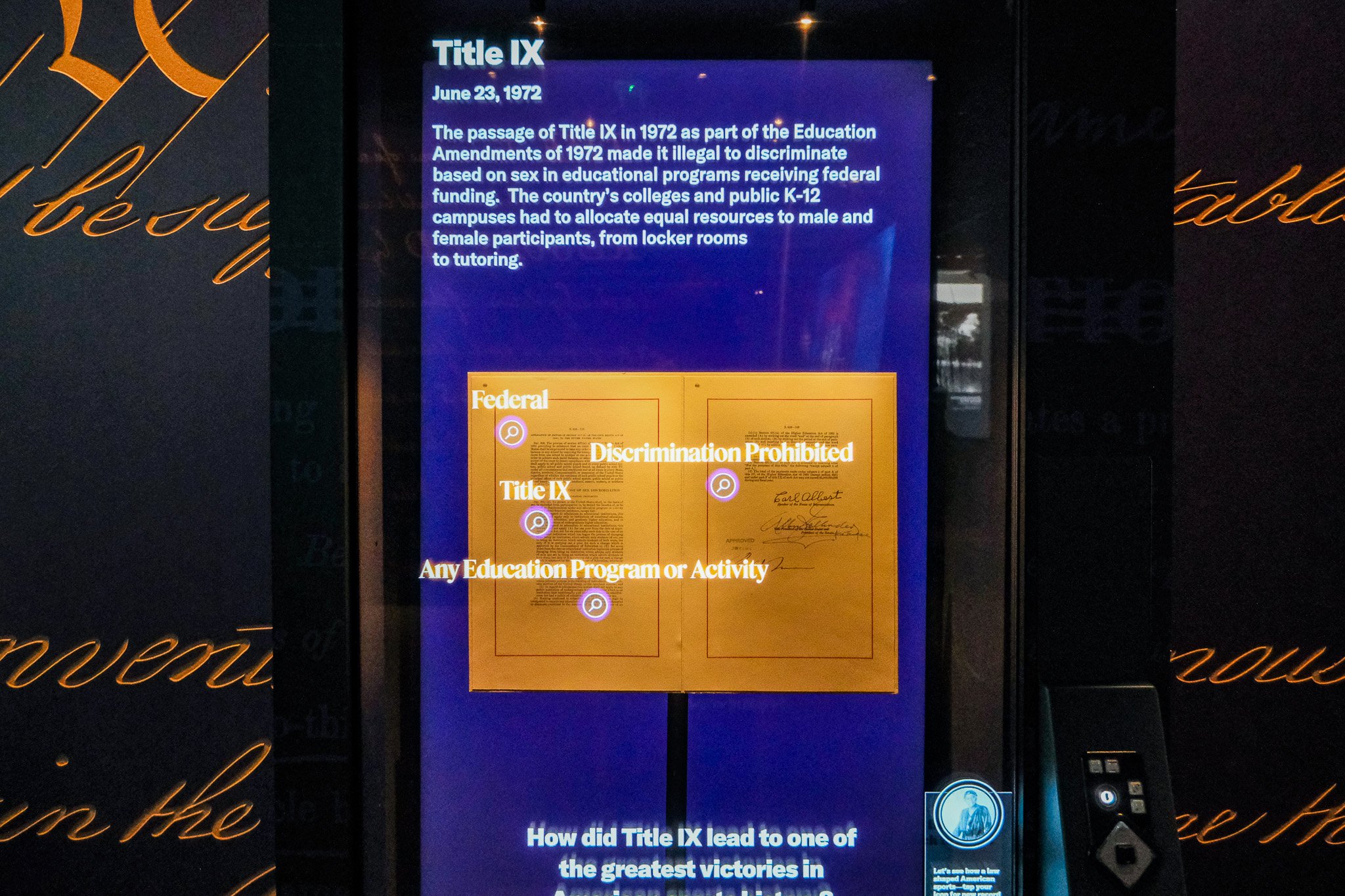
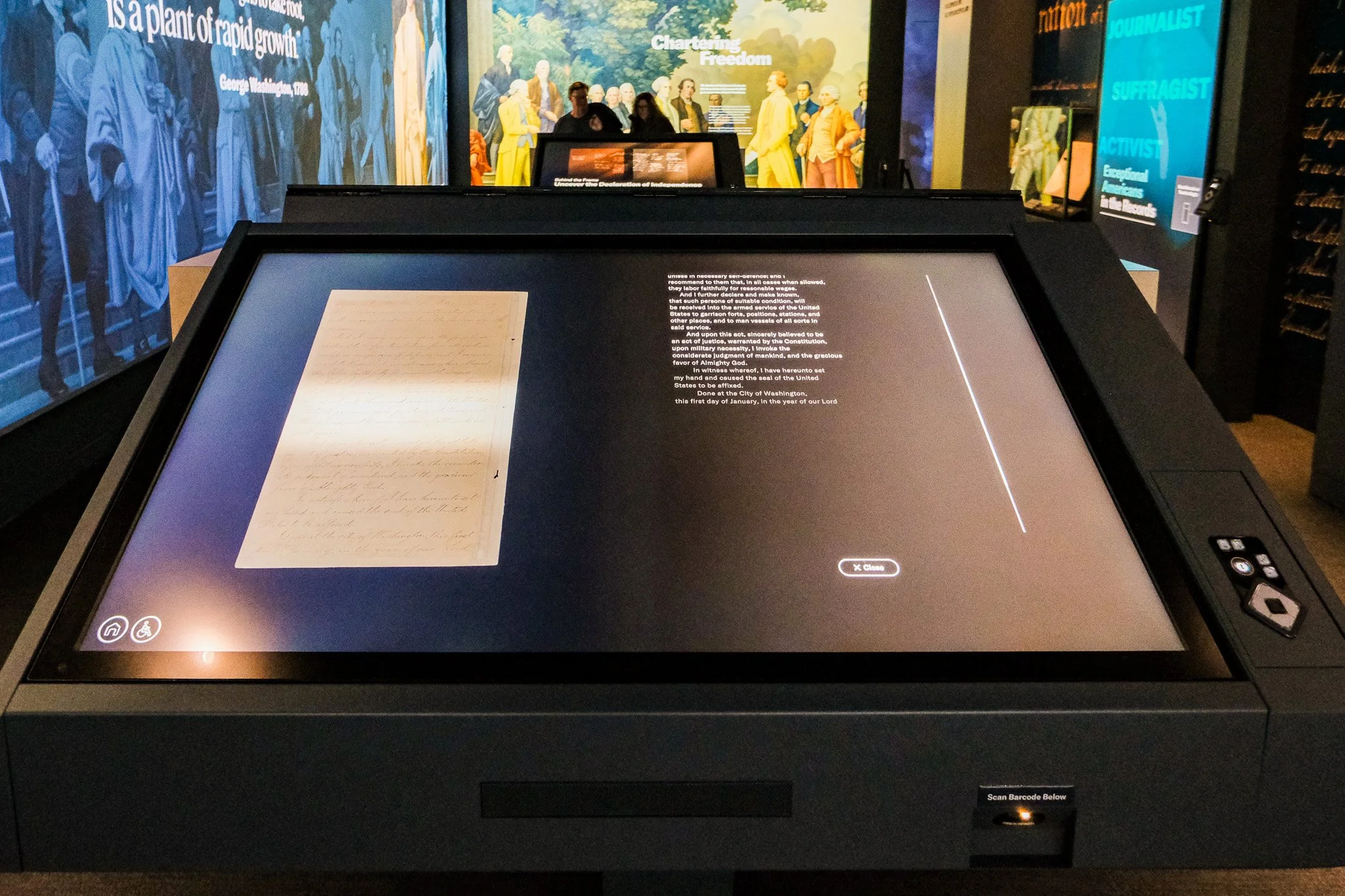
Immersive technology lets you read a document while using an overlying touch screen to learn more.

On a separate, more personal ticket, I saved some of my personal family information from a century-old Census record. You can begin basic genealogical research in this exhibition, too. There are privacy safeguards. Visitors are forced to link any saved ancestral/genealogical information accessed in the exhibition to a personal email address. This prevents that information from showing up to anyone who might find a lost ticket or randomly link to your Archives page online.

Along with a strong start featuring a deep dive into key documents like the Declaration, Emancipation Proclamation, and Louisiana Purchase (featuring mostly facsimile documents however), the exhibition branches out with a smattering of other topical deep dives including presidential gifts (received by), interesting patent history, genealogy, a thematic rotating photo gallery (currently featuring Ansel Adams), and a kids & family focused discovery center with "gamified" research and fun-fact stations.

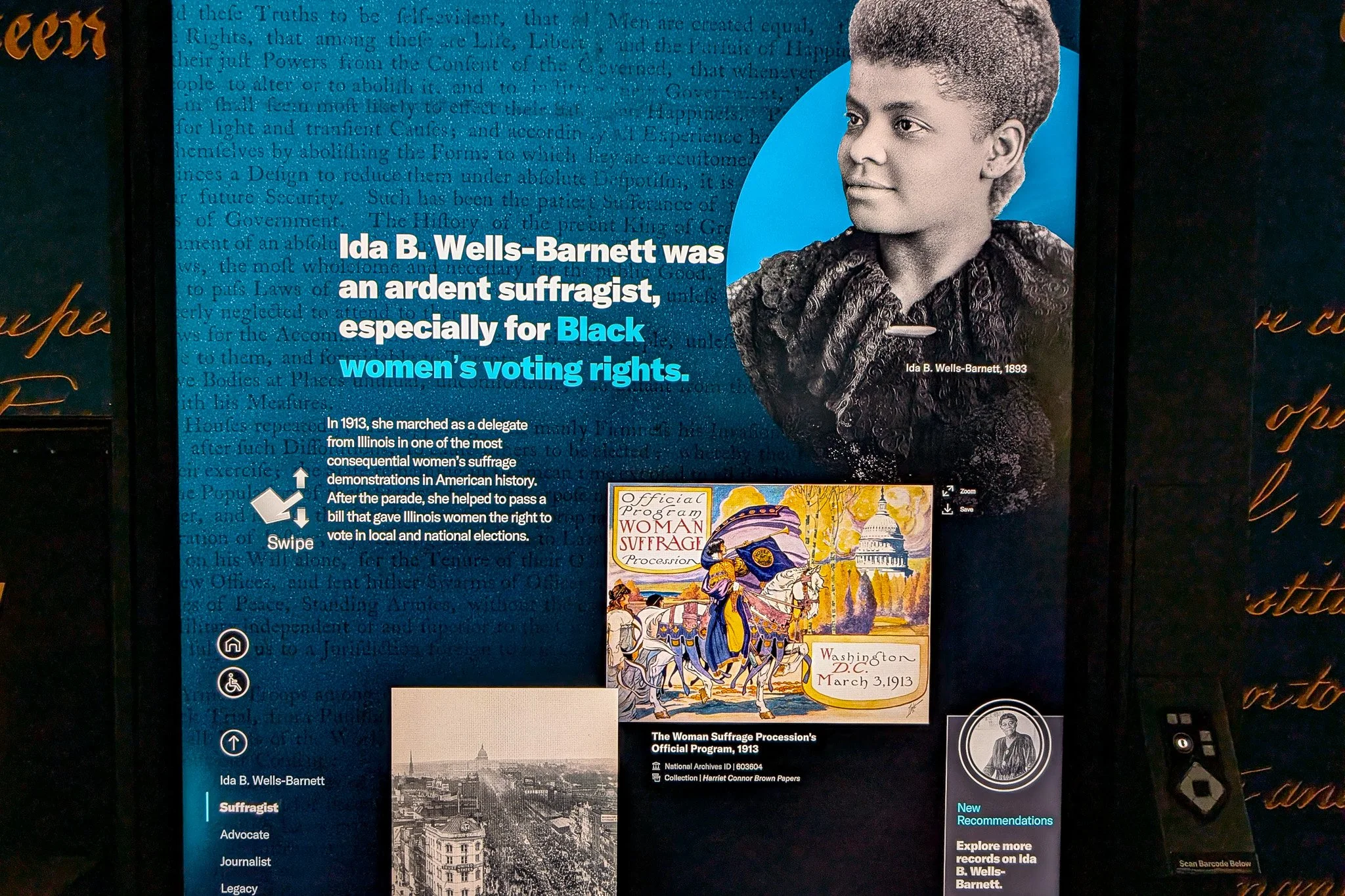
Profile of journalist and suffragist Ida B. Wells.

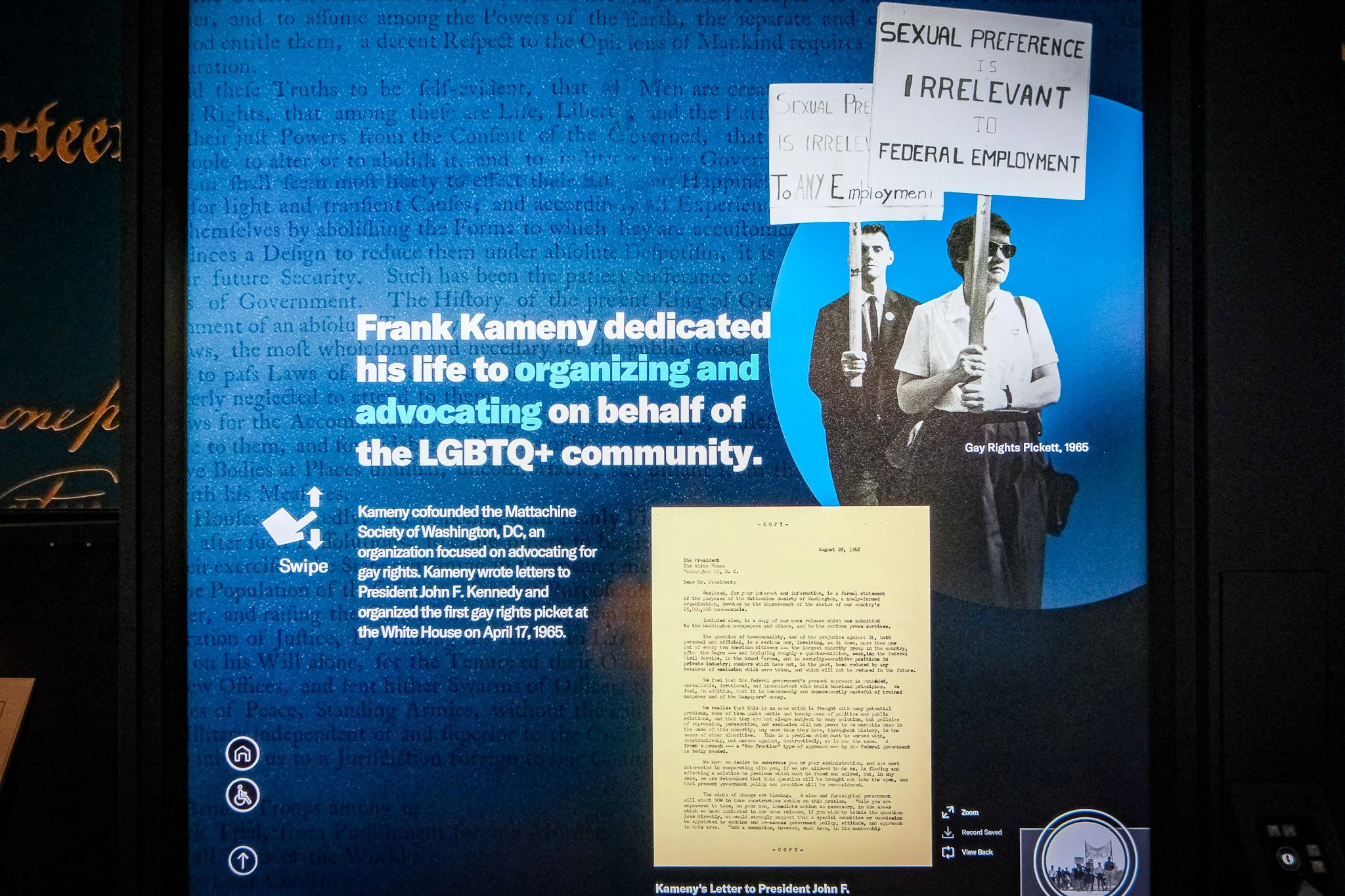
Profile of Frank Kameny and a letter he personally sent to President Kennedy.

One key attention grabbing aspect of select kiosks is the highlighting of personal profiles. The profiles are of influential or compelling change makers from American history that are related to the section of the exhibition you happen to be in or nearby documents to the kiosk. At the very first kiosk I was shown profiles of Ida B. Wells and Frank Kamany, two Americans I was immensely glad to see included in the exhibition. Linked to each profile are related government documents, of course – docs related to each person’s activism, struggle, or occasionally mundane government paperwork that became symbols of those struggles. I thought this was an extremely effective way to give a certain document meaning. We’re used to recognizing the importance of the written words on a few sheets of lined paper that make up the Emancipation Proclamation, for example. But, the links to other, lesser known documents or government paperwork along with the profile of the person who wrote or filled it out, AND the context as to why that mundane submission might have importance, kept me at the kiosk looking up various individuals and their related docs. Especially folks I have never read or learned about before. 

Overall, “The American Story" is a success, insofar as it provides a new, clever, and mostly accessible way to interact with the documents held in the Archives. And even though the “AI” is somewhat of a gimmicky idea to me in this case, the system does result in delivering suggestive documents in a way meaningful to one’s interests. I will also give points for the opportunity to discover transformative individual Americans at each station, relative to the documents on view in that section. On the other hand, the whole exhibition doesn’t come nearly as close to telling any one version of “THE” or even “AN” American story. The exhibition is just too scattered to weave a solid overall narrative. There are solid pocket narratives related to presidential decision making, westward expansion, innovation, and founding documents. And I can’t offer too many demerits outside of picking a slightly misleading name to the exhibition. If one is looking for a more cohesive and comprehensive national narrative, I  would visit any number of exhibitions in the nearby National Museum of American History or even NMAI or NMAAHC for that type of experience. 

The American Story is a permanent exhibition at the Archives and as such, has no closing date. It’s open 10am to 5:30pm daily with the rest of the Archives. The exhibition is located on the same floor as the Rotunda and Charters of Freedom.