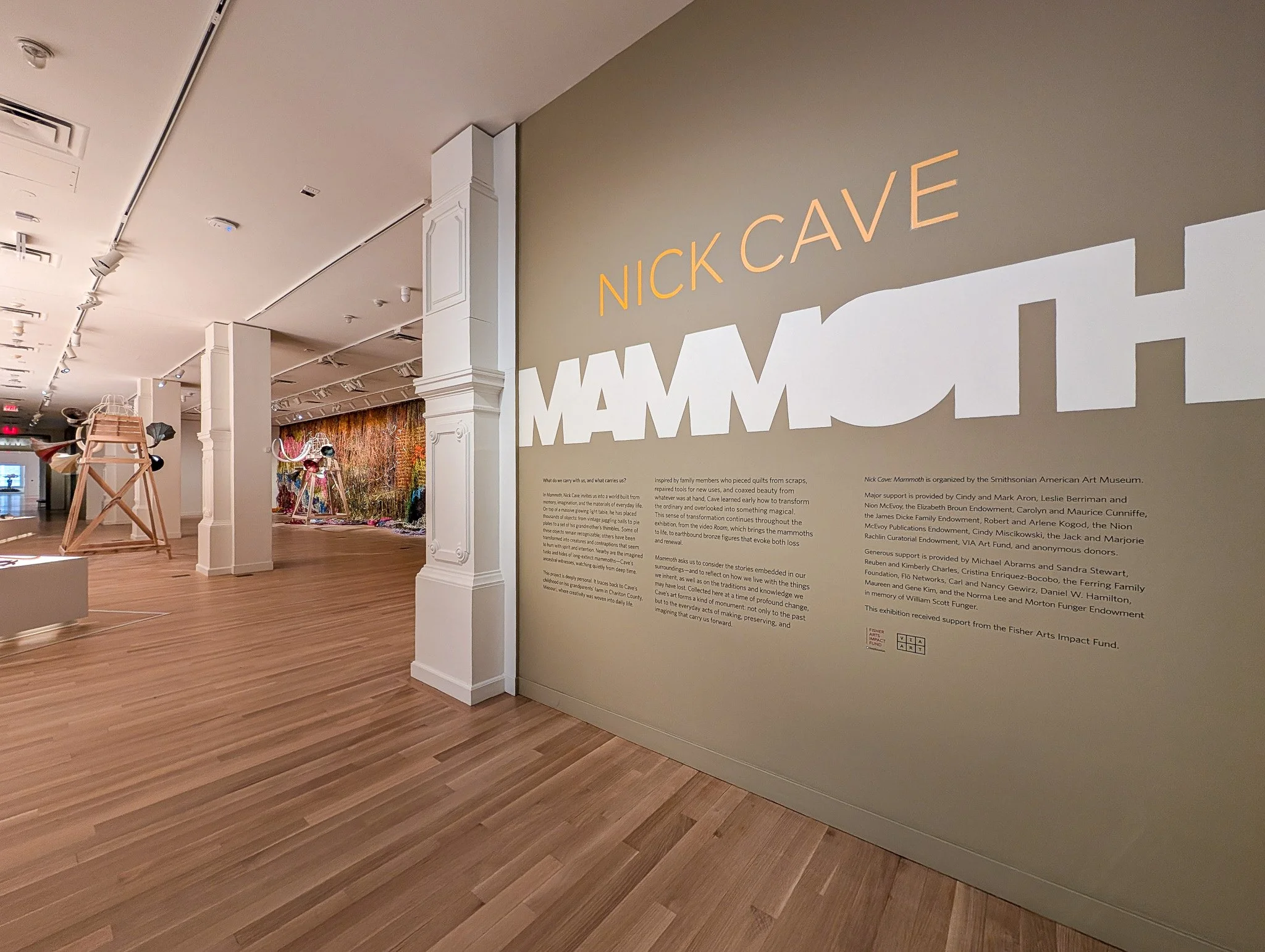
Nick Cave achieved the double of at once overwhelming me and at the same time, stoking my desire to engage further. In a way, this exhibition lived up to the title. Mammoth likely hits you differently depending on how much you know about Nick Cave's art and life. I went in not knowing more than this exhibition had been recommended to me multiple times by multiple people from different parts of my life, and having read reviews from a few national publications. I might now know him a little more having seen and absorbed this work.
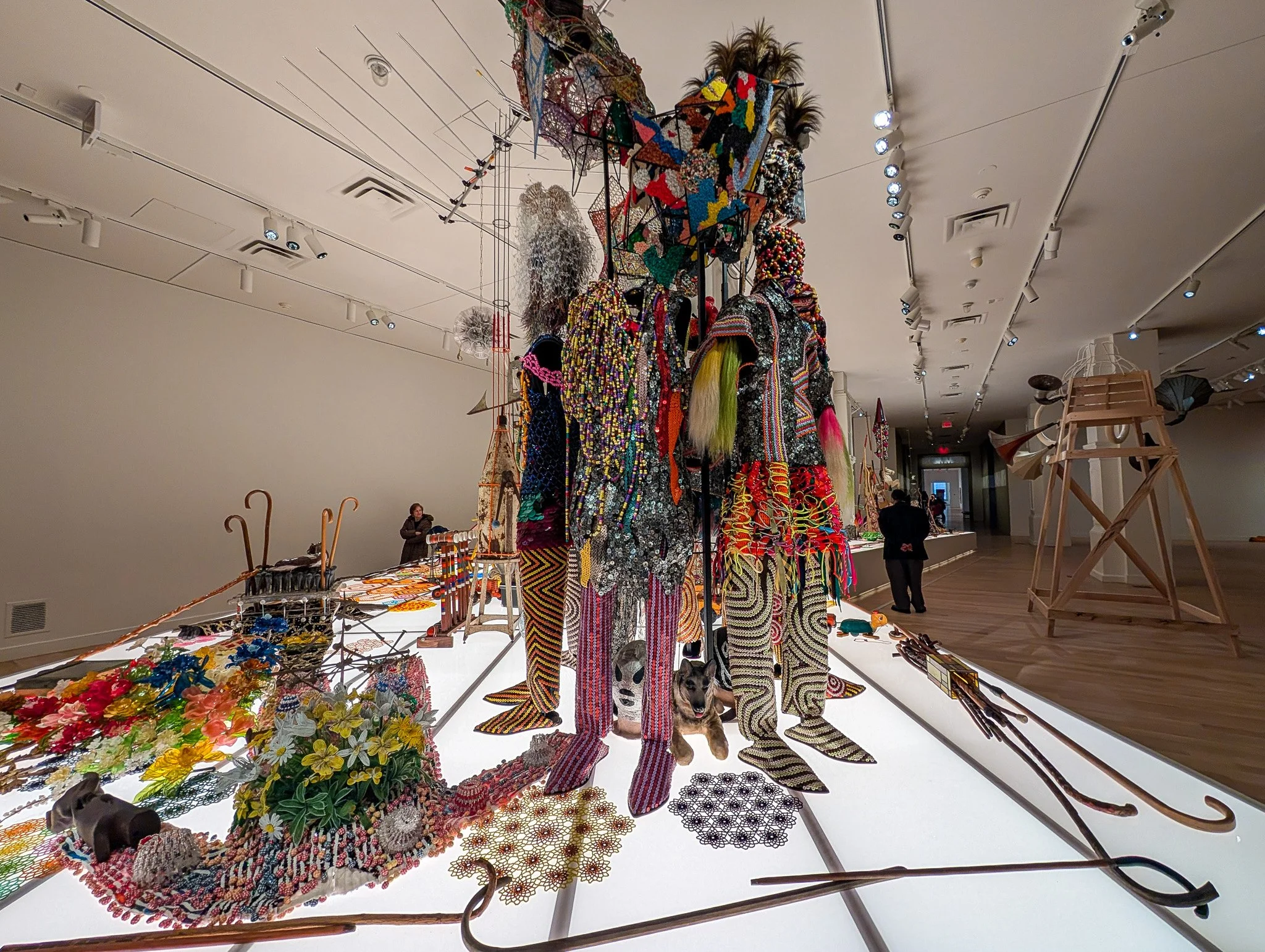
Having this exhibition's main draw (the light table) hosted in a huge open gallery space featuring ethereal lighting, with narrow exits at each end, led me to do what I believe many visitors will; spend a lot of time looking down at the plethora of objects presented on the life-sized light box, perhaps at the expense of the other parts of the exhibition.
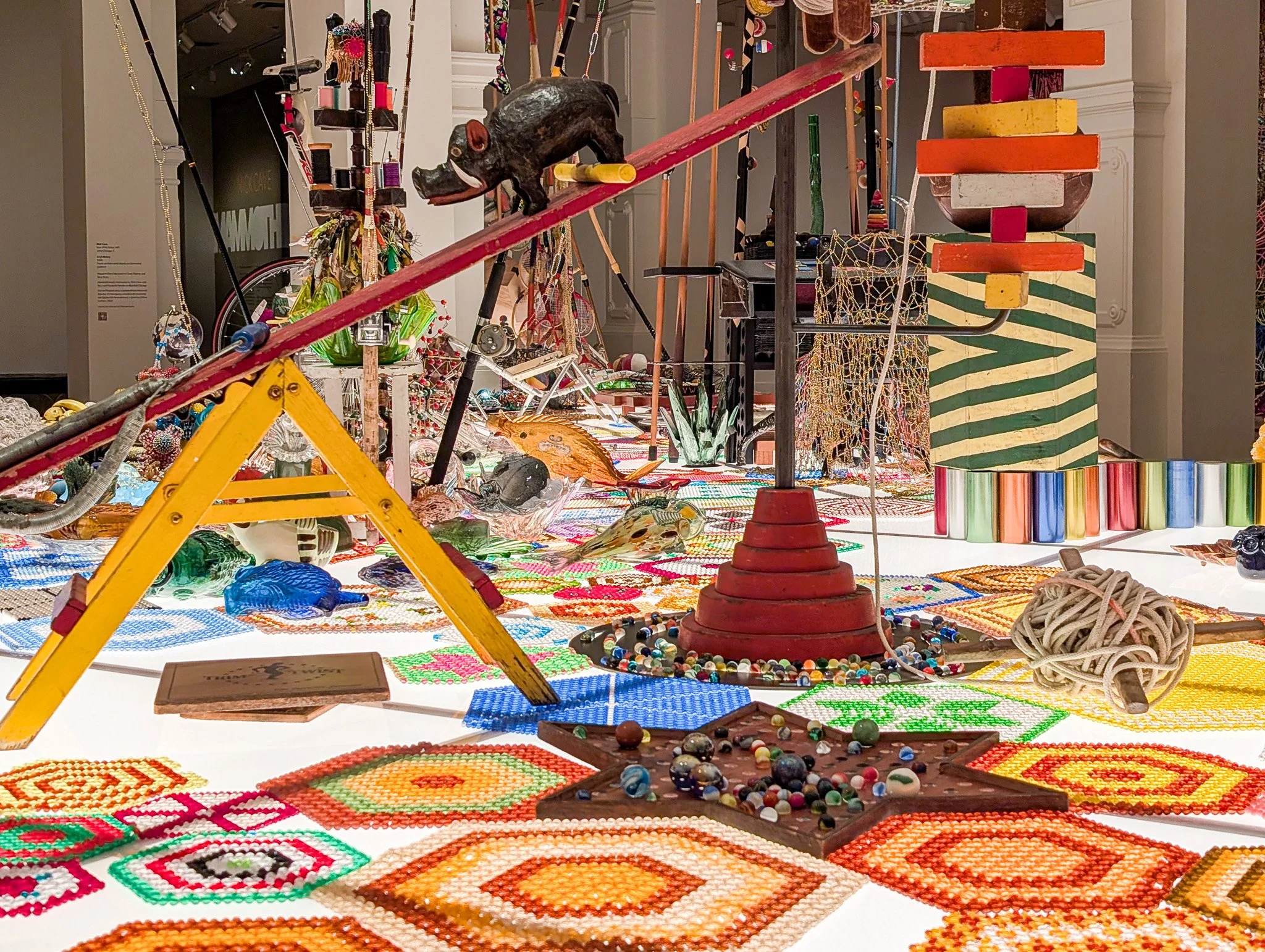
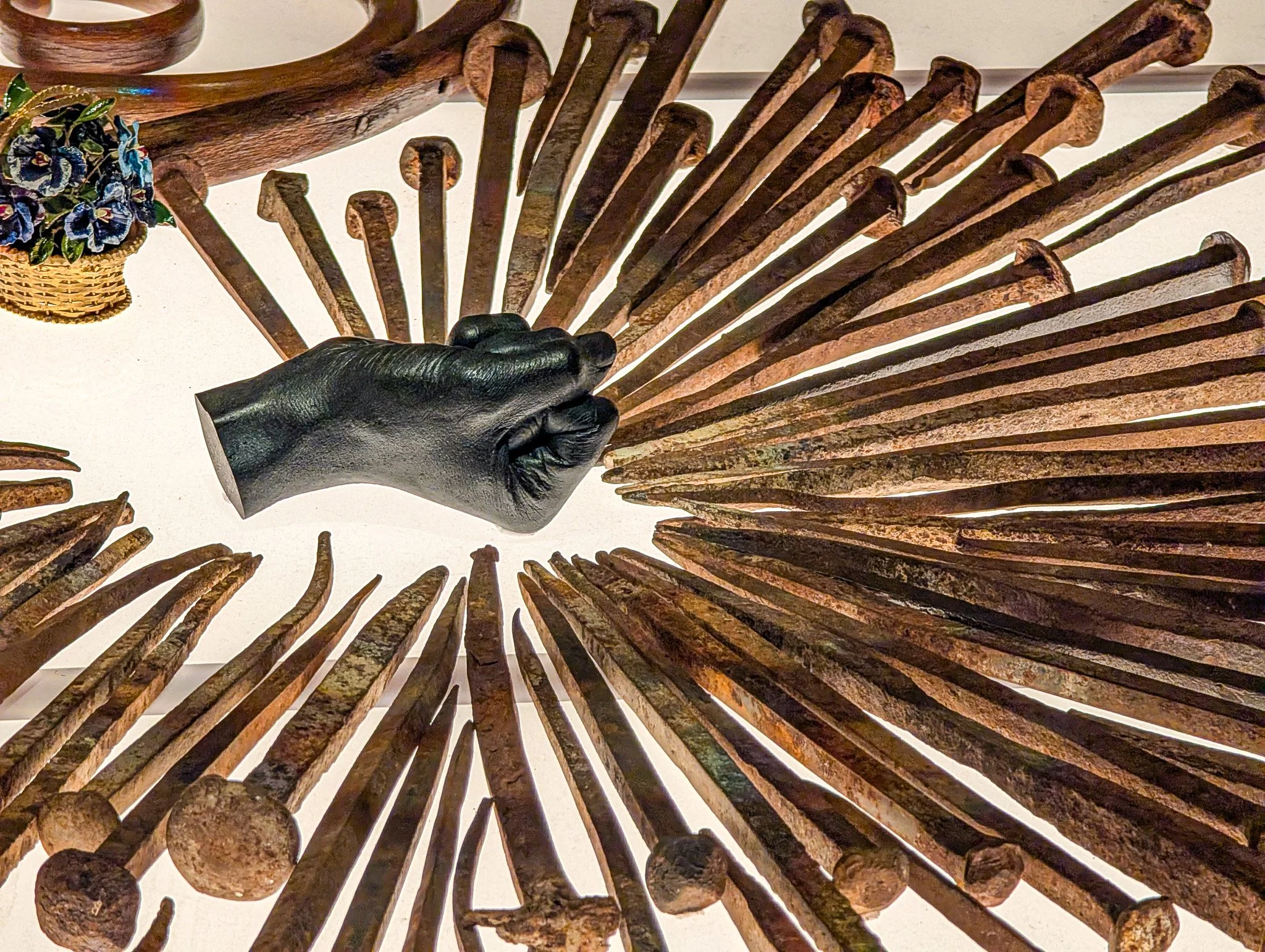
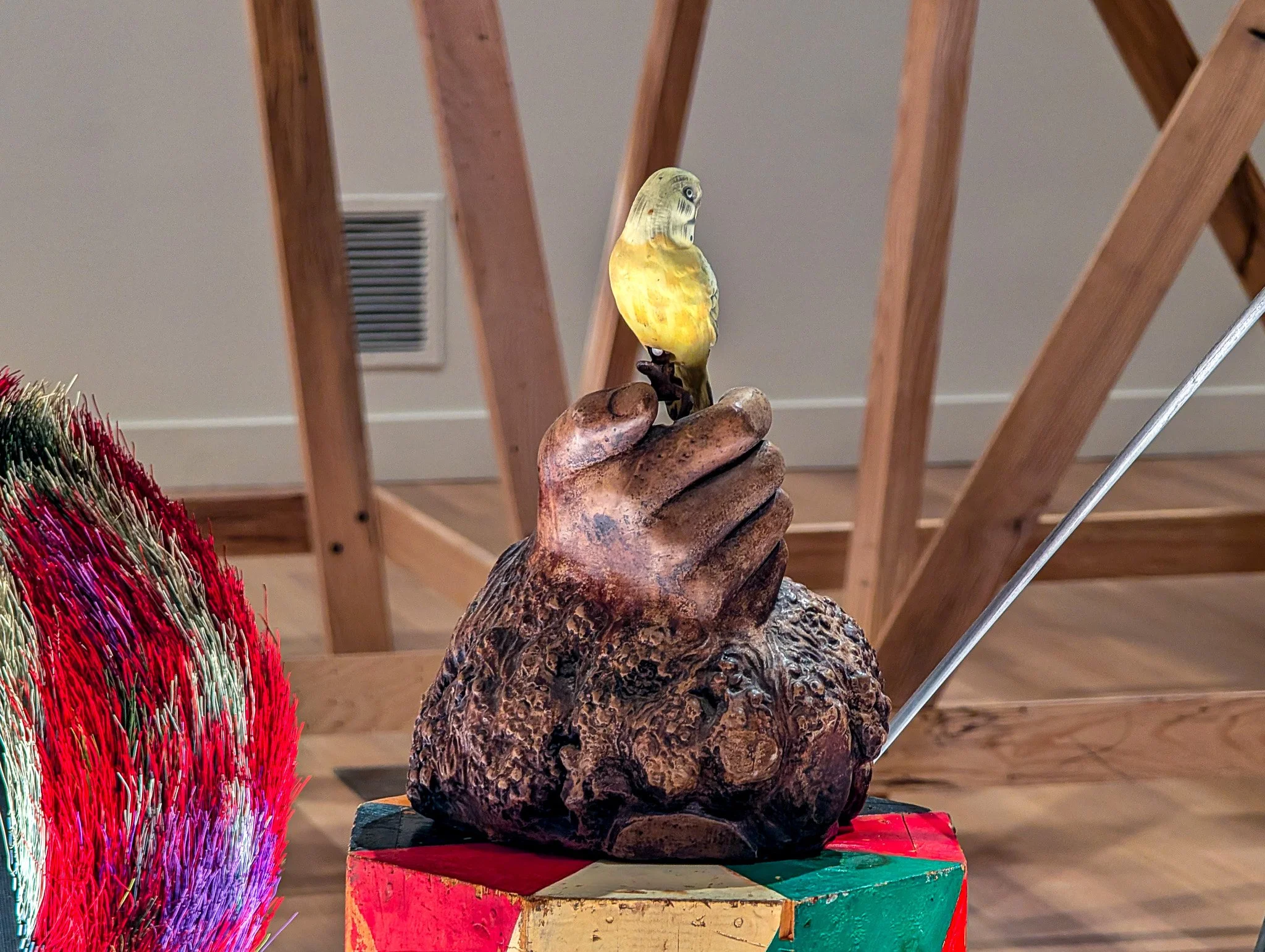
To think of the objects on the light box as detritus would mask the value in looking at everyday objects in this way. The exhibition is as much an examination of life at a moment in time as it is a collection of what makes us, us, over the course of an entire lifetime. Or in this case what made Nick Cave, Nick Cave. Toys, tools, textiles, and more -- the light table has it all. The overwhelming part is that there is just too much to observe in a single passing. The desire to engage more is partially fed by the slight chaos. Curiosity gives way to engagement. And questions. Who owned this one? Was that passed down through the family? What is it, exactly?
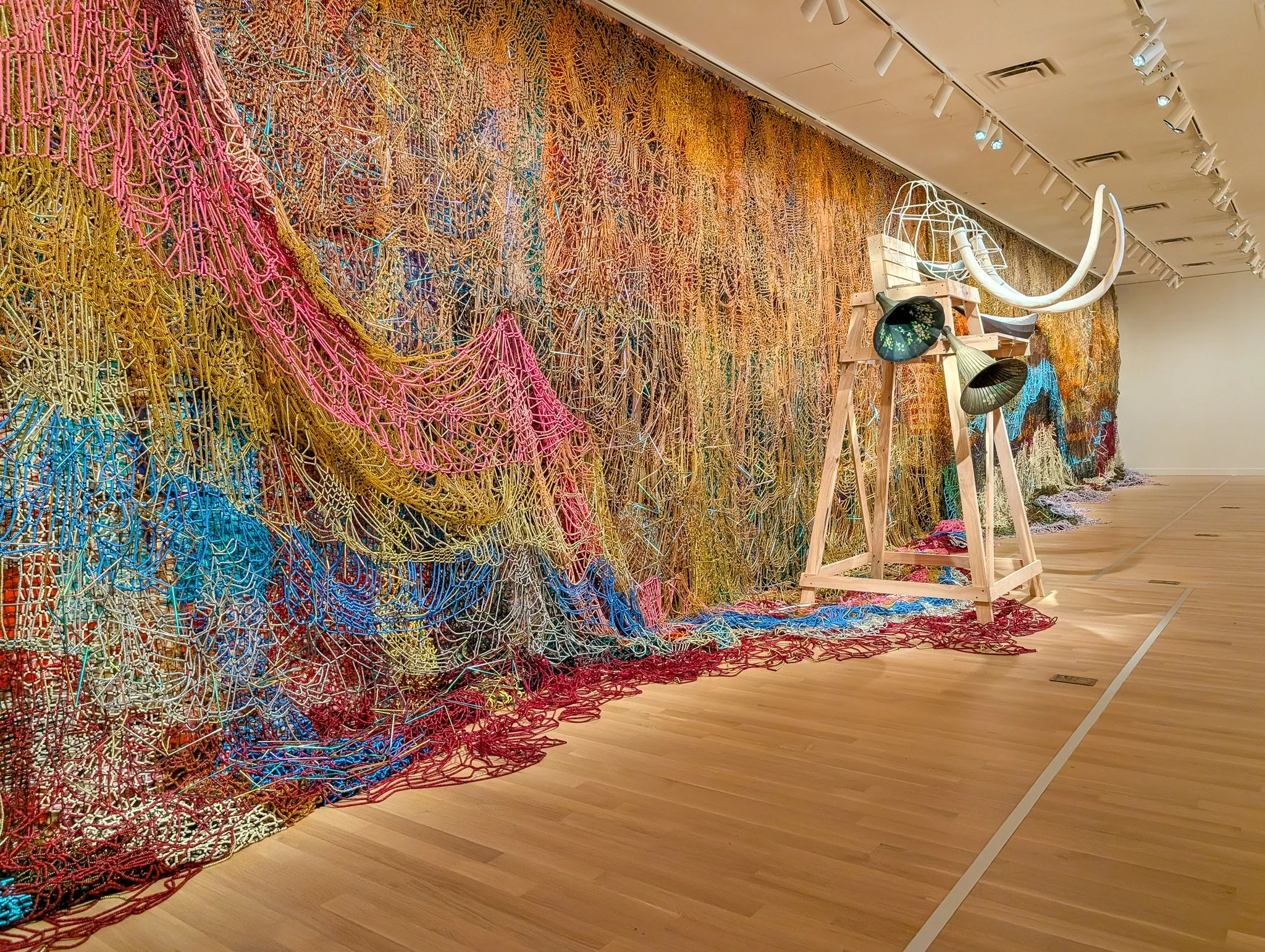
All the while, the massive mammoth bone structures watch from atop lifeguard-like platforms. Are they judging us for leering? Are they benevolent overseers of the cosmos? Are they watching for mistakes or learning? With consternation or pride?
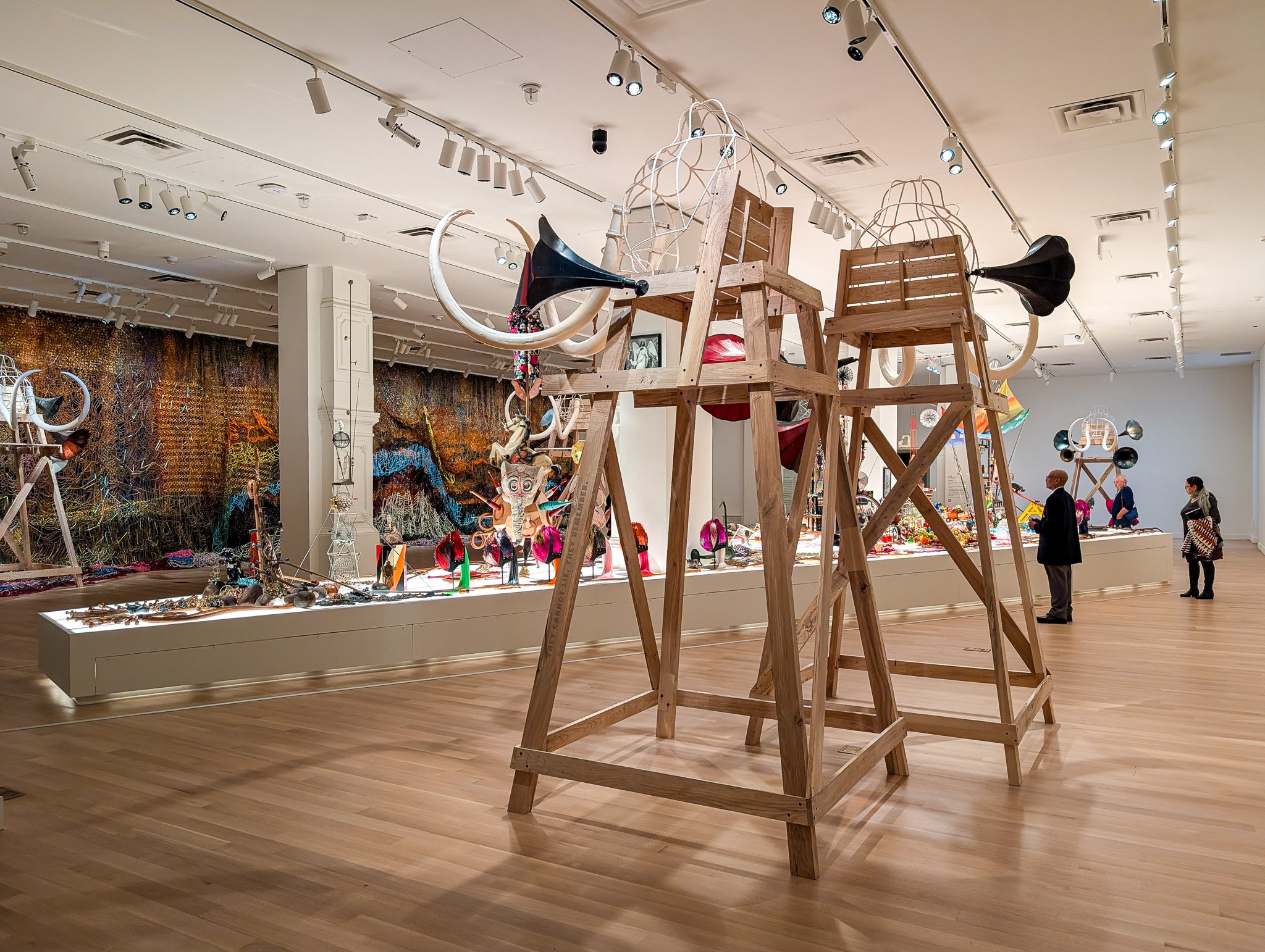
While the light box is engrossing, the two pieces near the entrance of the exhibition are as powerful. First, a moving image short film of the titular mammoths (people adorned as mammoths) walking/wandering though what appears to be the Chicago landscape.
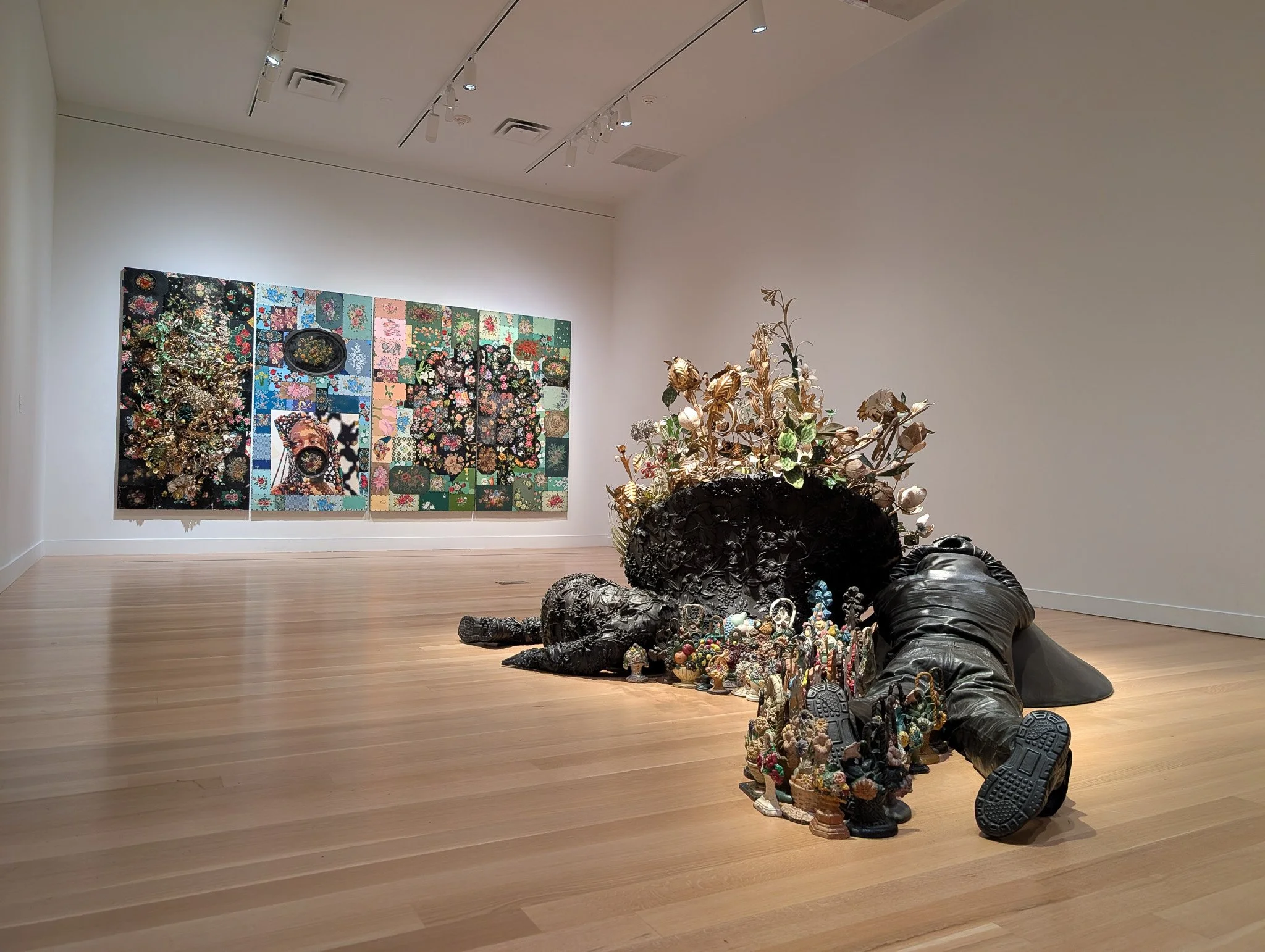
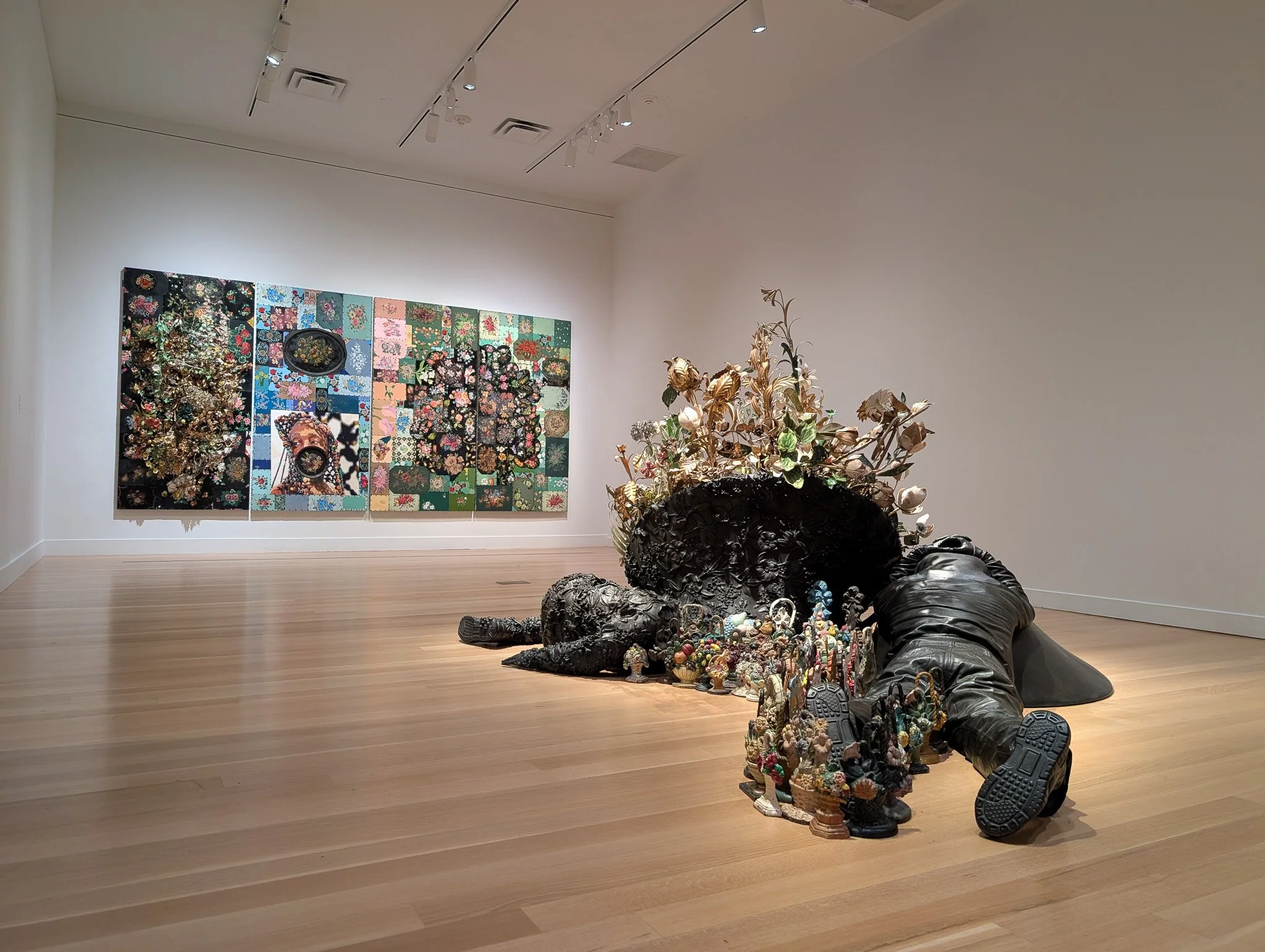
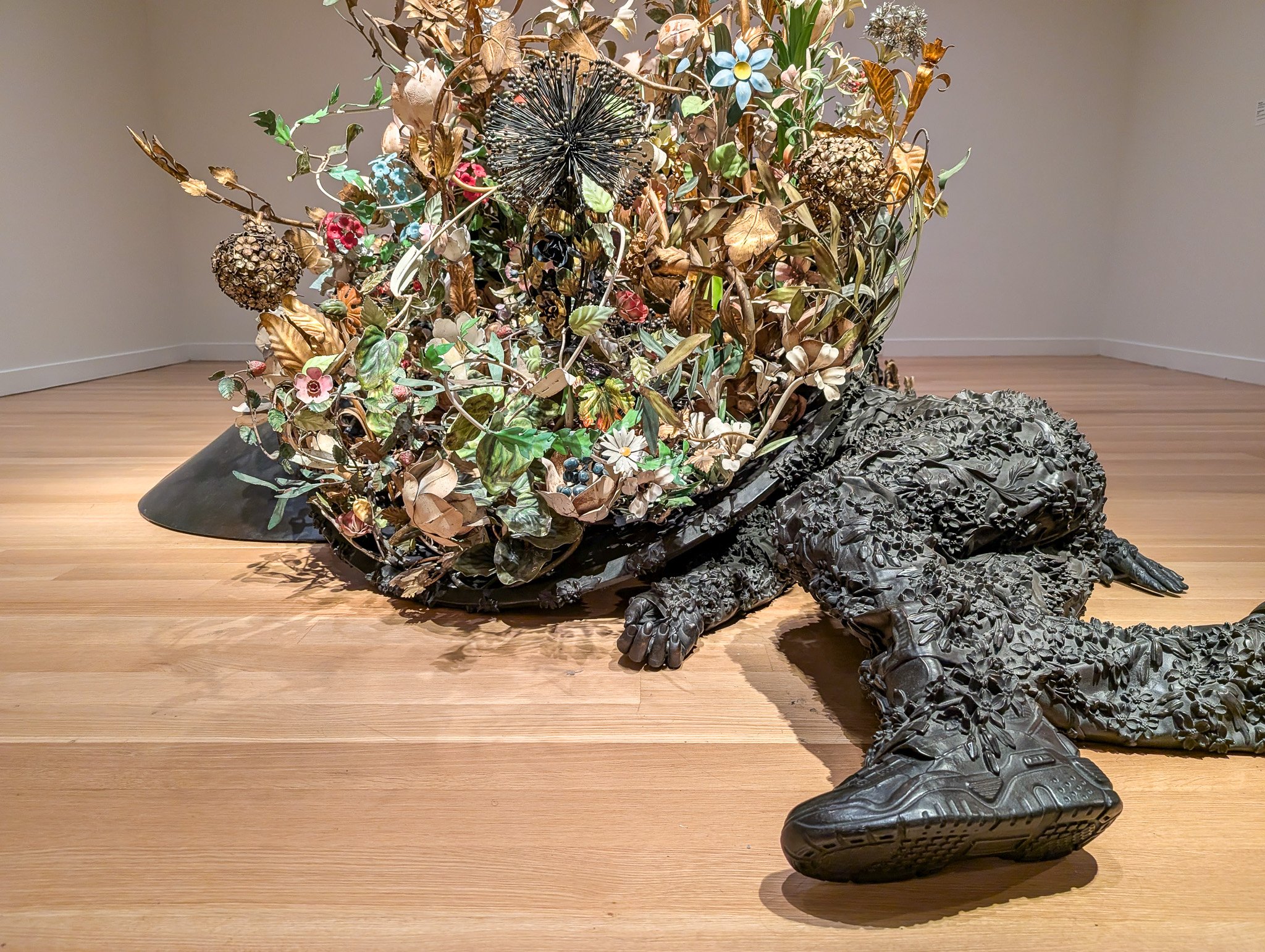
And in what was the most intriguing and slightly disconcerting piece, Amalgam (Plot). Two prone bodies meet on the floor, faces obscured. How did they get there? How long have they been there? Almost presented as another part of the body, flowers rise up along the edges of the prone figures and from the meeting of the two figures. This reminded me of one of the scenes from a dystopian movie where the survivors walk aimlessly among the ruins of a great catastrophe, occasionally coming across a body in the wild. A dark interpretation -- but the door is seemingly left open for rosier thoughts.
Overall, I was really taken with Mammoth. I was prepared to walk in with an open mind., and even then was surprised by the depth and presentation. Sometimes I have trouble connecting to "found art" style exhibitions. I did not write up the Material Witness exhibition showing at Rubell Museum, but perhaps I will. It was chaotic in a different way than Mammoth, but they both share few thematic links. Until then, Mammoth is worth a view! It has plenty of time to breathe, showing at the Smithsonian American Art Museum January 3, 2027.