art

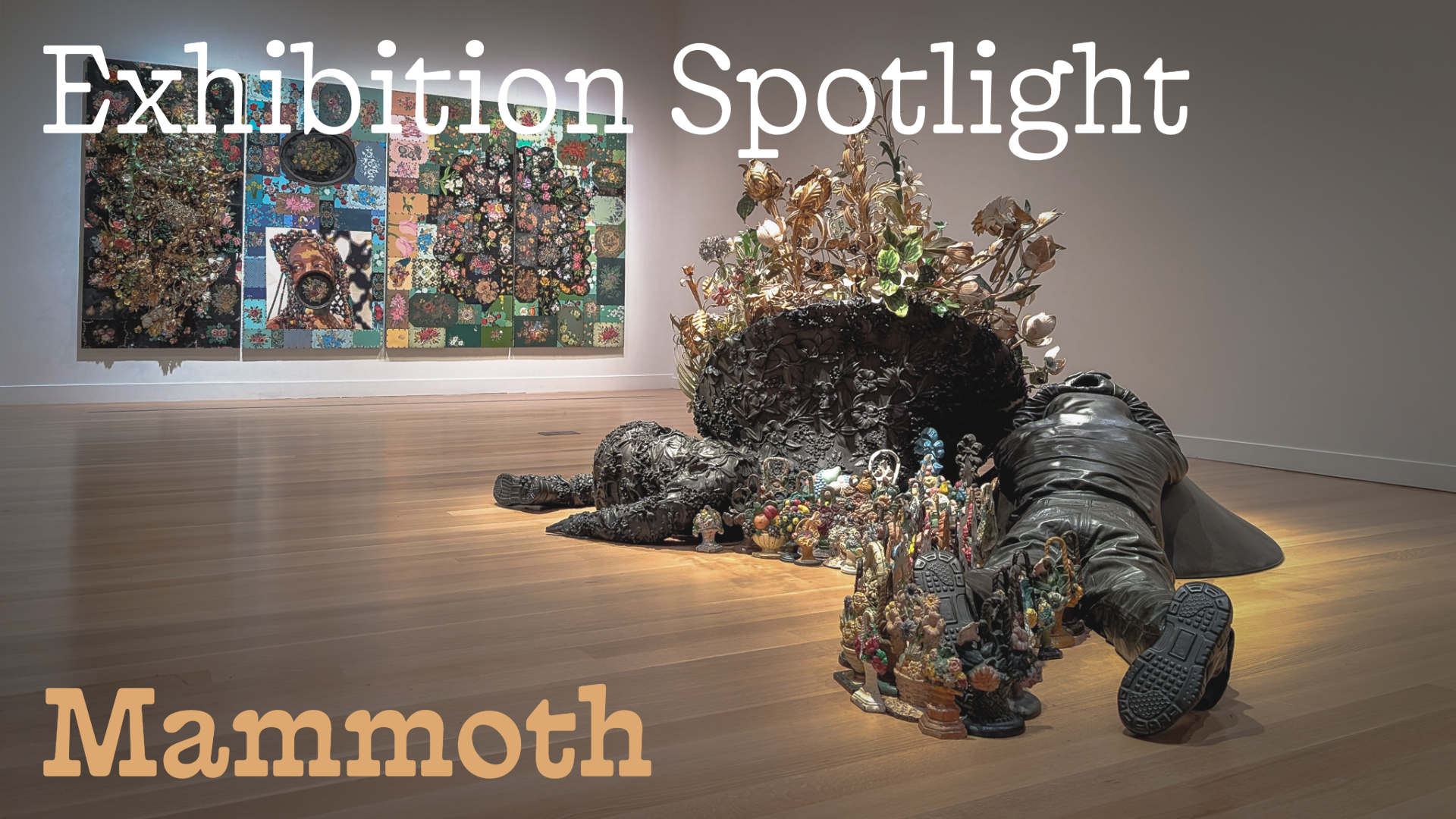
Mammoth: Exhibition Spotlight

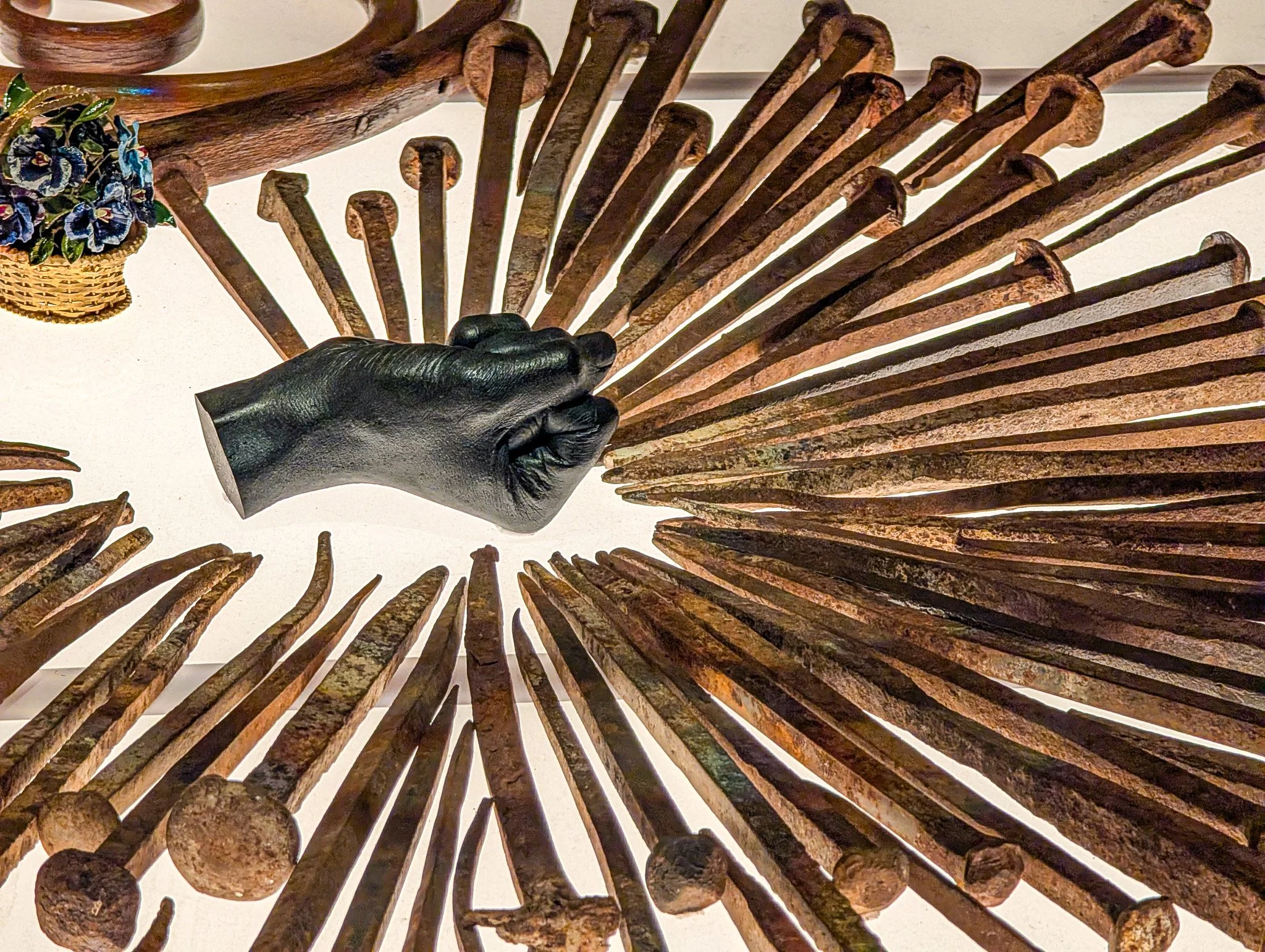
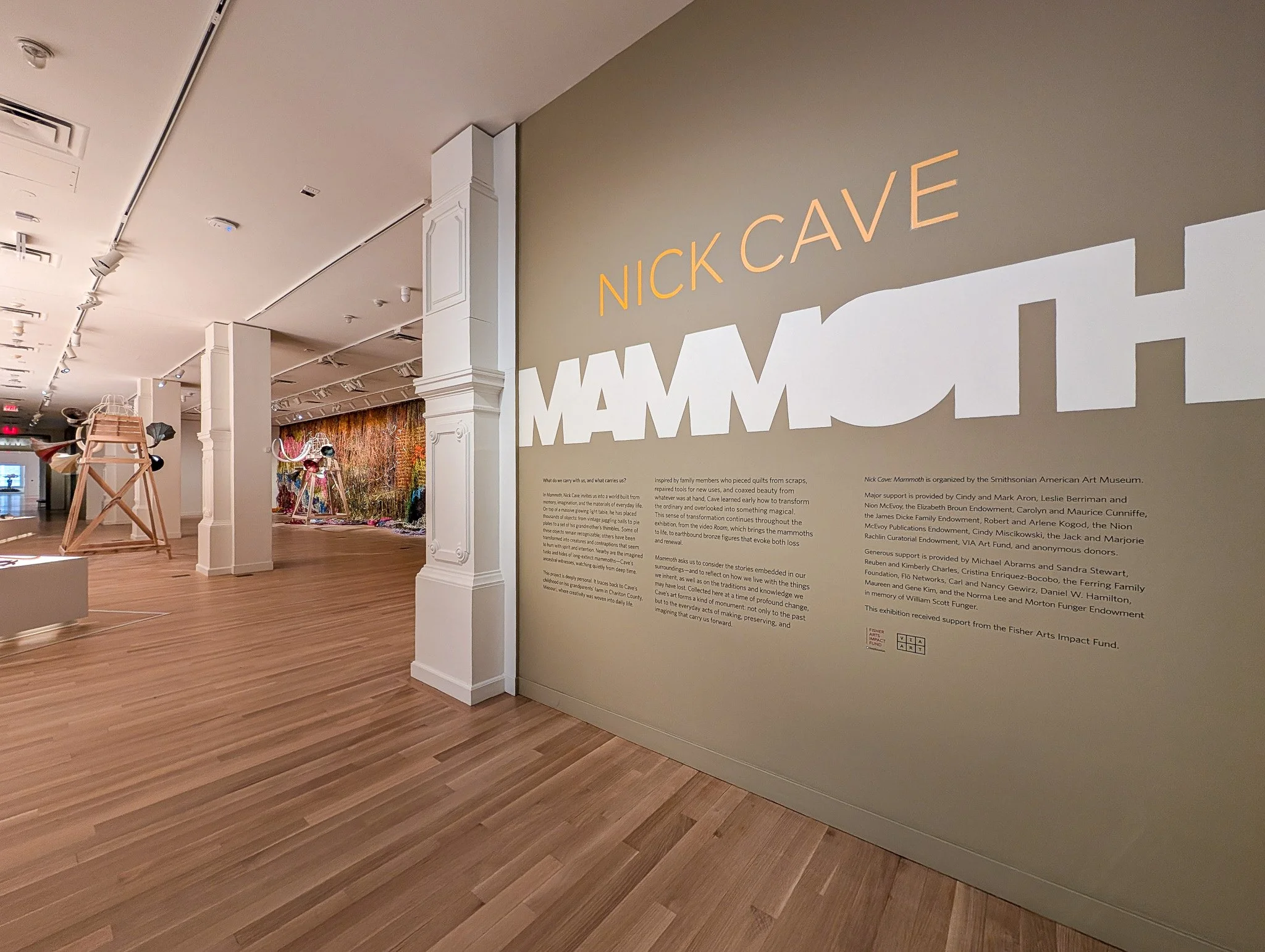
Nick Cave achieved the double of at once overwhelming me and at the same time, stoking my desire to engage further. In a way, this exhibition lived up to the title. Mammoth likely hits you differently depending on how much you know about Nick Cave's art and life. I went in not knowing more than this exhibition had been recommended to me multiple times by multiple people from different parts of my life, and having read reviews from a few national publications. I might now know him a little more having seen and absorbed this work.

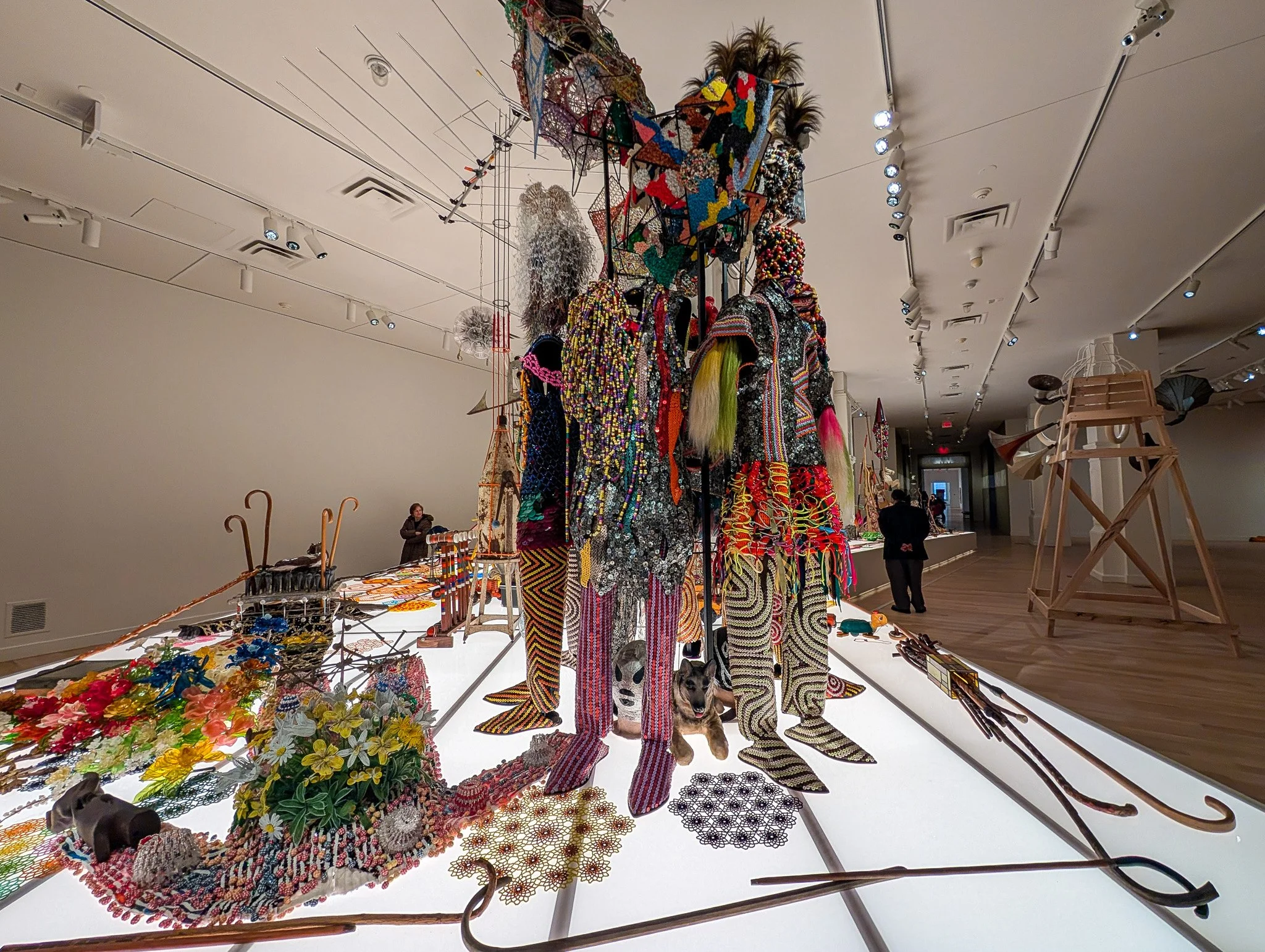
Having this exhibition's main draw (the light table) hosted in a huge open gallery space featuring ethereal lighting, with narrow exits at each end, led me to do what I believe many visitors will; spend a lot of time looking down at the plethora of objects presented on the life-sized light box, perhaps at the expense of the other parts of the exhibition.
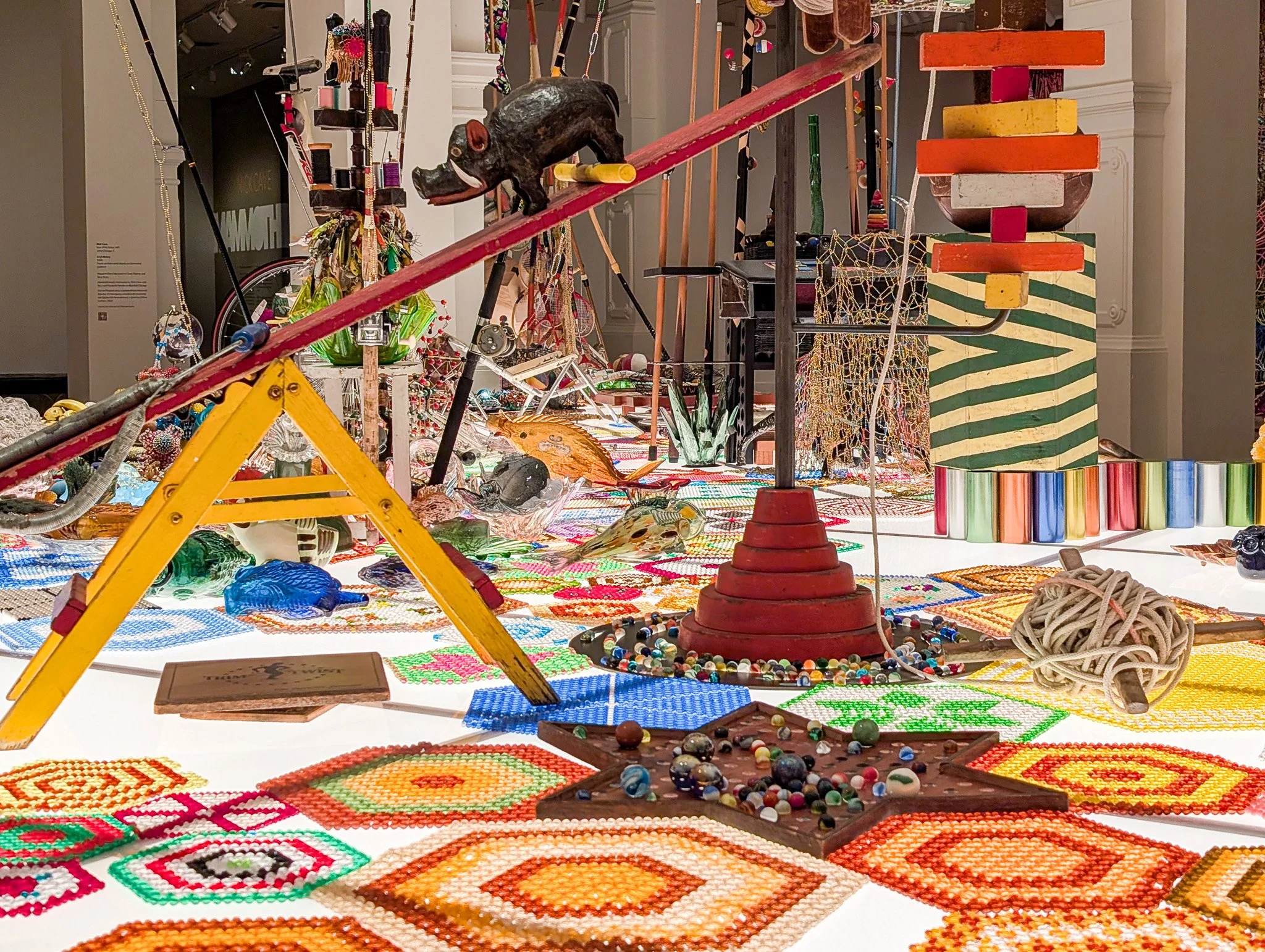
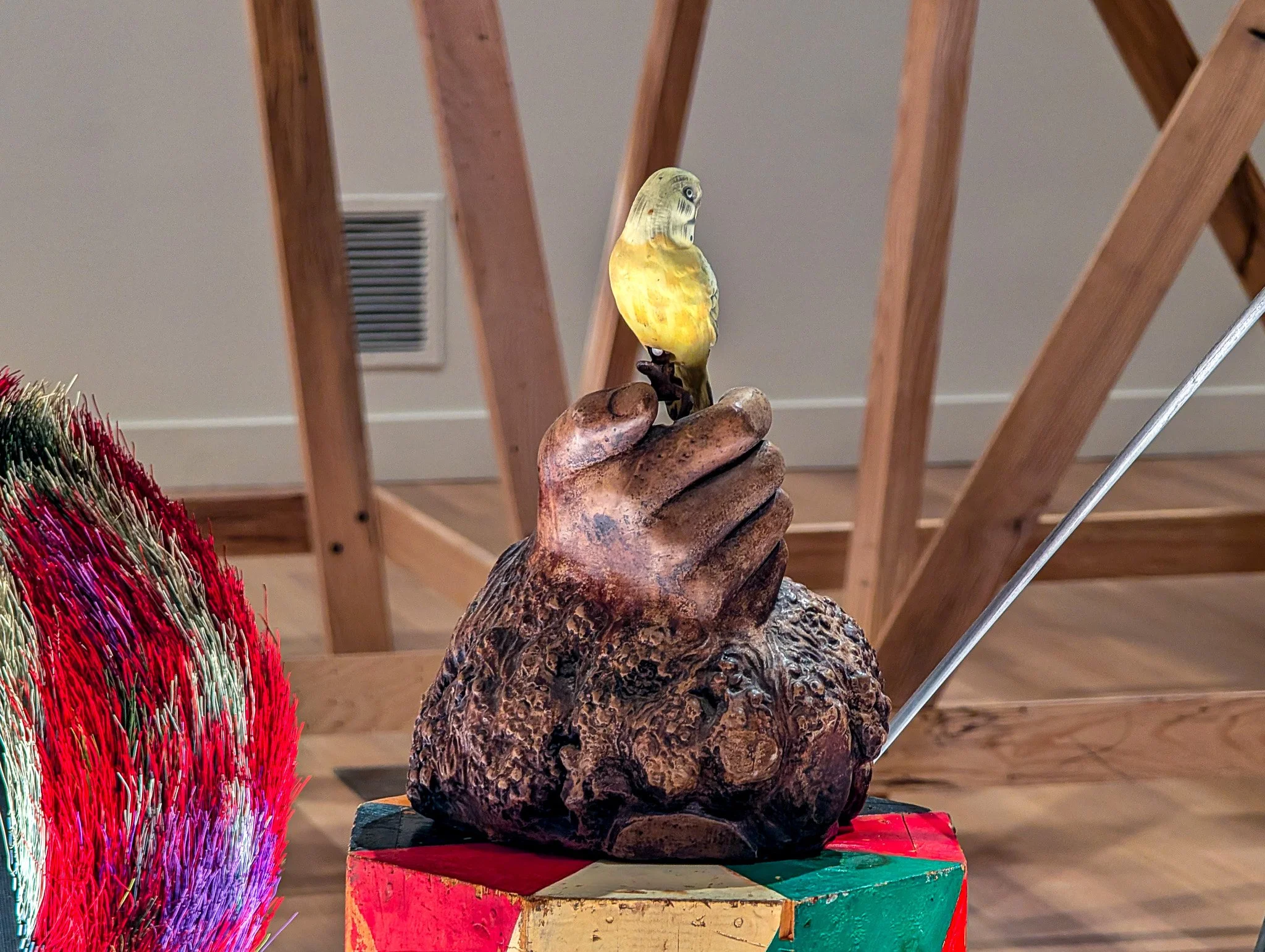
To think of the objects on the light box as detritus would mask the value in looking at everyday objects in this way. The exhibition is as much an examination of life at a moment in time as it is a collection of what makes us, us, over the course of an entire lifetime. Or in this case what made Nick Cave, Nick Cave. Toys, tools, textiles, and more -- the light table has it all. The overwhelming part is that there is just too much to observe in a single passing. The desire to engage more is partially fed by the slight chaos. Curiosity gives way to engagement. And questions. Who owned this one? Was that passed down through the family? What is it, exactly?

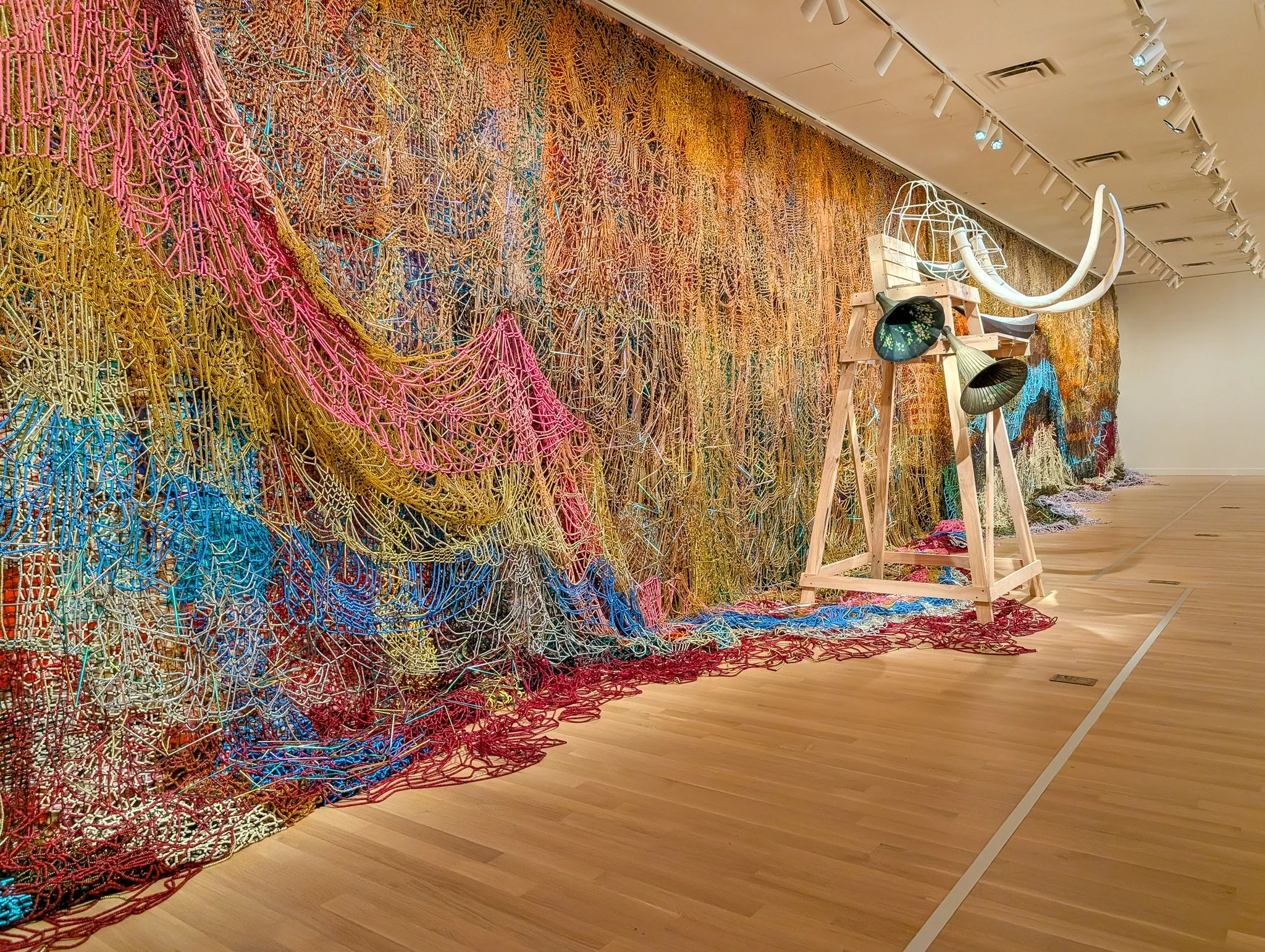
All the while, the massive mammoth bone structures watch from atop lifeguard-like platforms. Are they judging us for leering? Are they benevolent overseers of the cosmos? Are they watching for mistakes or learning? With consternation or pride?
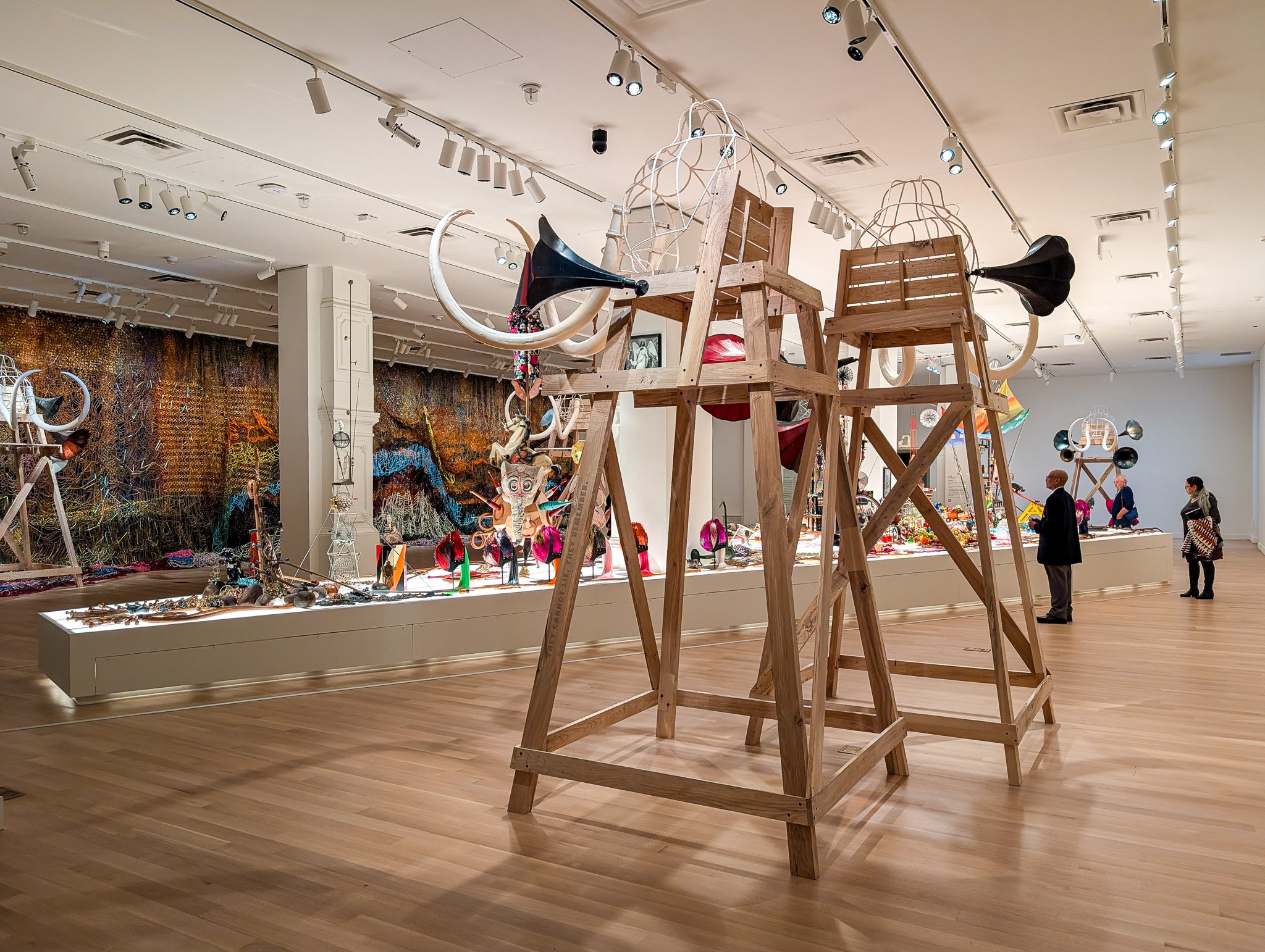
While the light box is engrossing, the two pieces near the entrance of the exhibition are as powerful. First, a moving image short film of the titular mammoths (people adorned as mammoths) walking/wandering though what appears to be the Chicago landscape.

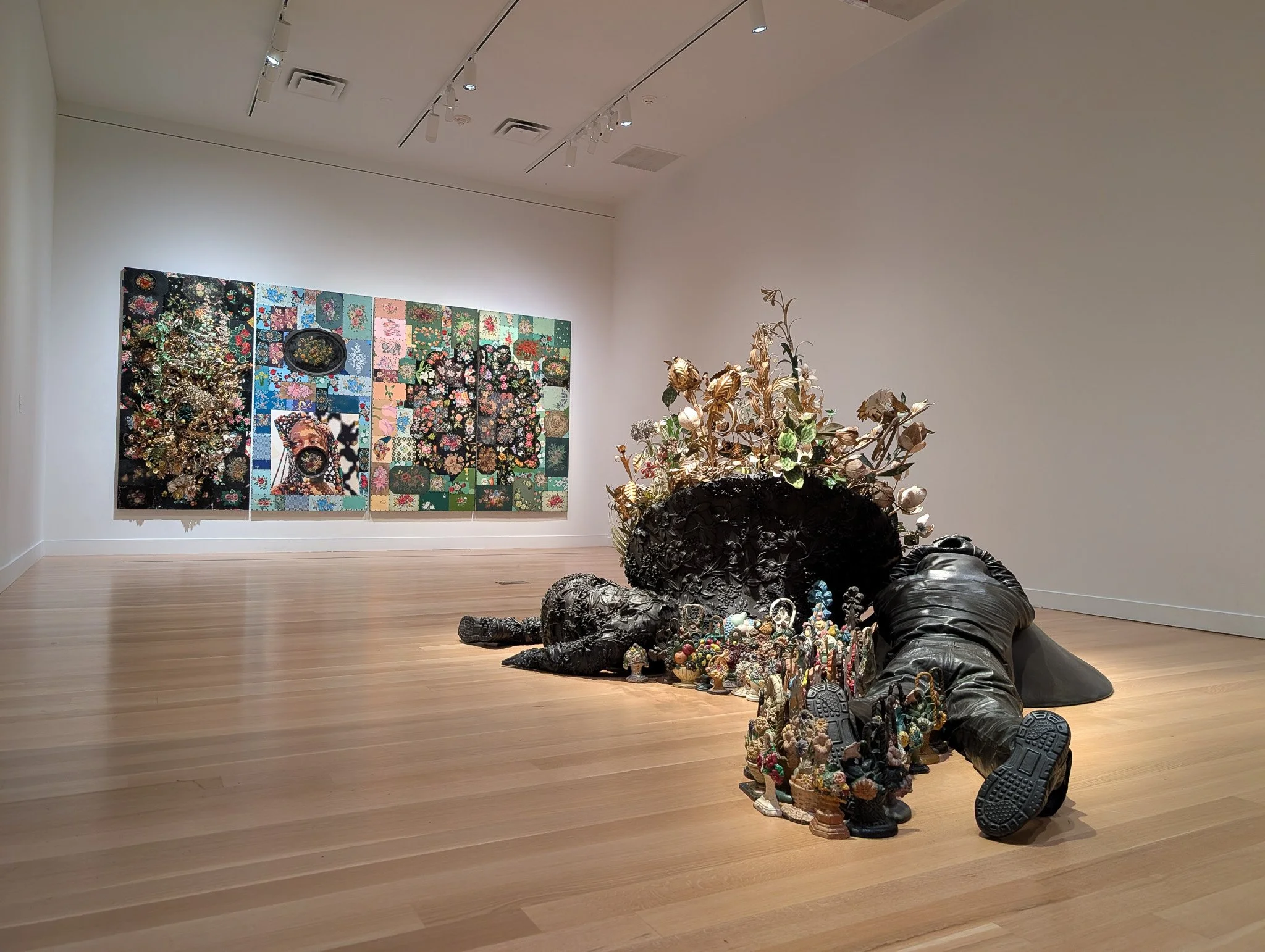
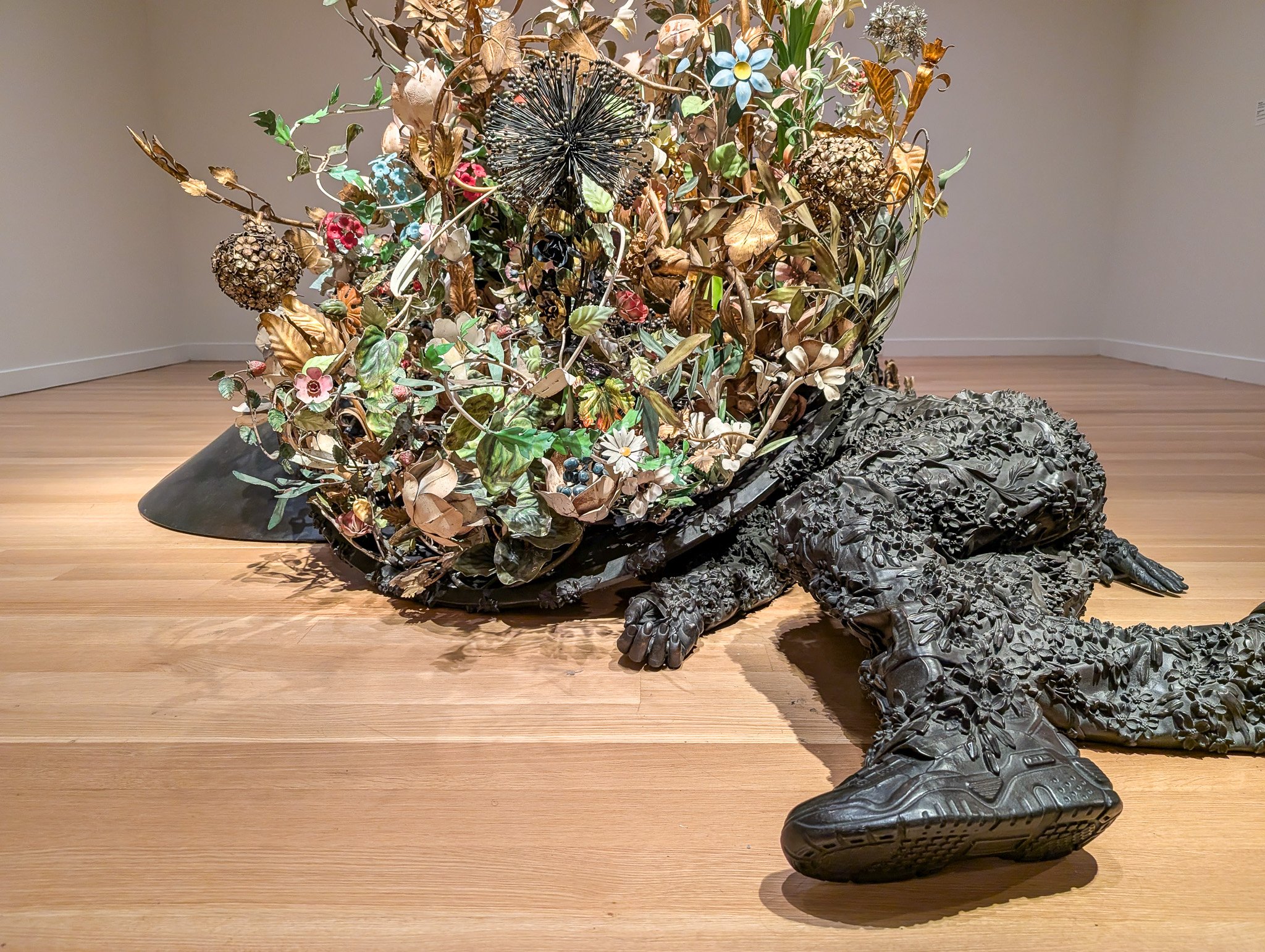
And in what was the most intriguing and slightly disconcerting piece, Amalgam (Plot). Two prone bodies meet on the floor, faces obscured. How did they get there? How long have they been there? Almost presented as another part of the body, flowers rise up along the edges of the prone figures and from the meeting of the two figures. This reminded me of one of the scenes from a dystopian movie where the survivors walk aimlessly among the ruins of a great catastrophe, occasionally coming across a body in the wild. A dark interpretation -- but the door is seemingly left open for rosier thoughts.
Overall, I was really taken with Mammoth. I was prepared to walk in with an open mind., and even then was surprised by the depth and presentation. Sometimes I have trouble connecting to "found art" style exhibitions. I did not write up the Material Witness exhibition showing at Rubell Museum, but perhaps I will. It was chaotic in a different way than Mammoth, but they both share few thematic links. Until then, Mammoth is worth a view! It has plenty of time to breathe, showing at the Smithsonian American Art Museum January 3, 2027.
Exhibition Spotlight: Brilliant Exiles

Josephine Baker est aux Folies-Bergère. Lithograph, 1936. ByMichel Gyarmathy (1908-1996).

Happy belated birthday Josephine Baker! The singer, dancer, and actor who captivated Paris in the 1920s was born 118 years ago this week, on June 3, 1906.

Baker was but one of many innovative and creative American women who moved to Paris in the early 20th century seeking personal autonomy along with professional agency and success.

Some of these “brilliant exiles” are profiled in the new National Portrait Gallery exhibition by the same name, “Brilliant Exiles: American Women in Paris, 1900-1939.” The exhibition is open through February 23, 2025.

Loïs Mailou Jones 1905-1998. Charcoal and chalk on textured paper, c. 1940. By Céline Tabary (1908-1993) .

Gertrude Stein 1874-1946. Oil on canvas, 1905-6. By Pablo Picasso (1881-1973).

The show is made up of nearly 80 works of art, mostly in the form of portraits. The portraits are of, and sometimes also by these Americans who shifted and elevated the Paris culture through literature, visual, arts, dance, drama, and philosophy.

Portraiture has a way of annunciating identity in a more evocative way than even the written word can. This exhibition does that in a simple way, letting the paintings speak for themselves.

Baker, like the other American women featured in the exhibition, did not leave the U.S. and land in Paris by accident or coincidence. Crushing legal and social limitations in the U.S. left little room for freedom expression for independent and talented women. Restrictions were based not on just gender, but sexuality, race, economic stratifications, and politics. Paris was not a panacea for all U.S. societal ills, but the artistic climate offered more independence, agency, and freedom to an extent that, for these women, the U.S. could not compare.

Mercedes de Acosta 1893-1968. Oil on canvas, 1923. By Abram Poole (1882-1961).

Baker herself moved to Paris in 1925. She did return to the U.S. for short stints in theatrical productions, and more extensively to lend her aid to the cresting civil rights movements in the 1960s. But by then she was a Parisian through and through, having gained French citizenship way back in 1937. Baker died in Paris, passing away in her sleep on April 12, 1975, just days after performing in a show marking her 50th year of her Paris debut.

This exhibitions is about more than Baker herself. The portraits that make up the show give a luminescent view into the personality, and dare I say, aura, of the people captured. This is high recommend to visit before the show closes in February of 2025!

This and all Exhibition Spotlights are brought to you by our wonderful Patrons. Patrons get monthly insight into new and upcoming museum exhibitions, DC history posts, photographs not shown anywhere else, and more. If you like this post, there’s way more at Patreon.com/AttucksAdams! Memberships start at just $3/month.

In Exaltation of Flowers: Rose- Geranium; Petunia-Caladium-Budleya; and Golden-Banded Lily-Violets. Katharine Nash Rhoades 1885-1965. Marion H. Beckett 1886-1949. Mercedes de Cordoba Carles 1879-1963. Tempera and gold leaf on canvas, 1910-13. By Edward Steichen(1879-1973).

New Works at the Gallery: Bisa Butler

This week I will be sharing some of my favorite new pieces on display at the Smithsonian American Art Museum and National Portrait Gallery.

Up second is "Patternmaster" by Bisa Butler.

Octavia Butler is one of my favorite authors – but I’m not alone. She was a groundbreaking science fiction author and multiple award winning literary giant whose work perhaps has resonated more even after her passing in 2006.

Butler is known for complex world building while incorporating themes such as racial injustice, gender inequality, environmental degradation, genetic engineering, and human (and sometimes alien) evolution.

In that same world building vein, Bisa Butler (no relation) has used various materials to build this stunning portrait of Octavia Butler. The artist used cotton, silk, vinyl, lace, beads, rhinestones, and other materials that all come together to make a quilt. The quilt is the portrait. Bisa Butler’s layering of fabric and materials mimic the layering of human emotion, speculative fiction, and fantastical scenarios that make Octavia Butler's writing so engaging. Talk about the portrait matching the person. This is it.

Check out yesterday’s post on Roger Brown and stay tuned for the final post tomorrow.✌🏾

New Works at the Gallery: Roger Brown

"World's Tallest Disaster" painting by Roger Brown. The painting shows a tall skyscraper building with the top portion in flames. The bottom half. is not on fire and people in the windows of the lower level are living their normal lives.

This week I will be sharing some of my favorite new pieces on display at the Smithsonian American Art Museum and National Portrait Gallery.

Up first is "World's Tallest Disaster" by Roger Brown.

I mostly chose this work due to the stylized colors and shapes of the flames and building. Half of this skyscraper is on fire with the upper floors ravaged in flames and people panicking. In the lower half, we see residents carrying on on with their lives, unaware (?) of the horrific chaos happening above in the very same building. Is the painting allegorical? Probably. But I really appreciate how accessible it is. Roger Brown’s art feels so accessible in part because much of his work was inspired by works of self-trained artists and comic book art. I love this one.

Stay tuned for more observations this week!

Video: Beyond Granite Reflections

With the Beyond Granite exhibition closing a few weeks ago, I wanted to take a moment to delve into the meaning of commemoration here in Washington, DC. This video offers notes on the specific elements of each of the six installations, but also delves into the motivations behind the artists' design choices.

What truly struck me was the profound way in which these installations connected with the existing commemorative landscape of the Mall. It was fascinating to witness the powerful intersections between history, art, and remembrance, and how they all intertwine to create a tapestry of meaning that —in theory— transcends time. Even if the exhibition was but one month in duration, the reflection on commemoration will continue.

Thanks to all Patrons whose support make videos like this possible. For more video blogs, photos, behind the scenes in tour creation, tour previews, or just to support my work, check out tiers of membership here.