exhibitions

Mammoth: Exhibition Spotlight

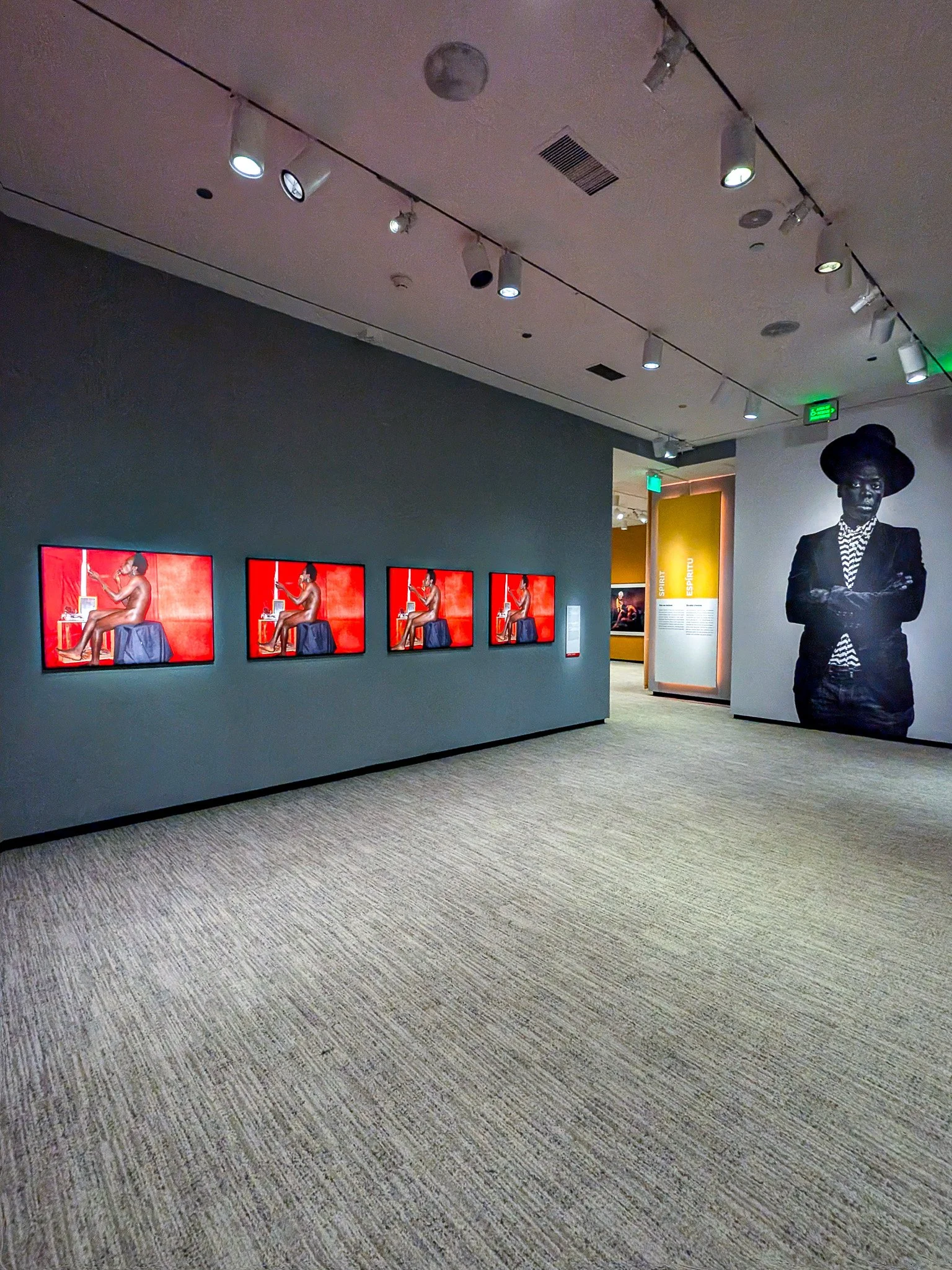
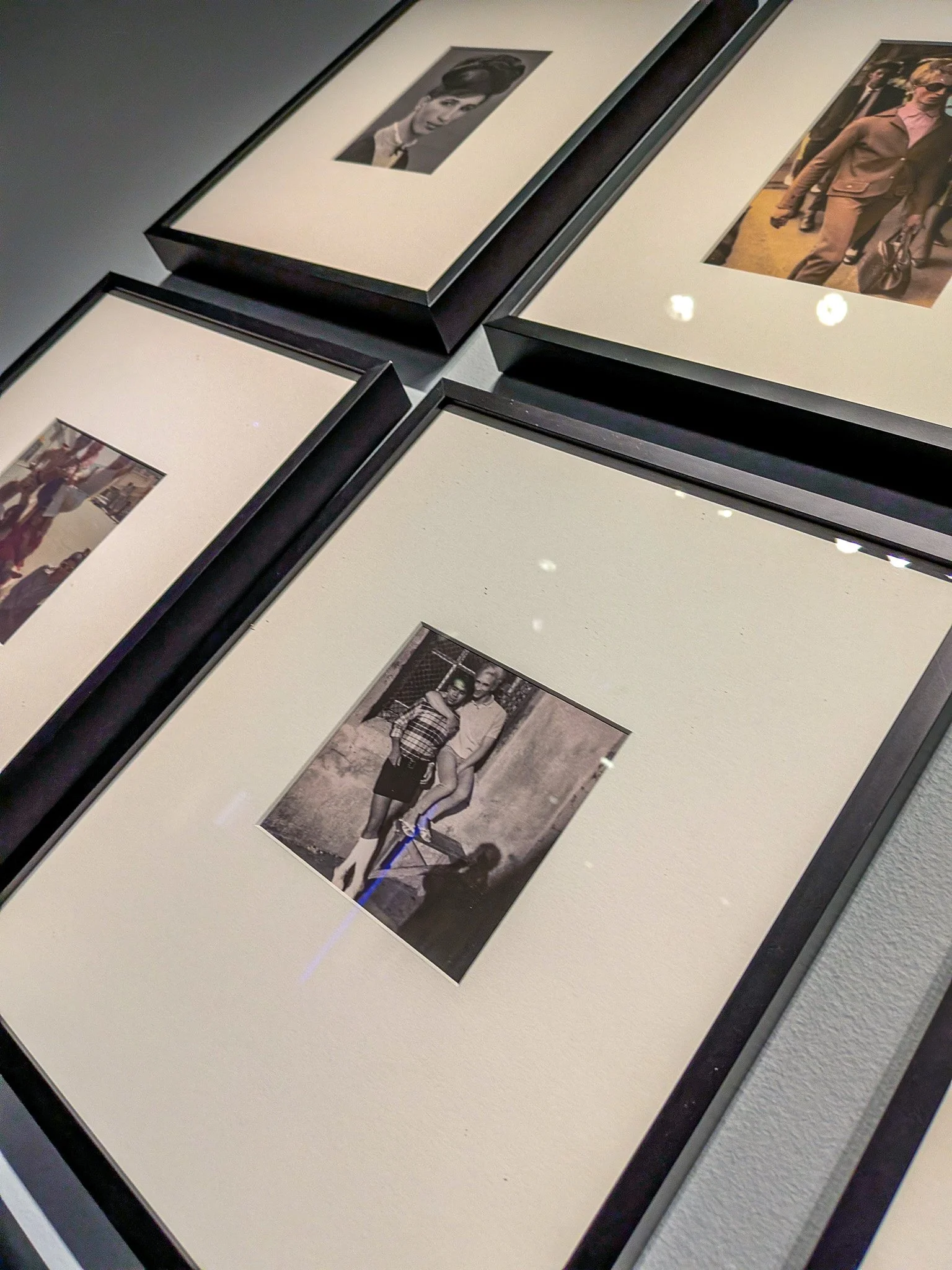
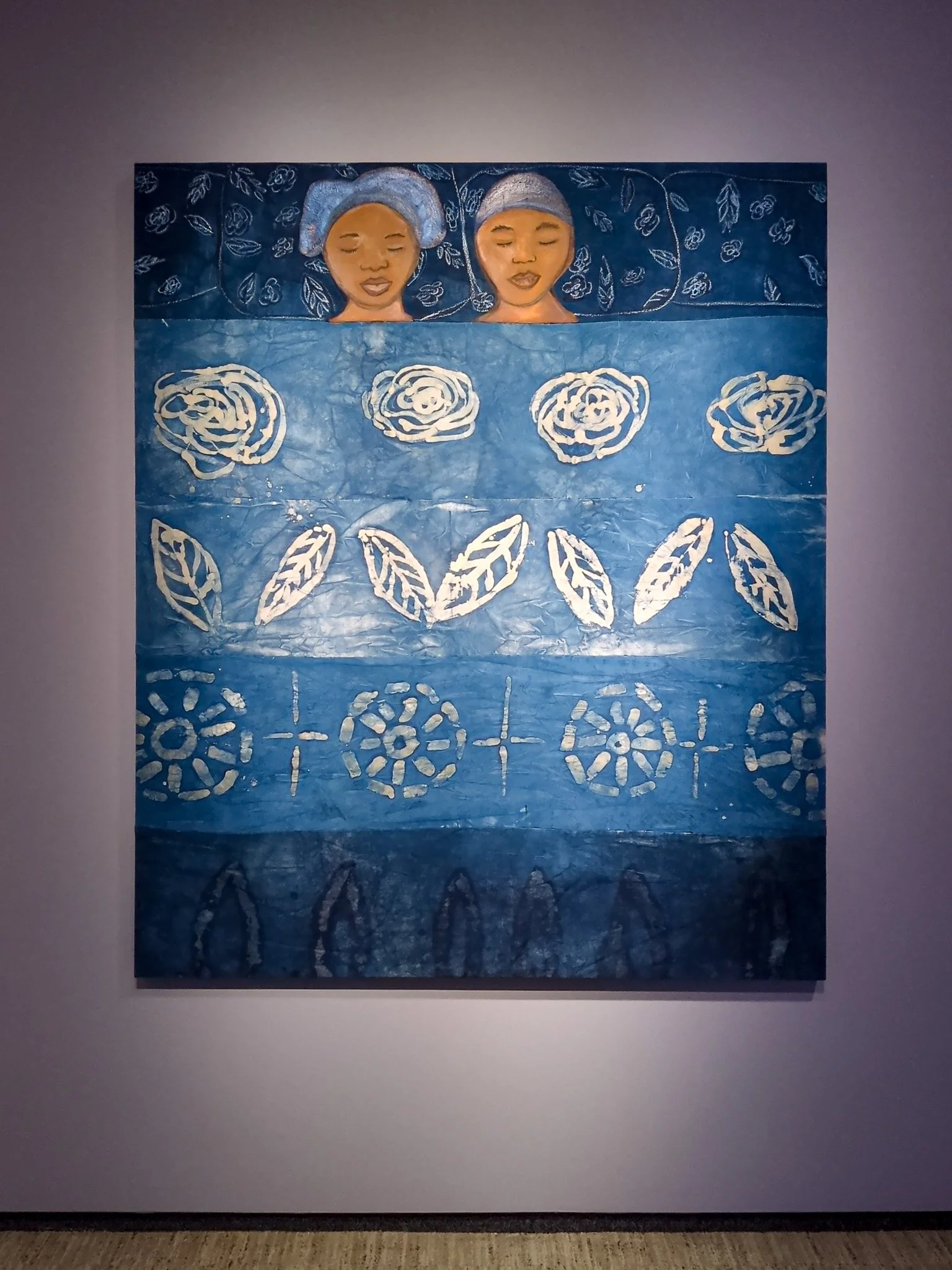
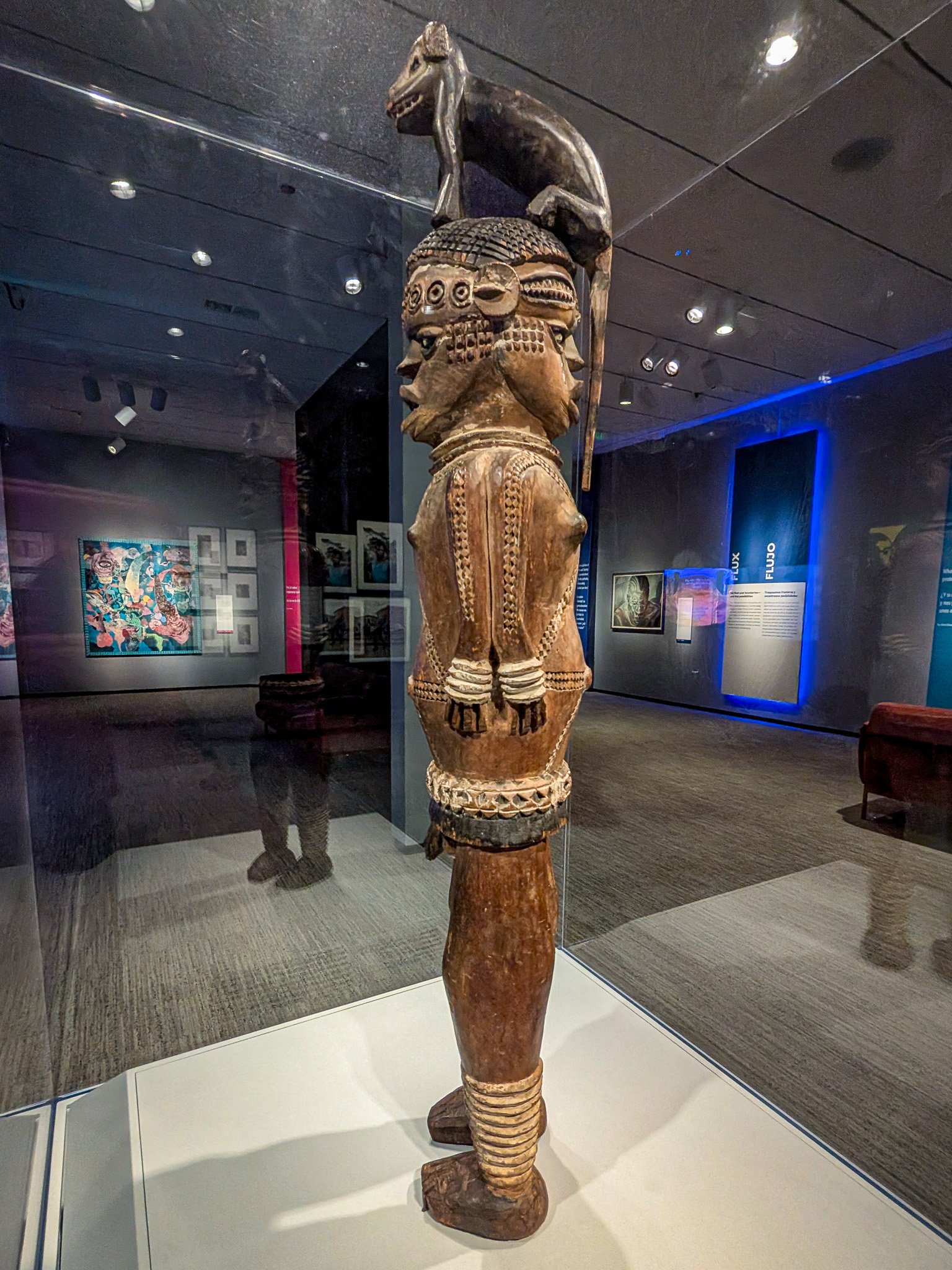
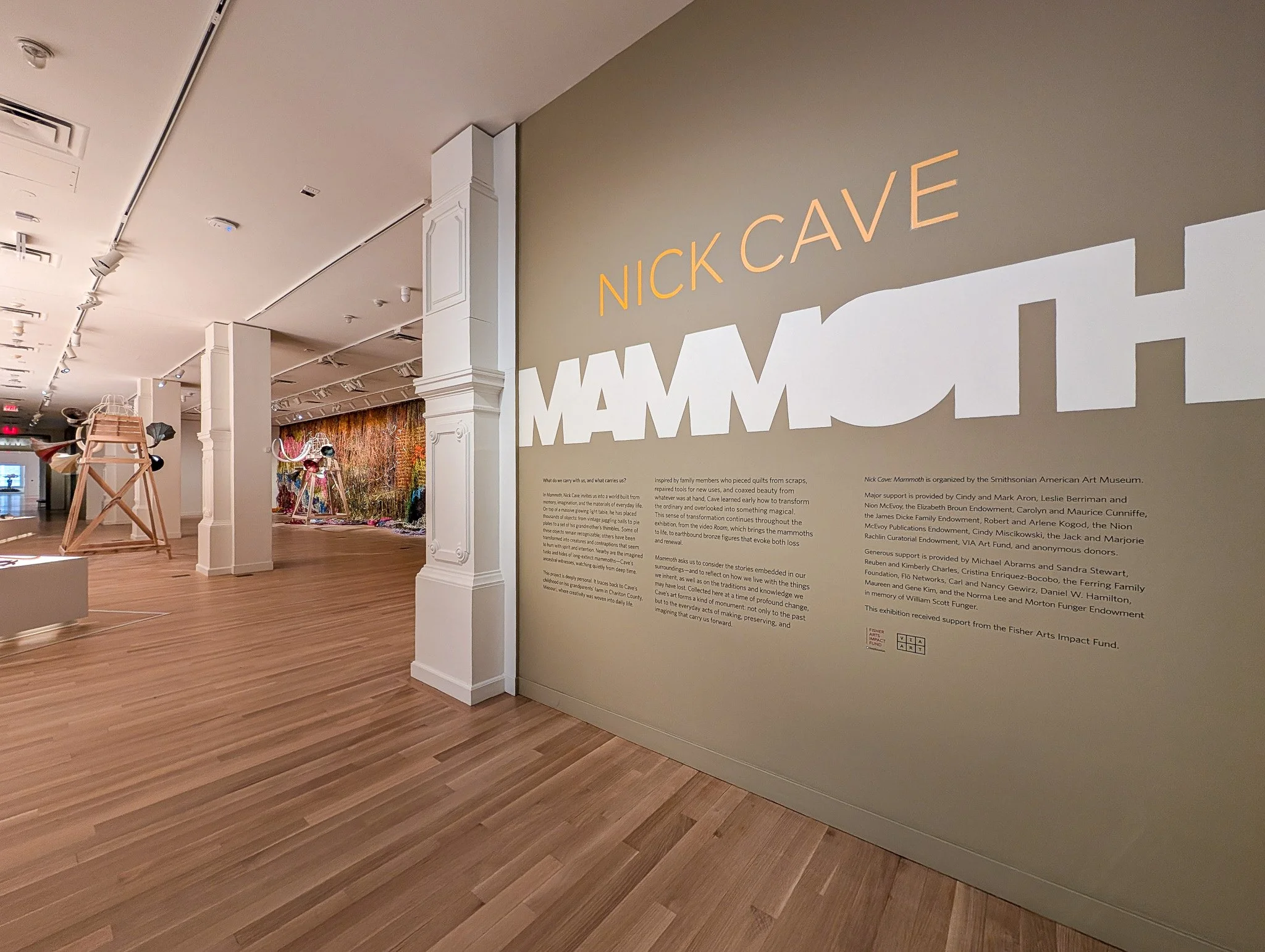
Nick Cave achieved the double of at once overwhelming me and at the same time, stoking my desire to engage further. In a way, this exhibition lived up to the title. Mammoth likely hits you differently depending on how much you know about Nick Cave's art and life. I went in not knowing more than this exhibition had been recommended to me multiple times by multiple people from different parts of my life, and having read reviews from a few national publications. I might now know him a little more having seen and absorbed this work.

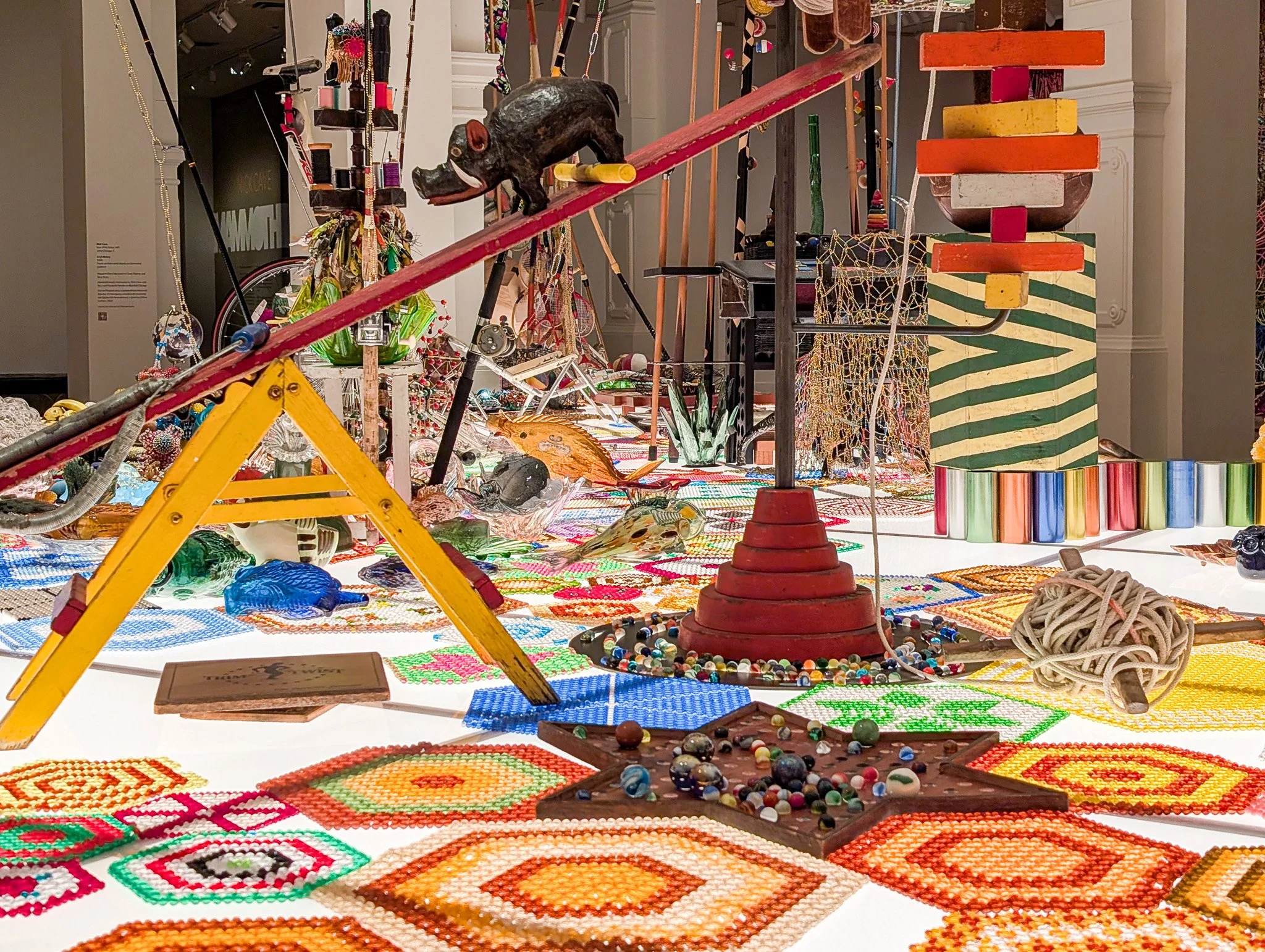
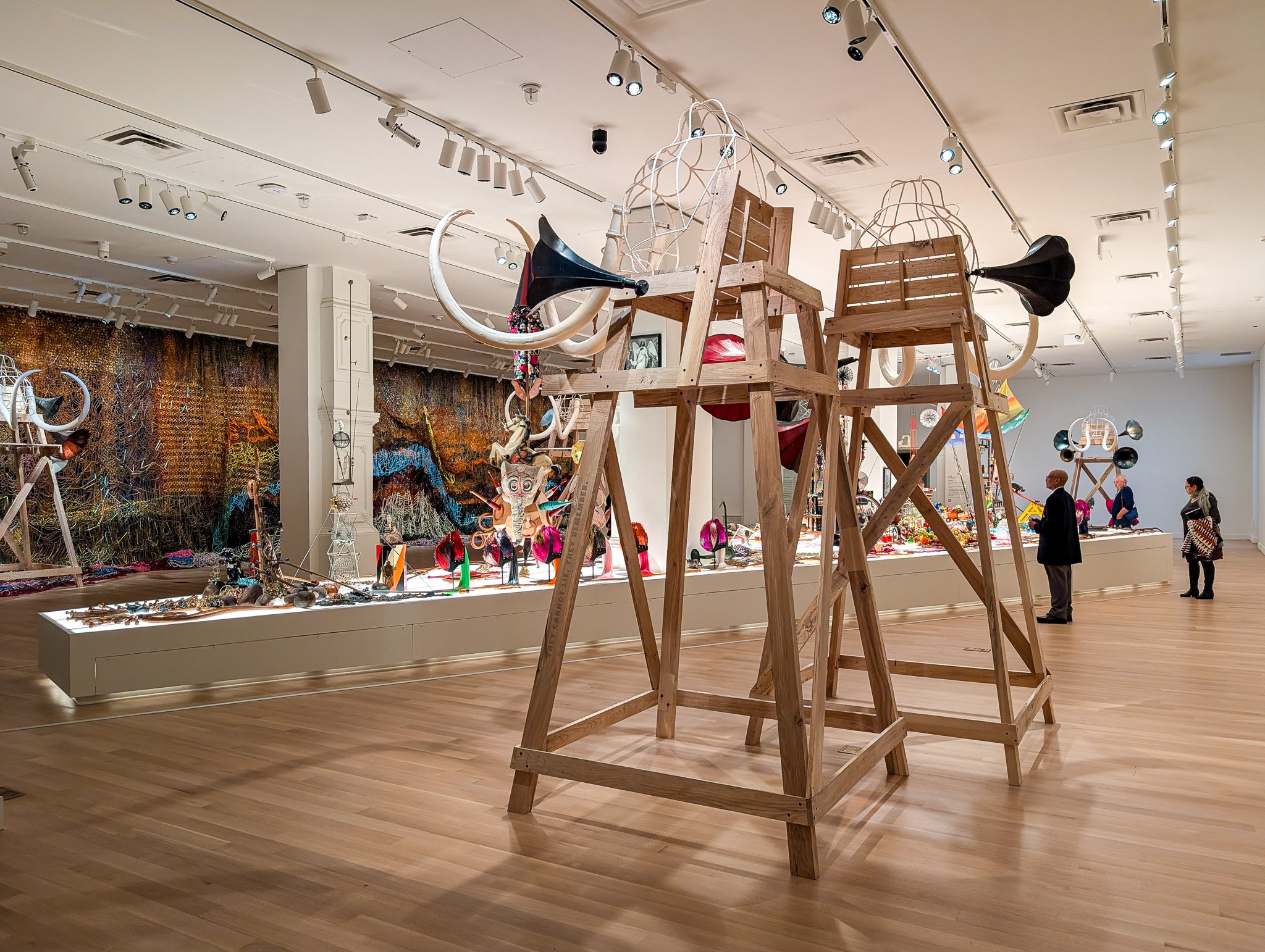
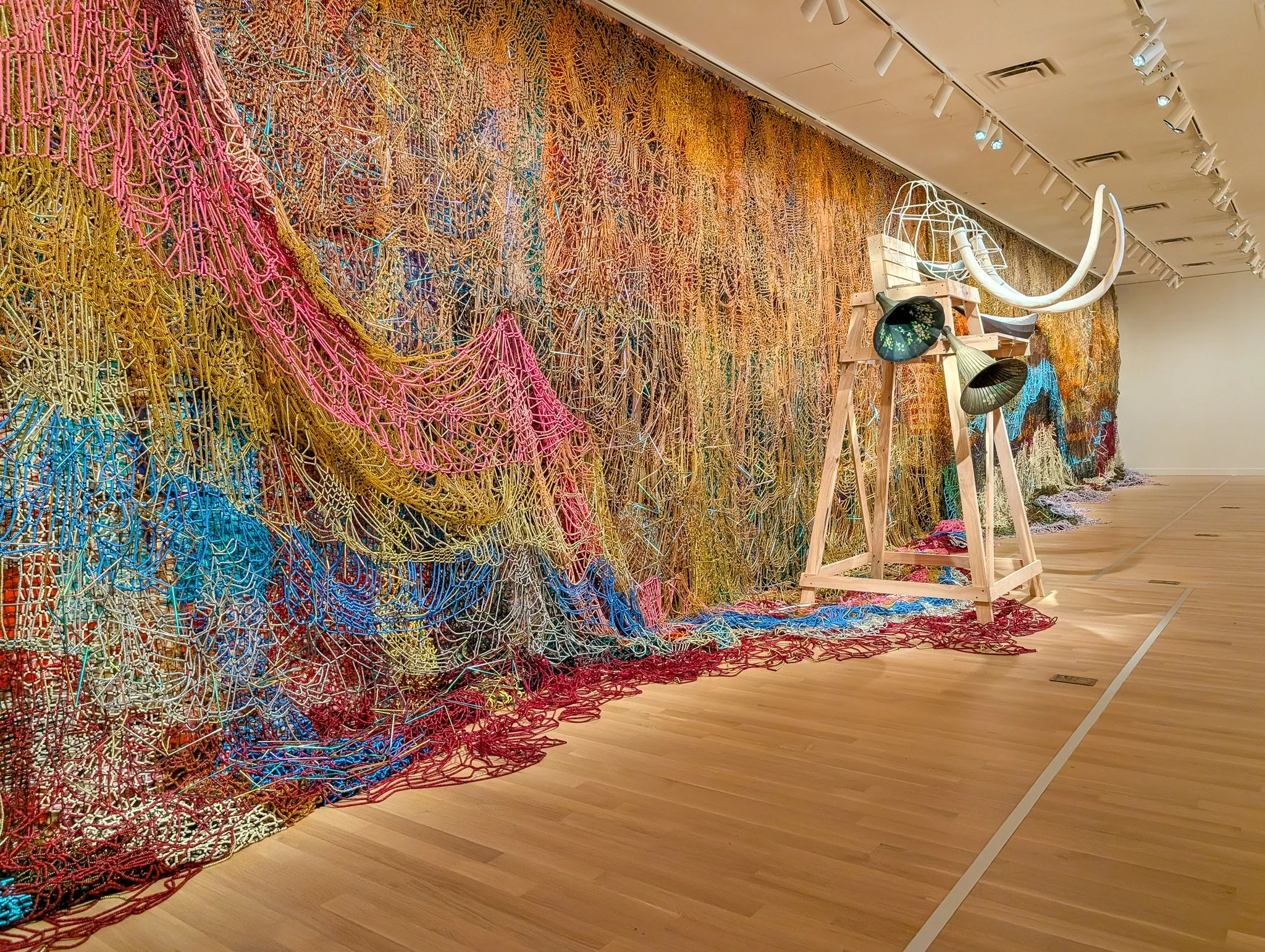
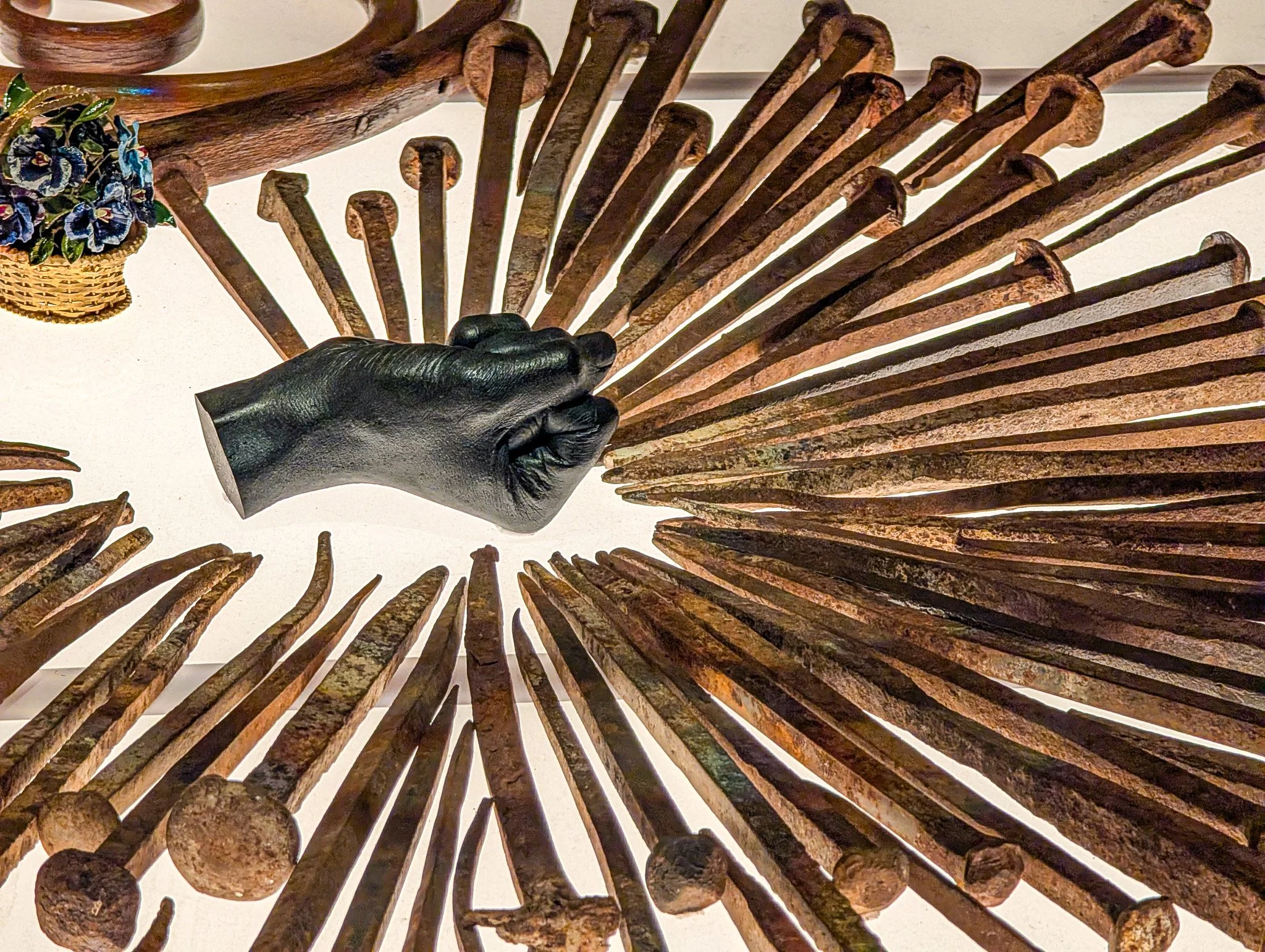
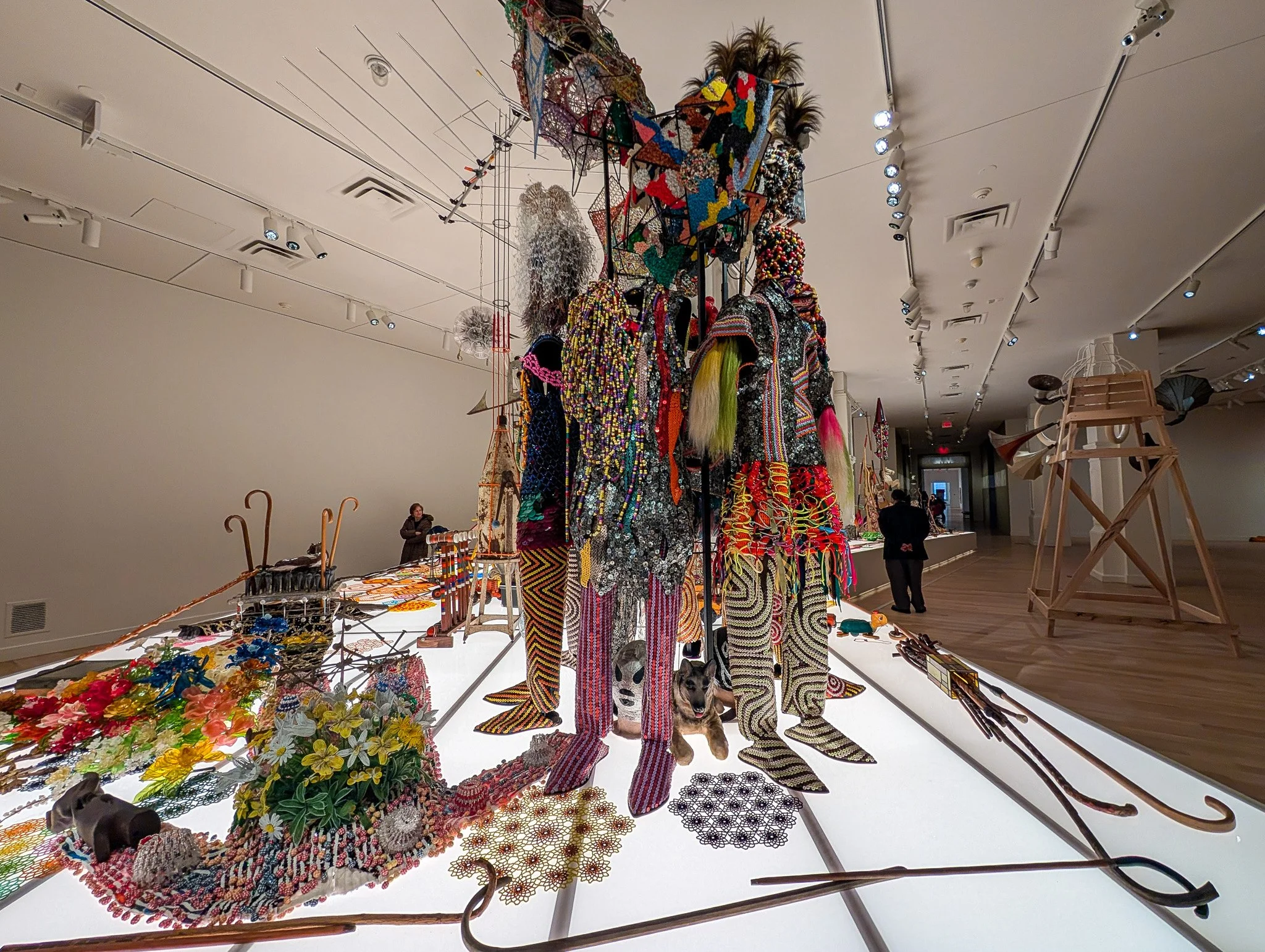
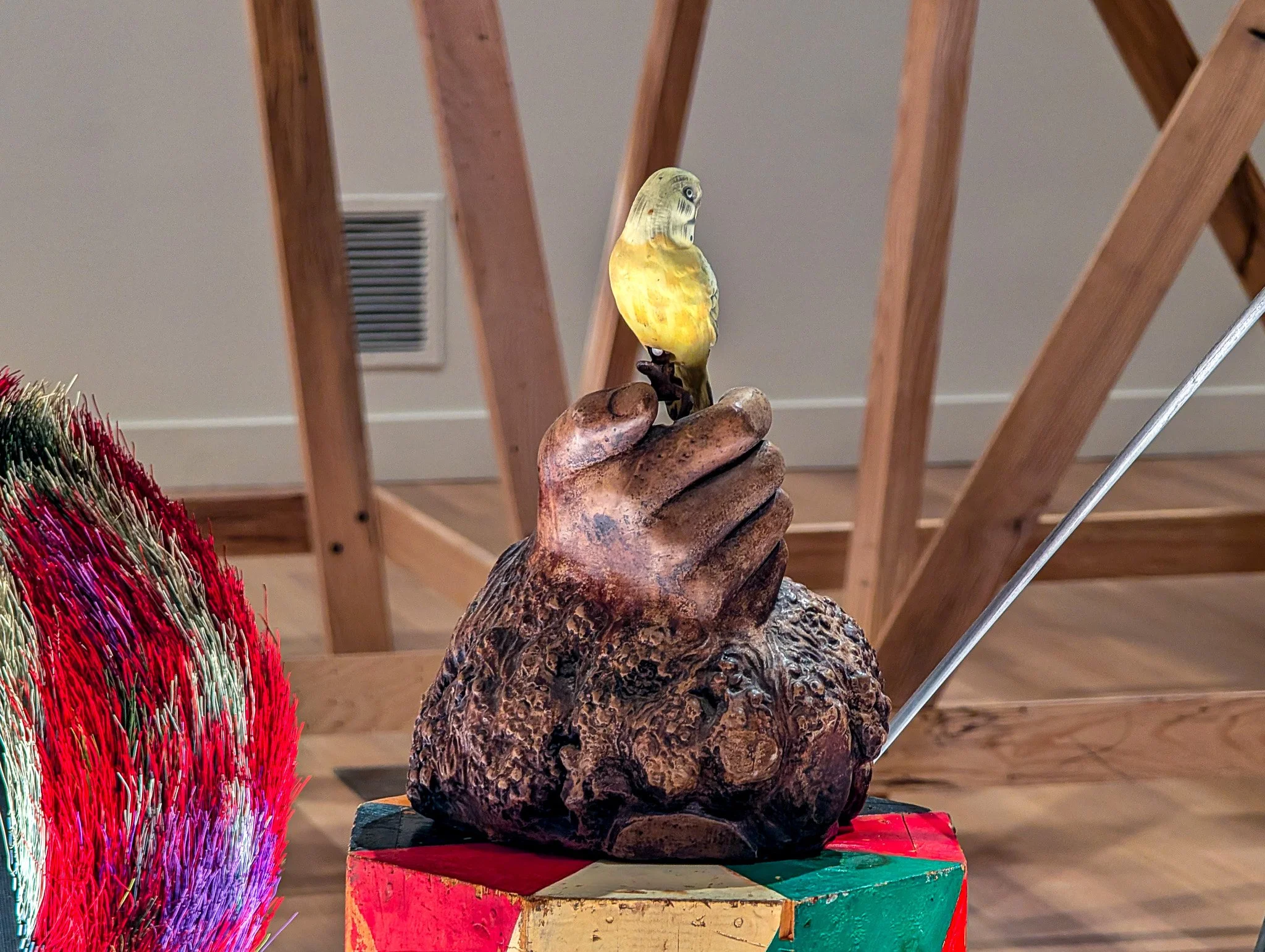
Having this exhibition's main draw (the light table) hosted in a huge open gallery space featuring ethereal lighting, with narrow exits at each end, led me to do what I believe many visitors will; spend a lot of time looking down at the plethora of objects presented on the life-sized light box, perhaps at the expense of the other parts of the exhibition.

To think of the objects on the light box as detritus would mask the value in looking at everyday objects in this way. The exhibition is as much an examination of life at a moment in time as it is a collection of what makes us, us, over the course of an entire lifetime. Or in this case what made Nick Cave, Nick Cave. Toys, tools, textiles, and more -- the light table has it all. The overwhelming part is that there is just too much to observe in a single passing. The desire to engage more is partially fed by the slight chaos. Curiosity gives way to engagement. And questions. Who owned this one? Was that passed down through the family? What is it, exactly?

All the while, the massive mammoth bone structures watch from atop lifeguard-like platforms. Are they judging us for leering? Are they benevolent overseers of the cosmos? Are they watching for mistakes or learning? With consternation or pride?

While the light box is engrossing, the two pieces near the entrance of the exhibition are as powerful. First, a moving image short film of the titular mammoths (people adorned as mammoths) walking/wandering though what appears to be the Chicago landscape.

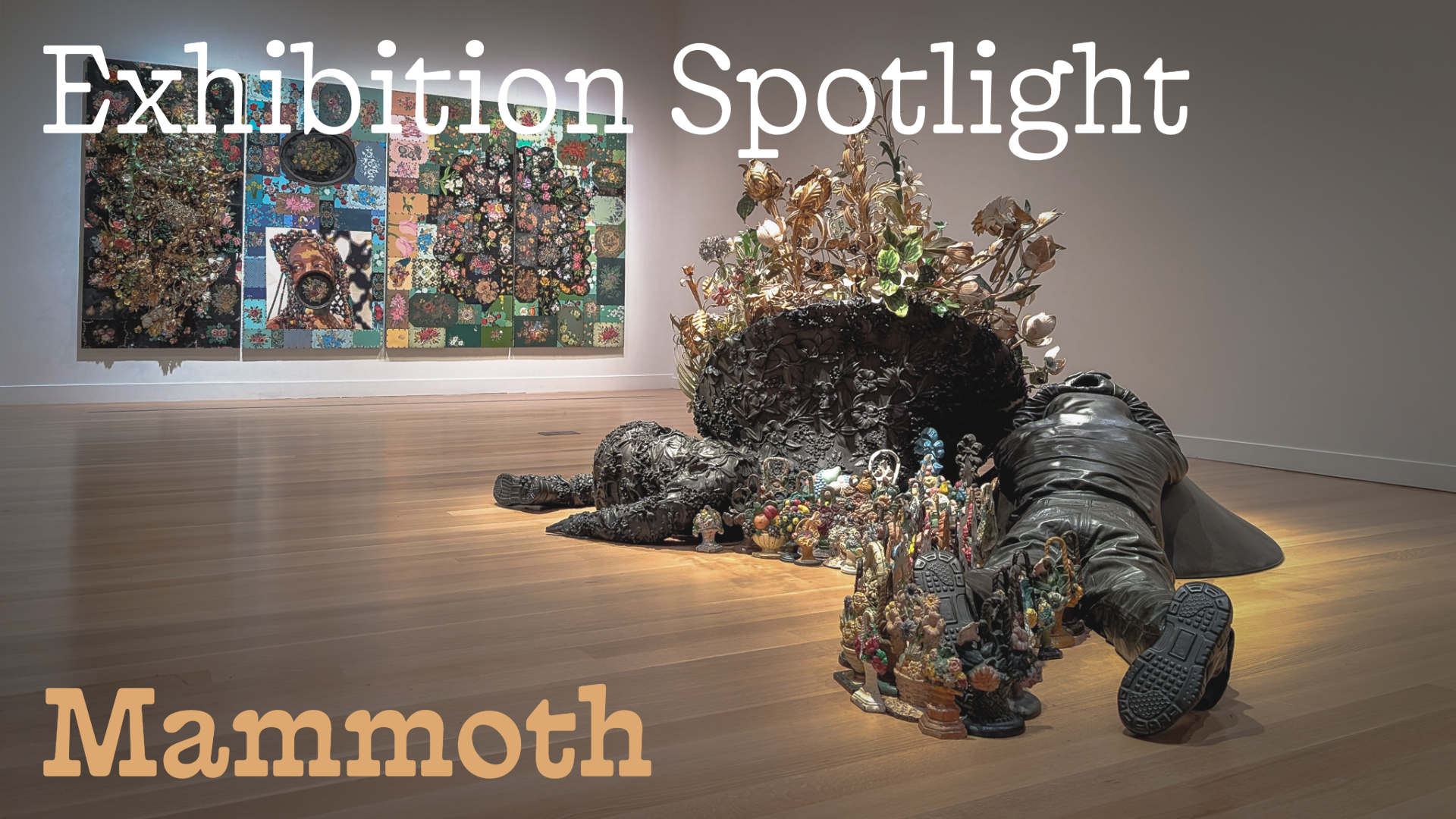
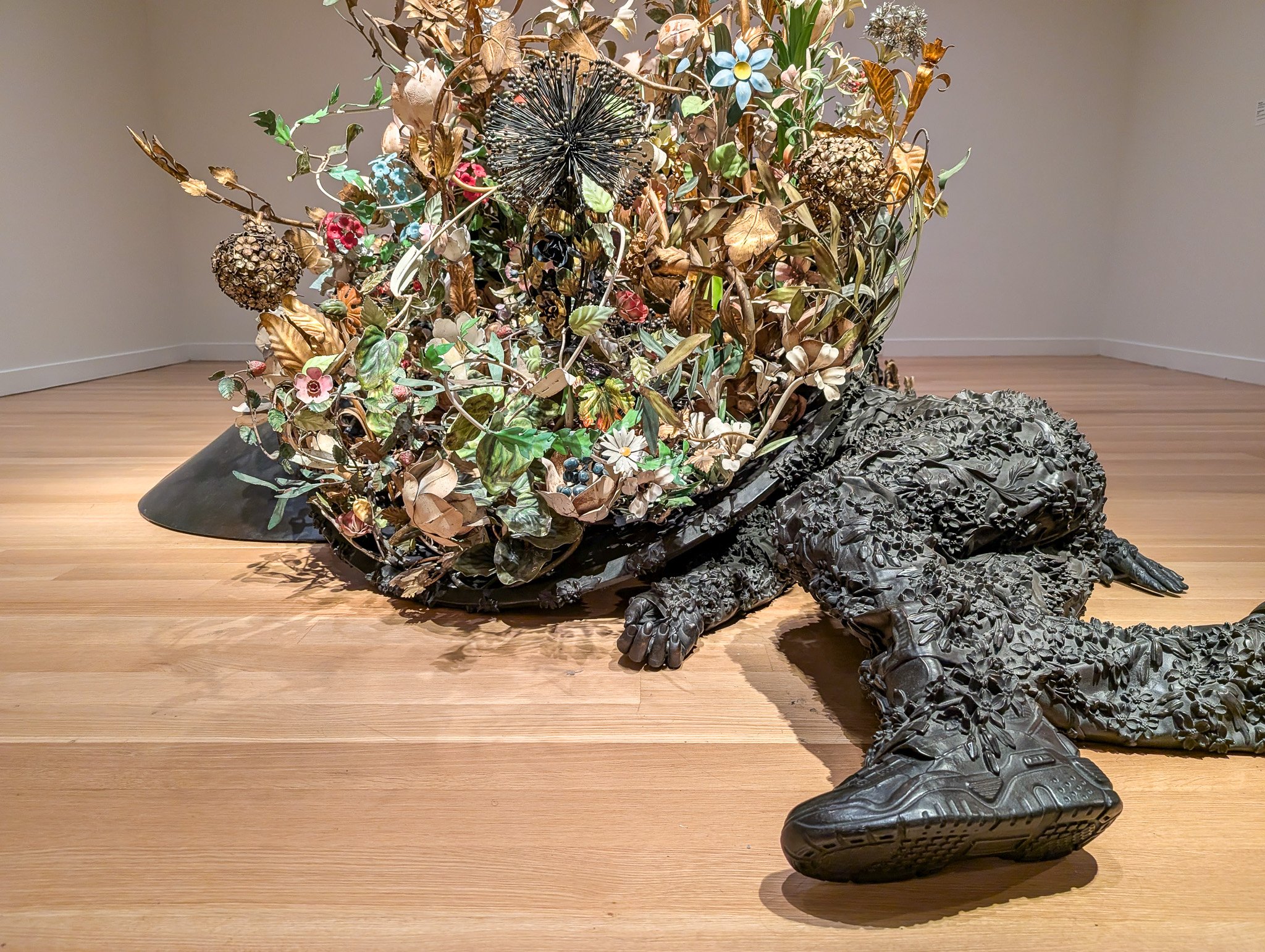
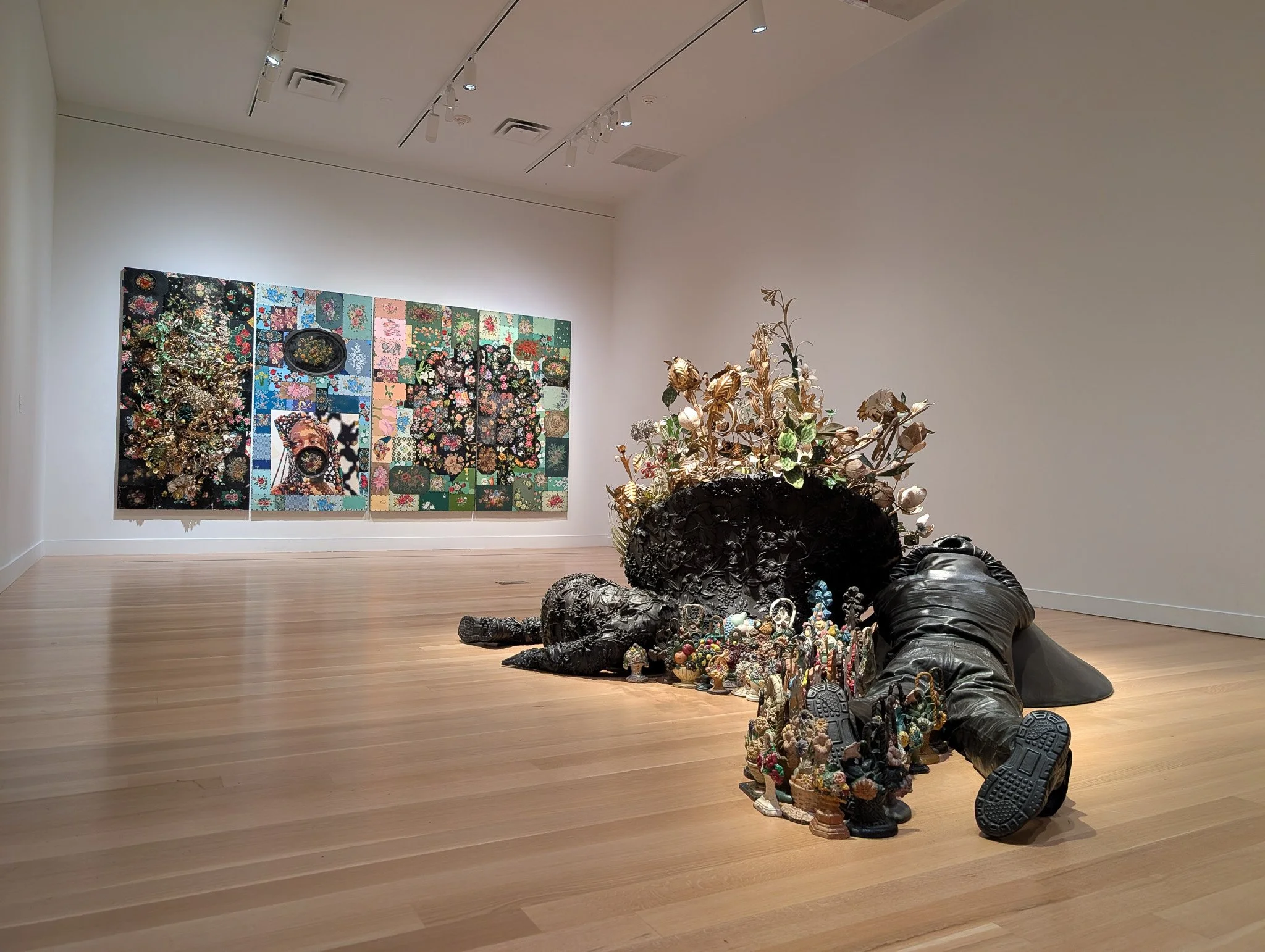
And in what was the most intriguing and slightly disconcerting piece, Amalgam (Plot). Two prone bodies meet on the floor, faces obscured. How did they get there? How long have they been there? Almost presented as another part of the body, flowers rise up along the edges of the prone figures and from the meeting of the two figures. This reminded me of one of the scenes from a dystopian movie where the survivors walk aimlessly among the ruins of a great catastrophe, occasionally coming across a body in the wild. A dark interpretation -- but the door is seemingly left open for rosier thoughts.

Overall, I was really taken with Mammoth. I was prepared to walk in with an open mind., and even then was surprised by the depth and presentation. Sometimes I have trouble connecting to "found art" style exhibitions. I did not write up the Material Witness exhibition showing at Rubell Museum, but perhaps I will. It was chaotic in a different way than Mammoth, but they both share few thematic links. Until then, Mammoth is worth a view! It has plenty of time to breathe, showing at the Smithsonian American Art Museum January 3, 2027.

The American Story: Exhibition Spotlight

The National Archives serves an outsized role in our country at this moment. As we grapple as a nation with how and what values drive policy, sentiment, laws, mores, behaviors, and citizen expectations, the documents that are foundational to life in the U.S. are still on display for public scrutiny. 

The Archives calls the collective documents including the Declaration of Independence, Constitution, and Bill of Rights the “Charters of Freedom.” Those three documents are the literal centerpiece of the main Archives building here in Washington, DC. The entire Rotunda and balance of remaining programming & exhibitions in the building –all the way down to ticketing, entrance, and egress–  have been built around access to the Charters of Freedom. But there is so much more to the Archives, especially to the average, non-researching visitor.

Officially, the National Archives and Records Administration (NARA) spans across the country in nearly 40 buildings including the main facility and museum in DC, a much larger archival storage and research facility nearby College Park Maryland, 10 regional archives, and 16 Presidential Libraries. In total, there are nearly 13 billion (13,000,000,000) documents under the purview of NARA. The building most associated with access to documents is the one you've probably visited -- the 1937 Archives building located on Constitution Avenue NW in DC. Aside from the Charters of Freedom, there are typically several other rotating exhibitions open in the museum portion of that building. 

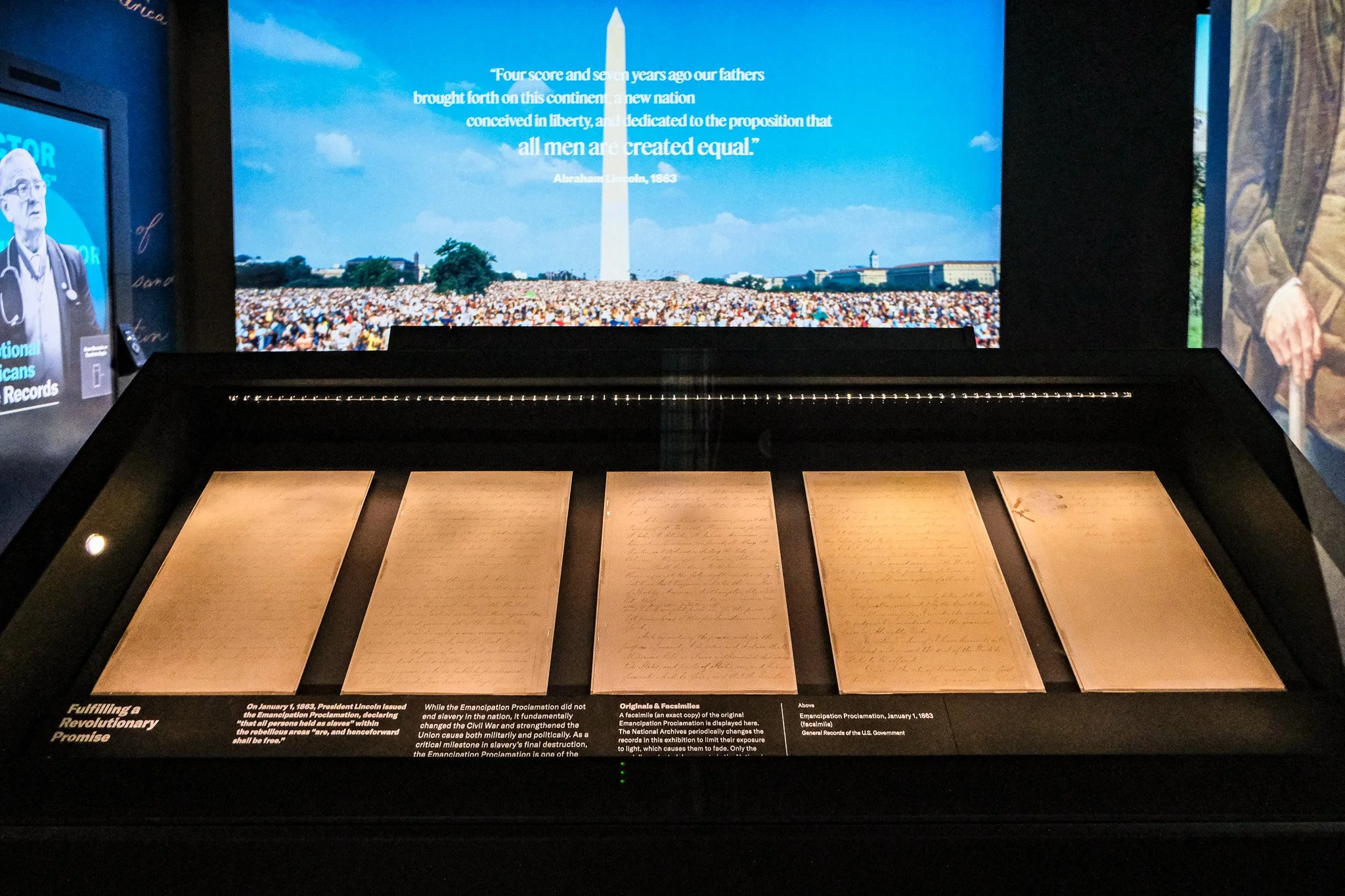
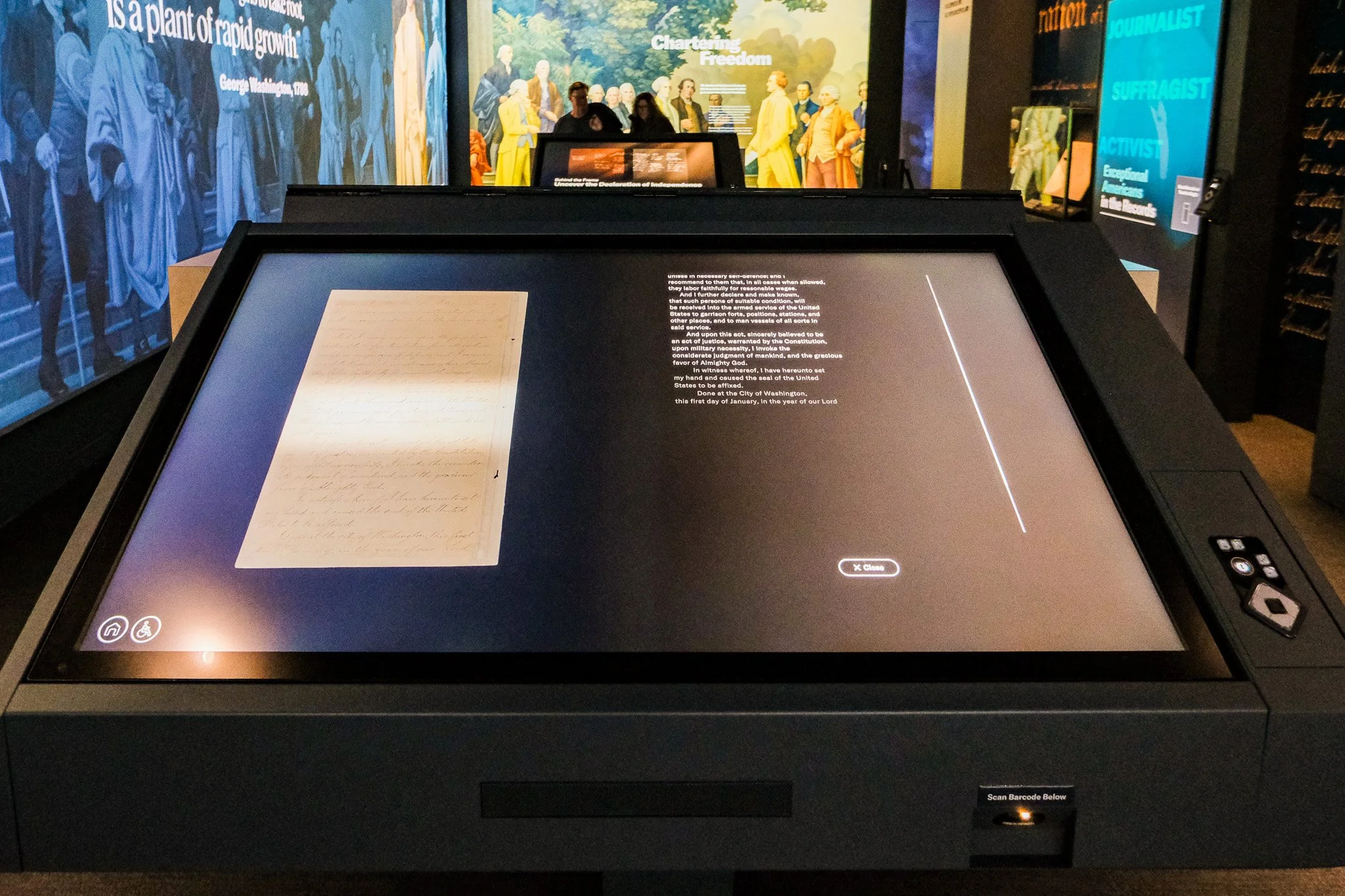
A surprising amount of documents on permanent display were facsimiles; like the Emancipation Proclamation.

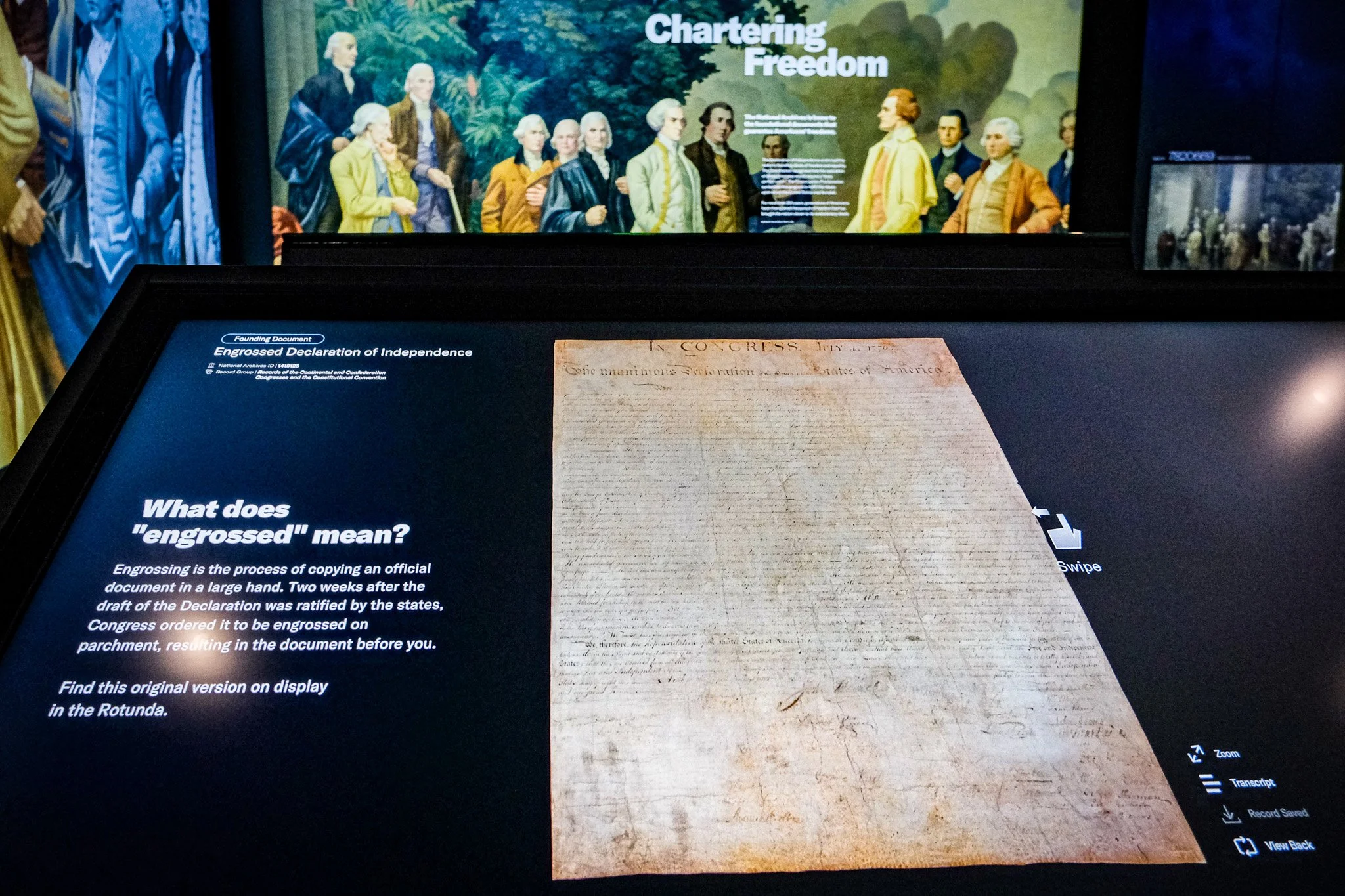
The amount of information about each document is astounding. From meaning behind the words to how the parchment was made.

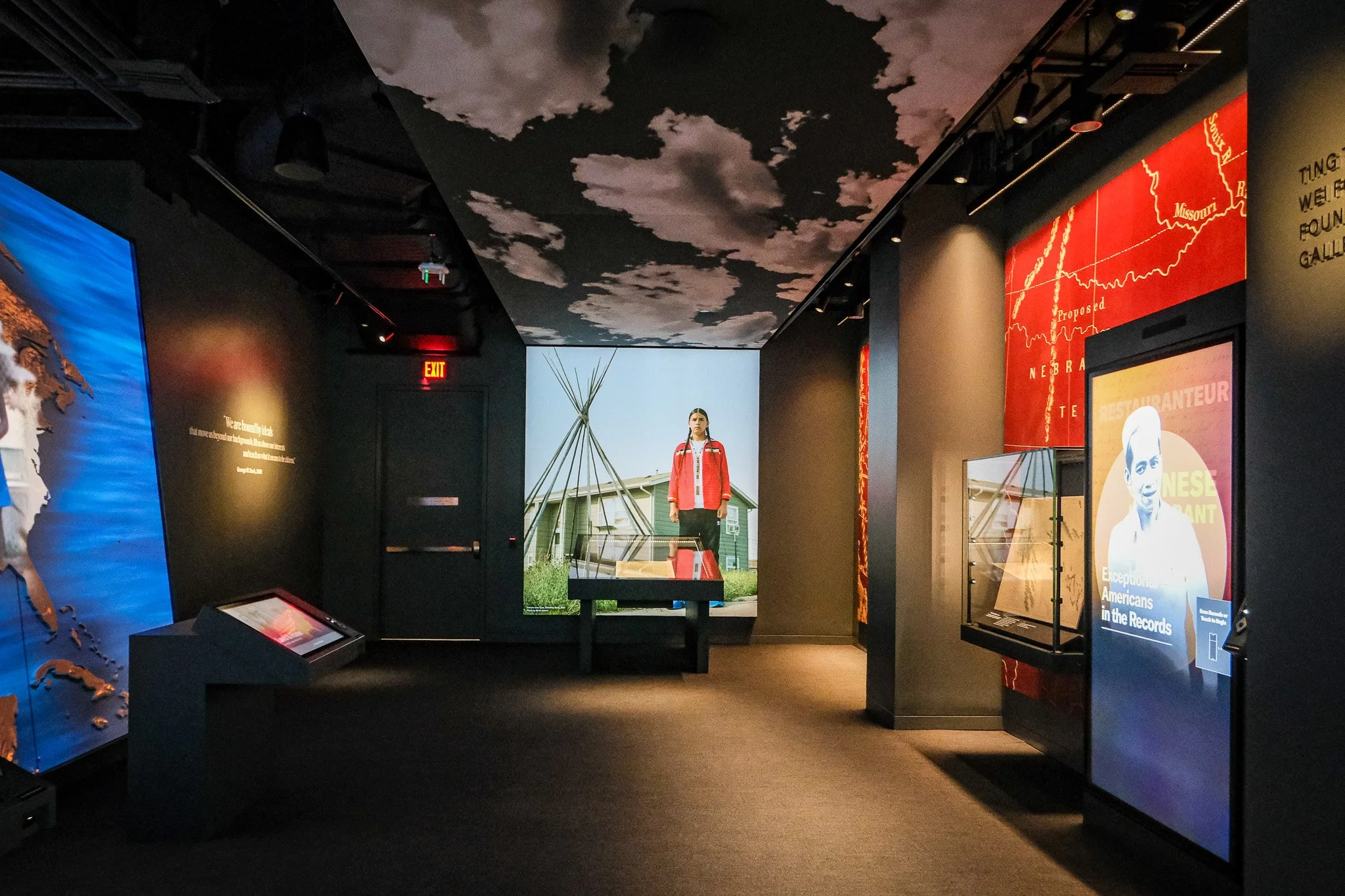
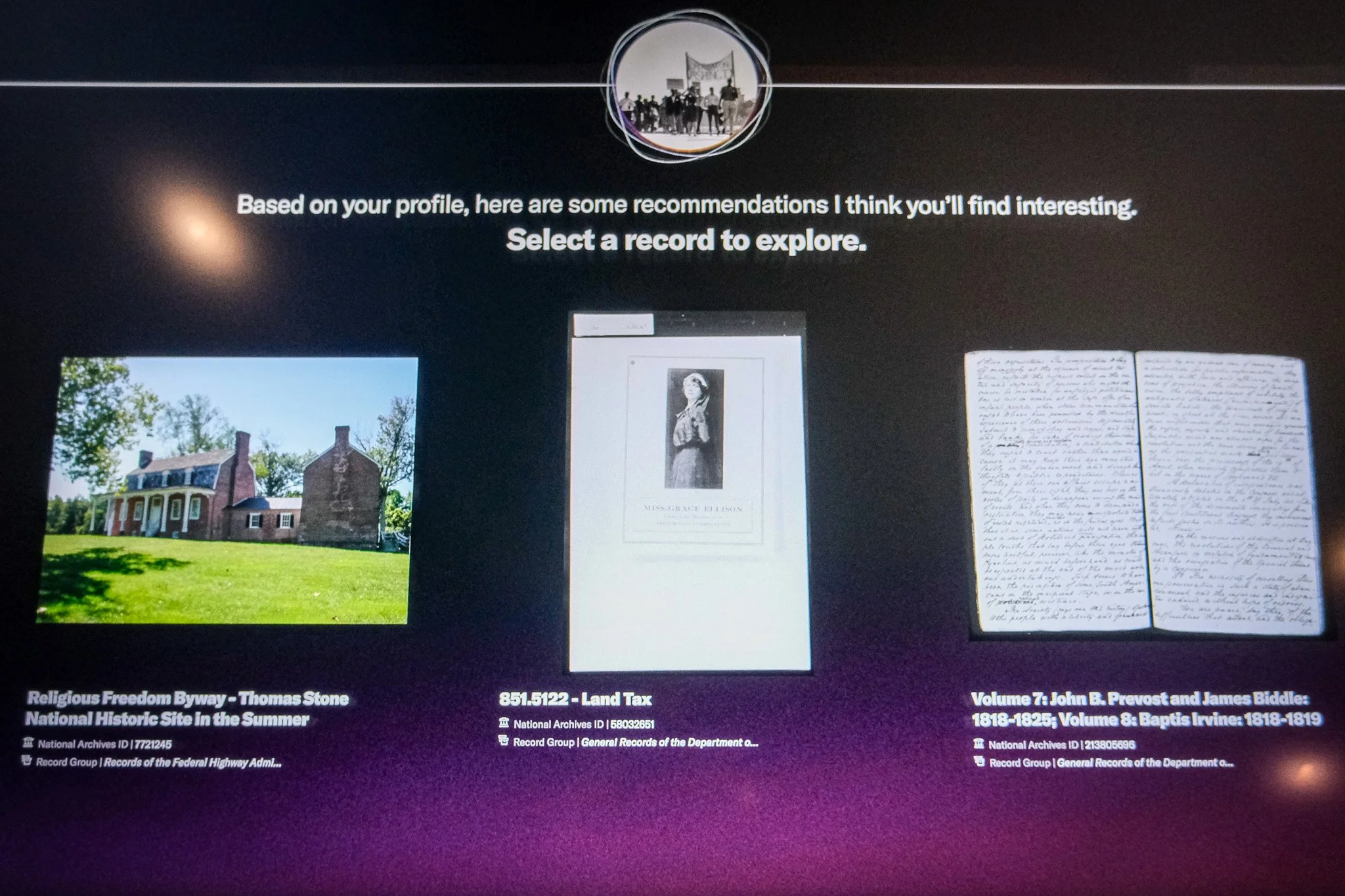
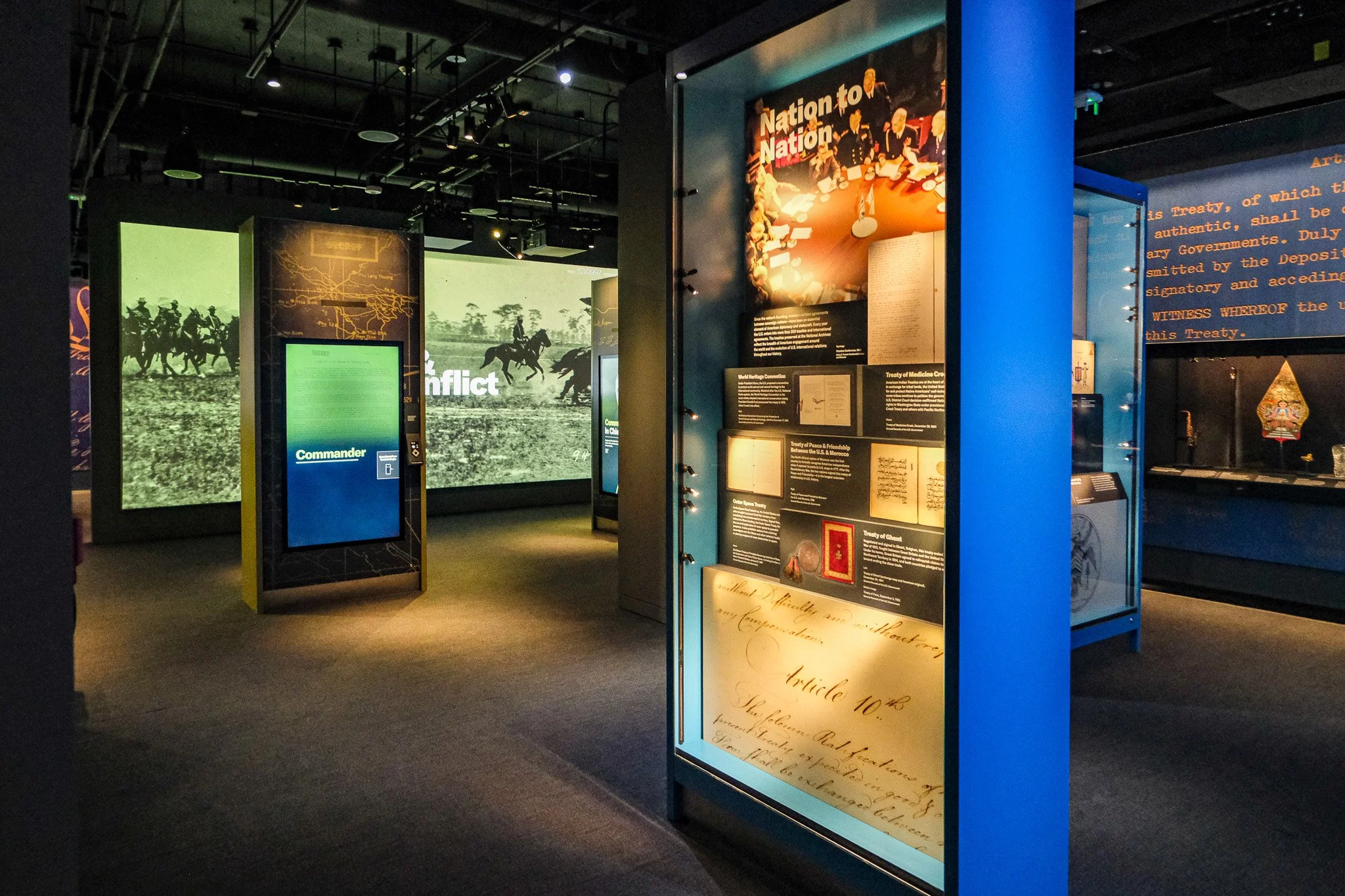
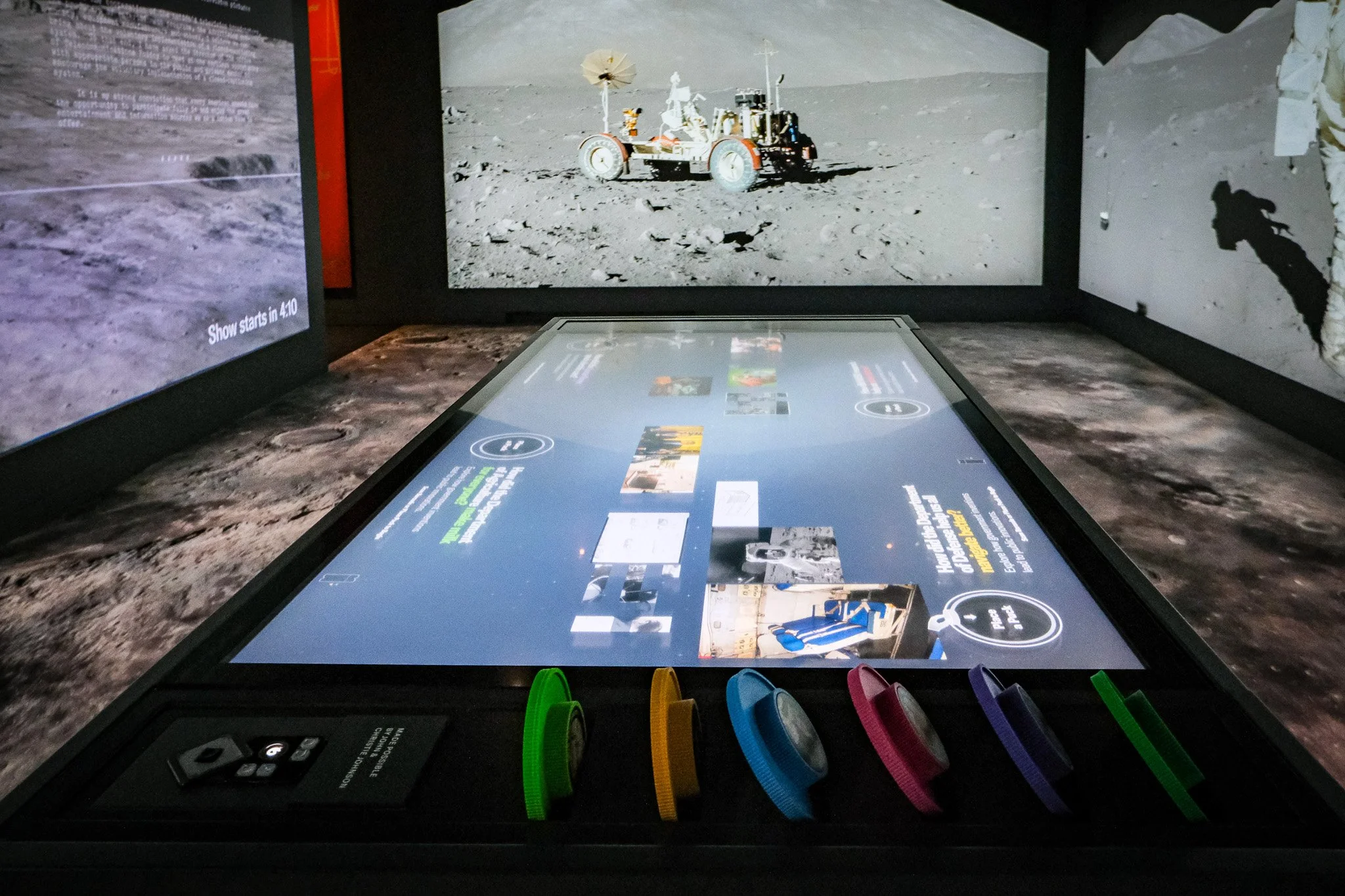
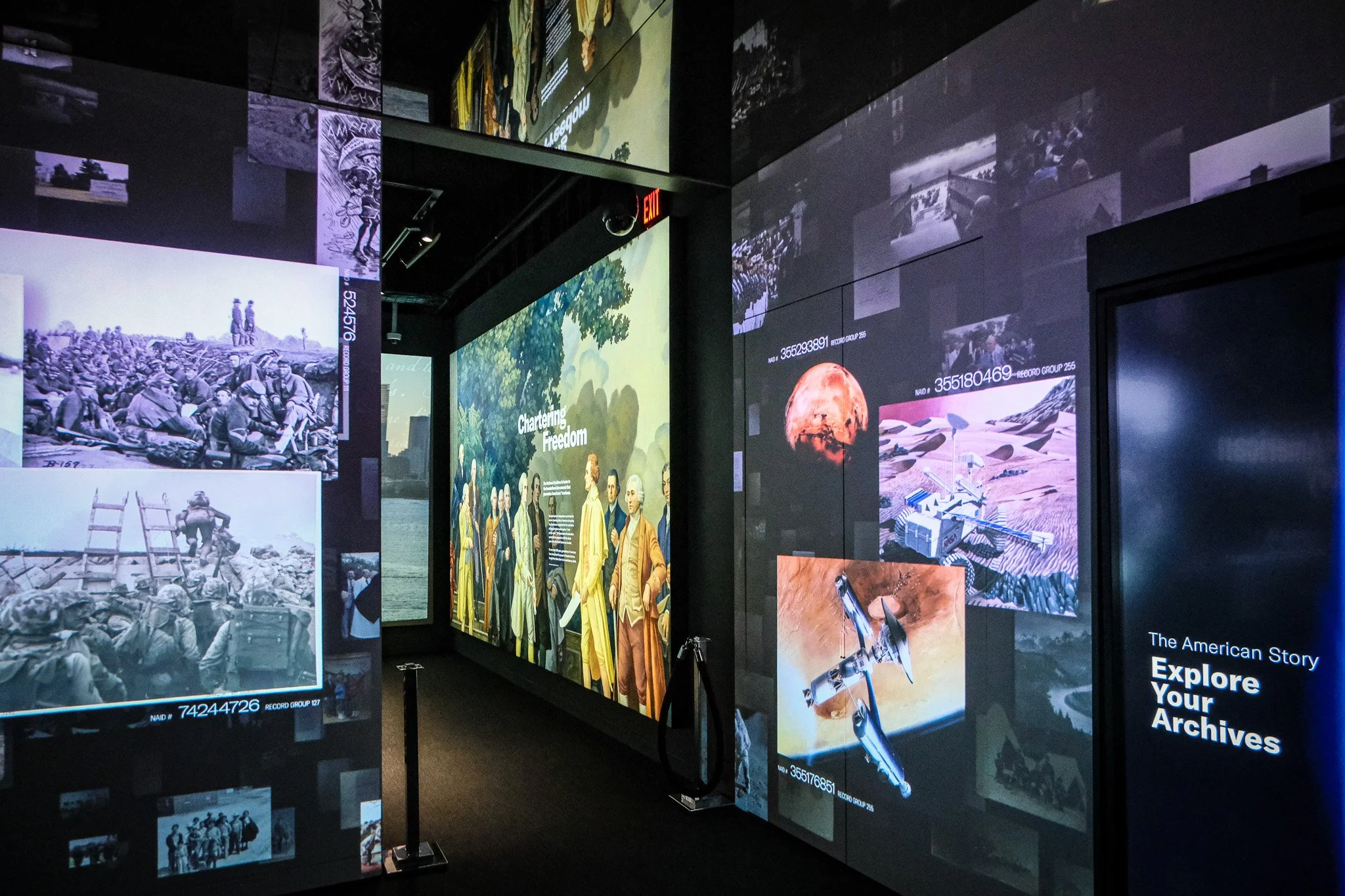
The newest exhibition, “The American Story” is the most forward attempt by the Archives to connect the visiting public to the vast amount of documents it oversees. Using what the Archives themselves have described as an Artificial Intelligence interactive, the main interface in this exhibition is a network screens that suggest documents for you to explore based on a combination of interests that you choose at the start of the exhibition and either the document you’re exploring at that particular station or the theme of the room you are in at the time.

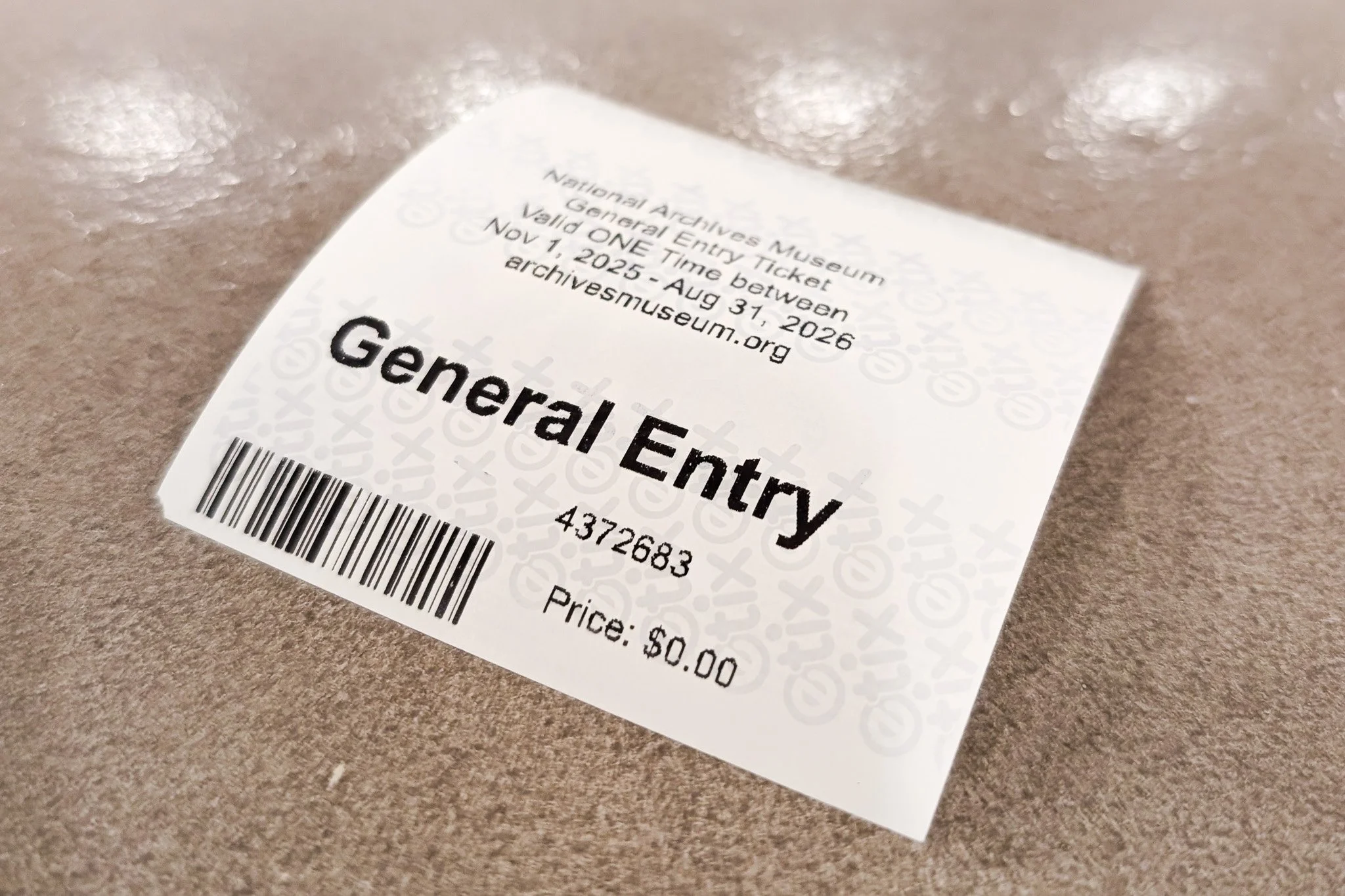
If you wish to keep track of the documents, you can grab a general entry ticket at the desk as you enter the Archives, after exciting security. You then scan that ticket at each touch screen kiosk in the exhibition as you interact along the way. At the exhibition exit, after your last scan, you have the option of navigation to a QR code linked to your personal ticket. There you can bookmark a unique web page on your phone in order to look in detail at all of your saved documents later. Hold on to the ticket! It’s good for the next year and you can return to add more documents to your unique web page. 

Here’s the web page for my last visit: https://archivesmuseum.org/14312293451. You can see which documents I saved in the exhibition in order to look more closely at them later at home.

For example, I saved this annotated draft copy of the Constitution that belonged to George Washington. You are able to see his hand-written notes in the margins! Now I can examine high quality digital files of this and other documents while I am at home. It’s not just an experience to be had inside the museum. 

How did I discover this George Washington related document? When I created my initial profile attached to my ticket, along with basic topical interests like founding documents, I indicated that I wanted to be offered associated items in the form of paper documents, photographs, and maps. These are all digitized of course. So at some point looking through the exhibition, the “AI Archives" program suggested that I save this document, which I did. Now I can bookmark this page in my browser for research purposes or just to relive the experience. Exploring further, I can also see where the actual paper document lives within the Archives system (actually in this same building!). Overall, on this visit I saved 34 documents which live across 6 different archive facilities and 2 presidential libraries. 

It is somewhat random, as many of the suggested documents were not at all linked to the content I was viewing or had very tenuous links to my purported interests. I’m not sure how this “AI” suggestion system is any different than an associated keyword search or metadata match.

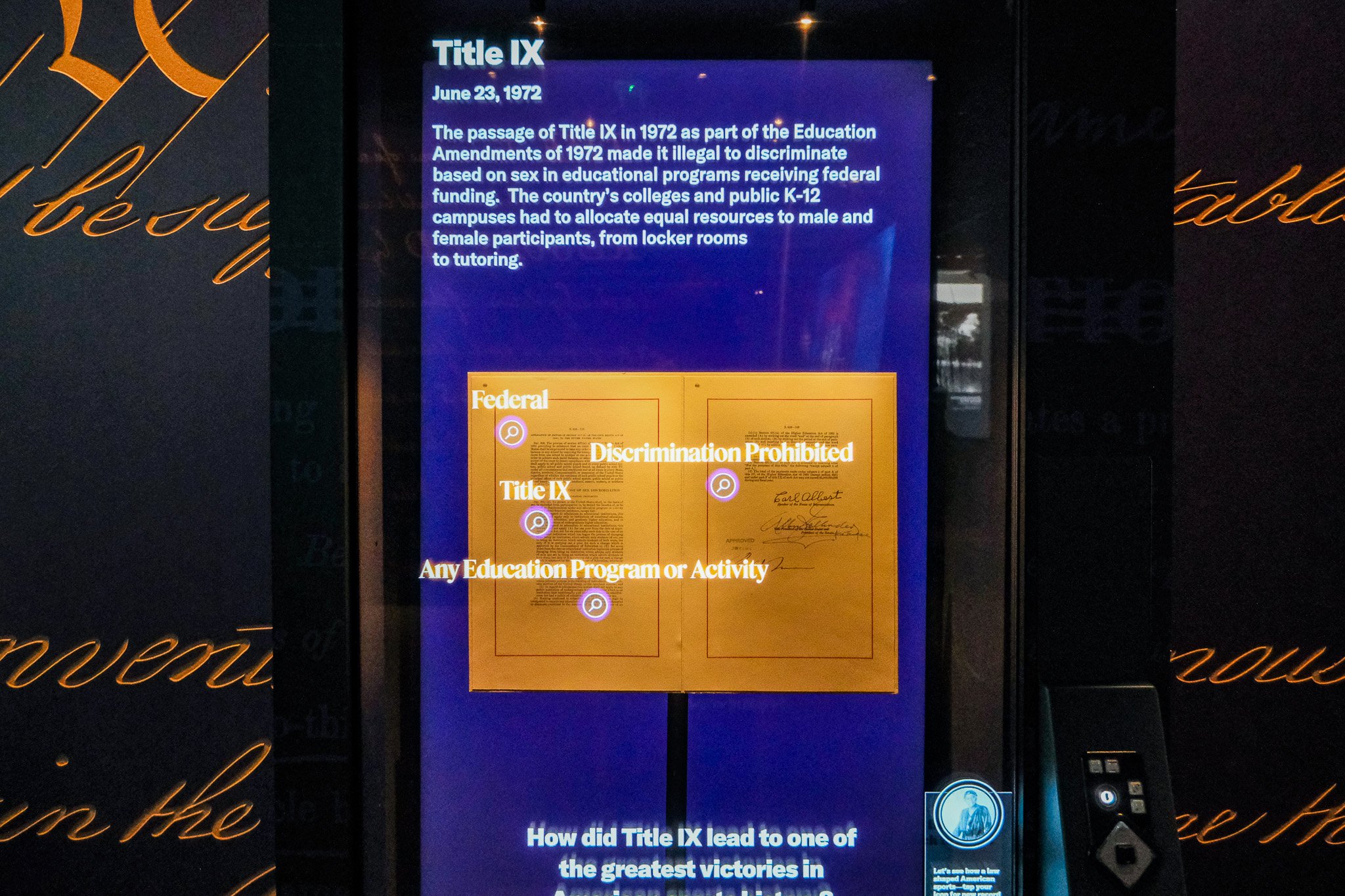
Immersive technology lets you read a document while using an overlying touch screen to learn more.

On a separate, more personal ticket, I saved some of my personal family information from a century-old Census record. You can begin basic genealogical research in this exhibition, too. There are privacy safeguards. Visitors are forced to link any saved ancestral/genealogical information accessed in the exhibition to a personal email address. This prevents that information from showing up to anyone who might find a lost ticket or randomly link to your Archives page online.

Along with a strong start featuring a deep dive into key documents like the Declaration, Emancipation Proclamation, and Louisiana Purchase (featuring mostly facsimile documents however), the exhibition branches out with a smattering of other topical deep dives including presidential gifts (received by), interesting patent history, genealogy, a thematic rotating photo gallery (currently featuring Ansel Adams), and a kids & family focused discovery center with "gamified" research and fun-fact stations.

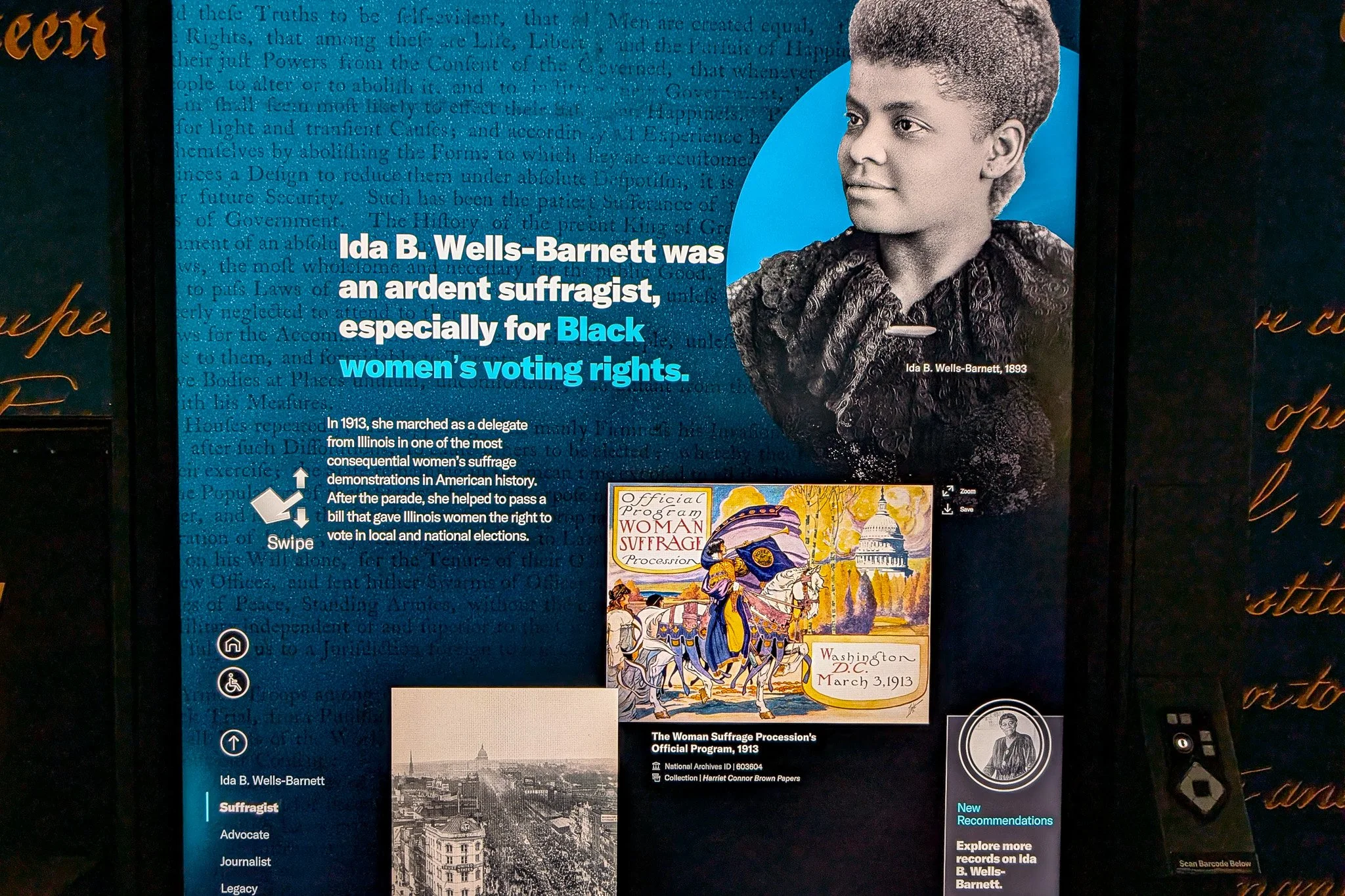
Profile of journalist and suffragist Ida B. Wells.

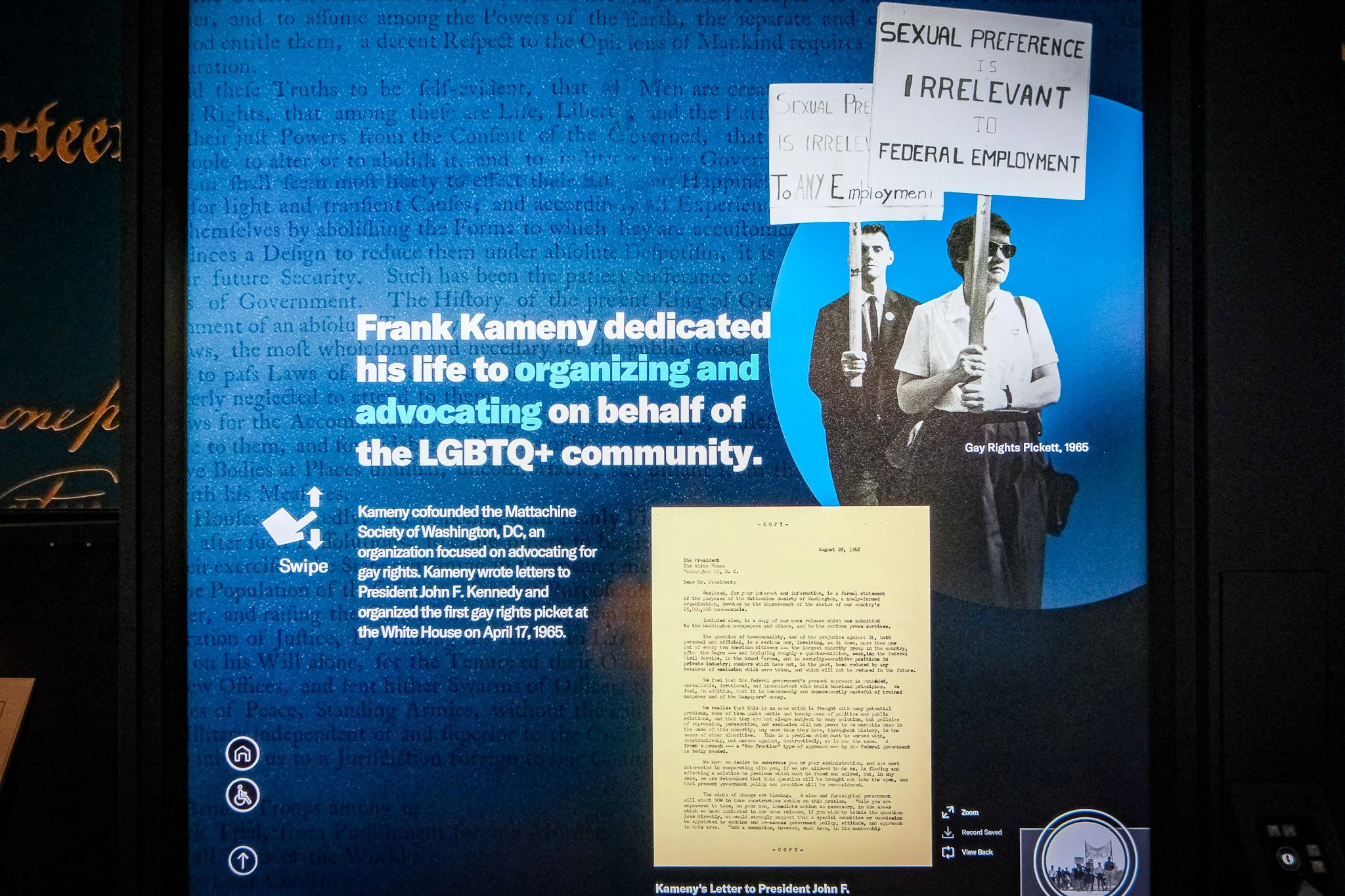
Profile of Frank Kameny and a letter he personally sent to President Kennedy.

One key attention grabbing aspect of select kiosks is the highlighting of personal profiles. The profiles are of influential or compelling change makers from American history that are related to the section of the exhibition you happen to be in or nearby documents to the kiosk. At the very first kiosk I was shown profiles of Ida B. Wells and Frank Kamany, two Americans I was immensely glad to see included in the exhibition. Linked to each profile are related government documents, of course – docs related to each person’s activism, struggle, or occasionally mundane government paperwork that became symbols of those struggles. I thought this was an extremely effective way to give a certain document meaning. We’re used to recognizing the importance of the written words on a few sheets of lined paper that make up the Emancipation Proclamation, for example. But, the links to other, lesser known documents or government paperwork along with the profile of the person who wrote or filled it out, AND the context as to why that mundane submission might have importance, kept me at the kiosk looking up various individuals and their related docs. Especially folks I have never read or learned about before. 

Overall, “The American Story" is a success, insofar as it provides a new, clever, and mostly accessible way to interact with the documents held in the Archives. And even though the “AI” is somewhat of a gimmicky idea to me in this case, the system does result in delivering suggestive documents in a way meaningful to one’s interests. I will also give points for the opportunity to discover transformative individual Americans at each station, relative to the documents on view in that section. On the other hand, the whole exhibition doesn’t come nearly as close to telling any one version of “THE” or even “AN” American story. The exhibition is just too scattered to weave a solid overall narrative. There are solid pocket narratives related to presidential decision making, westward expansion, innovation, and founding documents. And I can’t offer too many demerits outside of picking a slightly misleading name to the exhibition. If one is looking for a more cohesive and comprehensive national narrative, I  would visit any number of exhibitions in the nearby National Museum of American History or even NMAI or NMAAHC for that type of experience. 

The American Story is a permanent exhibition at the Archives and as such, has no closing date. It’s open 10am to 5:30pm daily with the rest of the Archives. The exhibition is located on the same floor as the Rotunda and Charters of Freedom.

DC's Alternative Art Spaces, Past & Present

DIY -- Do It Yourself. As applied to music and the arts, DIY usually signifies the show, project, or venue is produced by the artists themselves. Even though not always not-for-profit on paper, usually DIY spaces are run without being part of, or subject to direct oversight of a typical corporation, government agency, or overarching bureaucratic framework. Nor would shareholder be profit the main motive.

The idea of having multiple DIY arts spaces in downtown DC is somewhat of an anomaly today. Many of those arts spaces are located outside the downtown core in group houses, places of worship, or underutilized retail spaces.

A new exhibition (D.I.Y. in the District) located on the first floor of the MLK Library highlights alternative DIY arts spaces in DC from the 1970s to the present. From Rhizome (located in a residential setting way uptown), to d.c. space (formerly located in the heart of downtown DC), the exhibition uses venue ephemera, archival photos, and audiovisuals to show how these venues helped shape the usually unrecognized arts culture embodied in DC's local population. That is to say, the arts outside of national or international museums and organizations.

Perhaps a partial "victim of their own success," dc. space closed in 1991 as downtown DC was about to see a 30 year boom of redevelopment and new construction that continues today. That redevelopment boom transformed downtown culture to favor retail and entertainment, but much of the DIY arts scene was left out. There are art galleries, theatres, and entertainment venues downtown, but the cultural scene is dominated by larger entities such as the Smithsonian (SAAM and NPG) and the 20,000 Capital One Arena which is primarily a sports venue. But, smaller artist-run galleries such as Touchstone (1976) do still exist.

MLK Library has grown over the past decade to be a place for so many diverse resources and I'm glad these great hall exhibitions have been a part of that growth.

D.I.Y. in the District is open through December 7, 2025. 901 G St NW, Washington, DC 20001.

Support us on Patreon to receive all posts, and early!

Exhibition Spotlight: "I’ll Have What She’s Having”: The Jewish Deli

Learning through food histories is a fascinating & compelling way to explore the past and learn about peoples, regions, and cultures. For instance, a few years ago I wrote a 60 minute food histories of DC program for a client and through this strictly food-based research, I learned so much more about the District of Columbia itself. A new exhibition at the Capital Jewish Museum titled "I’ll Have What She’s Having”: The Jewish Deli encapsulates all of that same sentiment and more.

From exploring the effects of 20th century immigration, to defining the actual foods served in delis, to surprisingly relevant modern day pop culture movie references, this exhibition is more than just a food history. It showcases how American Jews, through delis, created new American food traditions, ensured continuity of important established traditions, and practiced a time-tested, cross cultural social exercise — sitting down together to have a meal.

Of course, since this is the Capital Jewish Museum —as in Washington, DC— there is a solid emphasis on the DC area history in deli culture from present day and years past. That includes the suburbs of Washington, too. Not to mention the existing interactive computer display of delis and other Jewish owned business, schools, places of worship, and significant sites in the ongoing exhibition (Connect. Reflect. Act.).

I loved the mix of laying groundwork through immigration histories while showing present day ephemera that makes every individual deli that particular deli — uniforms, menus, equipment, signage, and advertisements. We have all seen these places in everyday city life, but the context and meaning make seeing the exhibition more of a journey. And of course, if you explore it all from beginning to end, you'll get to watch the namesake, payoff “I’ll have what she’s havingfilm scene in the final gallery. Admittedly a somewhat hilarious sounding clip if you haven't seen the movie and you hear it while making your way through the adjacent room in the exhibition.

“I’ll Have What She’s Having”: The Jewish Deli” is on view through August 20, 2024. As a special exhibition, it does require an entrance ticket of $15. The rest of the museum is free with timed ticket. Walk-ins are excepted as space permits. 575 3rd St NW.

Exhibition Spotlight: Brilliant Exiles

Josephine Baker est aux Folies-Bergère. Lithograph, 1936. ByMichel Gyarmathy (1908-1996).

Happy belated birthday Josephine Baker! The singer, dancer, and actor who captivated Paris in the 1920s was born 118 years ago this week, on June 3, 1906.

Baker was but one of many innovative and creative American women who moved to Paris in the early 20th century seeking personal autonomy along with professional agency and success.

Some of these “brilliant exiles” are profiled in the new National Portrait Gallery exhibition by the same name, “Brilliant Exiles: American Women in Paris, 1900-1939.” The exhibition is open through February 23, 2025.

Loïs Mailou Jones 1905-1998. Charcoal and chalk on textured paper, c. 1940. By Céline Tabary (1908-1993) .

Gertrude Stein 1874-1946. Oil on canvas, 1905-6. By Pablo Picasso (1881-1973).

The show is made up of nearly 80 works of art, mostly in the form of portraits. The portraits are of, and sometimes also by these Americans who shifted and elevated the Paris culture through literature, visual, arts, dance, drama, and philosophy.

Portraiture has a way of annunciating identity in a more evocative way than even the written word can. This exhibition does that in a simple way, letting the paintings speak for themselves.

Baker, like the other American women featured in the exhibition, did not leave the U.S. and land in Paris by accident or coincidence. Crushing legal and social limitations in the U.S. left little room for freedom expression for independent and talented women. Restrictions were based not on just gender, but sexuality, race, economic stratifications, and politics. Paris was not a panacea for all U.S. societal ills, but the artistic climate offered more independence, agency, and freedom to an extent that, for these women, the U.S. could not compare.

Mercedes de Acosta 1893-1968. Oil on canvas, 1923. By Abram Poole (1882-1961).

Baker herself moved to Paris in 1925. She did return to the U.S. for short stints in theatrical productions, and more extensively to lend her aid to the cresting civil rights movements in the 1960s. But by then she was a Parisian through and through, having gained French citizenship way back in 1937. Baker died in Paris, passing away in her sleep on April 12, 1975, just days after performing in a show marking her 50th year of her Paris debut.

This exhibitions is about more than Baker herself. The portraits that make up the show give a luminescent view into the personality, and dare I say, aura, of the people captured. This is high recommend to visit before the show closes in February of 2025!

This and all Exhibition Spotlights are brought to you by our wonderful Patrons. Patrons get monthly insight into new and upcoming museum exhibitions, DC history posts, photographs not shown anywhere else, and more. If you like this post, there’s way more at Patreon.com/AttucksAdams! Memberships start at just $3/month.

In Exaltation of Flowers: Rose- Geranium; Petunia-Caladium-Budleya; and Golden-Banded Lily-Violets. Katharine Nash Rhoades 1885-1965. Marion H. Beckett 1886-1949. Mercedes de Cordoba Carles 1879-1963. Tempera and gold leaf on canvas, 1910-13. By Edward Steichen(1879-1973).