In April 1866 two regiments of Black troops stood in front of the White House as cannons rang out to welcome President Johnson. The crowd offered up three cheers for the President. President Johnson shook hands with onlookers, stepped up, and gave remarks regarding the celebration at hand: marking the 4th anniversary of the end of slavery in the District of Columbia. After the President’s remarks, a crowd estimated at 10,000 watched a procession of nearly 5,000 Black men march to the U.S. Capitol and back to Franklin Square to hear remarks from the Reverend Henry Highland Garnet. This was one of the first large public celebrations of emancipation in Washington DC.
The Emancipation Proclamation went into effect January 1, 1863 and the 13th Amendment was ratified December 6, 1865. But in Washington, DC, slavery ended on April 16, 1862 with President Lincoln’s signature on the District of Columbia Compensated Emancipation Act. 3,100 enslaved DC residents were made free on that day. At the same time, enslavers were compensated by the federal government for ending the institution. This was the first large-scale emancipation of enslaved people by the federal government. It was an important landmark, establishing that the federal government had the authority to end slavery in territories under its jurisdiction; later leading to the Emancipation Proclamation as well as the 13th Amendment. It also remains the only time enslavers were compensated for the dissolution of slavery in the U.S. 3,100 DC residents were emancipated. And 930 petitions for compensation by enslavers were approved over the next 9 months.
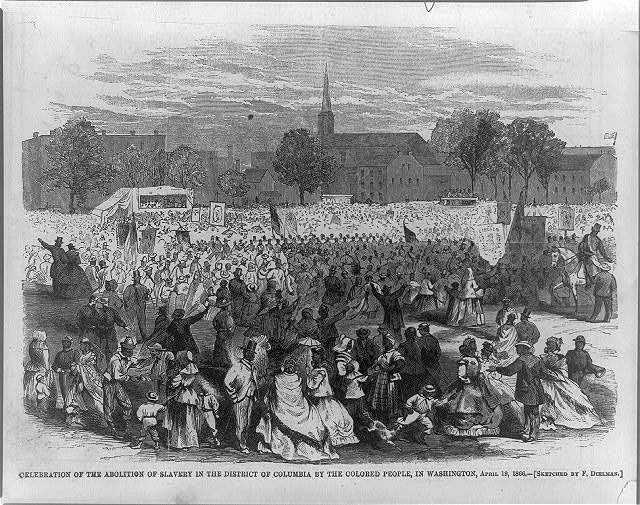
1866 celebration of Emancipation in DC. (Harper’s Weekly)
The large Franklin Park celebration four years later marked the short period of freedom but also called for universal suffrage as well. Full rights and opportunity across the board. Voting, equal protection, free association, religion, speech, equality in public accommodations like housing and schools; the fight for rights continued for more than a century after the Franklin square celebration.
We still celebrate Emancipation Day here in Washington DC. Emancipation day is an official local holiday in the District of Columbia, typically April 16th. While some government workers have the day off and schools are closed, there are often public celebrations, including a parade and city-sponsored gathering. For decades, that gathering has been held at Freedom Plaza on Pennsylvania Avenue NW. In 2026, the celebration was set to move back to Franklin Park, but not by choice. Freedom Plaza was closed then and is still closed as of today.
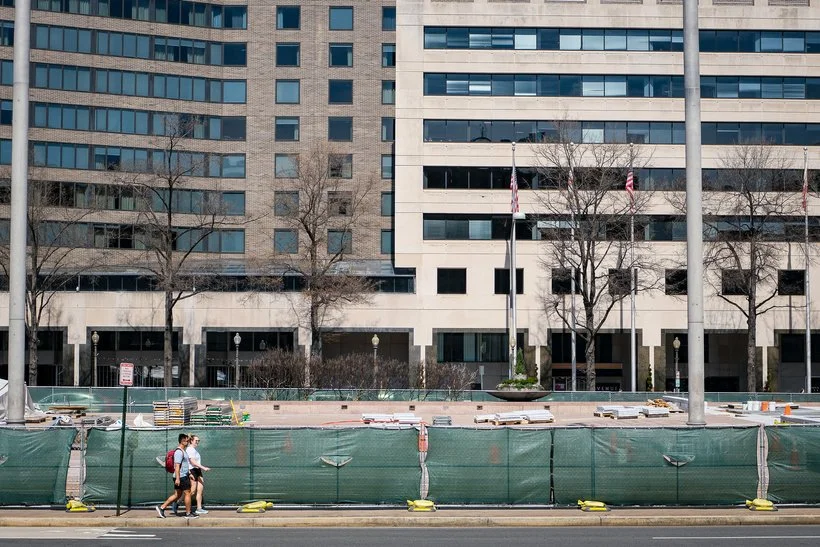
Freedom Plaza closed for the time being.
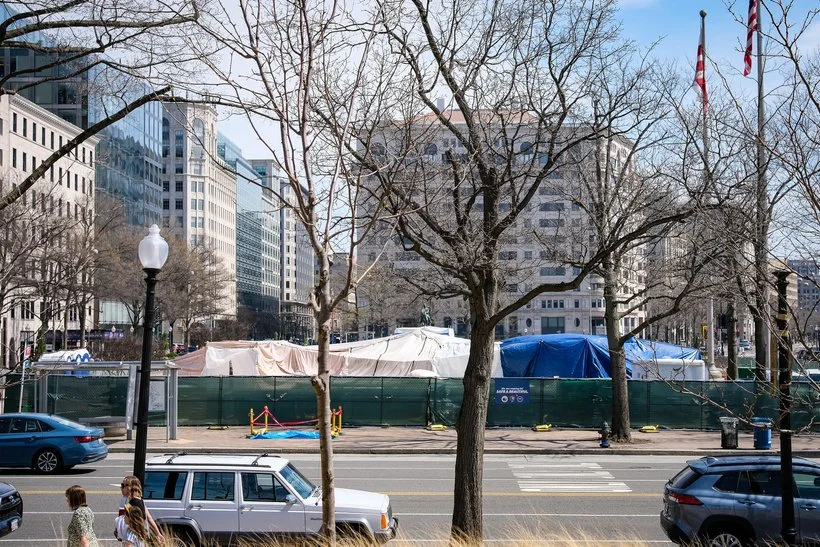
Freedom Plaza is one of an increasing number of public spaces closed as we move into the Spring and Summer seasons in the District of Columbia. Dupont Circle, Malcolm X Park, Freedom Plaza, Lafayette Park, and Logan Circle are all public gathering spaces that have been, are, or will be closed for extended periods of time as a result of an initiative by the name Make the District of Columbia Safe and Beautiful. The initiative came in the form of an executive order in March of 2025. There is an act making its way through Congress that would codify the Executive Order into law and is similarly titled: Make the District of Columbia Safe and Beautiful Act of 2025. After passing in the House, the bill is currently sitting in the Senate. Nevertheless, work continues via the power of the Executive Order issued in 2025.
Among other mandates, the order empowers the Secretary of the Interior to emphasize urban beauty and update maintenance of various public spaces. Many of the public spaces are public commemorations like monuments & memorials, or parks & plazas, especially those with water fountains like Lafayette Park, Malcolm X Park, and Freedom Plaza. The main issue (especially regarding touring) is that when a public space is closed by the task force, little or no notice has been given, and the timelines for work have or will interrupt visitation. Two spaces I utilize on regular tours are closed for the foreseeable future, Lafayette Park and Freedom Plaza. On those tours I use the iPad to show spaces to illustrate elements we would typically visit in person, or reference elements from afar.
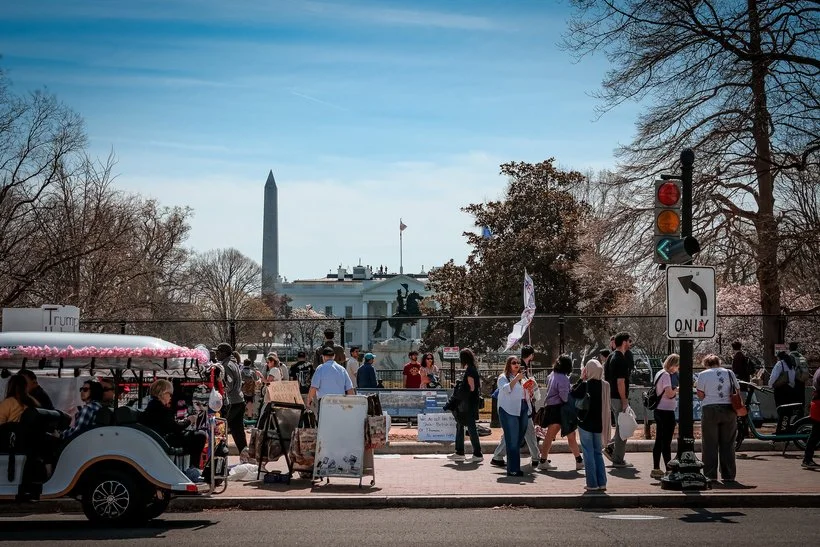
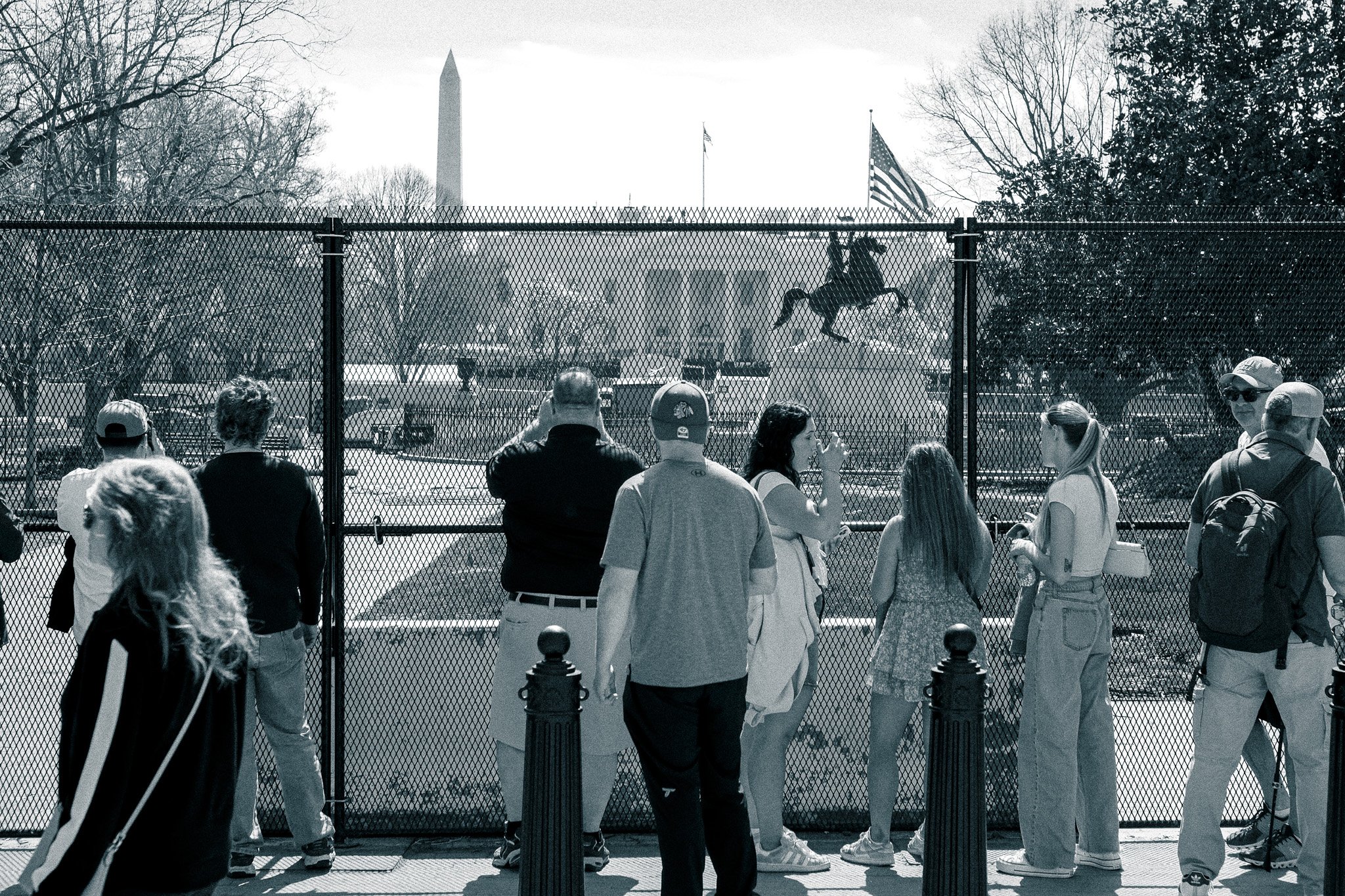
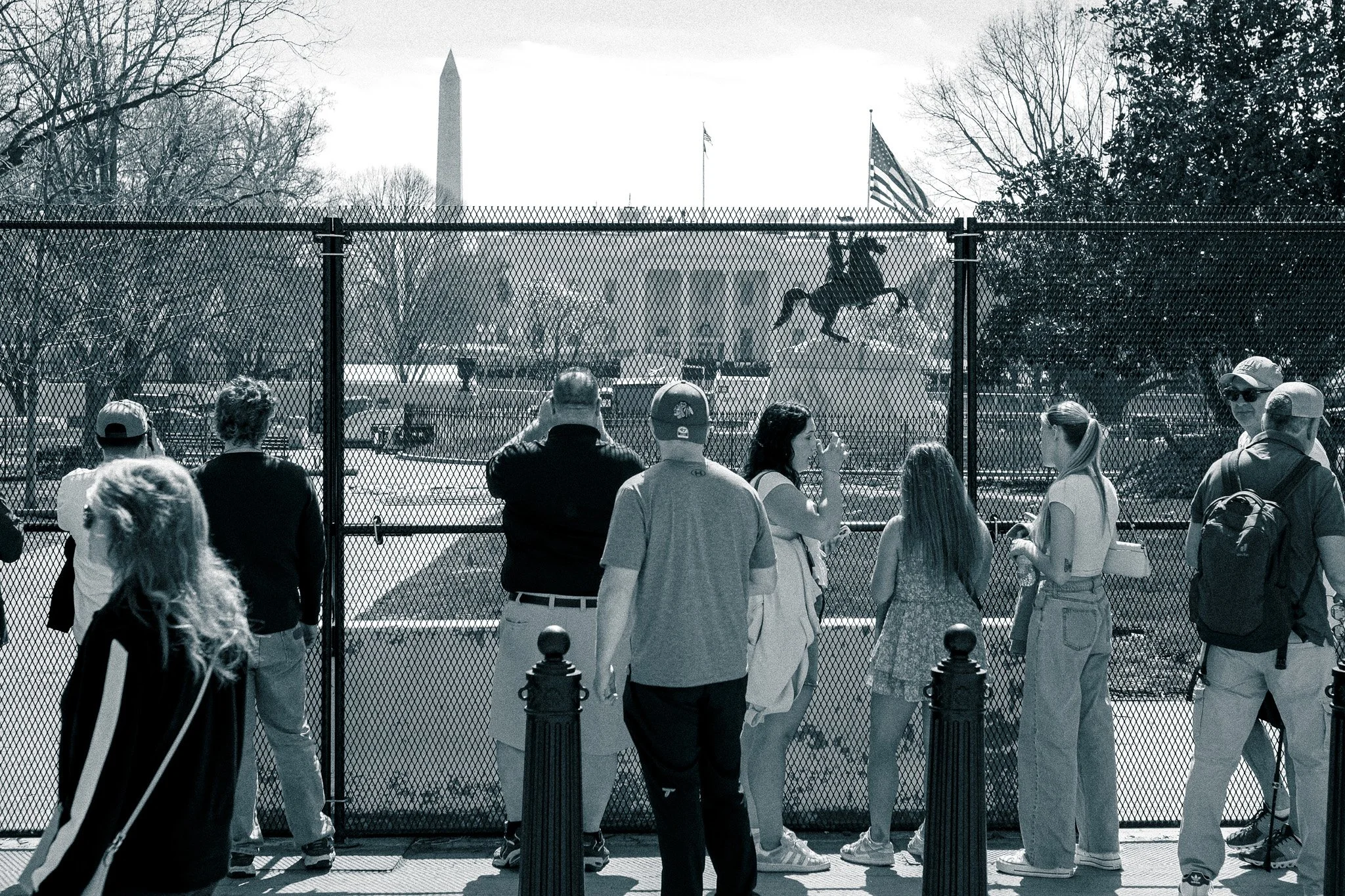
As close as one can get to the White House at the moment.
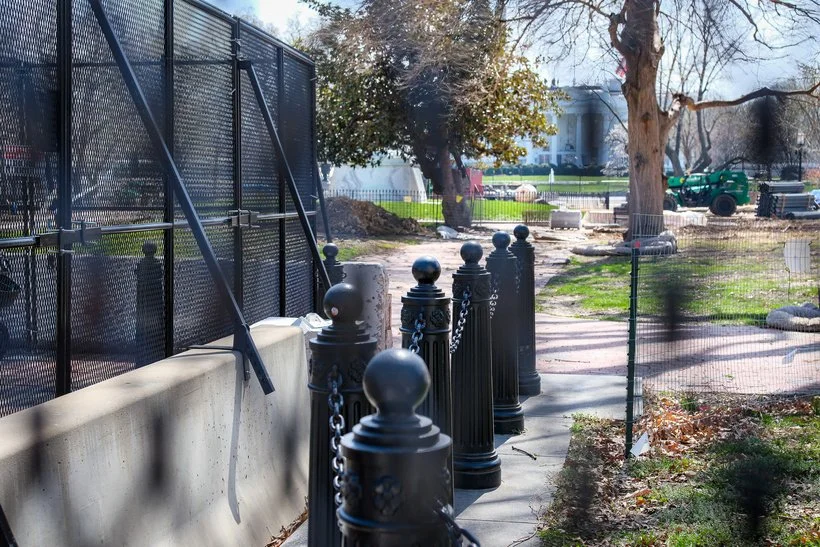
Heavy duty fencing around the White House.
Closing a part of one park for a few weeks would likely go unchallenged, but the closure of multiple open park spaces at the same time, during the busy outdoor and tourist season has drawn some local consternation. Especially in light of other alterations in DC including the erasure of Black Lives Matter Plaza. Lafayette Park, Malcolm X Park, and Freedom Plaza also all have history as places for protest, rallies, and other gatherings for free speech activities. Each of those spaces will have overlapping closure this year including right now. That’s three fewer places to gather, protest, or hold a popular rally.
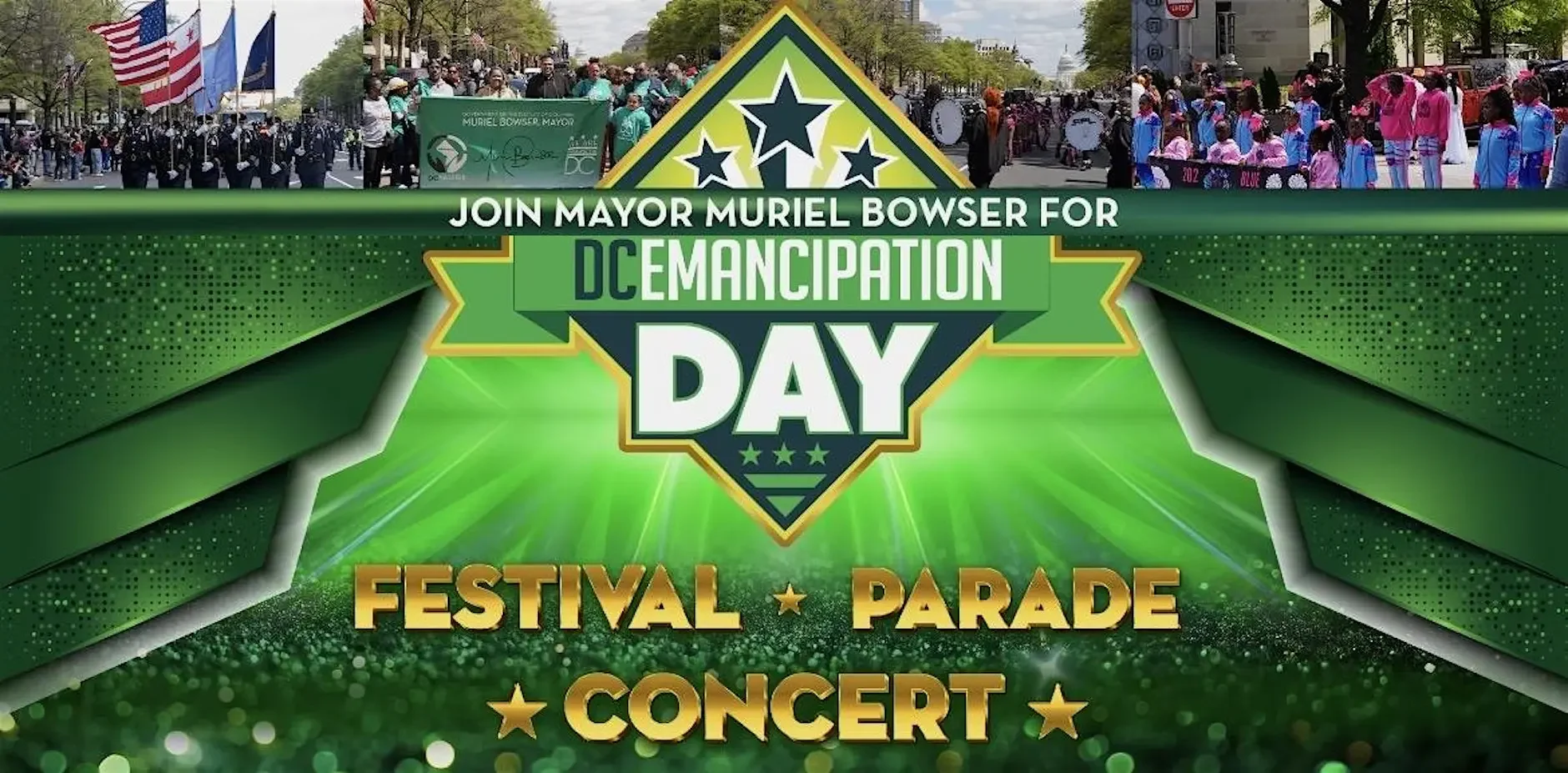
Flyer for the 2026 DC Emancipation Day program (held on April 19).
The 2026 Emancipation Day program was set to be moved back to Franklin Park. However interest far exceeded what the park could potentially hold. So, the official DC Emancipation Day program was held on April 19, but back at Freedom Plaza, specifically, on the streets adjacent to Freedom Plaza. Read more about the program here, but it was an all day event with a short parade and musical portion with national artists like T.I. and Mya (from DC!) and local go-go bands. The program was free.
What can we do when access to public spaces pause? Keep learning!
Ever wanted to know which universities offer public history programs?: https://ncph.org/program-guide/
Are you a museum learner? Find a museum: https://www.aam-us.org/programs/about-museums/find-a-museum/
Celebrate and engage in existing historical spaces and resources around DC history: https://subjectguides.library.american.edu/c.php?g=175019&p=1153864
Advocate for more, new public histories. One current chance we have is regarding the redesign of Pennsylvania Avenue. Let the National Capital Planning Commission know your thoughts: https://www.ncpc.gov/initiatives/pennave/
Get involved in public history on a deeper level. Attend the DC History Conference this May. I have been before and it a is a blast!: https://conference.dchistory.org/
Make your own art or display of public history.
What are other ideas?