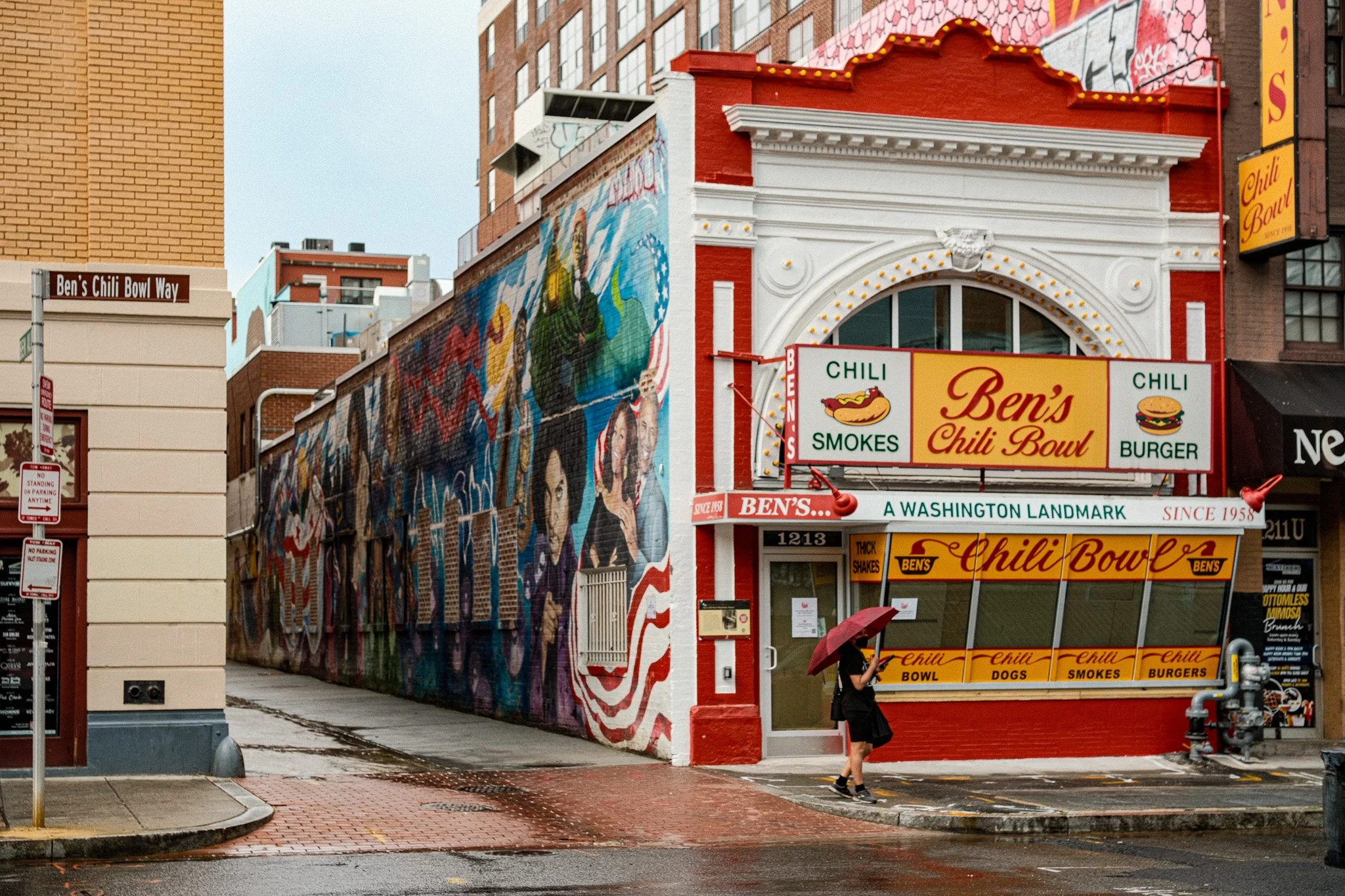
Ben's Chili Bowl days before their recent grand opening, May 2026. "The Torch" mural was still visible.
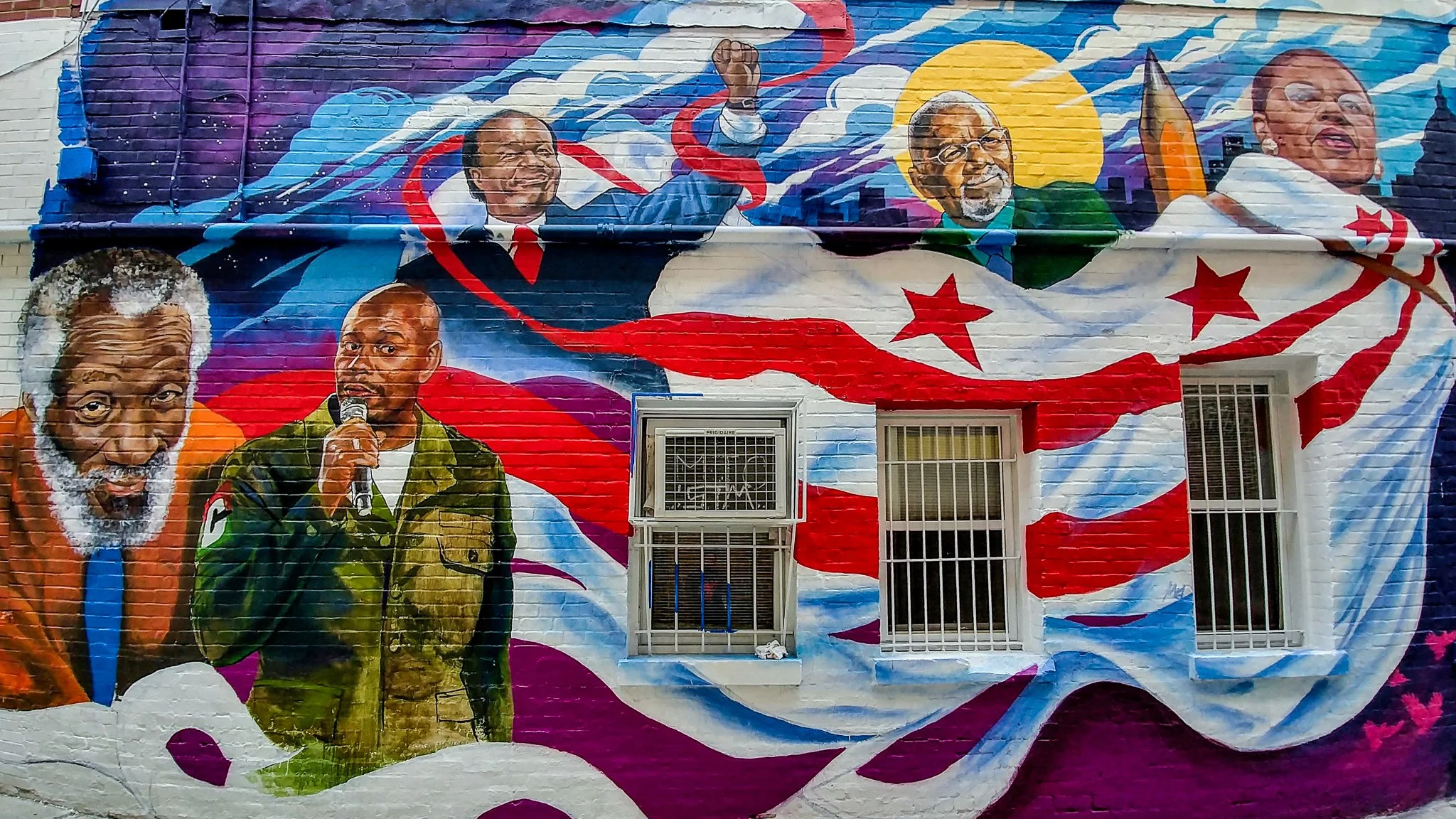
Detail of "The Torch" mural at Ben'c Chili Bowl. Artists: Aniekan Udofia with Mia Duval.
For the past seven years I have used the mural on the west wall of Ben's Chili Bowl to weave together multiple narratives that make up the Art & Soul of Black Broadway walking tour. The mural features a plethora of figures important to U Street, Washington, DC, and American history in general. In order from when you entered the alley were Barack and Michelle Obama, Harriet Tubman, Muhammad Ali, Prince, Chuck Brown, Roberta Flack, Donnie Simpson, Russ Parr, Taraji P. Henson, Wale, Eleanor Holmes Norton, Jim Vance, Marion Barry, Dave Chappelle, Dick Gregory, Jesse Jackson, Cathy Hughes, and Bruce Johnson. Shortly after the restaurant reopened this month post-major renovation, the owners announced that the mural would be replaced.
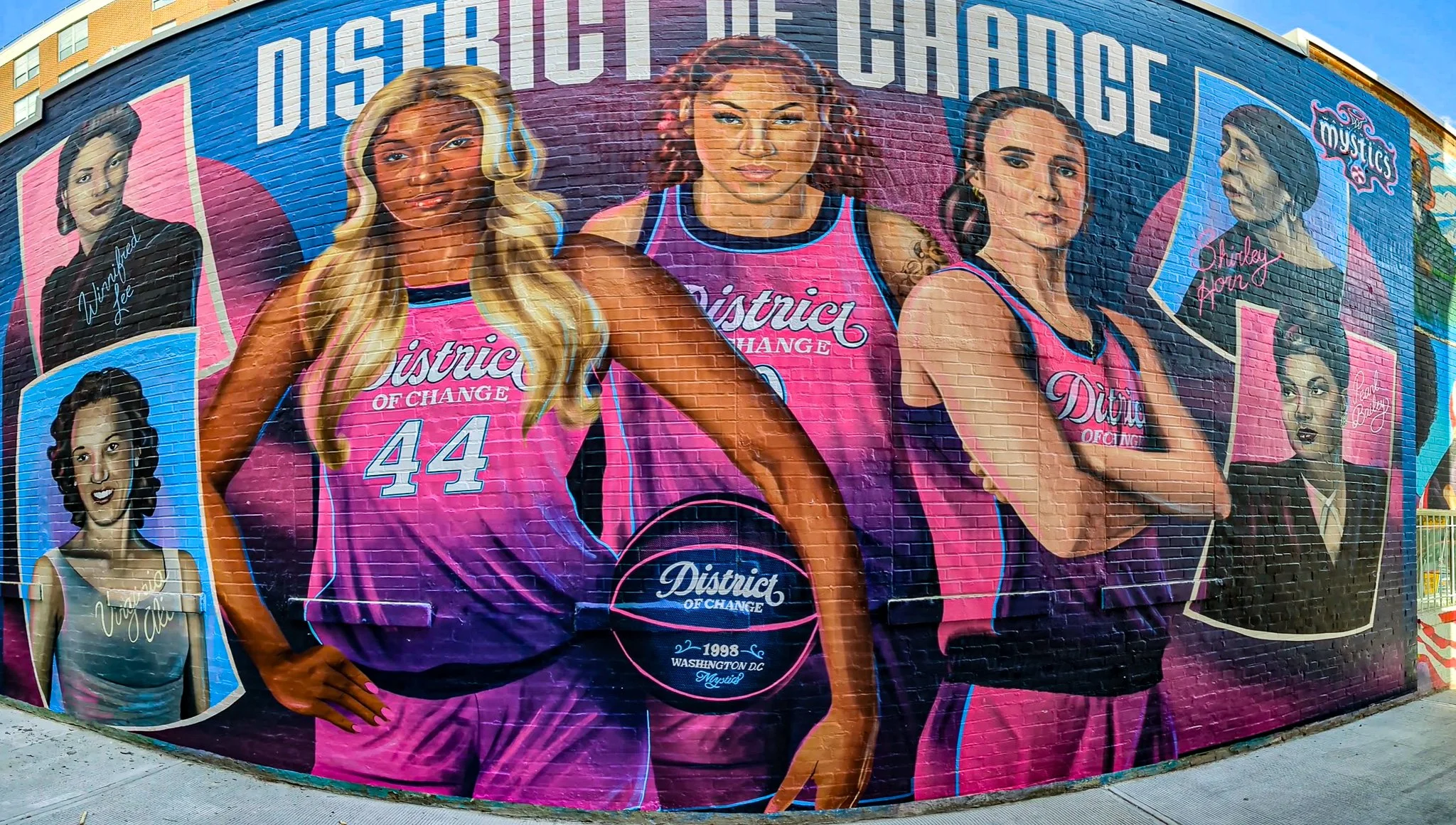
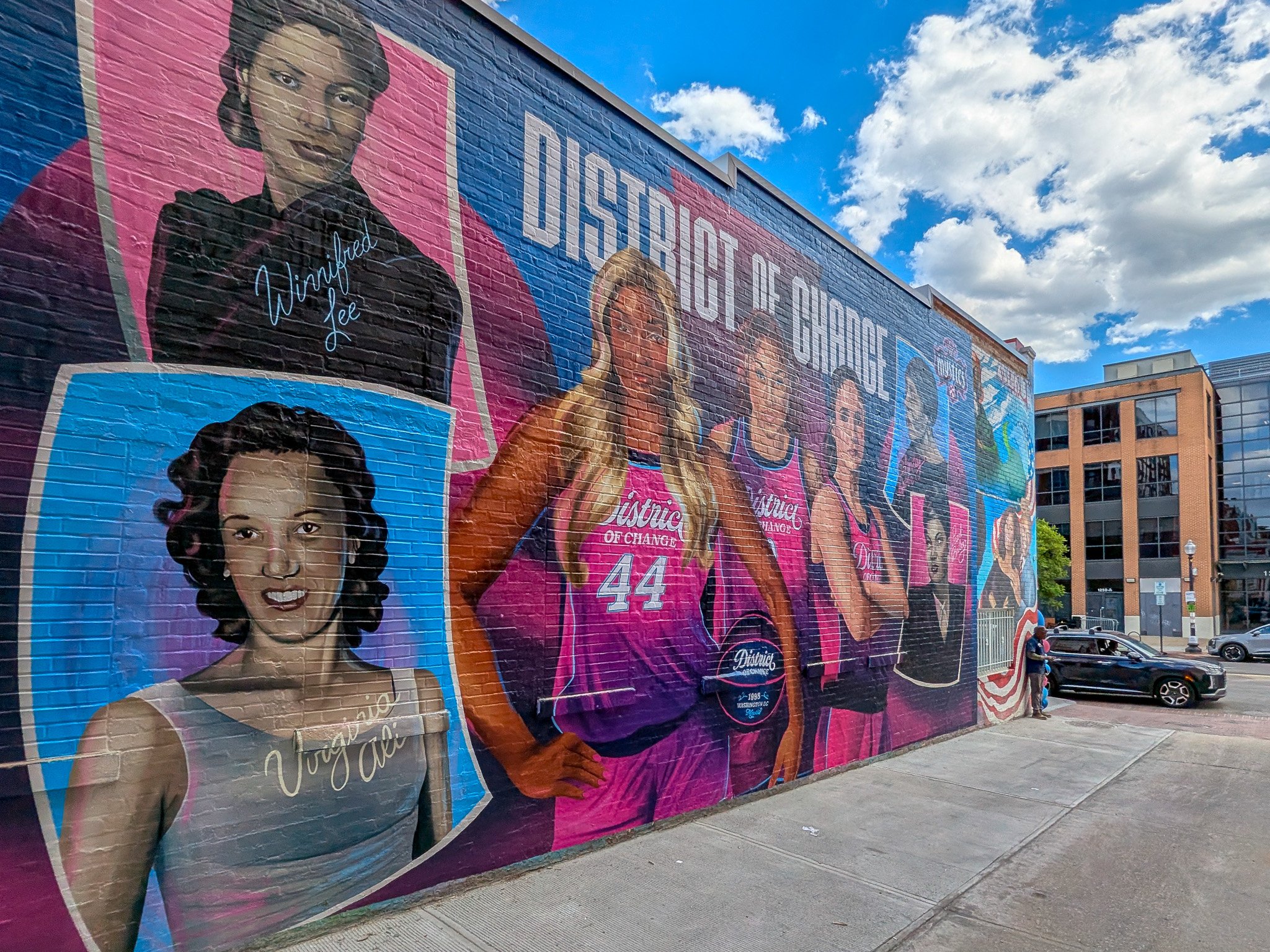
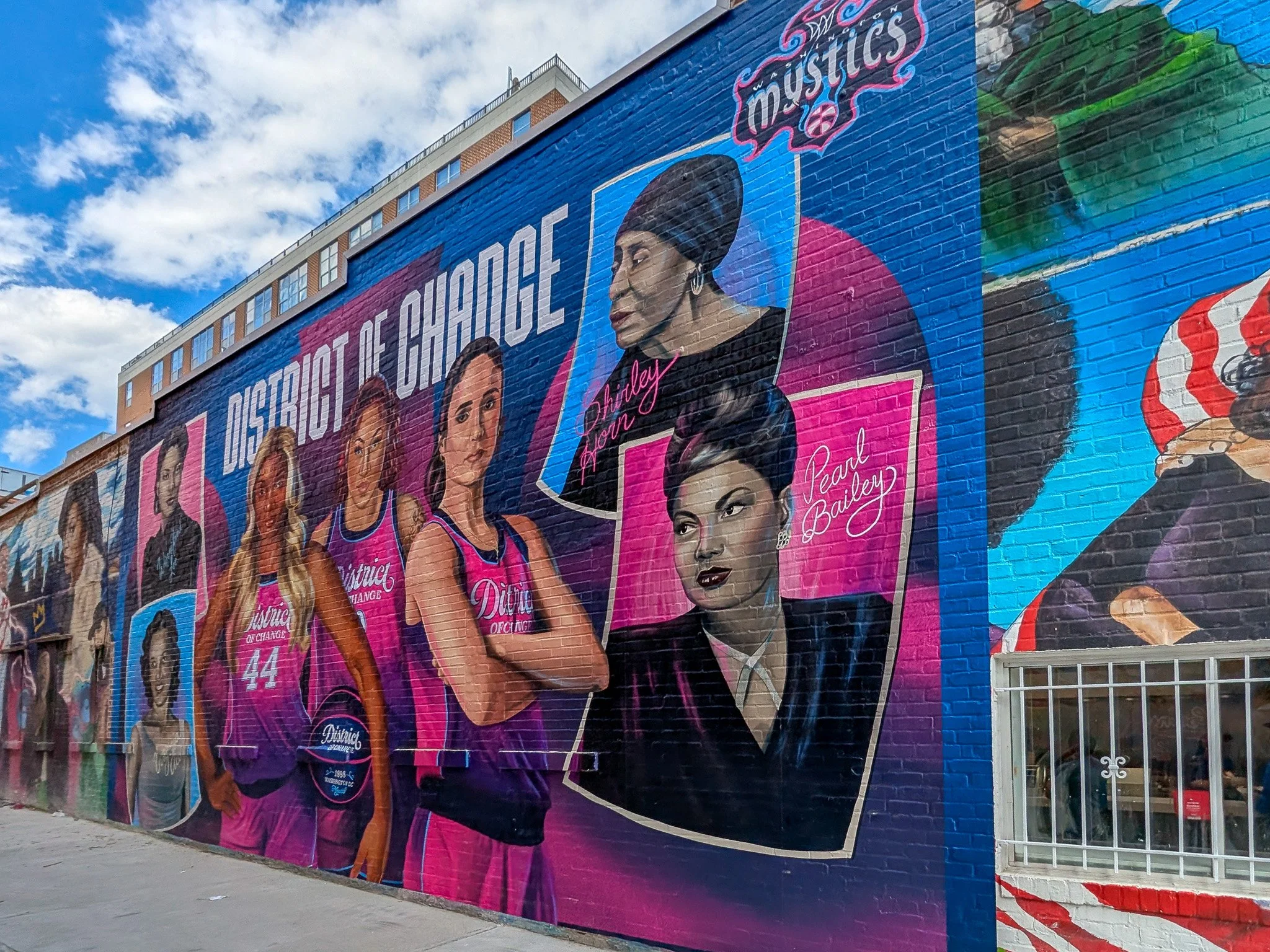
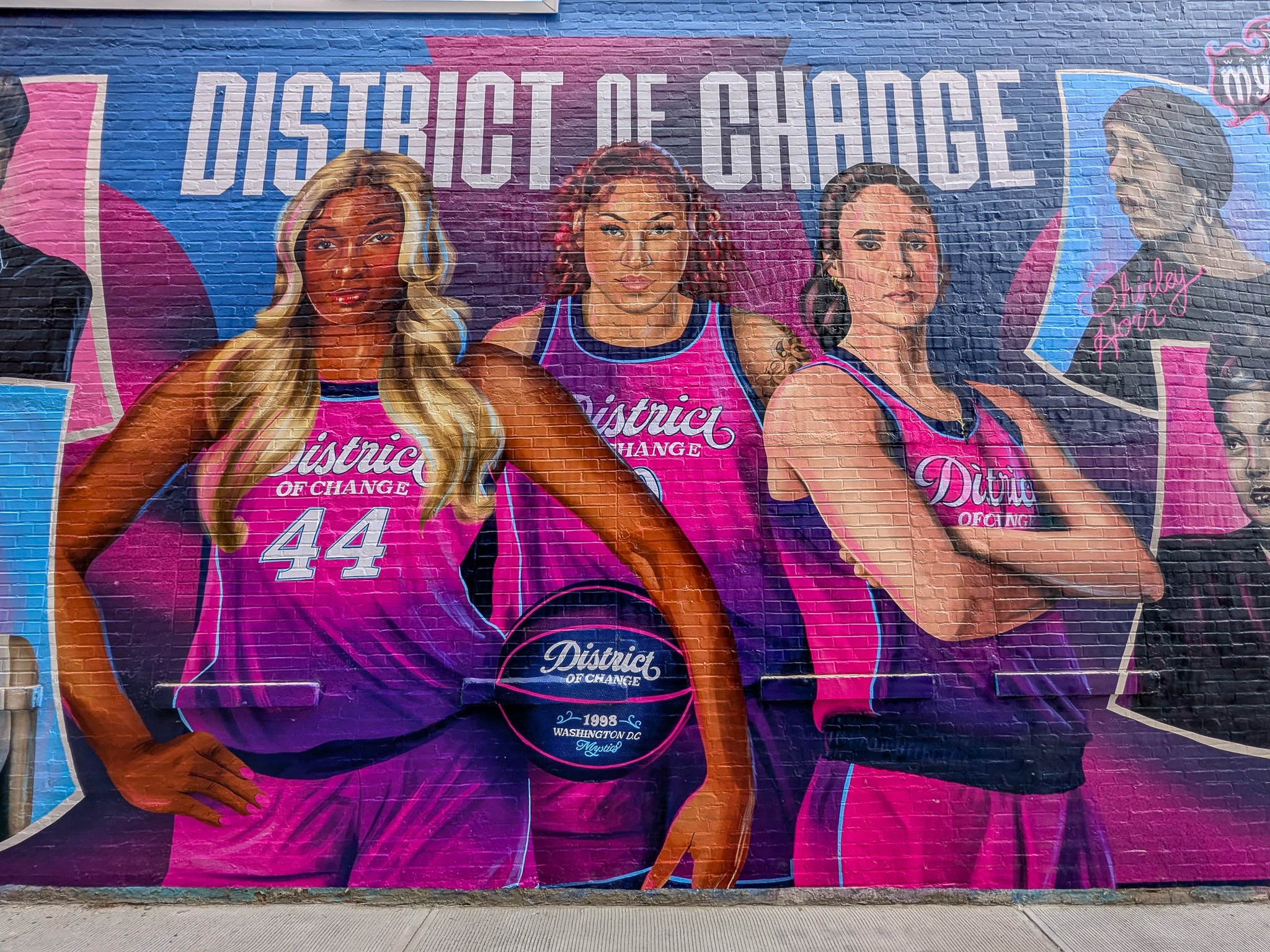
Temporary mural featuring Mystics players and four local legends including Virginia Ali, owner of Ben's Chili Bowl. artist: Katty Huertas.
While calling on the general public to suggest ideas for the new mural, a temporary mural went up over the now defunct one: a collaboration with Washington Mystics basketball team Washington Mystics. In the center of the mural are players Kiki Iriafen, Shakira Austin, and Sonia Citron. Flanking the players are painted portraits of Winnifred Lee, Virginia Ali, Shirley Horn, and Pearl Bailey. Lee and Ali are considered business pioneers on U Street, having opened two of the longstanding Black-owned businesses there, Lee's Flowers and Ben's Chili Bowl. Horn and Bailey are among the top tier of performers who made U Street "Black Broadway" with Pearl Bailey actually being credited with establishing the term Black Broadway. The temporary art is as much an homage to contributors of U Street history and culture as it was an advertisement for the Mystics new alternative jerseys for the 2026 season which began the night of the mural unveiling.
Murals are an ultra-ephemeral part of the built environment. And that's a good thing, ultimately. Visual artists using a medium such as murals can adapt to represent the times in a way architecture isn't always able to. Architecture's semi-permanence also means it tends to end up defining the times more so than offer frequent comment on it. Murals on the other hand rely much less on infrastructure, funds, or expectation of permanence. Even with the force of nostalgia they come and go to such an extent that when a mural does persist into the next era, what remains isn't always as understood as it was on debut. So, many details get lost over time -- the original artist, intent, meaning, colors or materials, elements, and even physical footprint. To me, a 20 year old mural is equivalent to a 200 year old building -- you really do not come across one too often in DC. And since the bureaucracy of making a new building is extensive, while a murals' creation could leave not even a paper trail, there aren't often "records" to refer to when researching DC murals. On the flip side, the era of unmitigated documentation on social media combined with the current popularity of murals as public art has resulted in new avenues to track their origins, meaning, and correct attribution.
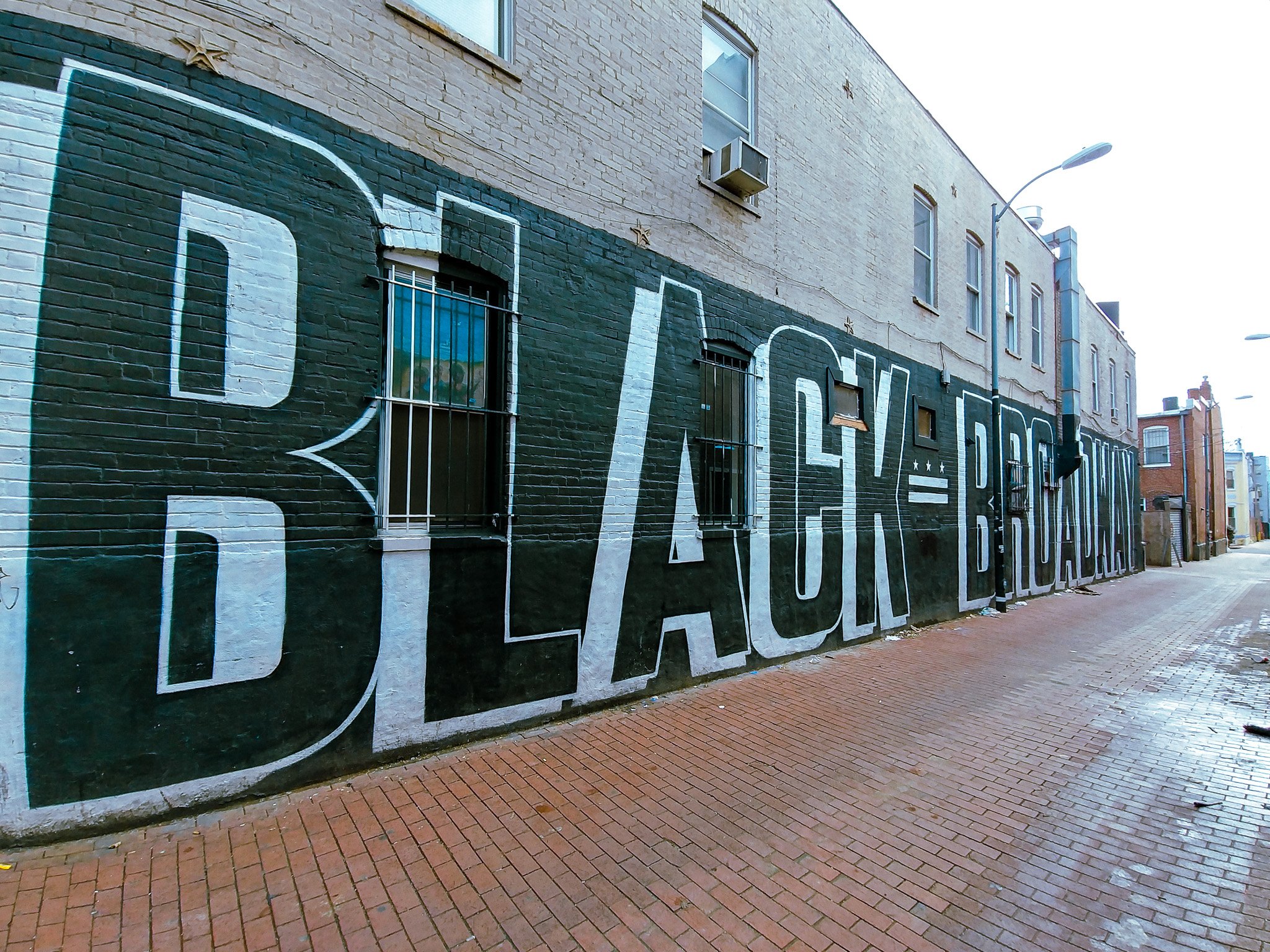
Mural that previously existed outside 1344 U Street NW. Artist: @ArtBlocDC.
Before "The Torch" version of the Ben's mural was painted, I used to end the U Street tour at another mural a half-block away. That mural simply included the words "BLACK BROADWAY" in huge block letters with a short quote by DC hip hop artist Head-Roc. After its abrupt removal in 2019, I rewrote the end of the tour to reflect not just the loss of the mural, but also the changing landscape of the neighborhood, including the perception of the neighborhood. When a mural disappears, its relevance to almost everyone that takes a tour drops to near zero. Guests are somewhat interested in art trends ("When did the murals program begin?" "Has non-sanctioned graffiti declined?," etc.) and extremely interested in interpretation of existing murals, but also seem to understand and perhaps appreciate the ephemeral nature of street art. However, they want to experience the neighborhood as it is, even while learning about how it was. As for the new Ben's Chili Bowl mural, there are still some unknowns. It's unclear if Ben's will utilize the DC government's Murals DC program, which would fund the work by paying a muralist or muralists directly. There is no publicly available timeline for the mural's completion. We also of course do not yet know the artist or artists. And the question of questions: who or what will be depicted? Who would you like to see? Stay tuned for updates.