Indeed, children are citizens! Beyond nationality and arbitrary political borders, children are world citizens and have the capacity to both inspire and make change. While they initially experience the environs adults have brought them into, they too can also shape the world. A new statue inside the U.S. Capitol commemorates one of those moments.
Barbara Johns was just sixteen years old in 1951 when she organized a strike amongst students in Prince Edward County, Virginia. Born in the South, but having lived in New York for some time, Johns was keenly aware of the discrepancies and unequal treatment she and her Black classmates & teachers were living with attending the racially segregated Robert Russa Moton High School. Severely diminished classrooms, a school building with inadequate heating, old & outdated textbooks, no proper labs for the sciences, no gymnasium, no cafeteria; the blatant subpar school experience was clear. Originally the strike was meant to spur action in the school system – build an equally operational school for Black students. But it grew into a much loftier effort that changed education and schooling nationwide.
Having seen adults previously being rebuffed by the school superintendent, Johns organized a walkout and student strike – as a sixteen year old. 450 students protested for two weeks. When further student-parent conversations with the superintendent resulted in no effort towards change, the NAACP Richmond chapter joined, including lawyer Oliver Hill.
Hill and other NAACP lawyers agreed to challenge the school system if and only if the students agreed to fight on constitutional grounds -- against the separate but equal edict; as opposed to demanding a newer, nicer, but still segregated school for Black students. The students and parents agreed, and the student strike ended, while the legal fight began. “Separate but equal” segregation was established U.S. doctrine since 1896. Barabra Johns’ protest for true quality started the upending of precedent set in that 1896 case, Plessy v. Ferguson.
Author’s note: As an aside, I grew up in Richmond, Virginia and witnessed Hill receive a number of commemorations in the city. Upon his death, he laid inside the Executive Mansion for public viewing under then governor Tim Kaine.
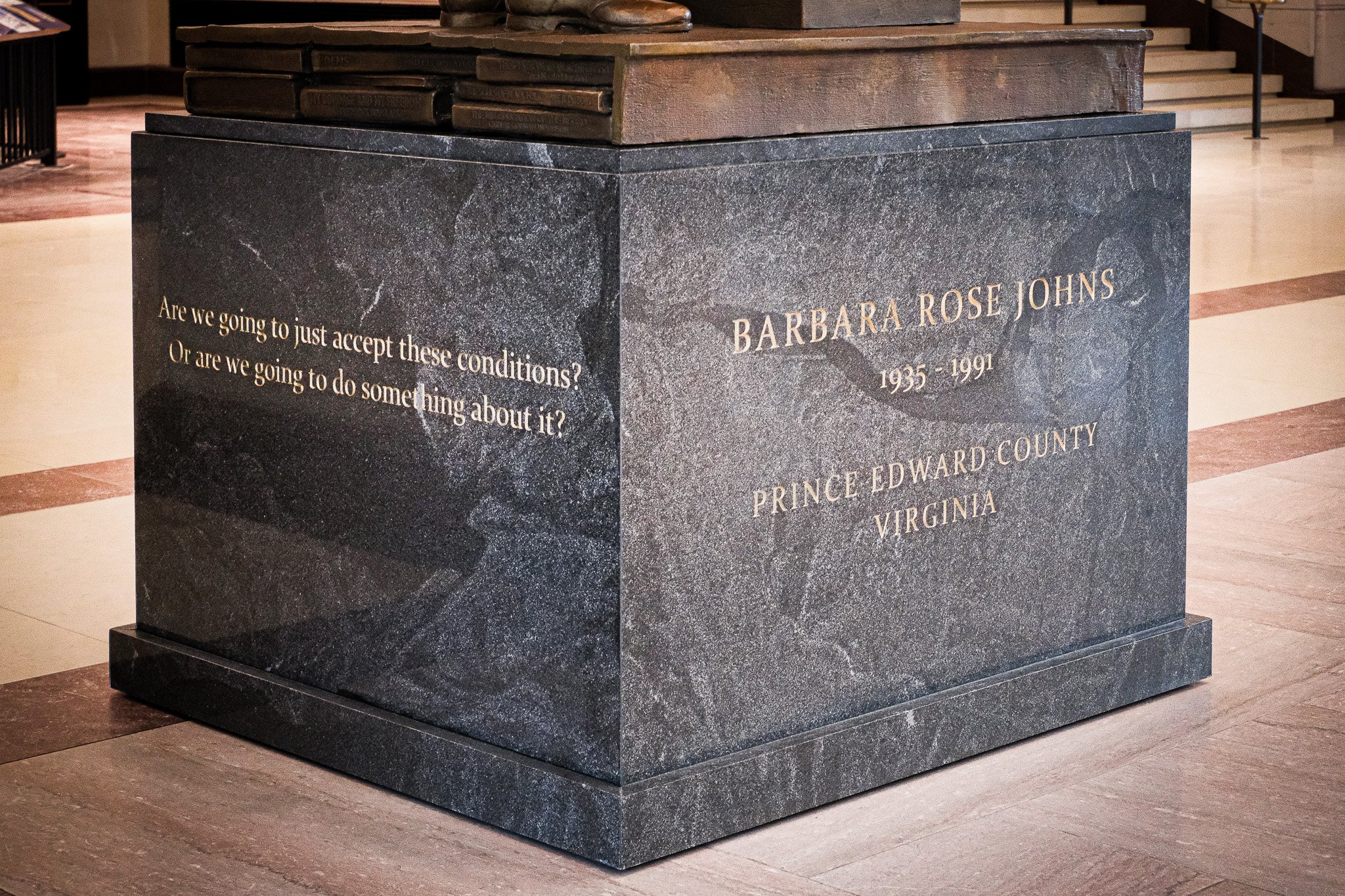
After the strike, the case that ended up going through the system was Dorothy E. Davis, et. al. v. County Schoolboard of Prince Edward County. While Johns was one of over 100 students to sign an official petition against the school board, Dorothy Davis was the first to sign, therefore her name came to define the case. Davis v. Board was later consolidated with a few other cases before eventually being heard in front of the Supreme Court: Briggs v. Elliott (South Carolina), , Gebhart v. Belton (Delaware), and Bolling v. Sharpe (District of Columbia), and Brown v. Board of Education of Topeka (Kansas). Joined by the others, Brown v. Board became the seminal Supreme Court case that partially overturned the 60 year old Plessy v. Ferguson decision and made segregationist separate but equal provisions unconstitutional.
One moment of protest led to a generation change in how we operate as a society in the United States.
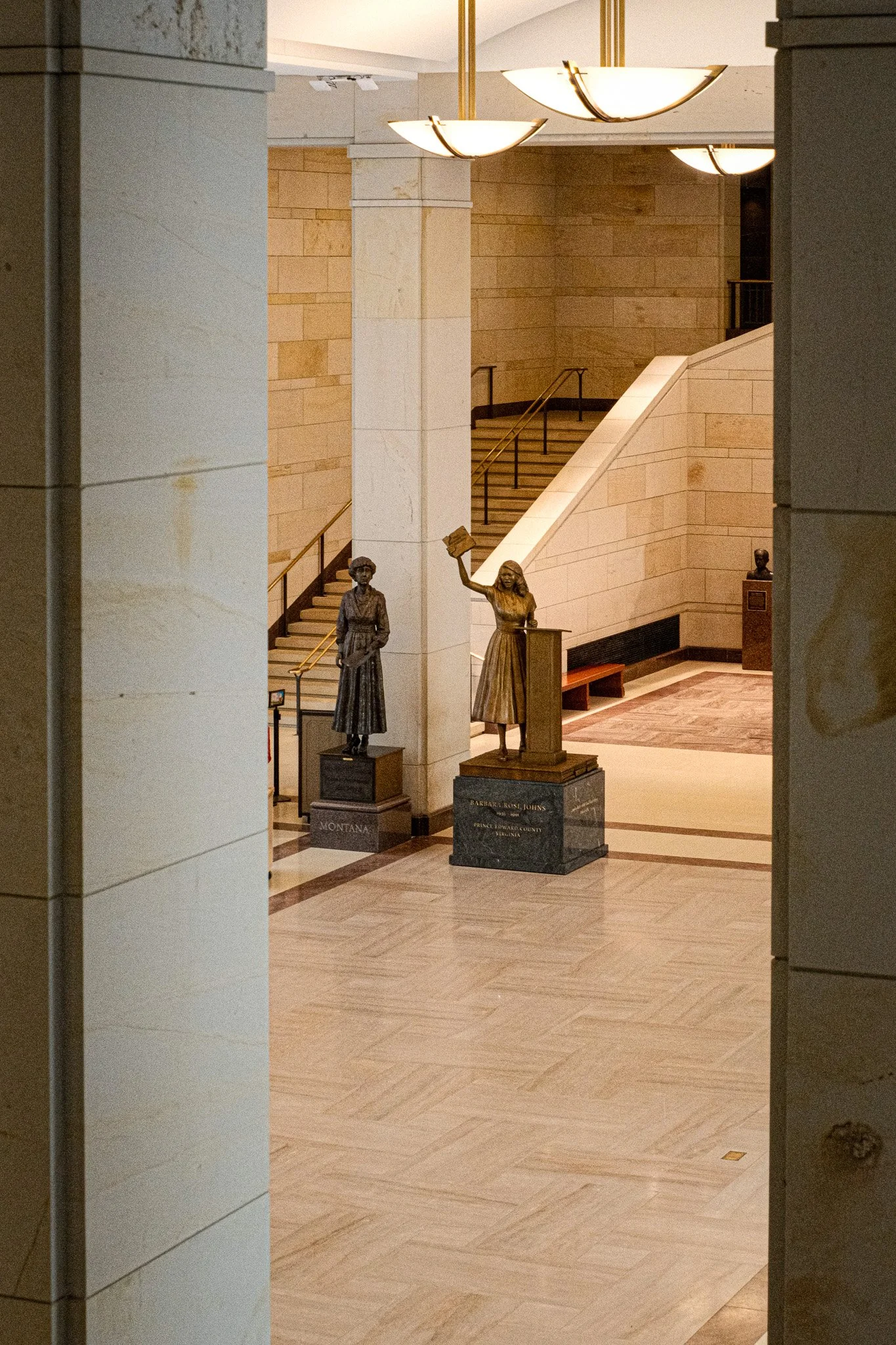
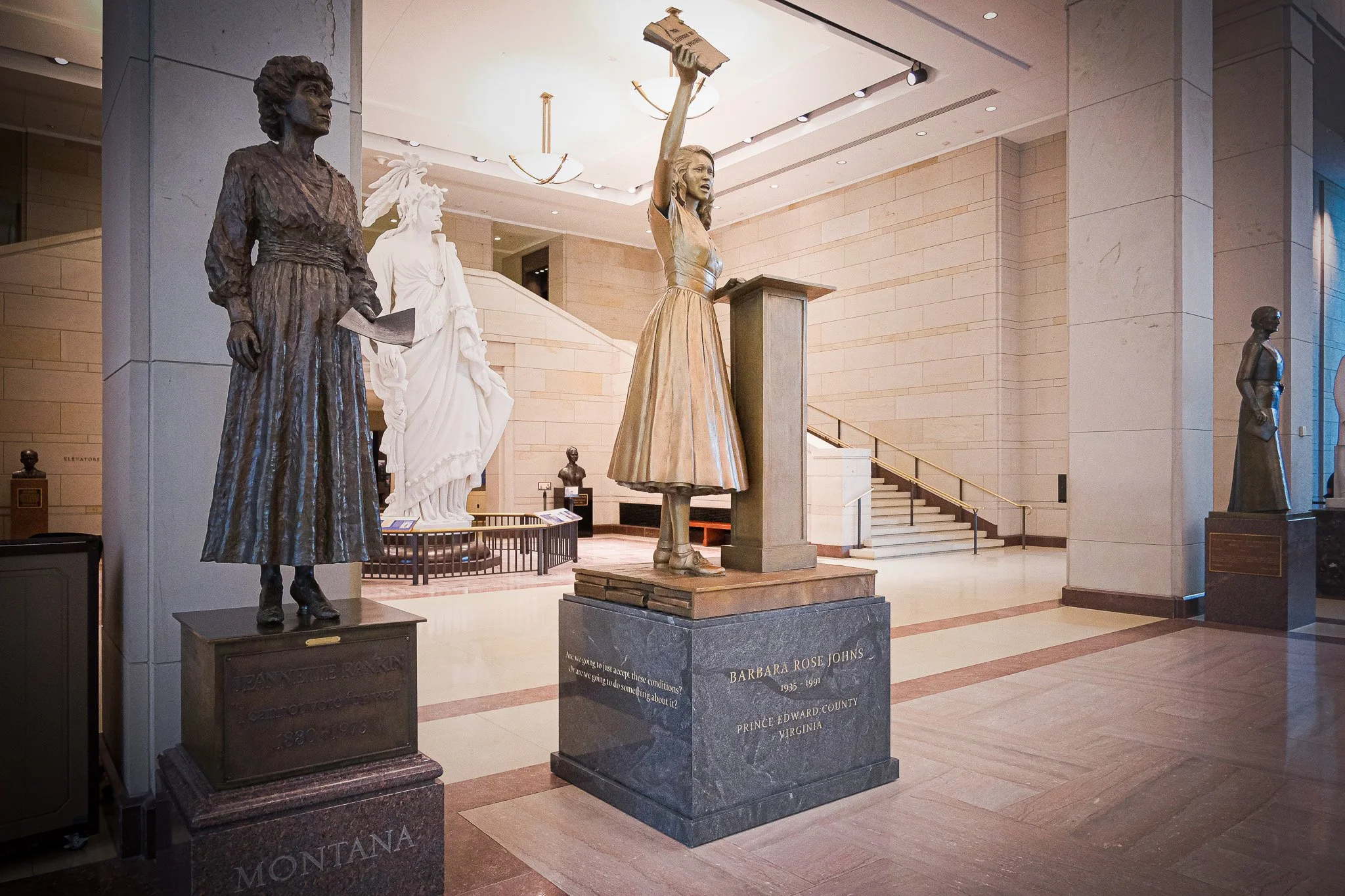
The Barbara Johns statue was offered to Congress to be placed in the Capitol by the Commonwealth of Virginia. Each of the 50 United States are able to produce and gift two statues to the Capitol National Statuary Collection. Typically these are people important to state's history or U.S. history. Unsurprisingly, one of Virginia’s statues is George Washington. Virginia’s second statue was of Robert E. Lee. Lee’s statue was removed in 2020 and Barbara Johns has come to replace it as of this month.
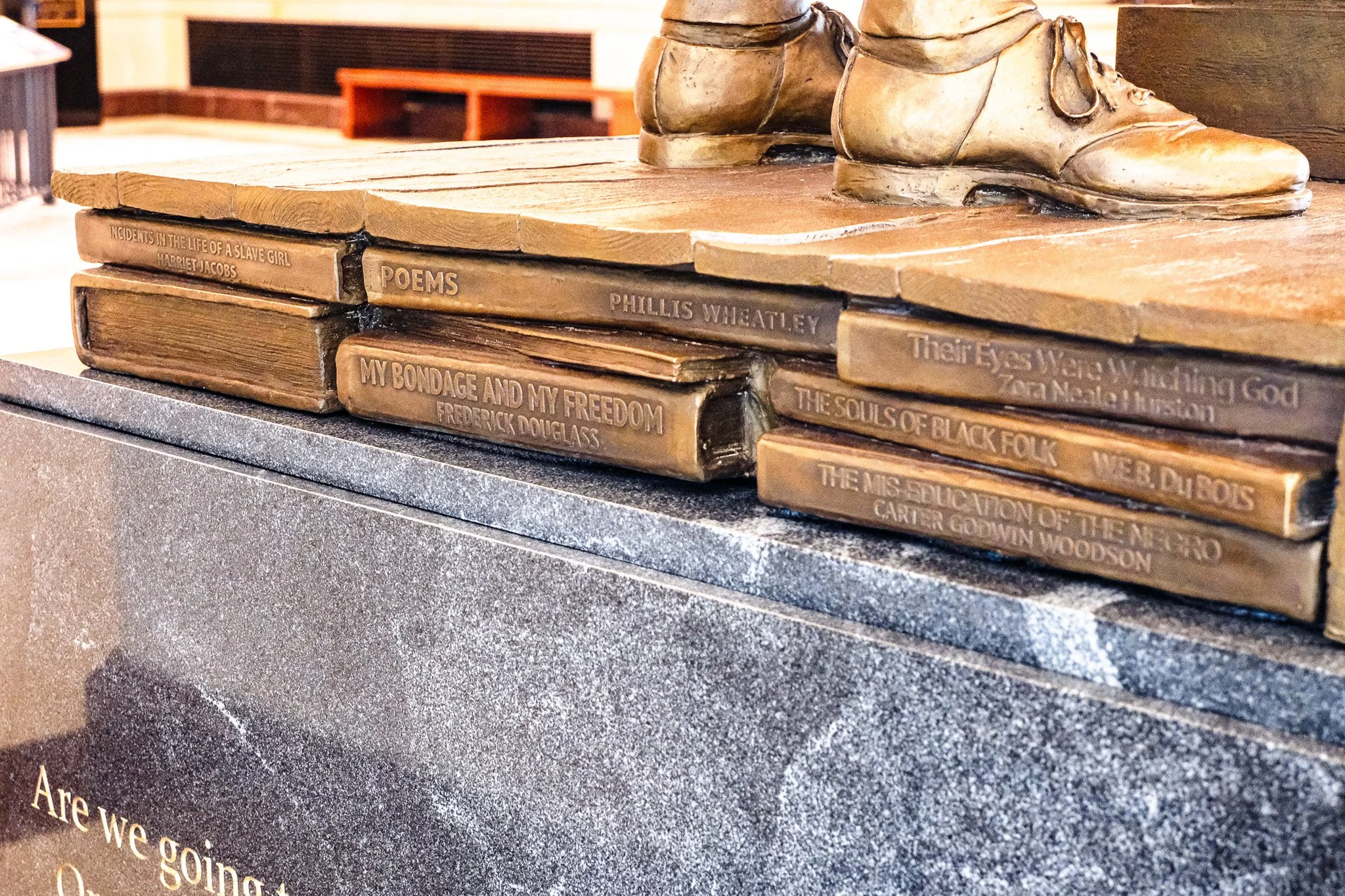
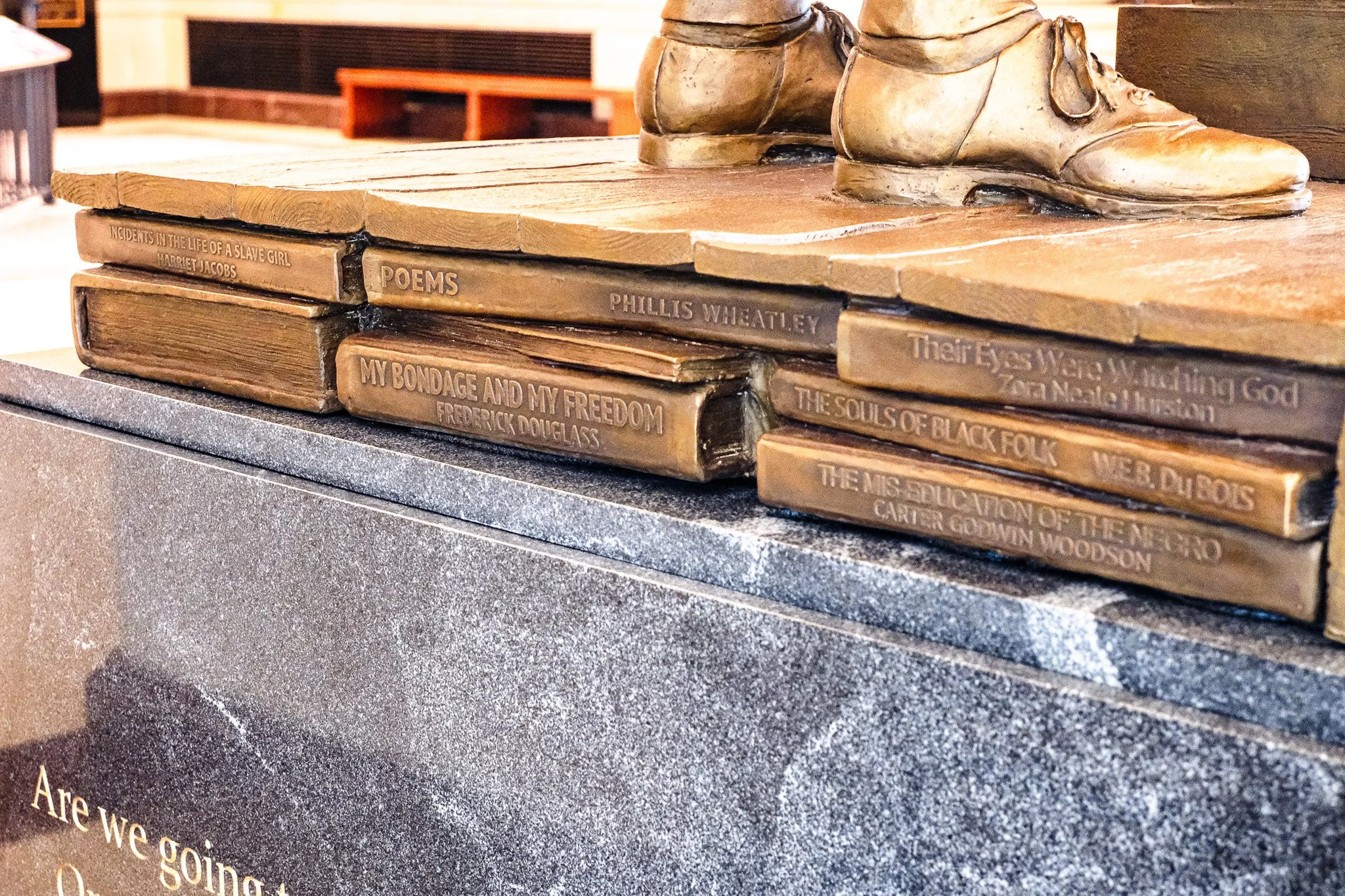
Johns’ statue is of her from the time of the student strike, aged 16 years old. She is depicted rallying other students while holding a textbook, “The History of Virginia.” The book is old and tattered; a used hand-me-down. It’s indicative of what she may have encountered at a school forced to utilize sub-par, second hand materials. Her clothes are typical of what a teen would have worn at the time, including saddle shoes, cuffed socks, and a puffed skirt. Under those shoes: floorboards with books underneath. The sculptor chose to represent Black artists and seminal works that the students at Johns' school may not have had access to, but nevertheless contributed to the through-line of striving for equality and justice. The books underfoot are:
Incidents in the Life of a Slave Girl by Harriet Jacobs
Poems of Phillis Wheatley
My Bondage and My Freedom by Frederick Douglass
Their Eyes Were Watching God by Zora Neale Hurston
The Souls of Black Folk, The Talented Tenth, and Black Reconstruction in America by W.E.B. Du Bois
The Mis-Education of the Negro and The Negro in Our History by Carter Godwin Woodson
The Weary Blues by Langston Hughes
Cane by Jean Toomer
From the Virginia Plantation to the National Capitol by John Mercer Langston
Up from Slavery by Booker T. Washington
What the Negro Thinks by Robert Russa Moton
Native Son by Richard Wright
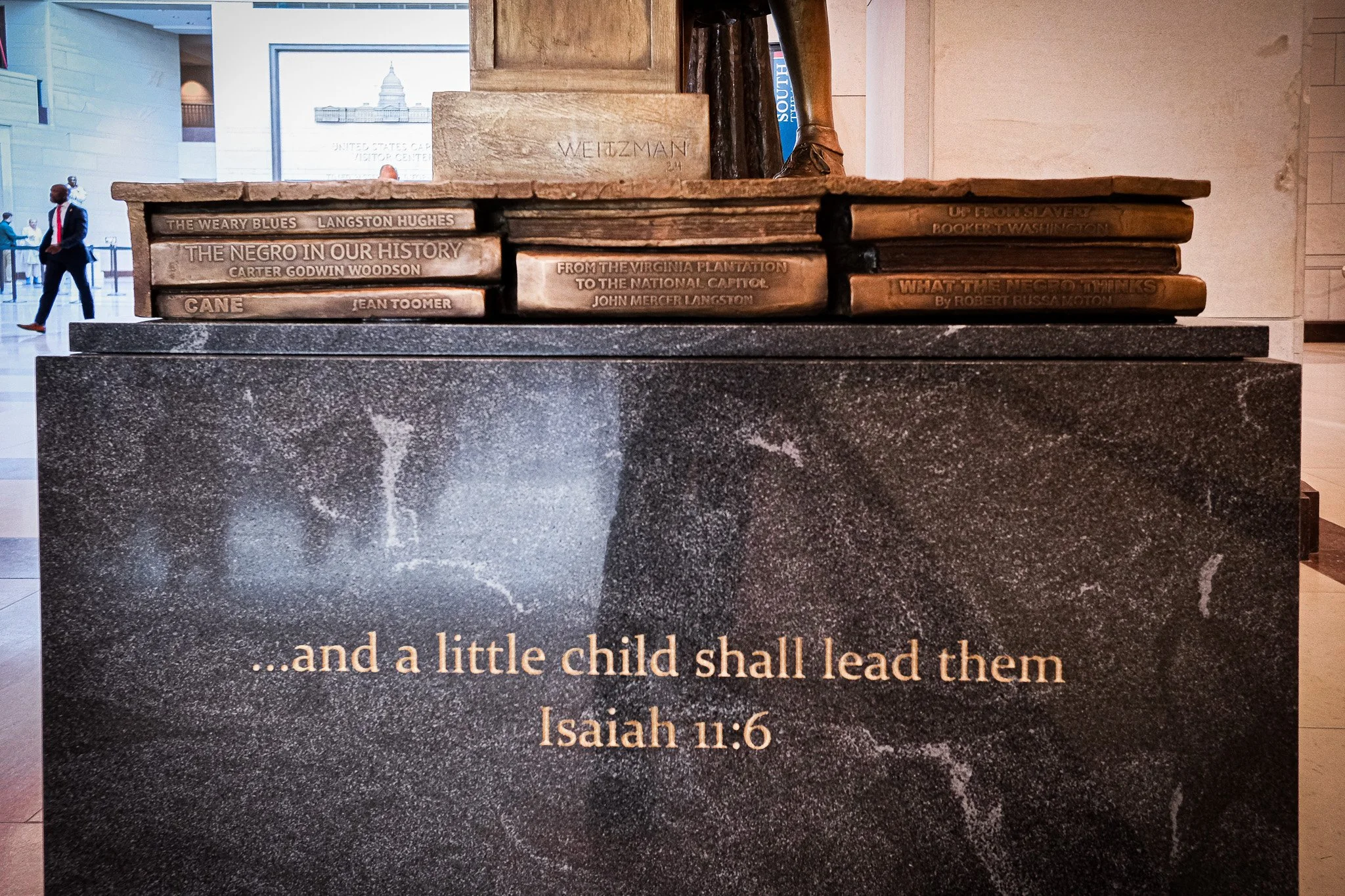
Below the books one side of the statue, an apt quote of Barbara Johns: “Are we going to just accept these conditions? Or are we going to do something about it?”
I’m so pleased that we honor Johns as an agent for change and honor her in the moment of change, as a teenaged person. While the statue was briefly in the U.S. Capitol Visitor’s Center, it has been moved to its permanent home, the Capitol Crypt, a vaulted space in the center of the Capitol under the Rotunda. This is typically the first area explored on the official U.S. Capitol tour, which is the best and easiest way to see the statue.
Consider joining the Attucks Adams Patreon where we have continued this conversation, looking at a number of other DC area commemorations featuring young people.