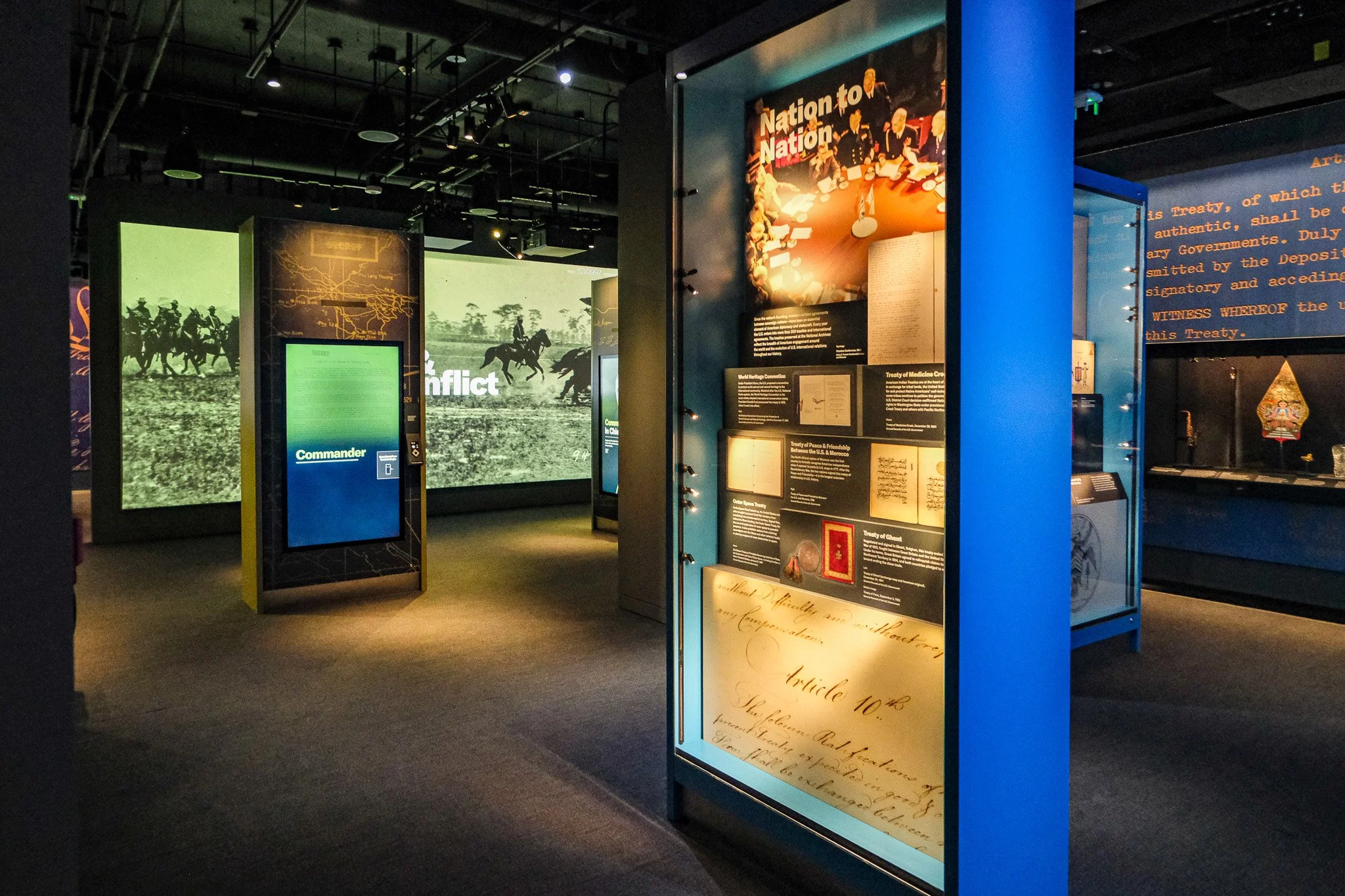

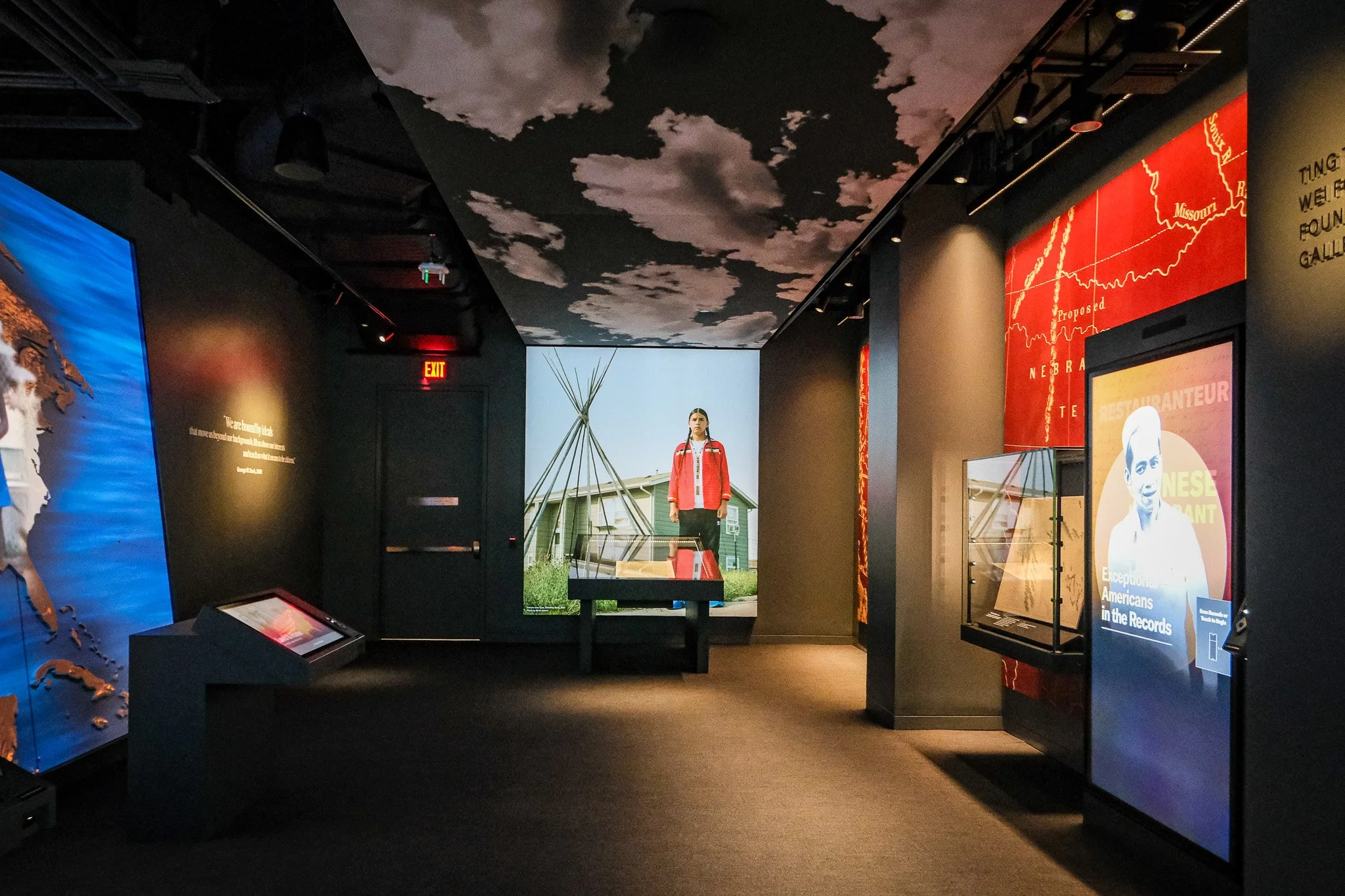
The National Archives serves an outsized role in our country at this moment. As we grapple as a nation with how and what values drive policy, sentiment, laws, mores, behaviors, and citizen expectations, the documents that are foundational to life in the U.S. are still on display for public scrutiny.
The Archives calls the collective documents including the Declaration of Independence, Constitution, and Bill of Rights the “Charters of Freedom.” Those three documents are the literal centerpiece of the main Archives building here in Washington, DC. The entire Rotunda and balance of remaining programming & exhibitions in the building –all the way down to ticketing, entrance, and egress– have been built around access to the Charters of Freedom. But there is so much more to the Archives, especially to the average, non-researching visitor.
Officially, the National Archives and Records Administration (NARA) spans across the country in nearly 40 buildings including the main facility and museum in DC, a much larger archival storage and research facility nearby College Park Maryland, 10 regional archives, and 16 Presidential Libraries. In total, there are nearly 13 billion (13,000,000,000) documents under the purview of NARA. The building most associated with access to documents is the one you've probably visited -- the 1937 Archives building located on Constitution Avenue NW in DC. Aside from the Charters of Freedom, there are typically several other rotating exhibitions open in the museum portion of that building.
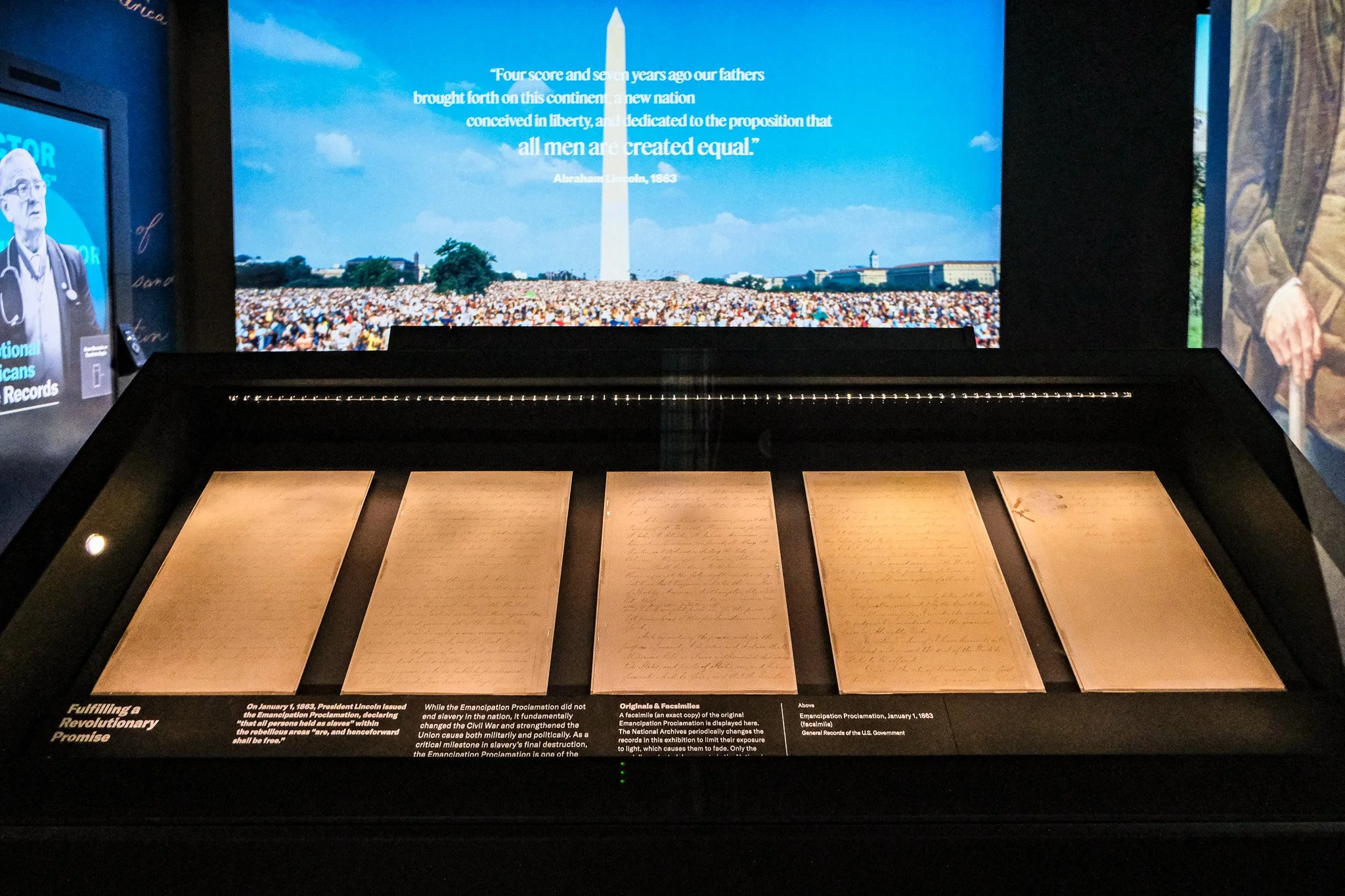
A surprising amount of documents on permanent display were facsimiles; like the Emancipation Proclamation.
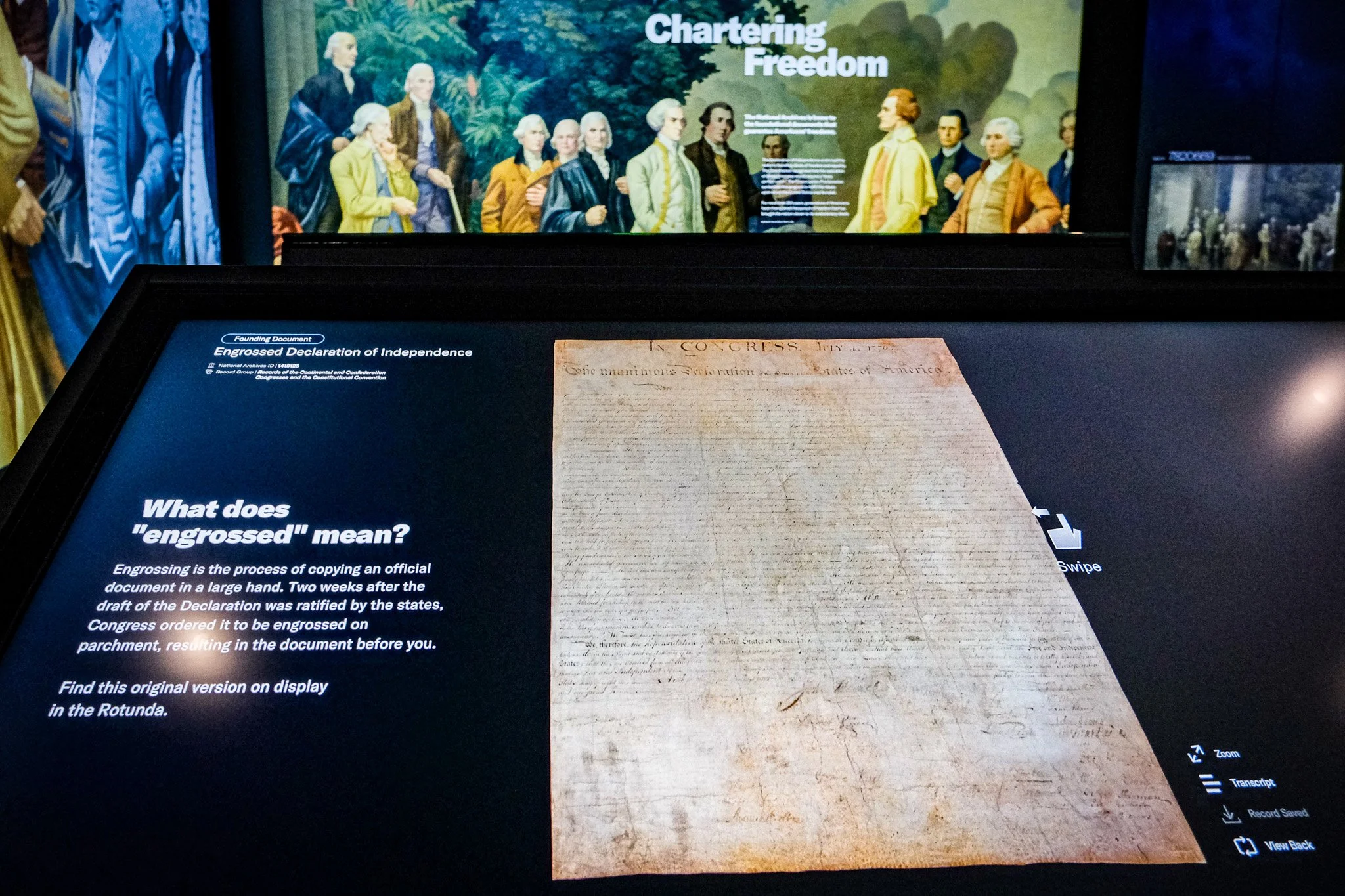
The amount of information about each document is astounding. From meaning behind the words to how the parchment was made.
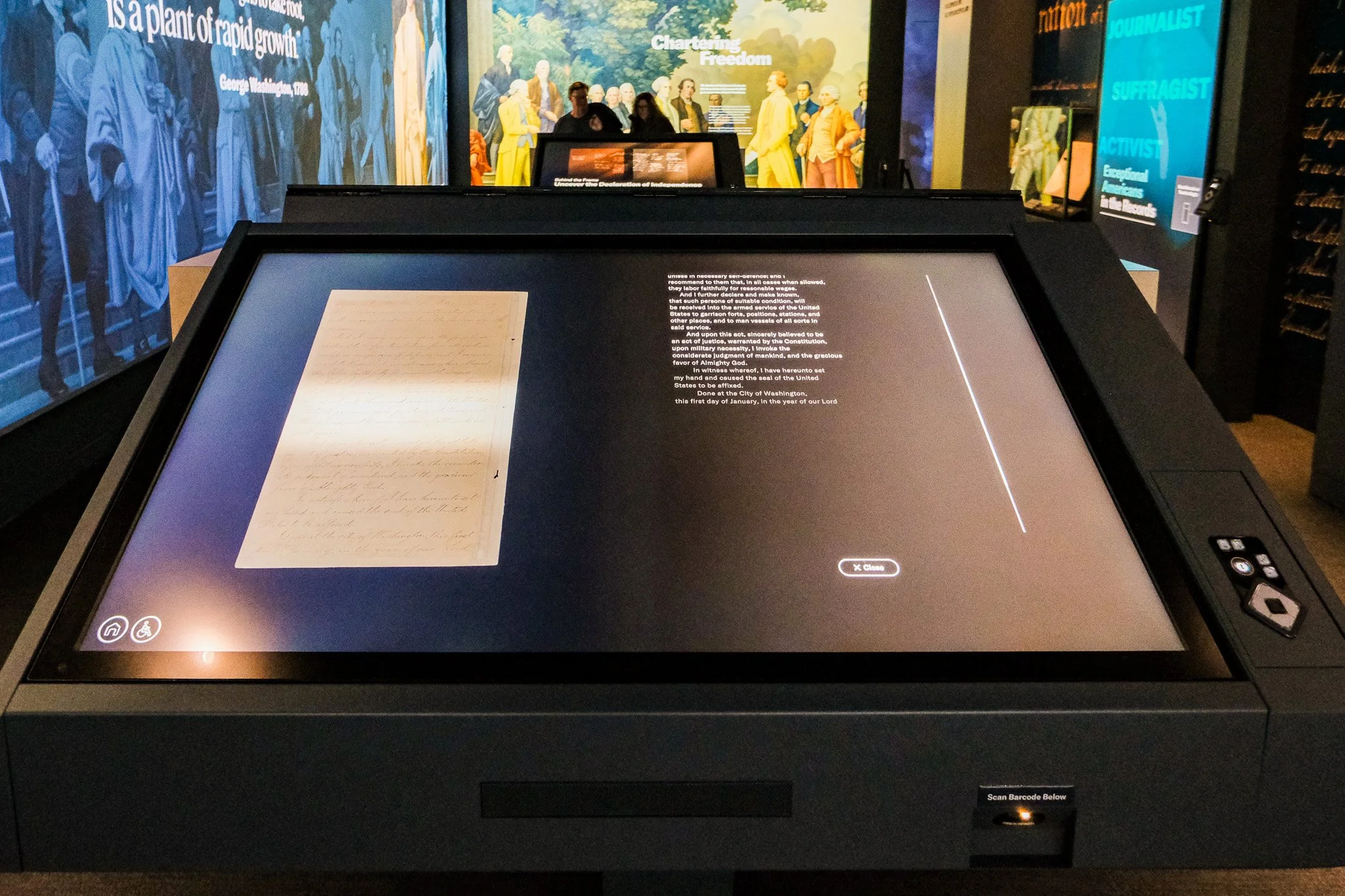
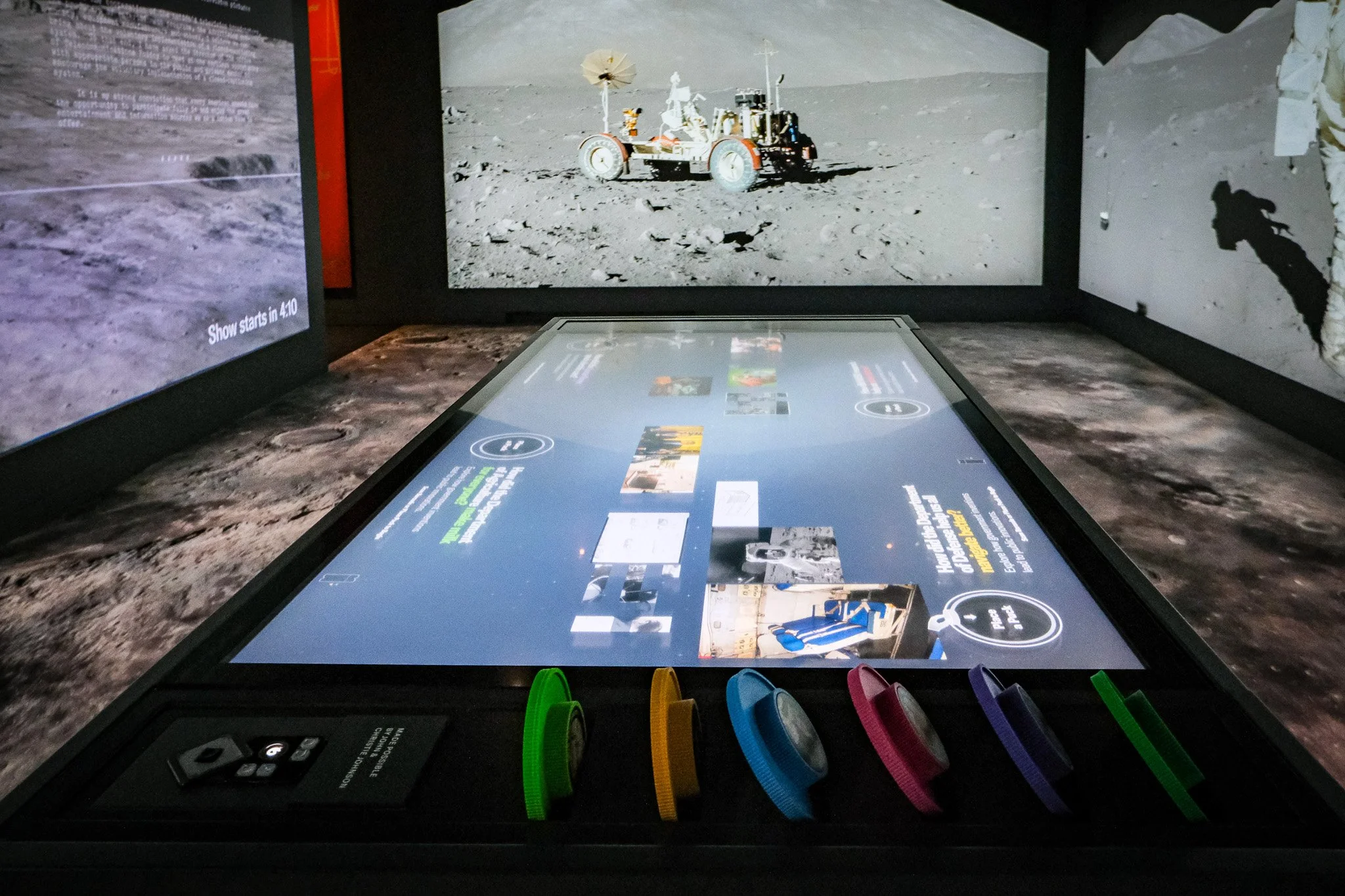
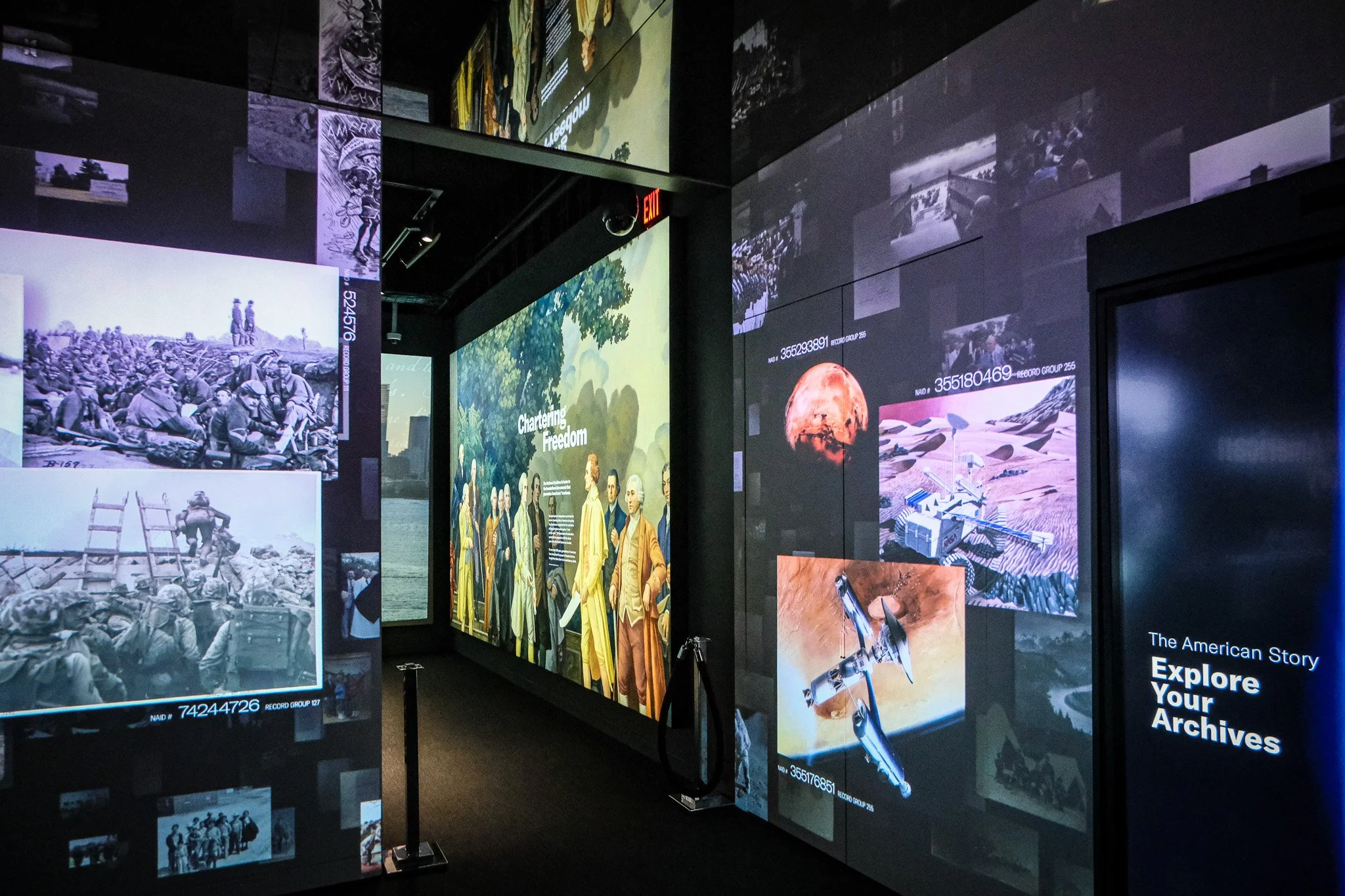
The newest exhibition, “The American Story” is the most forward attempt by the Archives to connect the visiting public to the vast amount of documents it oversees. Using what the Archives themselves have described as an Artificial Intelligence interactive, the main interface in this exhibition is a network screens that suggest documents for you to explore based on a combination of interests that you choose at the start of the exhibition and either the document you’re exploring at that particular station or the theme of the room you are in at the time.
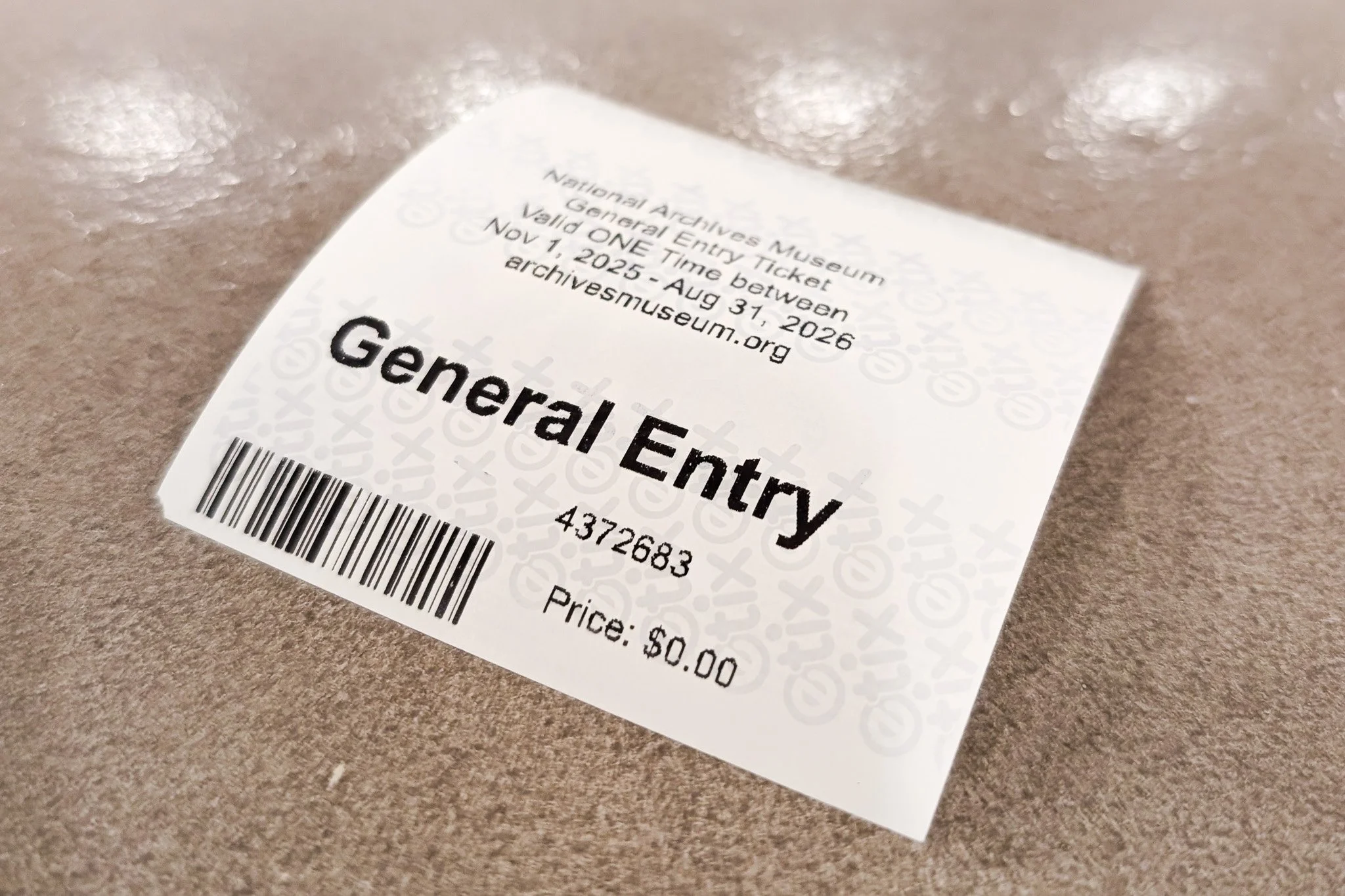
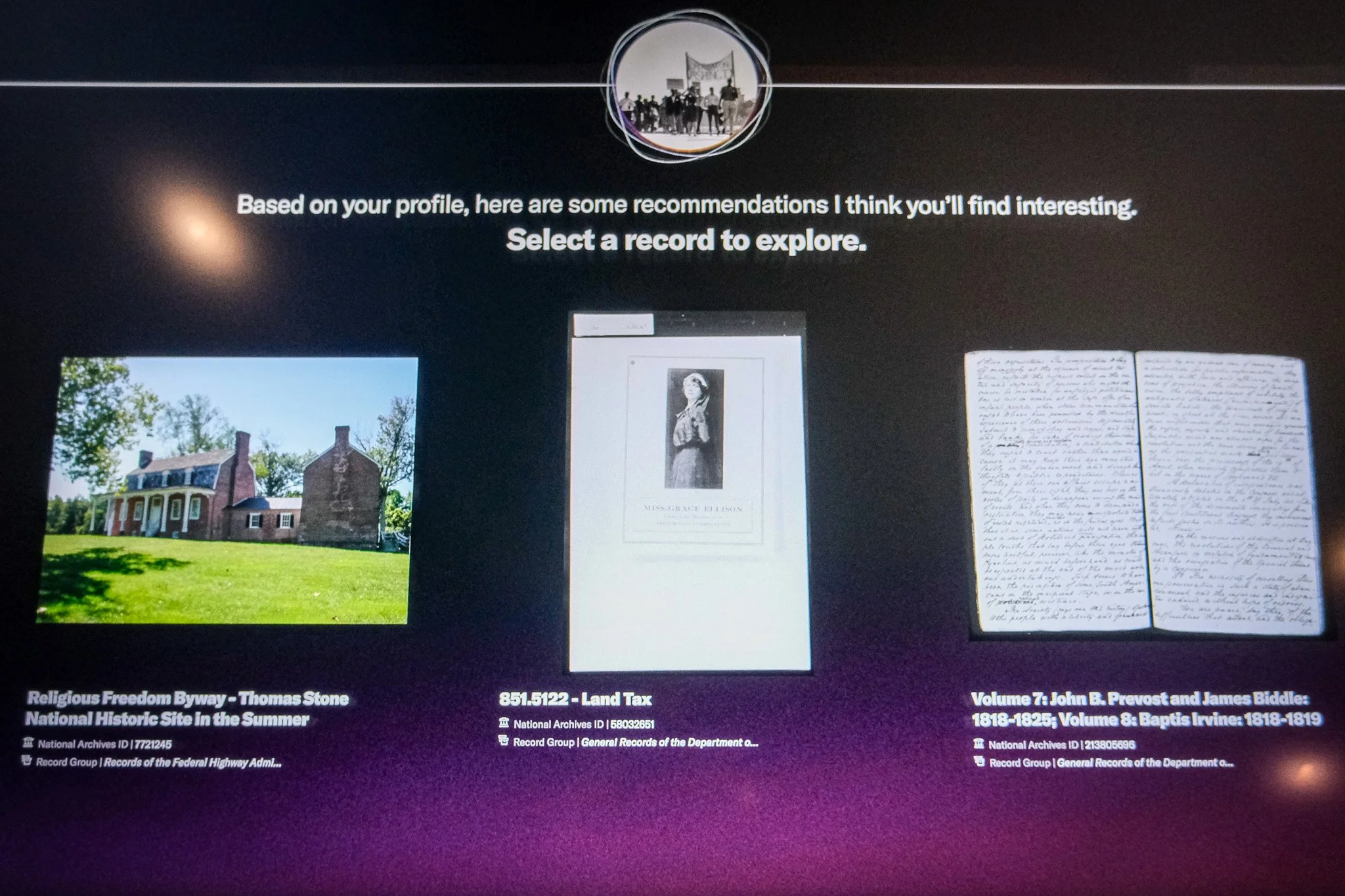
If you wish to keep track of the documents, you can grab a general entry ticket at the desk as you enter the Archives, after exciting security. You then scan that ticket at each touch screen kiosk in the exhibition as you interact along the way. At the exhibition exit, after your last scan, you have the option of navigation to a QR code linked to your personal ticket. There you can bookmark a unique web page on your phone in order to look in detail at all of your saved documents later. Hold on to the ticket! It’s good for the next year and you can return to add more documents to your unique web page.
Here’s the web page for my last visit: https://archivesmuseum.org/14312293451. You can see which documents I saved in the exhibition in order to look more closely at them later at home.
For example, I saved this annotated draft copy of the Constitution that belonged to George Washington. You are able to see his hand-written notes in the margins! Now I can examine high quality digital files of this and other documents while I am at home. It’s not just an experience to be had inside the museum.
How did I discover this George Washington related document? When I created my initial profile attached to my ticket, along with basic topical interests like founding documents, I indicated that I wanted to be offered associated items in the form of paper documents, photographs, and maps. These are all digitized of course. So at some point looking through the exhibition, the “AI Archives" program suggested that I save this document, which I did. Now I can bookmark this page in my browser for research purposes or just to relive the experience. Exploring further, I can also see where the actual paper document lives within the Archives system (actually in this same building!). Overall, on this visit I saved 34 documents which live across 6 different archive facilities and 2 presidential libraries.
It is somewhat random, as many of the suggested documents were not at all linked to the content I was viewing or had very tenuous links to my purported interests. I’m not sure how this “AI” suggestion system is any different than an associated keyword search or metadata match.
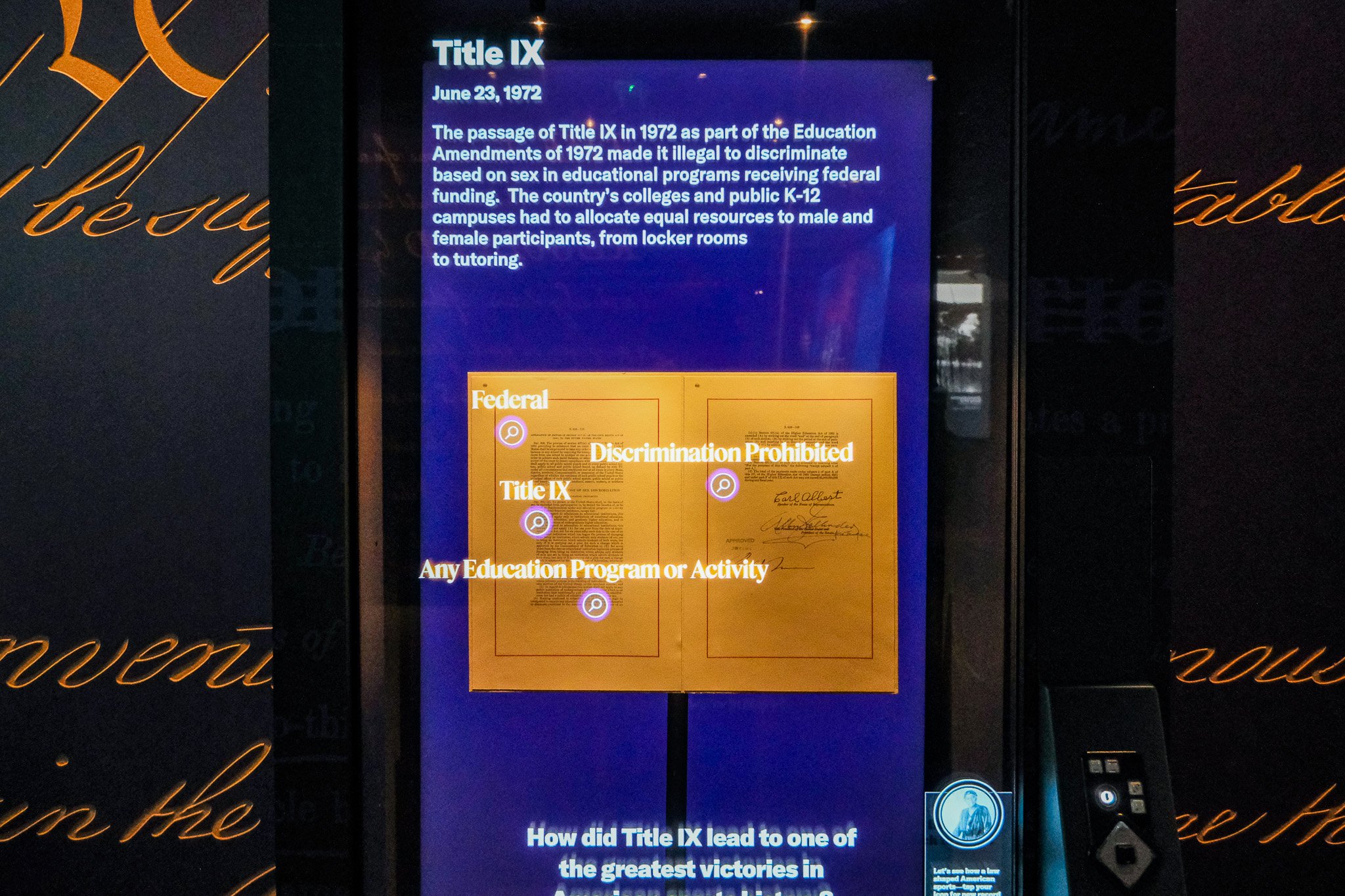
Immersive technology lets you read a document while using an overlying touch screen to learn more.
On a separate, more personal ticket, I saved some of my personal family information from a century-old Census record. You can begin basic genealogical research in this exhibition, too. There are privacy safeguards. Visitors are forced to link any saved ancestral/genealogical information accessed in the exhibition to a personal email address. This prevents that information from showing up to anyone who might find a lost ticket or randomly link to your Archives page online.
Along with a strong start featuring a deep dive into key documents like the Declaration, Emancipation Proclamation, and Louisiana Purchase (featuring mostly facsimile documents however), the exhibition branches out with a smattering of other topical deep dives including presidential gifts (received by), interesting patent history, genealogy, a thematic rotating photo gallery (currently featuring Ansel Adams), and a kids & family focused discovery center with "gamified" research and fun-fact stations.
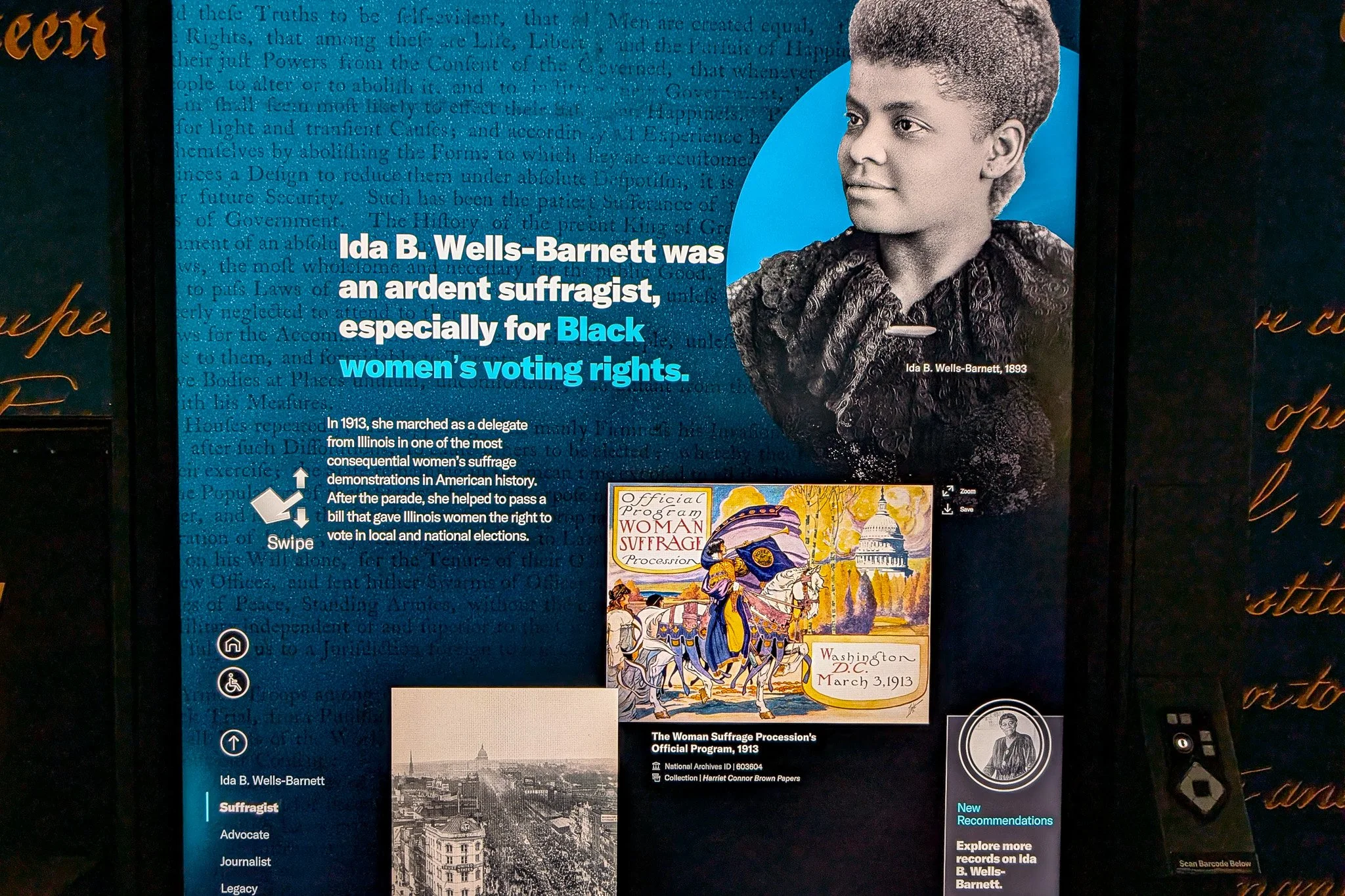
Profile of journalist and suffragist Ida B. Wells.
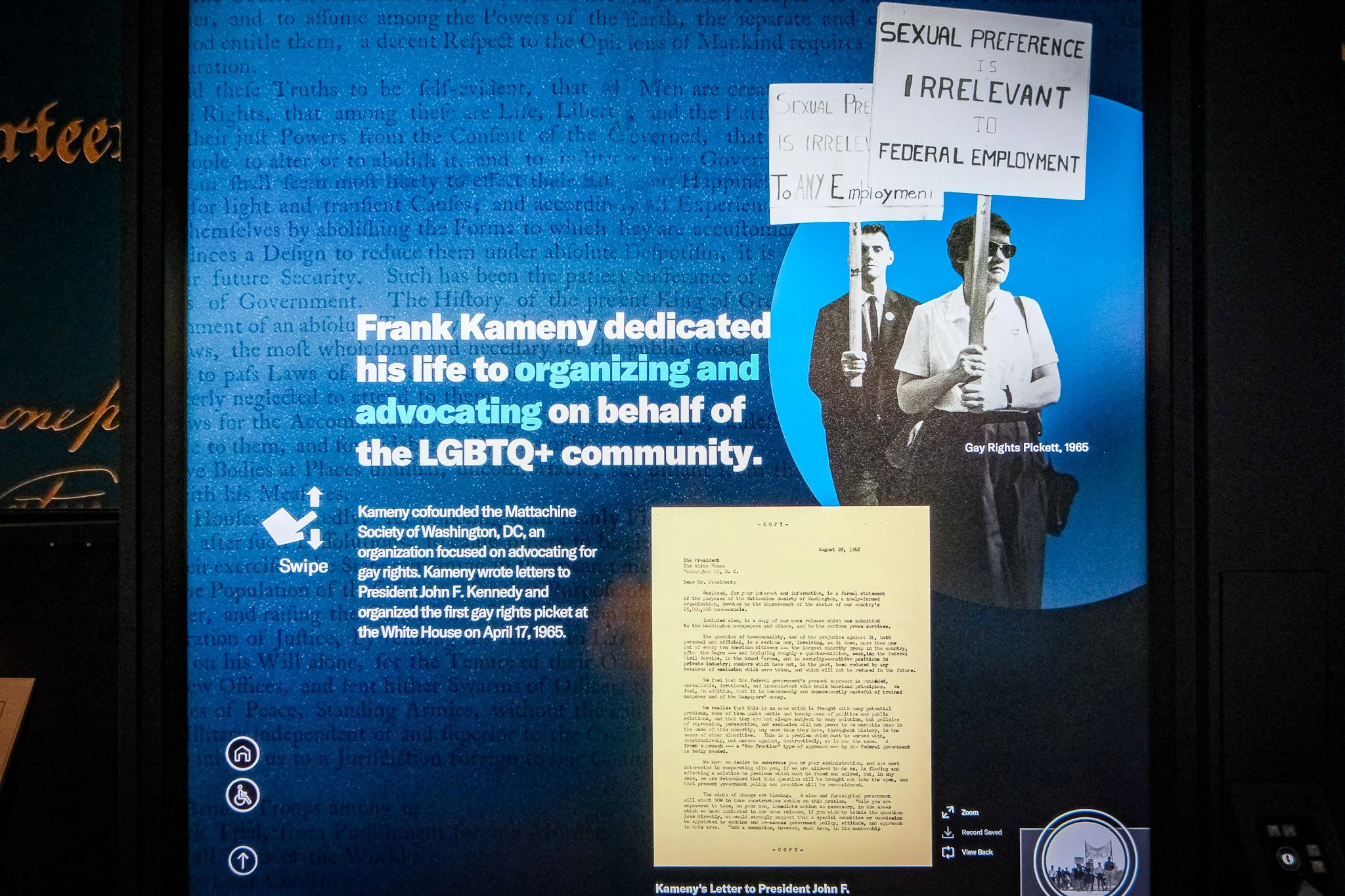
Profile of Frank Kameny and a letter he personally sent to President Kennedy.
One key attention grabbing aspect of select kiosks is the highlighting of personal profiles. The profiles are of influential or compelling change makers from American history that are related to the section of the exhibition you happen to be in or nearby documents to the kiosk. At the very first kiosk I was shown profiles of Ida B. Wells and Frank Kamany, two Americans I was immensely glad to see included in the exhibition. Linked to each profile are related government documents, of course – docs related to each person’s activism, struggle, or occasionally mundane government paperwork that became symbols of those struggles. I thought this was an extremely effective way to give a certain document meaning. We’re used to recognizing the importance of the written words on a few sheets of lined paper that make up the Emancipation Proclamation, for example. But, the links to other, lesser known documents or government paperwork along with the profile of the person who wrote or filled it out, AND the context as to why that mundane submission might have importance, kept me at the kiosk looking up various individuals and their related docs. Especially folks I have never read or learned about before.
Overall, “The American Story" is a success, insofar as it provides a new, clever, and mostly accessible way to interact with the documents held in the Archives. And even though the “AI” is somewhat of a gimmicky idea to me in this case, the system does result in delivering suggestive documents in a way meaningful to one’s interests. I will also give points for the opportunity to discover transformative individual Americans at each station, relative to the documents on view in that section. On the other hand, the whole exhibition doesn’t come nearly as close to telling any one version of “THE” or even “AN” American story. The exhibition is just too scattered to weave a solid overall narrative. There are solid pocket narratives related to presidential decision making, westward expansion, innovation, and founding documents. And I can’t offer too many demerits outside of picking a slightly misleading name to the exhibition. If one is looking for a more cohesive and comprehensive national narrative, I would visit any number of exhibitions in the nearby National Museum of American History or even NMAI or NMAAHC for that type of experience.
The American Story is a permanent exhibition at the Archives and as such, has no closing date. It’s open 10am to 5:30pm daily with the rest of the Archives. The exhibition is located on the same floor as the Rotunda and Charters of Freedom.