museums

Exhibition Spotlight: Block by Block

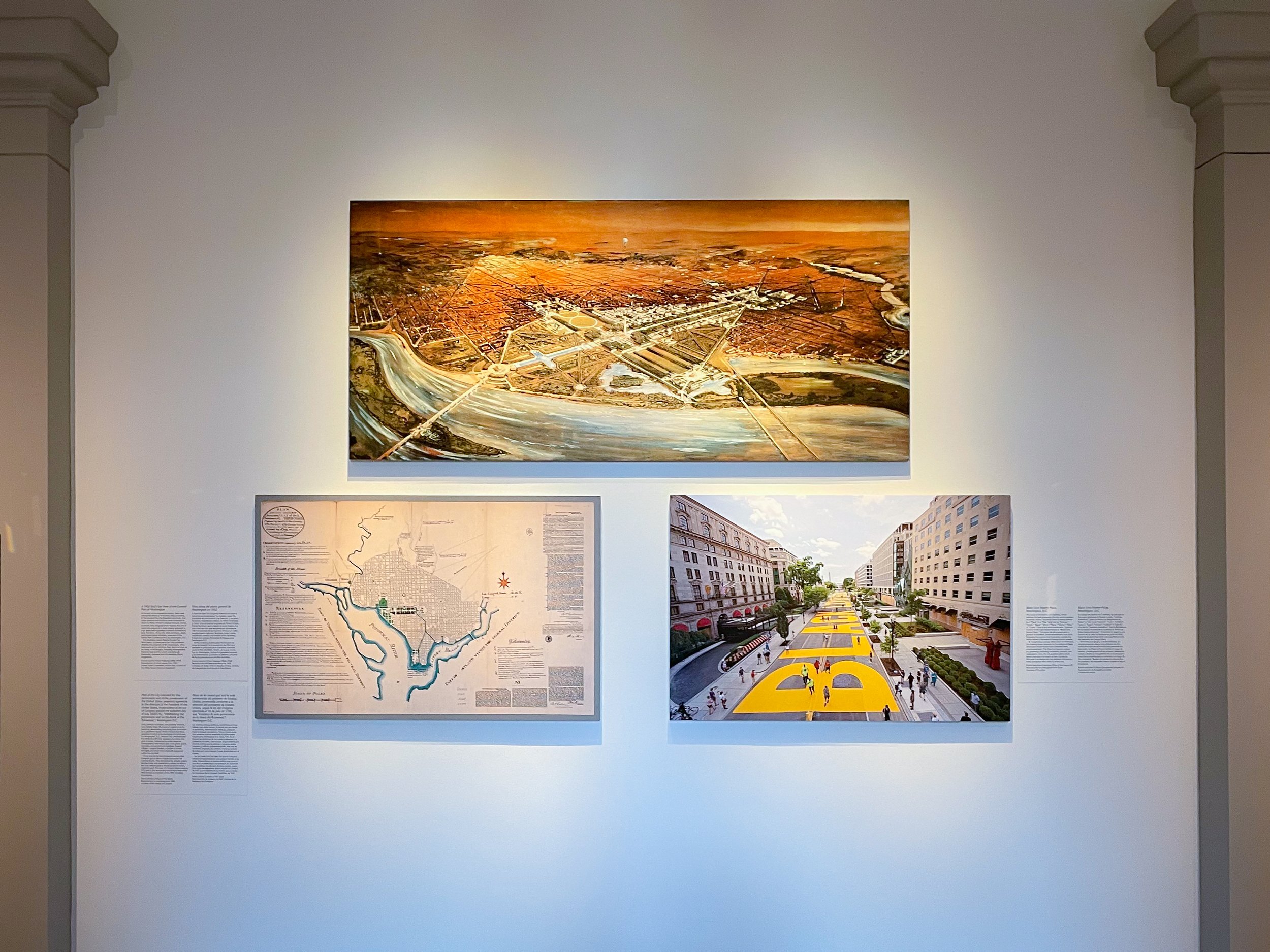
I *loved* with this tiny exhibition at the National Portrait Gallery on the origin of DC street names. The material only touches on a few streets, but I appreciated the bits of history covered.

At just about 1,000 square feet, it won't take long to see the entirety of the exhibition, but for DC area residents, it is pretty neat learning about the people behind the names of streets we live, work, and play on. For example, the exhibition includes Gales Street NE, a narrow, ginkgo tree lined side street not far from my home neighborhood of Carver Langston. For the first time I learned about its namesake, Joseph Gales, Jr. Gales was a journalist & one time mayor of DC in mid 1800s.

Other historical figures featured are Benjamin Banneker (Banneker Circle SW), Otis Howard (Howard Pl NW), and Clara Barton (Clara Barton Parkway). Block by Block: Naming Washington is located on the second floor on the F Street side of the building. Open though January 2023.

Exhibition Preview: The Wall/El Muro

The National Building Museum is open Friday-Monday 11am-4pm. 401 F Street NW.

What is a border? I often think about borders living here in the District of Columbia. Since Virginia, Maryland, and the District comprise a dense and diverse metropolitan area, much attention is paid to borders, what living on one side or the other means for your life, and what those borders say about us depending on where we live and work relative to them. Even within DC itself, political borders like Wards and Quadrants are significant markers of identity and policy. 

The Wall/El Muro: What is a Border Wall? exhibition at the National Building Museum is both a swift historical dive into the U.S.-Mexico border as part of our built world, as well as an introduction to understanding the impact of the infrastructure itself. This show is presented in English and Spanish.

The exhibition takes a wide view at the outset, helping visitors define what a border actually is and displaying a fascinating map (c. 1728) of Spanish North America denoting the borders of American Indian tribes before the British, French, Spanish, and others divided up the continent, eventually morphing into the national borders we have today. Of course national borders are not new, and not exclusive to North America, a fact smartly acknowledged here in the first bay, visualizing border walls and barriers across the globe. 

Border wall prototypes c. 2019.

From there the focus is in the U.S.-Mexico border, and not just the physical manifestation of the border wall. The exhibition has a running timeline from the late 1700s to present day on border policy, popular fears around immigrants and immigration, and national immigration policy itself. 

There is a good division among storytelling about the history of the border wall, examination of the physical infrastructure of the many types of walls & barriers, and the impact of the existence of borders including on the people who cross or attempt to cross, the mechanisms around how we ask people to access borders, and the results of the often dangerous and violent process of interacting with the border.

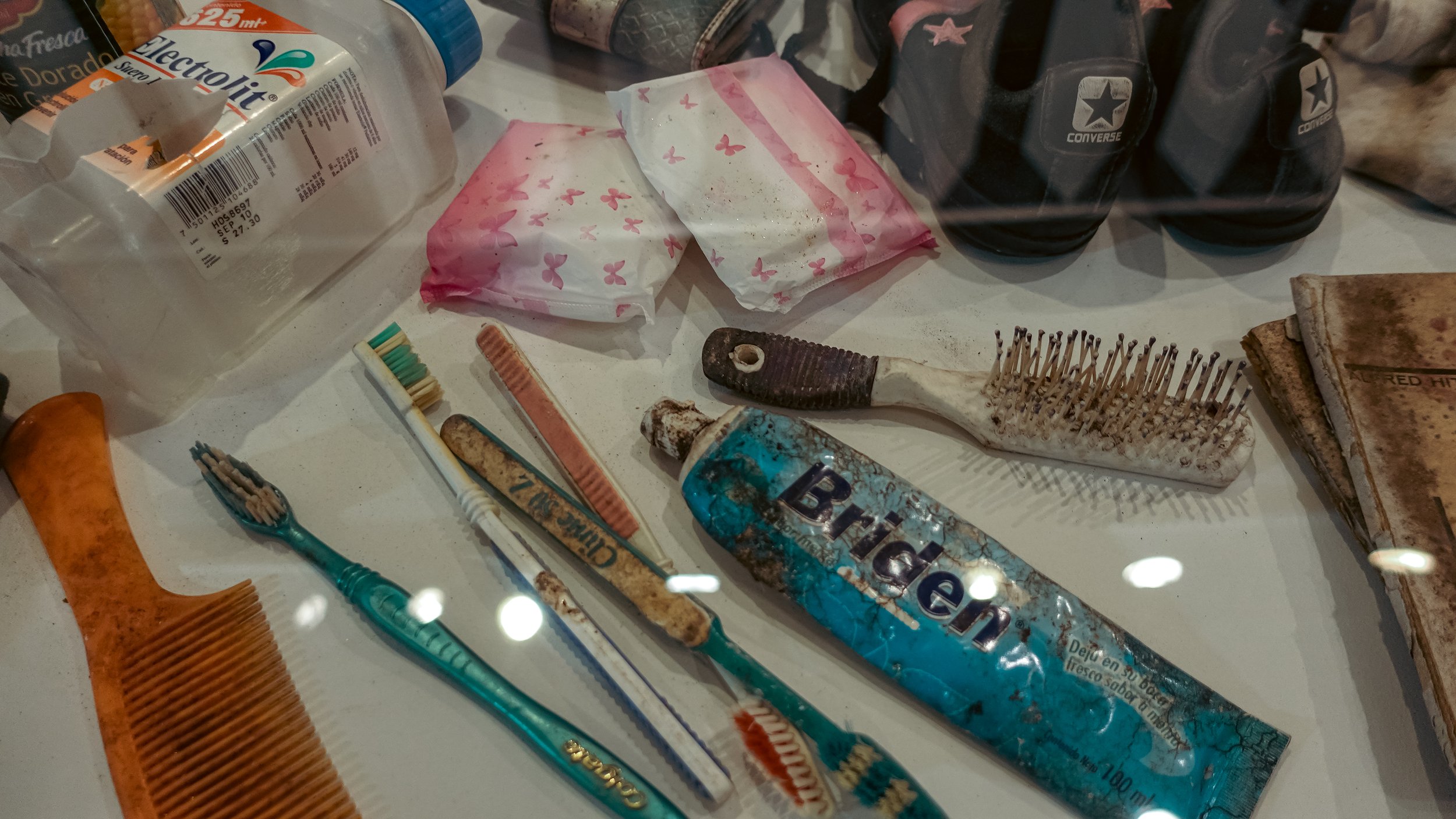
Migrant belongings left behind in the Sonoran Desert.

Complementing the maps, timelines, and infographics are several extraordinary objects.

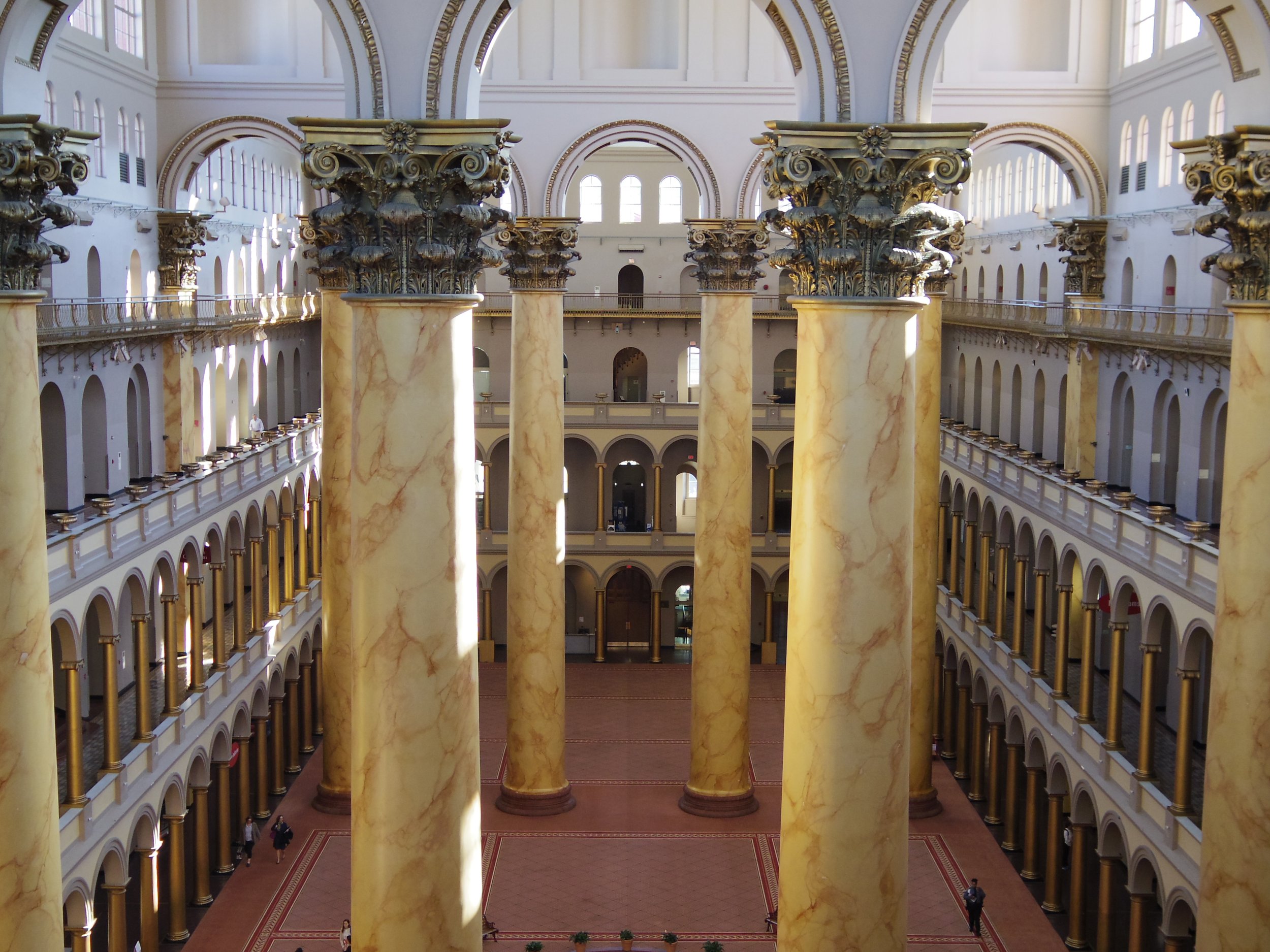
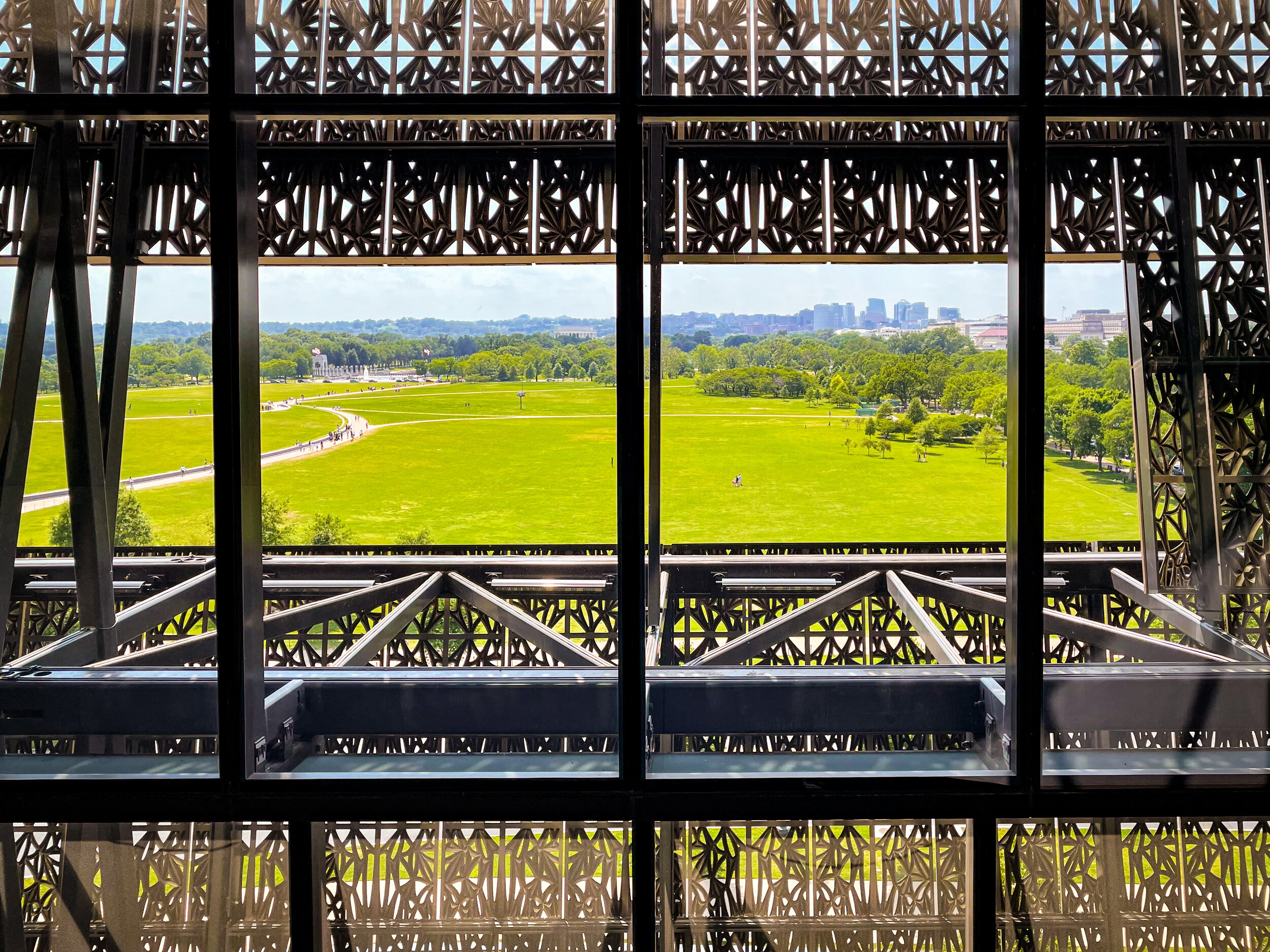
One ordinary chain link fence with barbed wire atop stood out even before I entered the exhibition because I could see it from the Museum's Great Hall, which has windows into the show. This small section of fence was used by U.S. authorities in 1950 as part of a border wall between Mexico and the U.S. state of California. It was installed in 1950. This fencing had been used before, though. During World War II, it separated internees from the outside world as they were detained in the Crystal City Alien Enemy Detention Facility in Texas. A fence serving two borders, within a different time, space, and affect.

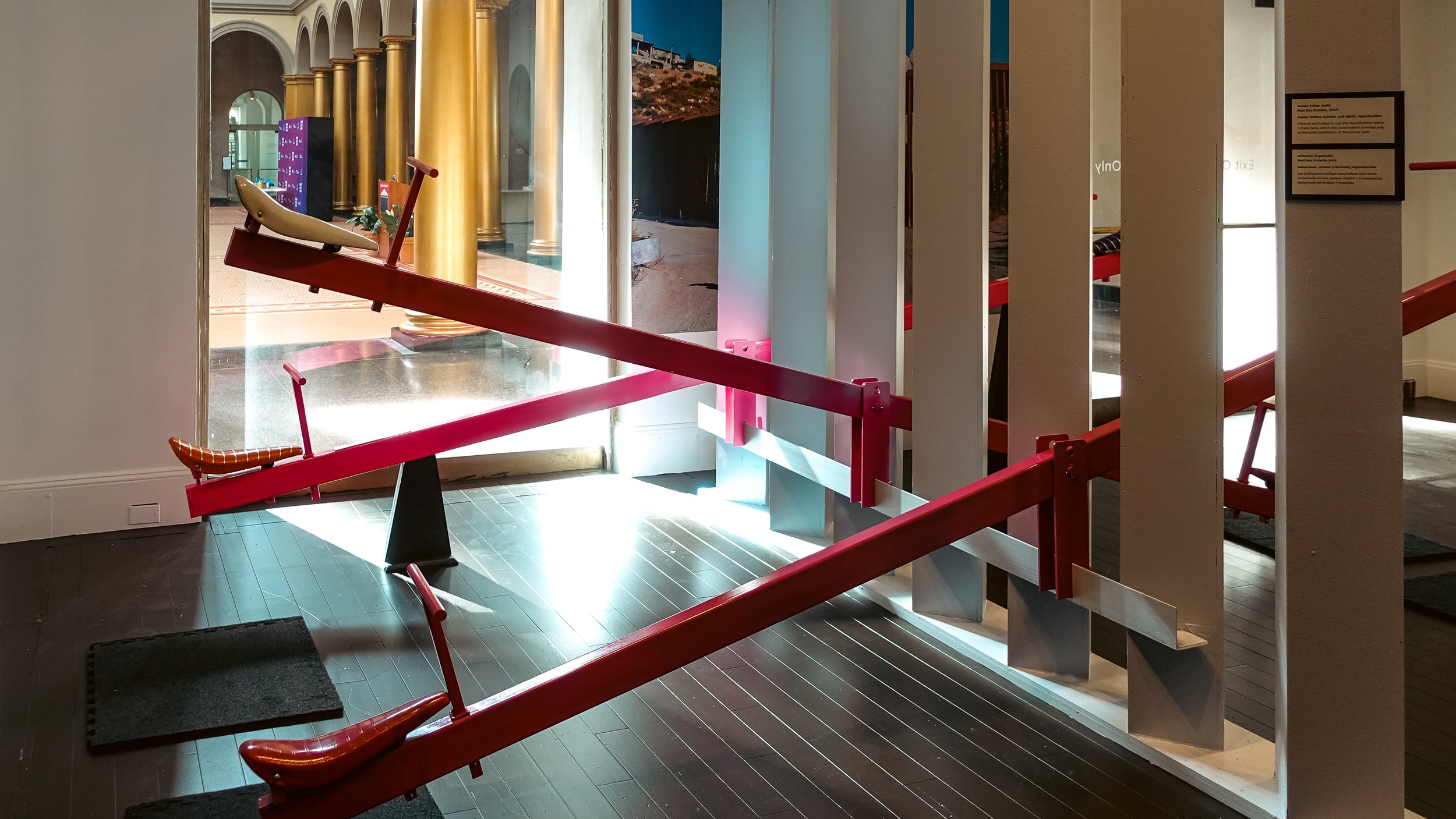
Another was the bright pink teeter-totter, a universal children's play thing and simple machine, but also a protest. The teeter-totter brought children together through the border fence, with each half of the lever on the opposite of the border wall between Mexico and the United States. A short accompanying video shed light on the artists and the installation which was located near El Paso, Texas.

I walked away still thinking about the essence of what it means to have national borders, state borders, even local neighborhood borders. So many questions are still on the table after seeing this exhibition: Do borders necessarily beget violence? Who decides where borders are located? In which other forms, besides lines on a map or fences in the ground do we enforce borders? What would a borderless world look like? And so many others. In this way, I consider the exhibition a success.

The Wall/El Muro opens on Saturday November 6, 2021 and closes one year later on November 6, 2022. It;s located on the first floor of the National Building Museum at 401 F Street NW in downtown Washington, DC. The Museum is currently open Friday-Monday 11am-4pm. Tickets to the museum cost $10 for adults. OYu can still enter and view the Great Hall for free, which I highly recommend!

The Museum’s Great Hall is open to the public whenever the museum is open.

This exhibition preview was made possible by montly supporters on Patreon. Thanks to you all! Get weekly history posts, photos of DC’s most interesting places, and as more museums reopen, exhibition previews and reviews. Check it out—> Patreon: Attucks Adams.

Museum Landscape: What's Open? (Hint: Quite a Few)

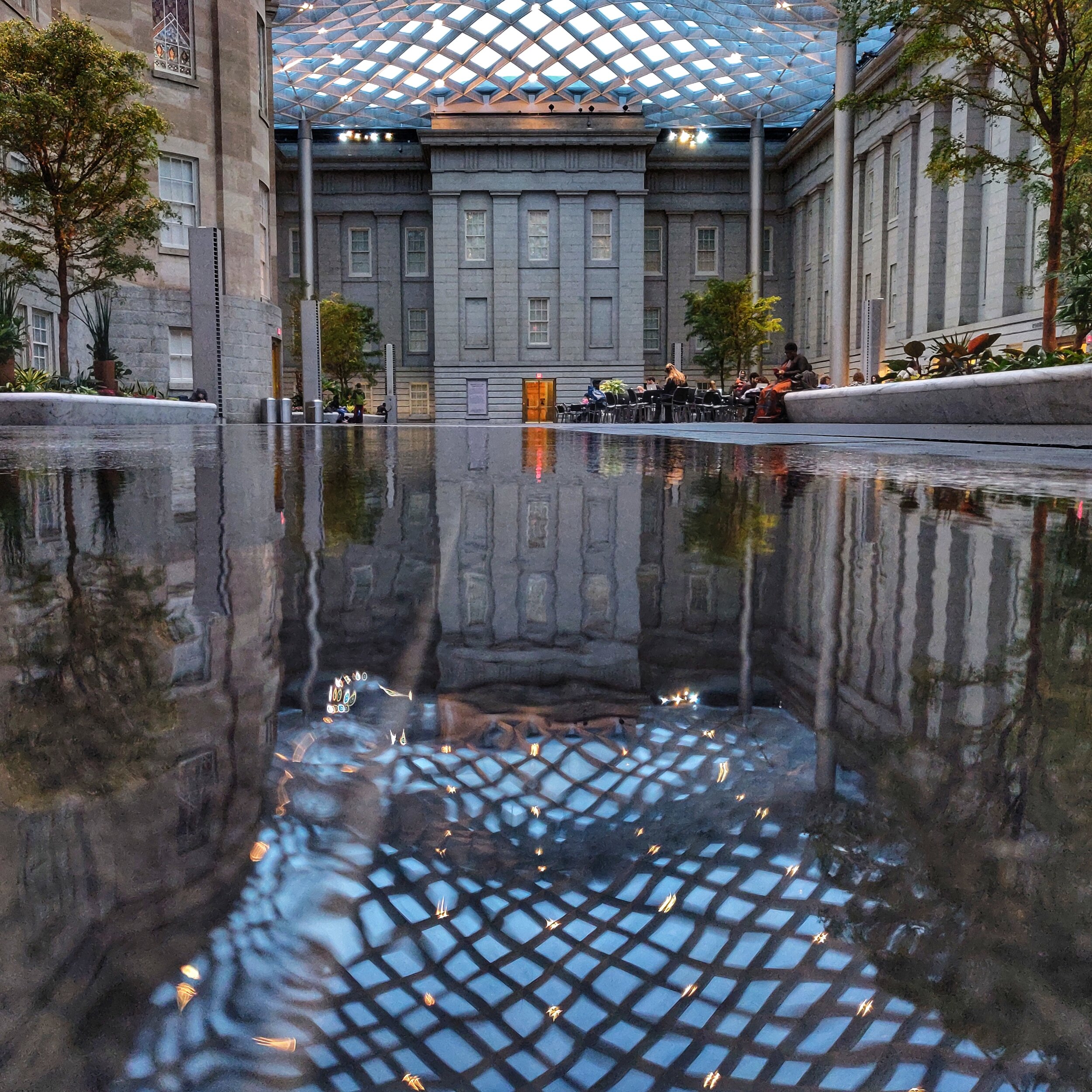
The Kogod Courtyard connects the Smithsonian’s American Art Museum and National Portrait Gallery

The Kogod Courtyard connects the Smithsonian’s American Art Museum and National Portrait Gallery

Every industry is moving toward reopening at various and disparate paths. Recently, the DC municipal government laid out a path for a near restriction-free reopening of many types of venues in regards to capacity. Museums are included in the new loosening of capacity restrictions, as they are included in the same category with libraries and galleries. As of June 11, museums will no longer be required to impose capacity restrictions. That doesn't mean they aren't able to do so on their own, but the requirement to do so will be shed. Each museum will also open with their own safety procedures in an effort to keep staff and visitors safe. Mask-wearing and distancing guidelines are likely still going to be implemented regardless of the venue type.

A number of Smithsonian museums and a collection of others are opening this Friday (May 14) or next Monday. By June there will be enough museums open to make a full day or two of exploration possible again.

Please check with each individual institution for ticketing options (many will not have walk-up entry), capacity restrictions, open hours & open days, and whether the exhibition you really wanted to see is actually going to be accessible.

Here's the list of DC's major museums and galleries along with their opening status as of today!

Smithsonian Museums

Open now:
Udvar-Hazy Air and Space Center (Virginia location)

Opening very soon:
National Museum of African American History and Culture (May 14)
American Art Museum AND National Portrait Gallery (May 14)
Renwick Gallery (May 14)
National Museum of American History (May 21)
National Museum of the American Indian (May 21)
National Zoo (May 21)

Still closed for now:
National Museum of African Art, National Air and Space Museum (DC location), Anacostia Community Museum, Arts and Industries Building, Hirshhorn Museum, Freer Gallery of Art, National Museum of Natural History, National Postal Museum, Ripley Center, Sackler Gallery, and the Smithsonian Castle.

Non-Smithsonian Museums

Open now:
National Museum of Women in the Arts
National Building Museum
Planet Word
Phillips Collection
International Spy Museum

Opening very soon:
National Gallery or Art; West Building only (May 14)
United States Holocaust Memorial Museum (May 17)

Still closed for now:
National Archives Museum
National Geographic Museum
Museum Spotlight: Planet Word!

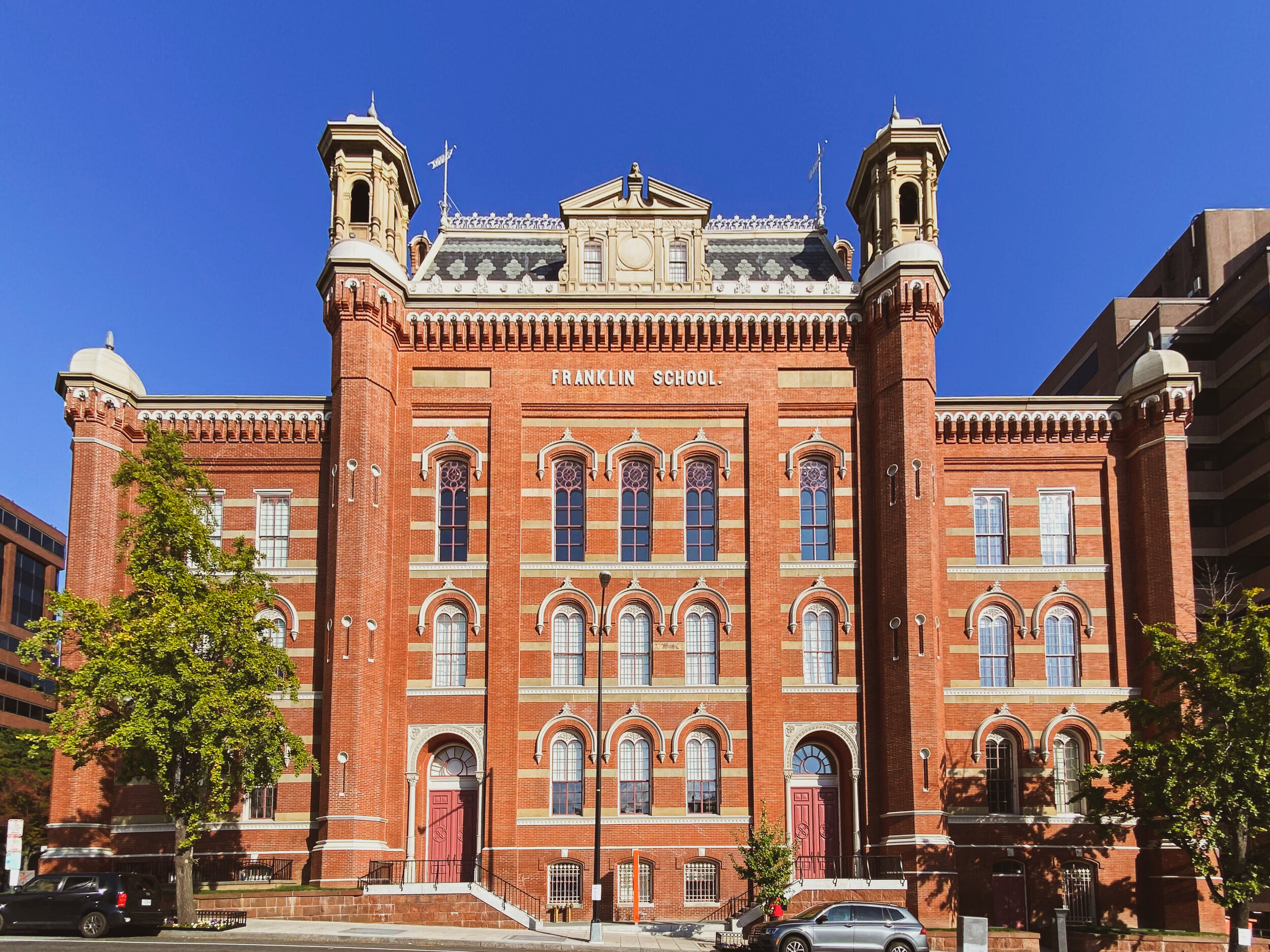
Planet Word inhabits the old Franklin School building (c. 1869) at the corner of 13th and K Streets NW.

Planet Word inhabits the old Franklin School building (c. 1869) at the corner of 13th and K Streets NW.

Planet Word was, in a word, phenomenal. My expectations were fuzzy heading into this museum adventure because 1) the pandemic has altered every facet of public life, including interacting with new institutions, and 2) museums I use on tour rely heavily on the physical artifact to create a narrative, which this museum does not, for the most part.

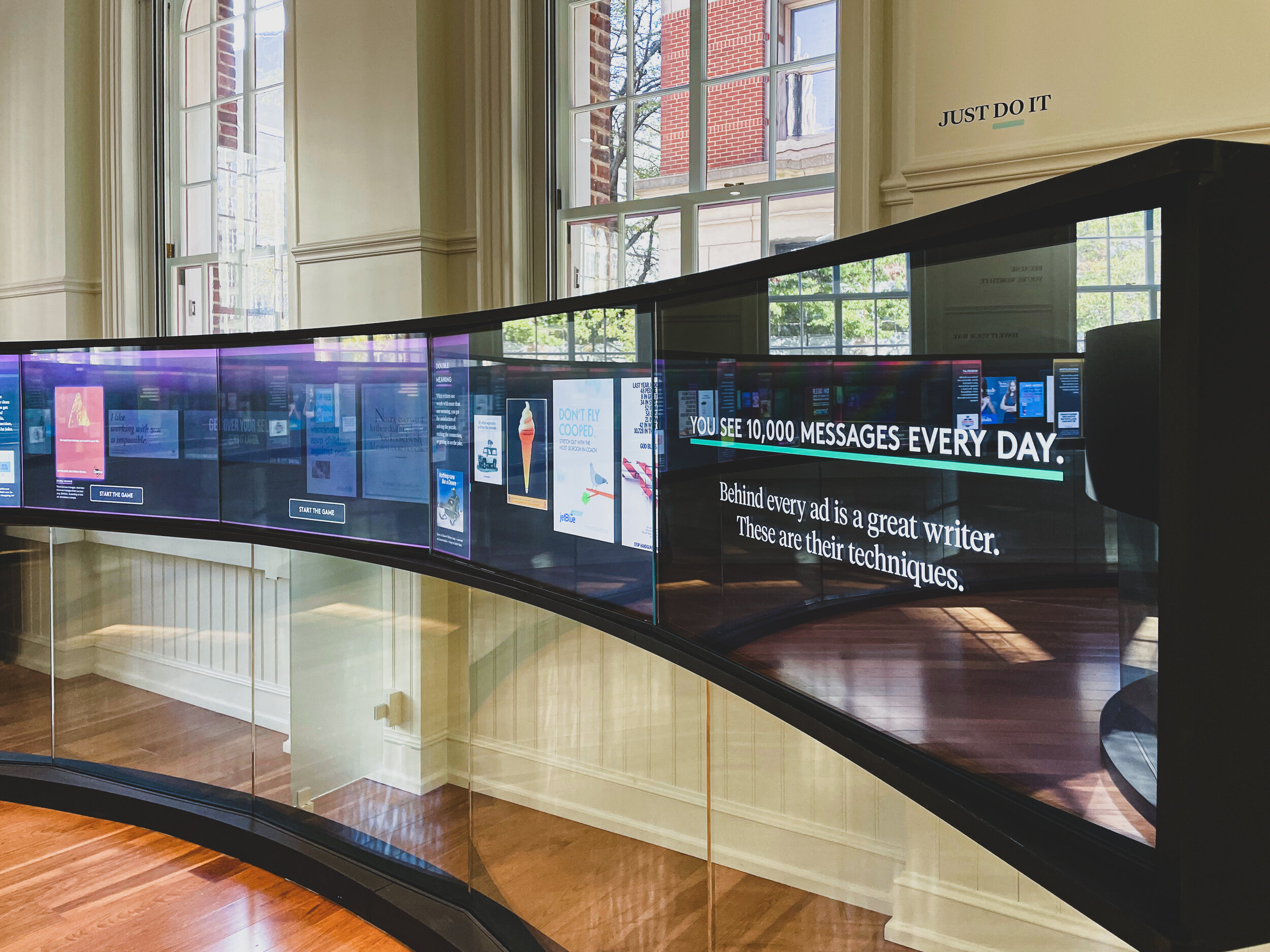
Planet Word is offering something quite different; a learning experience based on language and demonstrating how we develop, utilize, protect (or sometimes fail to protect), and continually alter language and words.

The first sentence on their website's homepage is “The museum where language comes to life” and that is quite accurate to the experience.

Like a few other DC museums (U.S. Holocaust Memorial Museum, National Museum of African American History and Culture) you enter on floor one, but start the exhibition experience on another floor --in this case the top floor-- and wind your way down back to floor one. I should also note that at the time of this visit, attendance was restricted and all visitors were given a free-to-take-home touch pen to interact with digital touch screens (which there were many).

The top five exhibition highlights for highlights for me:

IMG_0762-2.jpg
IMG_0753-2.jpg

Where Do Words Come From?
Imagine a huge wall that talks to you, asks you questions, listens for your answer, and explains the root origin of dozens of English words. And imagine all this happens while it works to keep you visually engaged through moving images and word highlights. Well, it is all that and more. I loved this experience. It’s one of the first you encounter and sets the stage well for the rest of the museum by getting your mind moving, deconstructing the English language and its interconnectedness with the world's other languages.

Where Do Words Come From? exhibition.

Where Do Words Come From? exhibition.

Where Do Words Come From?

Where Do Words Come From?

The Spoken World
It should be acknowledged that English is the language vehicle for this museum. In the Spoken World exhibition, the visitor is presented with a huge globe of the Earth surrounded by individual displays you can approach and interact with. Each individual display features a person who helps you delve into a language that is not English. For my visit, I interacted with speakers of Vietnamese, American Sign Language, Irianian Sign Language, and Russian. Each conversation offers a combination of new vocabulary, syntax, practice with simple sentences, and uncomplicated culture references. I wanted to try every language, but I also wanted to finish seeing the rest of the museum before closing. I could have stayed for hours.

This exhibition gets bonus points for a feature that fills the interactive globe in the middle of the room with images based on your own interactions with the video displays. It’s quite amusing. For those with more interest in the history of language, three large screen displays have interactive videos about topics such as disappearing languages and more; all extremely engaging topics.

Couldn’t karaoke today, but I will be back!

Couldn’t karaoke today, but I will be back!

Joking Around exhibition.

Joking Around exhibition.

Unlock the Music
The first exhibition I plan to rush back to after we’re free and clear of covid restrictions will be this one. Unlock the Music dives right into how musicians transform language into art; or rather, conveys exactly what it is that makes a collection of words into a song we can relate to, remember, and enjoy. All of the songs featured should be popular enough for some recognition by the average visitor. Along with the breakdown of syntax and techniques like alliteration, rhyming, and assonance, visitors get to model these techniques by… performing karaoke with the featured popular songs. While the karaoke and stage setting was fantastic, we’ll have to wait until after the pandemic to safely belt out songs in a room full of strangers without masks. 

Words Matter
Reflecting on any museum visit is highly recommended. Museum experiences are dense; usually full of content, information, and new concepts. The Words Matter section is located near the end of the Planet Word experience. This space gives you a chance to reflect by completing writing prompts about how language has played a part in your own life. There are nooks at which you can take a seat and hear answers to those same questions from other people in pre-recorded talks. These videos are very personal, moving, and most importantly, relatable.

And my favorite space in the museum: The Library

In what felt like a private reading room with thousands of books floor to ceiling surrounding a reading table in the center, this was an exhibition all about the written word as literature. Books, books, books: fiction, non-fiction, graphic novels, classics, and newly released. This exhibition is truly a celebration of books. Speaking a classic line from a classic book opens up (literally opens up) dioramas with classic scenes from selected books. The long reading table features an interactive element in which you can place a book down --any book you find in the room-- and see moving image narratives about that particular book, its origins, the author, or the impact & legacy of the work itself. They’re graceful visuals and I wanted to explore every book in the room, even books I’ve already read and know inside out.

The Library exhibition.

The Library exhibition.

To Kill a Mockingbird presented with commentary.

To Kill a Mockingbird presented with commentary.

The verdict
Overall, Planet Word surprised me, in all the good ways. The Language Arts don’t belie the other disciplines. On the contrary, language makes advancement in any other discipline possible. Communication, messaging, entertainment, study, reflection; all conveyed through words.

Of all the post-pandemic museum glow ups I’m anticipating, Planet Word probably tops the list. In a world where we can’t sing aloud in groups, project when we speak, or even be near other people, it’s just harder to convey words we know, practice words we don’t, or interact with words in the ways we’re asked to at Planet Word. But now seeing what the museum actually is, I feel they have made themselves as accessible as possible considering the various (and 100% necessary) precautions in place. Whenever this pandemic ends in the U.S., I hope to revisit Planet Word to experience every feature and exhibition as they were intended. Highly recommended!

Planet Word is located at 925 13th Street NW. Admission is free, with a suggested donation of $15.

As of November 23, the museum is temporarily closed due to the pandemic. Visit the museum website for updates on opening hours and advanced reservations when they are next available. 

If you enjoyed this content, consider supporting Attucks Adams on Patreon. Get weekly history posts about Washington DC including exhibition & museum reviews, photos of what’s happening across the city in real time, and much more. Subscriptions begin at just $3 and starting just this month, yearly subscribers get discounted rates. Check it out here: https://www.patreon.com/attucksadams.

The Spoken Word exhibition.

The Spoken Word exhibition.

IMG_0715.jpg
Excellent prompts for reflection in the Words Matter exhibition.

Excellent prompts for reflection in the Words Matter exhibition.

IMG_0744.jpg
IMG_0740.jpg
IMG_0729.jpg