museums

Museum Spotlight: Planet Word!

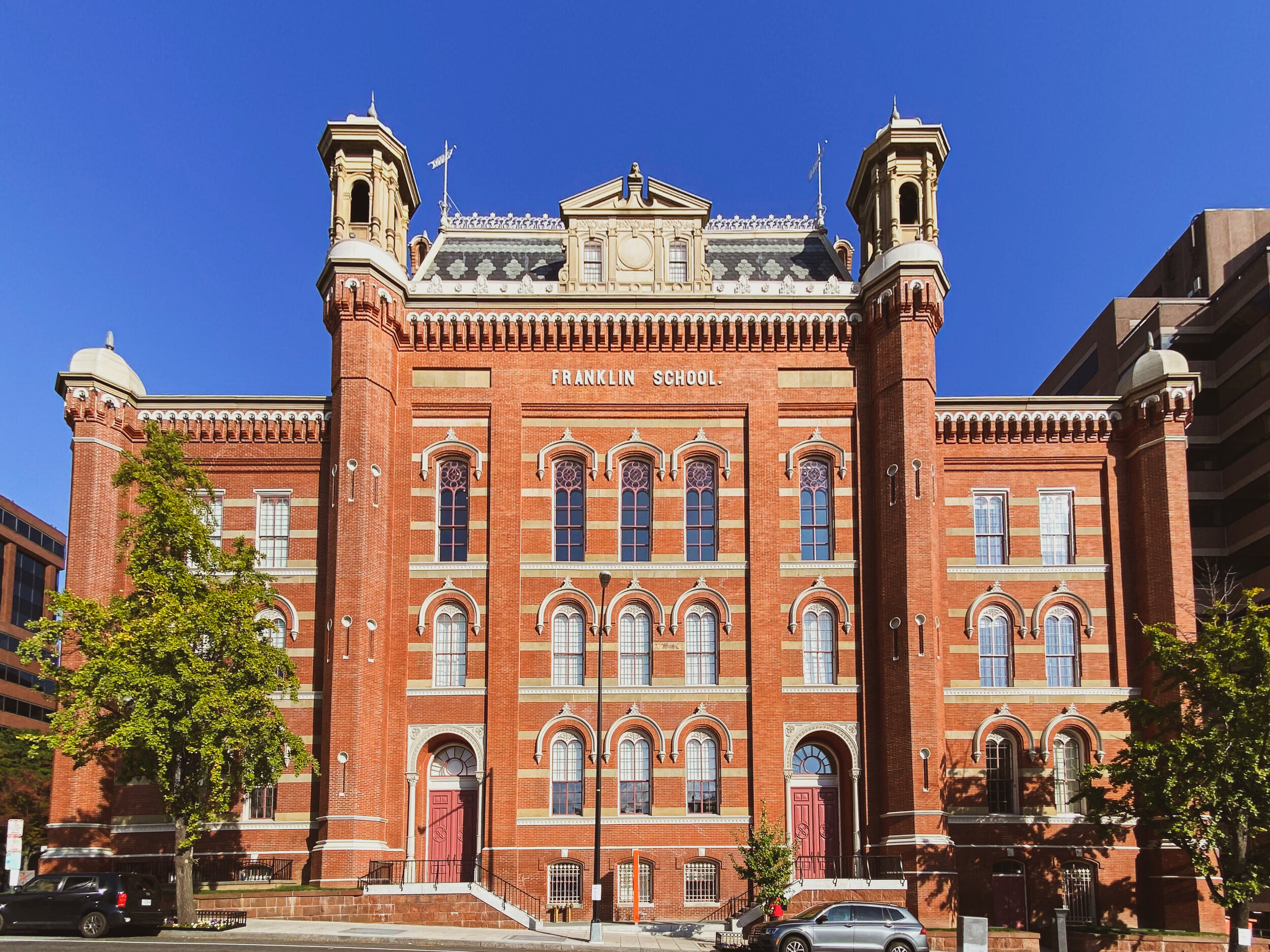
Planet Word inhabits the old Franklin School building (c. 1869) at the corner of 13th and K Streets NW.

Planet Word inhabits the old Franklin School building (c. 1869) at the corner of 13th and K Streets NW.

Planet Word was, in a word, phenomenal. My expectations were fuzzy heading into this museum adventure because 1) the pandemic has altered every facet of public life, including interacting with new institutions, and 2) museums I use on tour rely heavily on the physical artifact to create a narrative, which this museum does not, for the most part.

Planet Word is offering something quite different; a learning experience based on language and demonstrating how we develop, utilize, protect (or sometimes fail to protect), and continually alter language and words.

The first sentence on their website's homepage is “The museum where language comes to life” and that is quite accurate to the experience.

Like a few other DC museums (U.S. Holocaust Memorial Museum, National Museum of African American History and Culture) you enter on floor one, but start the exhibition experience on another floor --in this case the top floor-- and wind your way down back to floor one. I should also note that at the time of this visit, attendance was restricted and all visitors were given a free-to-take-home touch pen to interact with digital touch screens (which there were many).

The top five exhibition highlights for highlights for me:

IMG_0762-2.jpg
IMG_0753-2.jpg

Where Do Words Come From?
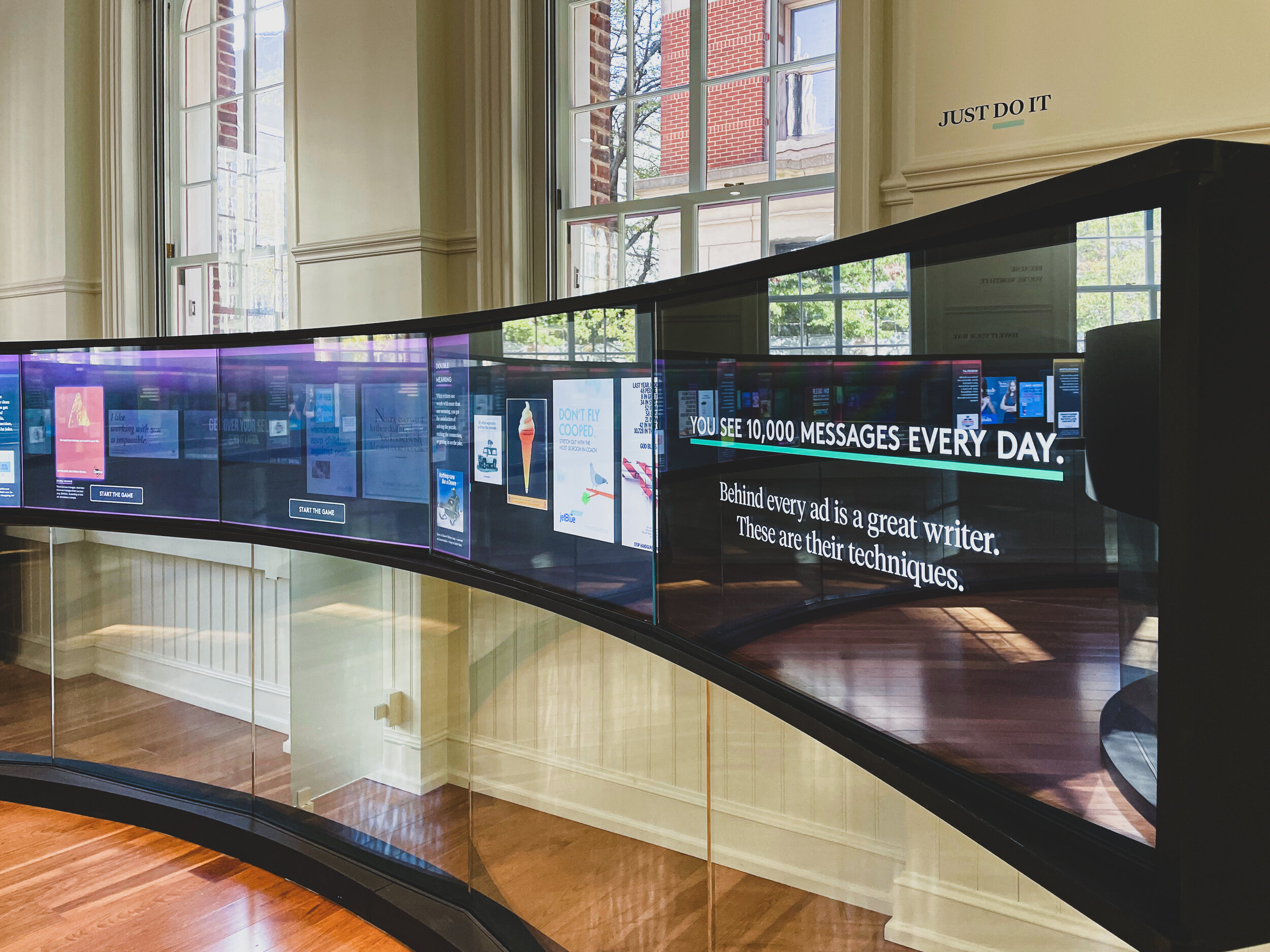
Imagine a huge wall that talks to you, asks you questions, listens for your answer, and explains the root origin of dozens of English words. And imagine all this happens while it works to keep you visually engaged through moving images and word highlights. Well, it is all that and more. I loved this experience. It’s one of the first you encounter and sets the stage well for the rest of the museum by getting your mind moving, deconstructing the English language and its interconnectedness with the world's other languages.

Where Do Words Come From? exhibition.

Where Do Words Come From? exhibition.

Where Do Words Come From?

Where Do Words Come From?

The Spoken World
It should be acknowledged that English is the language vehicle for this museum. In the Spoken World exhibition, the visitor is presented with a huge globe of the Earth surrounded by individual displays you can approach and interact with. Each individual display features a person who helps you delve into a language that is not English. For my visit, I interacted with speakers of Vietnamese, American Sign Language, Irianian Sign Language, and Russian. Each conversation offers a combination of new vocabulary, syntax, practice with simple sentences, and uncomplicated culture references. I wanted to try every language, but I also wanted to finish seeing the rest of the museum before closing. I could have stayed for hours.

This exhibition gets bonus points for a feature that fills the interactive globe in the middle of the room with images based on your own interactions with the video displays. It’s quite amusing. For those with more interest in the history of language, three large screen displays have interactive videos about topics such as disappearing languages and more; all extremely engaging topics.

Couldn’t karaoke today, but I will be back!

Couldn’t karaoke today, but I will be back!

Joking Around exhibition.

Joking Around exhibition.

Unlock the Music
The first exhibition I plan to rush back to after we’re free and clear of covid restrictions will be this one. Unlock the Music dives right into how musicians transform language into art; or rather, conveys exactly what it is that makes a collection of words into a song we can relate to, remember, and enjoy. All of the songs featured should be popular enough for some recognition by the average visitor. Along with the breakdown of syntax and techniques like alliteration, rhyming, and assonance, visitors get to model these techniques by… performing karaoke with the featured popular songs. While the karaoke and stage setting was fantastic, we’ll have to wait until after the pandemic to safely belt out songs in a room full of strangers without masks. 

Words Matter
Reflecting on any museum visit is highly recommended. Museum experiences are dense; usually full of content, information, and new concepts. The Words Matter section is located near the end of the Planet Word experience. This space gives you a chance to reflect by completing writing prompts about how language has played a part in your own life. There are nooks at which you can take a seat and hear answers to those same questions from other people in pre-recorded talks. These videos are very personal, moving, and most importantly, relatable.

And my favorite space in the museum: The Library

In what felt like a private reading room with thousands of books floor to ceiling surrounding a reading table in the center, this was an exhibition all about the written word as literature. Books, books, books: fiction, non-fiction, graphic novels, classics, and newly released. This exhibition is truly a celebration of books. Speaking a classic line from a classic book opens up (literally opens up) dioramas with classic scenes from selected books. The long reading table features an interactive element in which you can place a book down --any book you find in the room-- and see moving image narratives about that particular book, its origins, the author, or the impact & legacy of the work itself. They’re graceful visuals and I wanted to explore every book in the room, even books I’ve already read and know inside out.

The Library exhibition.

The Library exhibition.

To Kill a Mockingbird presented with commentary.

To Kill a Mockingbird presented with commentary.

The verdict
Overall, Planet Word surprised me, in all the good ways. The Language Arts don’t belie the other disciplines. On the contrary, language makes advancement in any other discipline possible. Communication, messaging, entertainment, study, reflection; all conveyed through words.

Of all the post-pandemic museum glow ups I’m anticipating, Planet Word probably tops the list. In a world where we can’t sing aloud in groups, project when we speak, or even be near other people, it’s just harder to convey words we know, practice words we don’t, or interact with words in the ways we’re asked to at Planet Word. But now seeing what the museum actually is, I feel they have made themselves as accessible as possible considering the various (and 100% necessary) precautions in place. Whenever this pandemic ends in the U.S., I hope to revisit Planet Word to experience every feature and exhibition as they were intended. Highly recommended!

Planet Word is located at 925 13th Street NW. Admission is free, with a suggested donation of $15.

As of November 23, the museum is temporarily closed due to the pandemic. Visit the museum website for updates on opening hours and advanced reservations when they are next available. 

If you enjoyed this content, consider supporting Attucks Adams on Patreon. Get weekly history posts about Washington DC including exhibition & museum reviews, photos of what’s happening across the city in real time, and much more. Subscriptions begin at just $3 and starting just this month, yearly subscribers get discounted rates. Check it out here: https://www.patreon.com/attucksadams.

The Spoken Word exhibition.

The Spoken Word exhibition.

IMG_0715.jpg
Excellent prompts for reflection in the Words Matter exhibition.
Excellent prompts for reflection in the Words Matter exhibition.

IMG_0744.jpg
IMG_0740.jpg
IMG_0729.jpg

Patreon Preview: National Native American Veterans Memorial

200CF1E6-6F16-45C8-BAD3-A500C27E1CC5.jpg

One characteristic of the National Mall I really appreciate is that there are dozens of smaller spots among the museums and large memorials that end up being excellent stages for more intimate spaces. Whether that space is used as a farmers market like the one hosted next to the USDA or a public garden like Haupt Garden at the Smithsonian Castle, there are pockets of land available for new additions to the living, civic work of art that is the National Mall.

The newly opened National Native American Veterans Memorial is in one of those spaces… (con’t)

Read more on our Patreon page including more than a dozen images: patreon.com/attucksadams.

377C81CD-1F8A-4CCE-AD5E-0A324DB52CE9.jpg
5AFBE4BF-EA55-4932-ACCA-13CF99BEE173.jpg

Exhibition Spotlight: Americans

IMGP2208-01.jpeg

Americans is a new, long term exhibition at the National Museum of the American Indian. I was floored by this exhibition. In a good way! It's on my must-see list for Washington, DC museum-goers for this summer.

Americans features 300 objects, still images, moving image clips, and historical artifacts across a 9,000 square foot gallery. There are interactive digital touch tables and a reflection room with excellent questions to get you thinking and writing. In addition to the images and objects, three mini-galleries trace the long lasting impacts of the legacy of Pocahontas, our changing memories regarding Battle of Little Bighorn, and the implementation of Indian Removal Act.

The exhibition highlights the ways in which American Indians, and specifically Indian imagery have been part of our national identity from 1600s until the present. Some of the images are difficult to look at, some complex, some took me by surprise, and some were very familiar.

IMGP2205-01.jpeg
IMGP2200-01.jpeg

From vehicle names, to fashion, to machines of war, to sports, we've co-opted American Indian imagery for commercial, political, and propagandic purposes. Often times we have done this in prejudicial, careless, and harmful ways. Other images were seemingly benign or sought to honor or pay homage. Seeing it all presented here in mostly a matter-of-fact manner was affecting and educational. I was moved and reflective after the experience.

Americans is located on the 3rd floor of the National Museum of the American Indian (4th St and Independence Ave SW). It will be on display until the year 2022.

IMGP2189-01.jpeg
20180205_150719.jpg
IMGP2173-01.jpeg
IMGP2163-01.jpeg
20180205_160846.jpg
20180205_161033.jpg
IMGP2177-01.jpeg
IMGP2186-01.jpeg
IMGP2194-01.jpeg
IMGP2180-01.jpeg
20180205_163951_HDR.jpg

Learn more:

Americans exhibition interactive website (FYI - has sound).
National Museum of the American Indian official website.
The Invention of Thanksgiving short film/video (featured in the exhibition).
Exhibition review by the Washington Post.
 

Exhibition Spotlight: City of Hope

Model of Resurrection City

Model of Resurrection City

This is the first in a series of posts marking 50 years since 1968. For the District of Columbia, many other cities & towns --and indeed the nation-- 1968 marks a significant moment of truth; a crucial year in our history that helped shape the half century of American life after it.

Fortunately, DC has several museums and cultural institutions up to the task of offering thoughtful interpretation and reflection on events of that year.

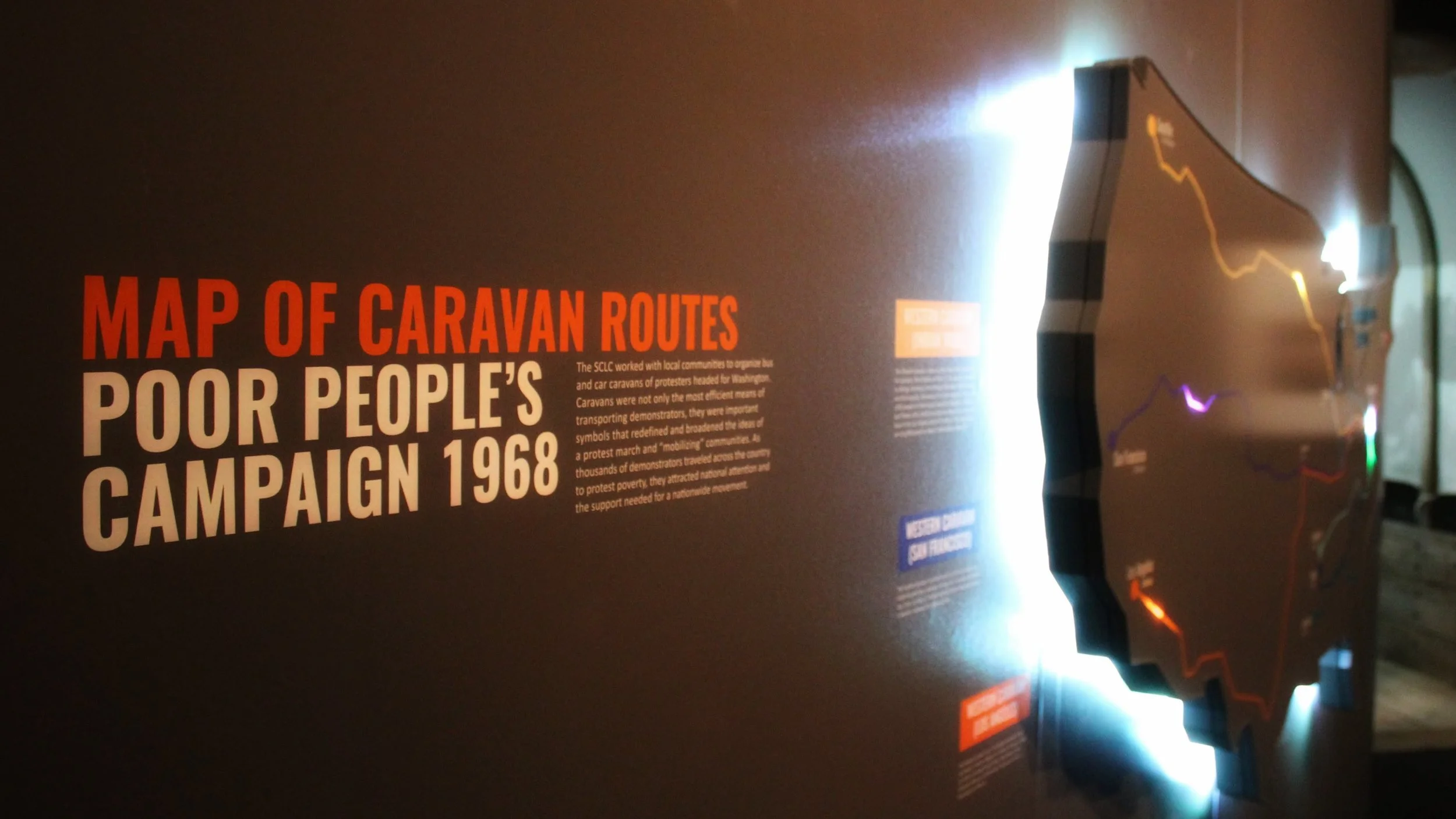
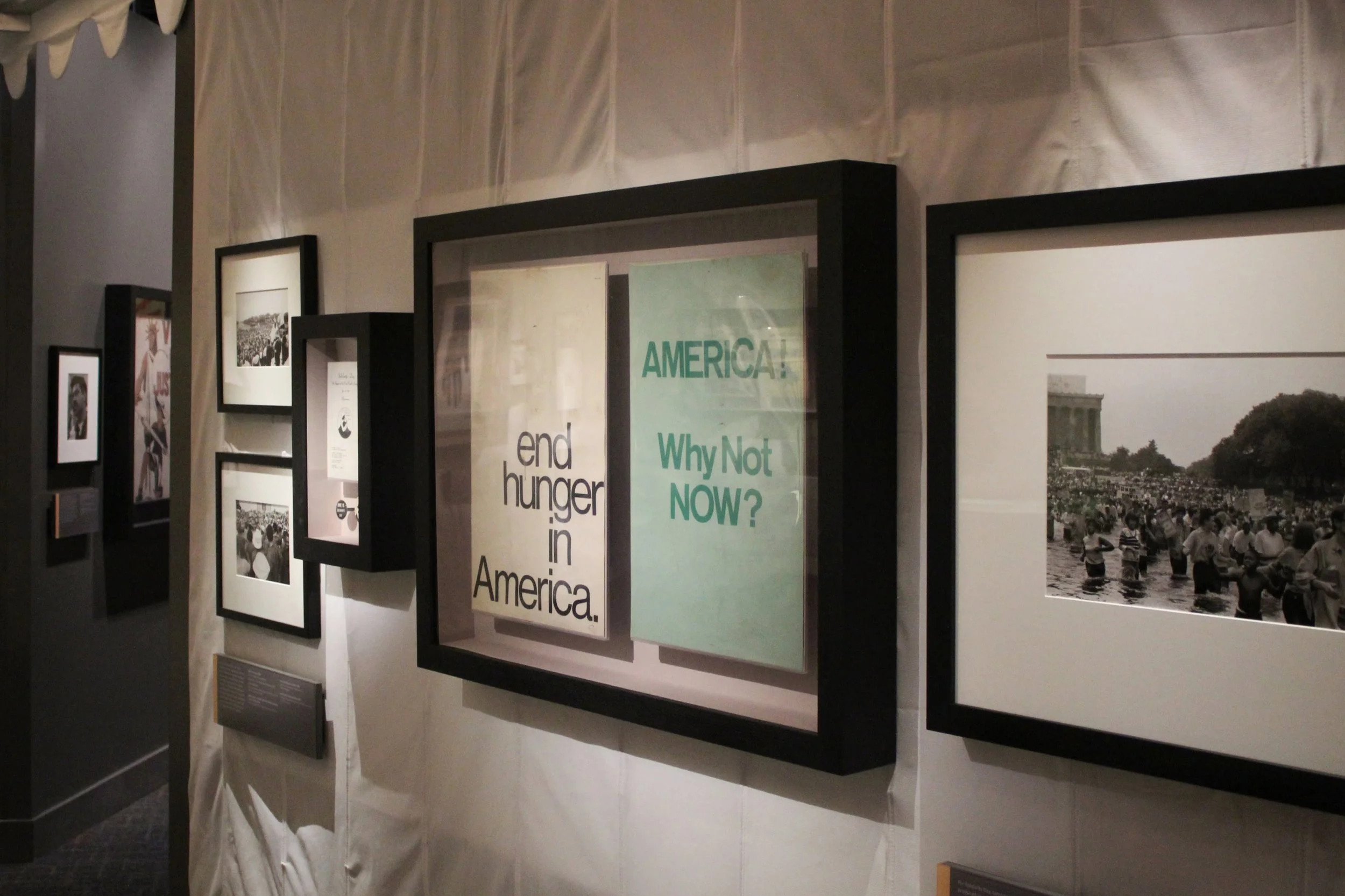
City of Hope: Resurrection City & the 1968 Poor People's Campaign is a new exhibition by the National Museum of African American History and Culture and hosted at the National Museum of American History. The exhibition focuses on the extraordinary execution of a community space created in Washington, DC. The community was part of the Poor People's Campaign, a highly organized, multifaceted campaign to fulfill Dr. Martin Luther King Jr.'s vision of ending poverty in America.

The exhibition follows a time linear narrative with four main sections starting with President Lyndon Johnson's "War on Poverty," and ending with first person oral history-filled video kiosk exploring the impact of Resurrection City and the Poor People's campaign.  In the intermediate sections we're presented with photographs, music, videos, paper ephemera, built structures, and other artifacts specific to Resurrection City. The exhibition looks at the motivations for building the city, underlying ideals of the larger campagh, the actual layout and other built environment details, and  on valuable insight into daily life in the community.

This is a just deep enough dive into a three month stretch that will open your eyes on 1968. It wasn't just about assassinations and riots. It was about everything after.

City of Hope: Resurrection City & the 1968 Poor People's Campaign is on display indefinitely at the National Museum of American History. Level 2, East Wing. 1300 Constitution Ave NW.

IMG_2790-01.jpeg
IMG_2761-01.jpg
IMG_2760-01.jpg
IMG_2781-01.jpg
IMG_2777-01.jpg
IMG_2776-01.jpg
IMG_2770-01.jpg

The Nation We Build Together

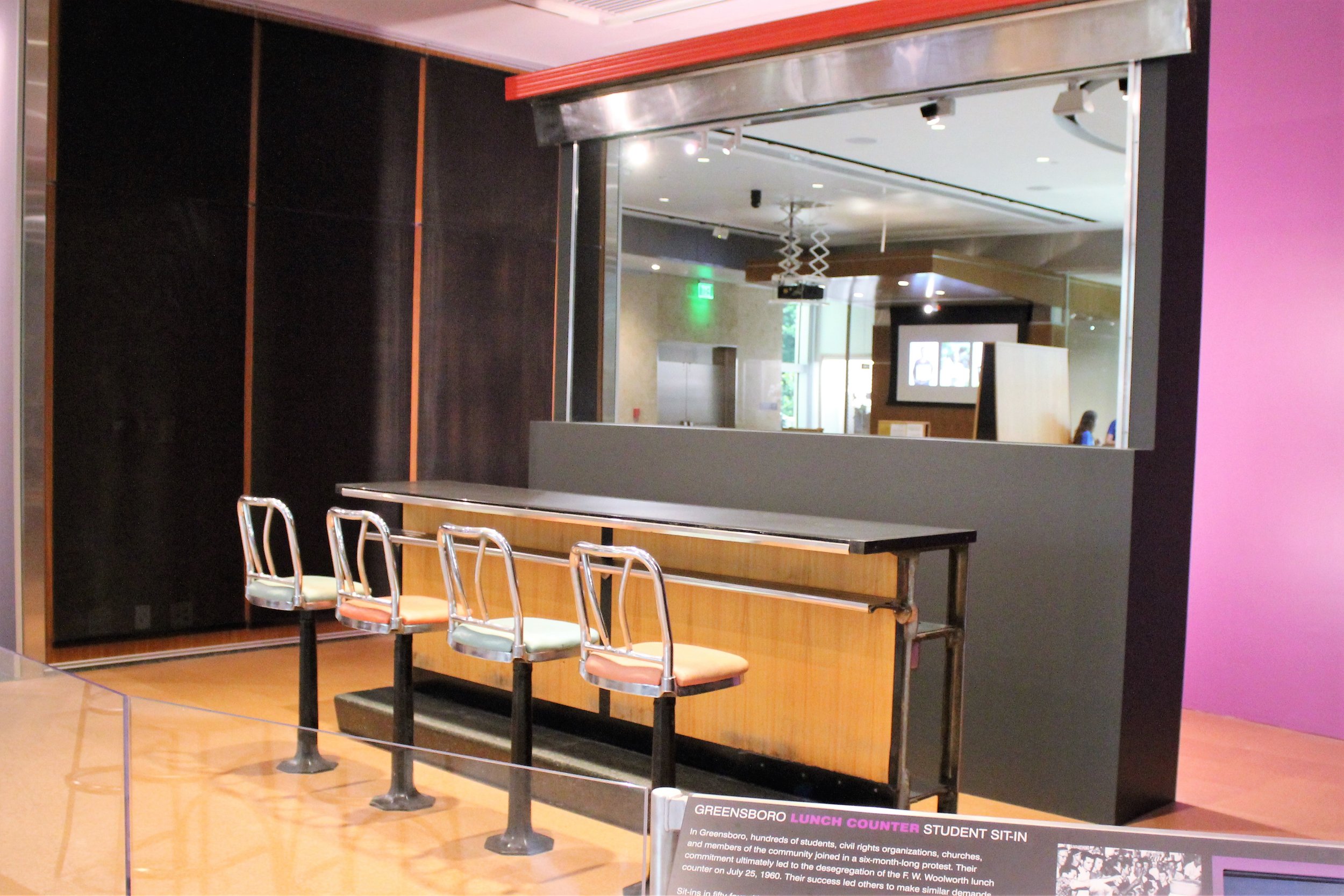
The National Museum of American History recently debuted the newly renovated second floor wing, titled The Nation We Build Together. The exhibitions within tell a nuanced story about how foundational American ideals have transformed over 300 years. The exhibitions are deep, artifact rich, and current. The interactive elements are excellent at testing your knowledge of government and political systems, while challenging you to examine your own views.

We can incorporate the best of these exhibitions into a Discover DC tour and pair the experience with site visits to Capitol Hill, the White House, or presidential memorials. Call us (202-681-0046) to schedule an exciting and educational tour.  We leverage the best of DC and help you maximize your time here in the city. Learn more and book here.

Meanwhile, get inspired by these photos from The Nation We Build Together!

Who gets to vote? How do we manage voting methods state to state and county to county? The exhibition American Democracy: A Great Leap of Faith touches on these questions and more, while illustrating how important political agency is to shaping…

Who gets to vote? How do we manage voting methods state to state and county to county? The exhibition American Democracy: A Great Leap of Faith touches on these questions and more, while illustrating how important political agency is to shaping American society.

When the United States of America began, only a small subset of land owning white men could vote. We've opened the door to more and more people over time, but the work isn't finished. The exhibition explores voting expansion over time on the federal…

When the United States of America began, only a small subset of land owning white men could vote. We've opened the door to more and more people over time, but the work isn't finished. The exhibition explores voting expansion over time on the federal, state, and local levels.

Many Voices, One Nation explores what it means it means to "be American," including how complex issues like immigration, assimilation, multiculturalism, and community intersect.

Many Voices, One Nation explores what it means it means to "be American," including how complex issues like immigration, assimilation, multiculturalism, and community intersect.

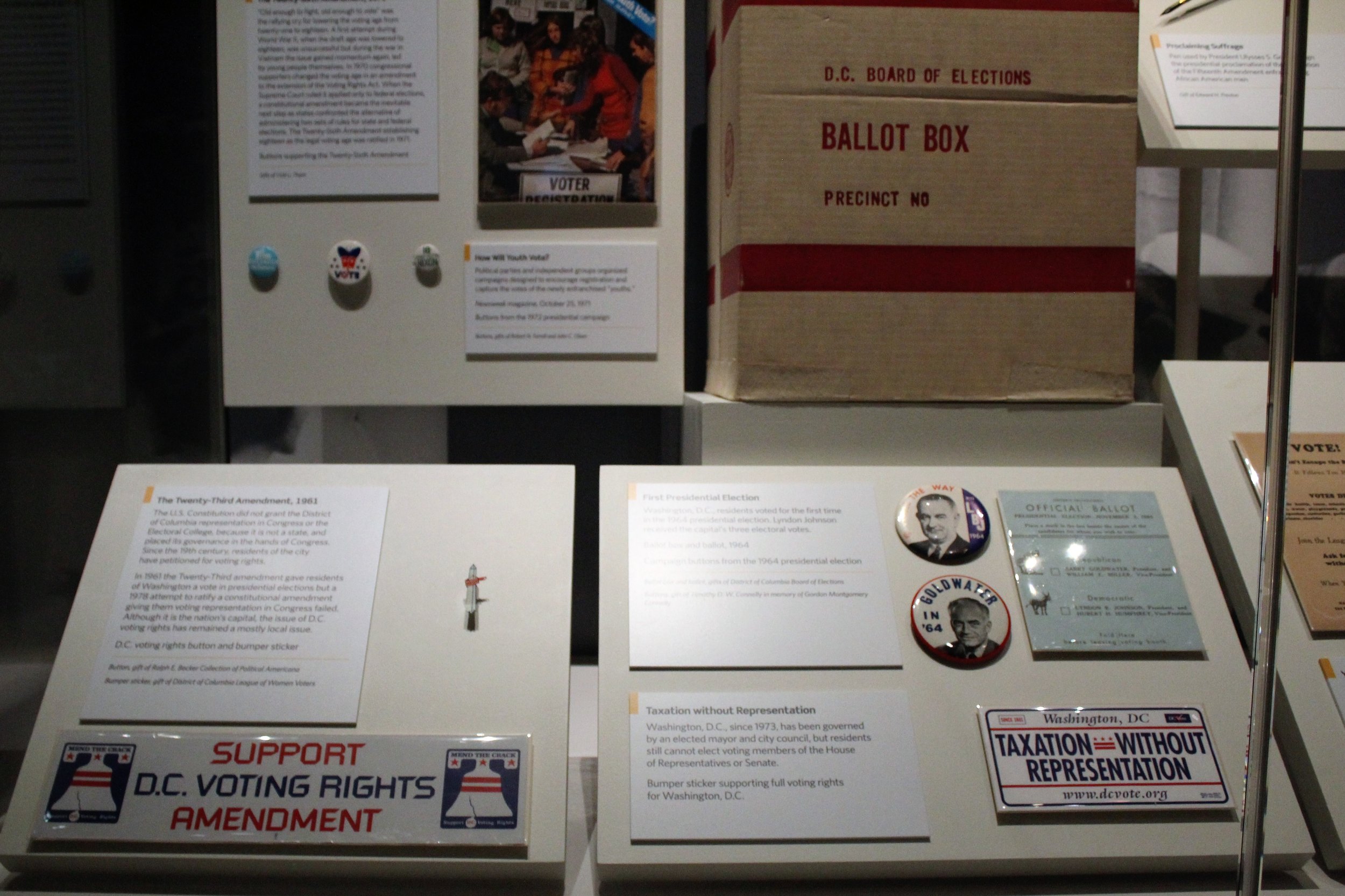
With no limited representation in the House and none in the Senate, residents of Washington, DC face a voting predicament unlike all other American citizens.

With no limited representation in the House and none in the Senate, residents of Washington, DC face a voting predicament unlike all other American citizens.

Campaign ephemera from recent elections and beyond.

Campaign ephemera from recent elections and beyond.

Petition and protest are American traditions, are protected by law, and come in many forms.

Petition and protest are American traditions, are protected by law, and come in many forms.