
The U.S. National Arboretum is often called a "hidden gem" in DC, but there are plenty of visitors -- 700,000 yearly according to Friends of the National Arboretum. The Arboretum is a 451 acre facility in the northeast quadrant of Washington, DC. Technically, it is part of the United States Department of Agriculture, nested in the USDA's Agricultural Research Service.
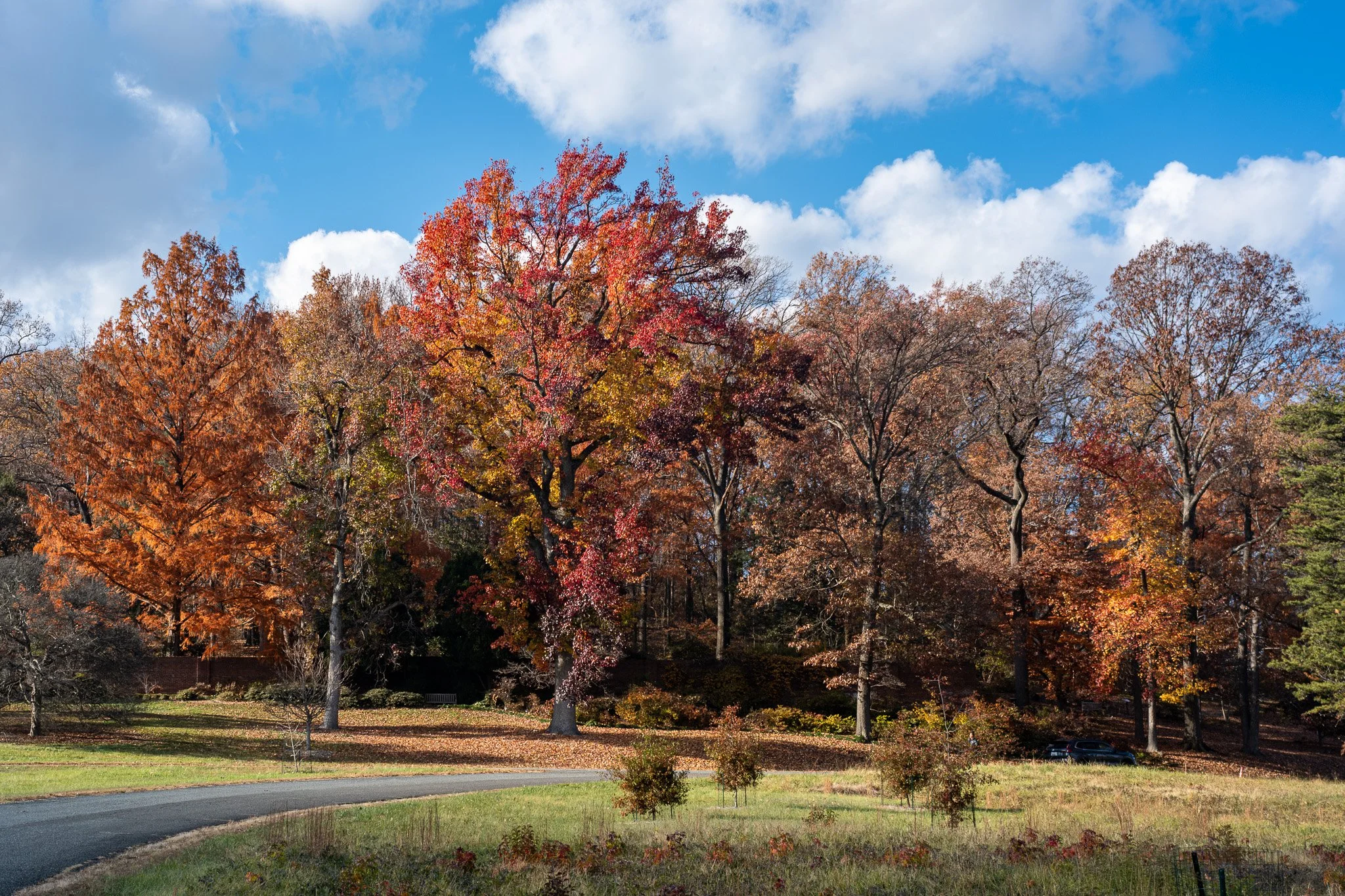
While research and conservation are a part of the Arboretum's mission, so is education. It doubly serves as a research facility and a publicly available green space for visitors — in the form of a huge park. Most of those 700,000 visitors are not there for formal research, but there to take in the gardens and vast Arboretum collections including dogwoods, azaleas, bonsai, ferns, herbs, perennials, conifers, and so many others.
Created by the National Arboretum Act in 1927, the goal of the initial public gardens was to elevate plant groups important to American landscapes. The current mission statement indicated that the Arboretum "enhances the economic, environmental, and aesthetic value of ornamental and landscape plants through long-term, multi-disciplinary research, conservation of genetic resources, and interpretative gardens and exhibits." Perhaps slightly verbose, but you get an idea of what the purpose of the facility actually is, although most visitors interact with the 451 acres as a public park.
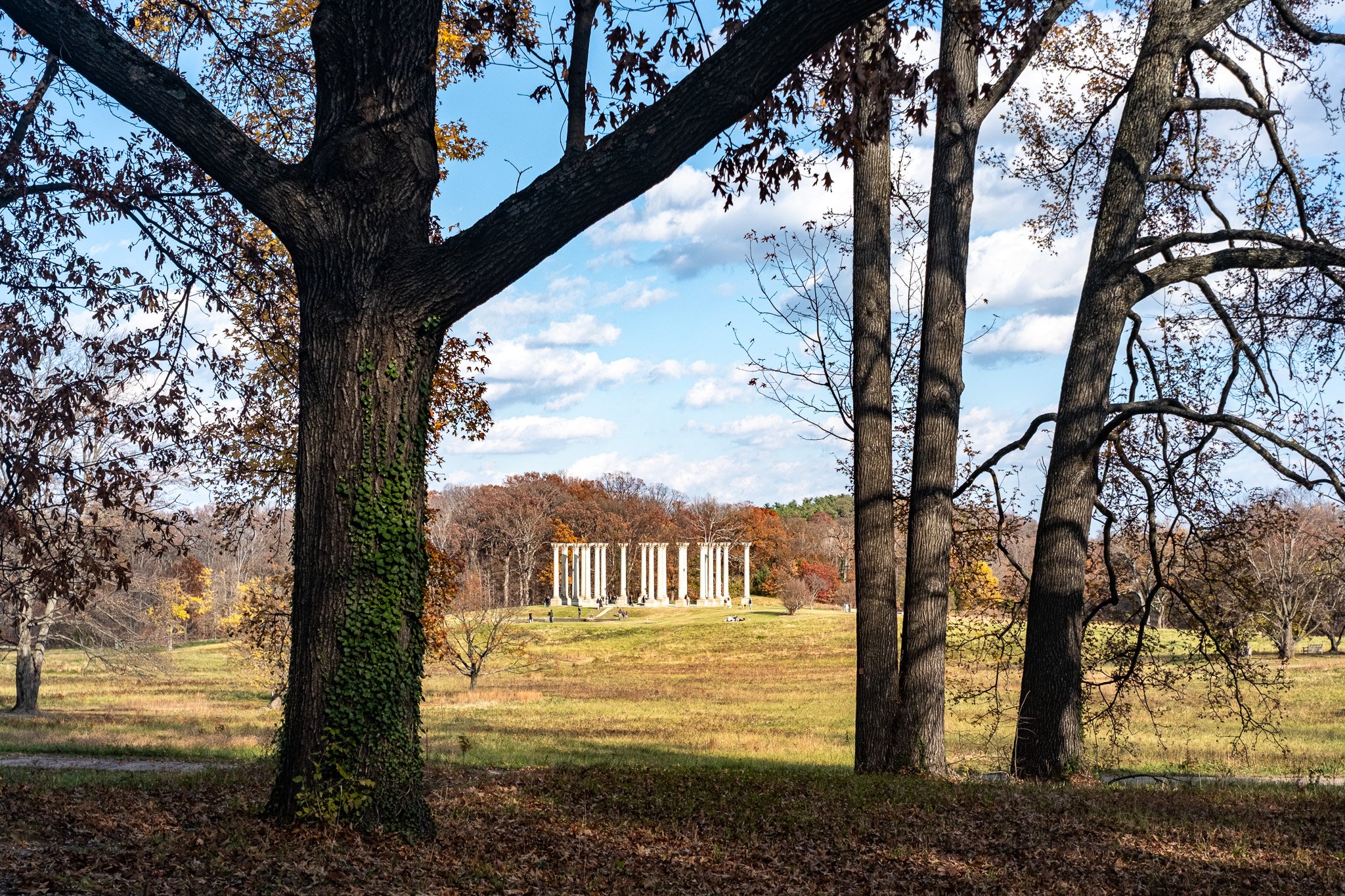
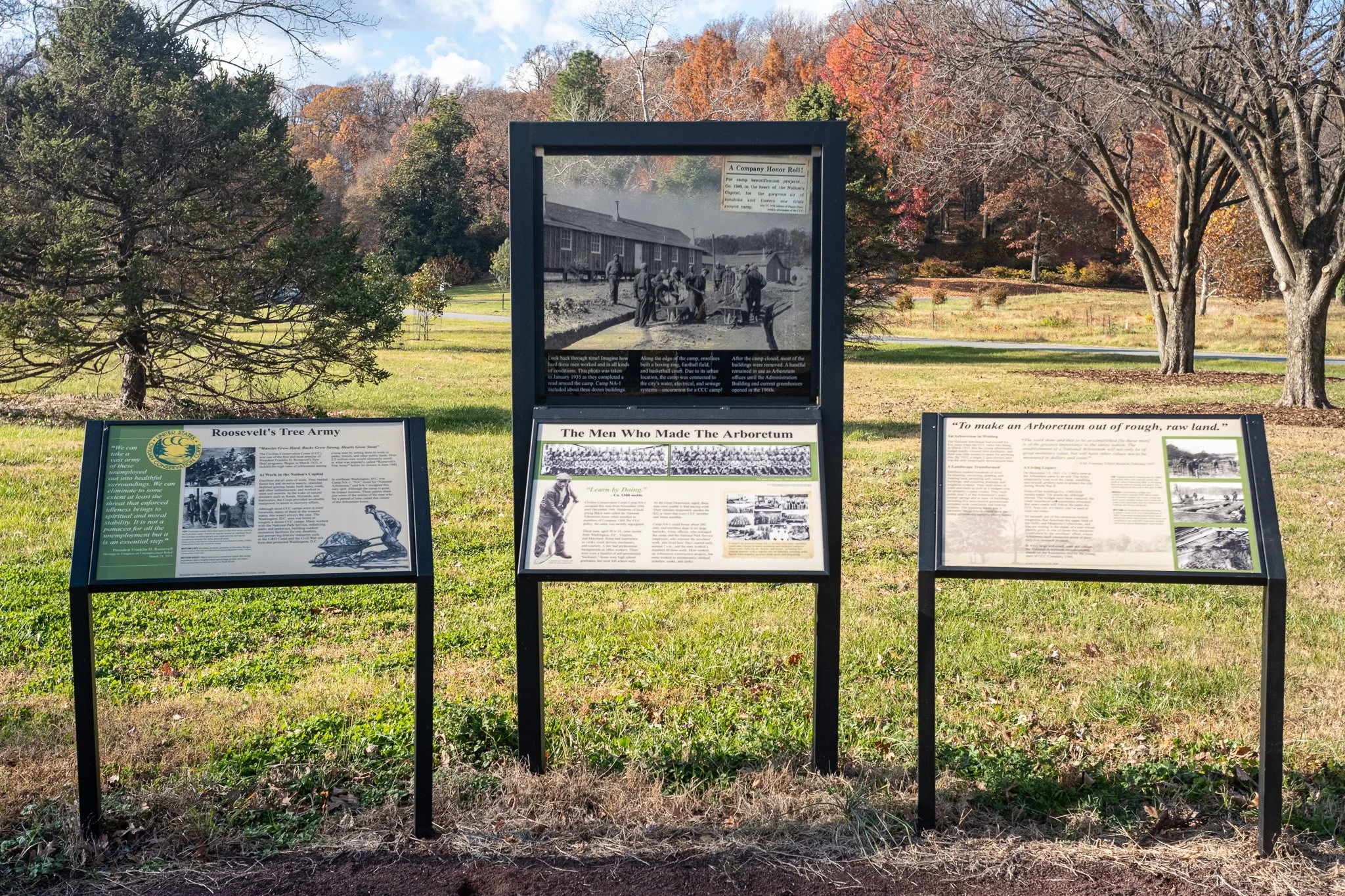
Recently the Arboretum created a display that honors some of the people that built the facility as it existed in infancy. In a small, four panel display near the old State Grove of Trees, visitors can learn a little about Company 1360.
Company 1360 was a DC-based company in the Civilian Conservation Corp (CCC), a Roosevelt era federal work relief program that employed mostly young men (18-25) on environmental and conversation projects across the country. Since the United States government was still segregated at the time, Company 1360 was initially an all Black unit, and remained so for the duration of their work program. It was the first all-Black CCC encampment in the National Capital Parks area. Over the nine year duration of the CCC, about 10% of CCC enrollees were Black. However quotas capped the number of Black enrollees as well as leadership advancement opportunities within CCC, even as under-employment in the Black community exceeded the national average. All CCC enrollees were paid equally regardless of race, including Company 1360, and enrollees individually received $30 per month. They were typically required to send $25 back their families to stimulate the economy (we were still in the Great Depression) and allowed to keep $5 for themselves. All enrollees received housing, food, uniforms, enrichment, and health care.
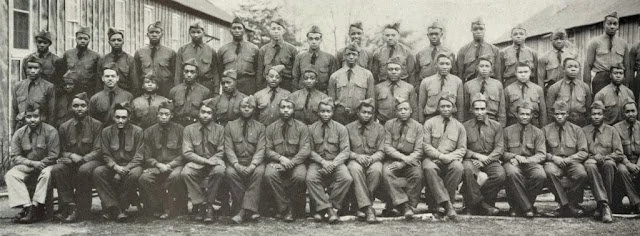
Company 1360 at their camp on the grounds of National Arboretum. c. 1937
Company 1360 worked from 1934 to 1941 to reshape the existing farmland and forest into what we now know as the National Arboretum. They lived on-site at "Camp NA-1," off of what was an extended M Street NE, at the southern end of the Arboretum; not far from the Anacostia River flats as they exist today. Camp NA-1 was one of the 4,500 CCC camps that existed over the course of the program, which ended in 1942. It probably doesn't come as a surprise that the CCC ended as a result of World War II as U.S. government funds and attention were diverted the war effort and young men diverted into military service away form programs like the CCC.
Members of Company 1360 came from DC, Maryland, and Virginia, with the vast majority being DC residents, according to early records. The cohort was tasked with building roads, constructing bridges, grading walk paths, clearing underbrush, creating manmade ponds, seeding grass, landscaping, building offices & tool houses, moving topsoil, cutting endless cords of wood, and generally transforming the land the Arboretum existed on into the form we now experience in the present day.
Present day visitors to the property owe a small debt to the original builders of the Arboretum and I was glad to see the four panel display out in the open, although it is a decent walk from the R Street and New York Avenue entrances. The exhibition will be available for the foreseeable future and has no end date.
This post was made possible by supporters of Attucks Adams on Patreon. Join our Patreon for weekly DC history posts, additional photographs of the Arboretum, and more. NEW: Gift a Patreon membership to the history buff in your life (even if that’s you). Thanks everyone for your continued support.