Book our Library of Congress tour here.
The Two Georges was one of the more "readable" exhibitions in recent Library of Congress history. I say readable because much of my experience was me eagerly learning more about King George III through well-designed text panels -- and as I learned more, my interest deepened regarding how his life intertwined with George Washington's. There were other engaging elements as well, including aspirational maps, personal artifacts, portraits, and utilitarian ledger-type documents used by each of the Georges. Text panels were a good mix of direct-from-source material and succinct explainers of each man's reality regarding their eventual confrontation over the revolution.
Not every exhibition would make it as a book, but this one was actually published into a book, The Two Georges: Parallel Lives in an Age of Revolution (UNC Press). As with each exhibition in the Library of Congress, I spent time learning some of the key components in order to incorporate it into my tour of the Jefferson Building. My guests generally liked the content and those that used the free time I gave them in the exhibition gave The Two Georges high marks.
So, I was a little sad to see it close – as most exhibitions tend to do at some point, of course. To the credit of the Library, the new main exhibition opened the same day Two Georges closed, leaving no gap between having a main show on the second floor. The new show opened on July 4, 2026 and I'm sure you can guess why.
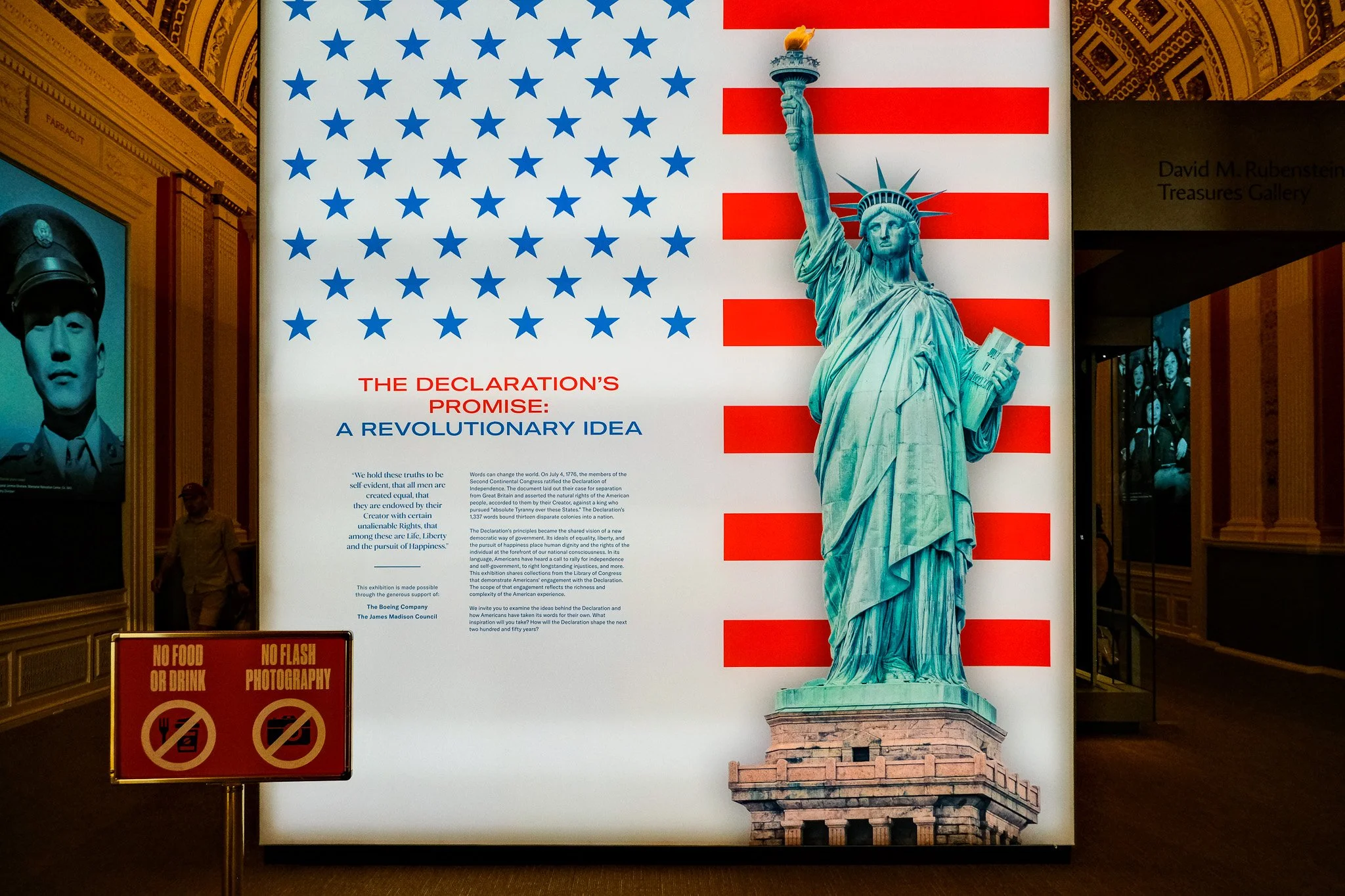
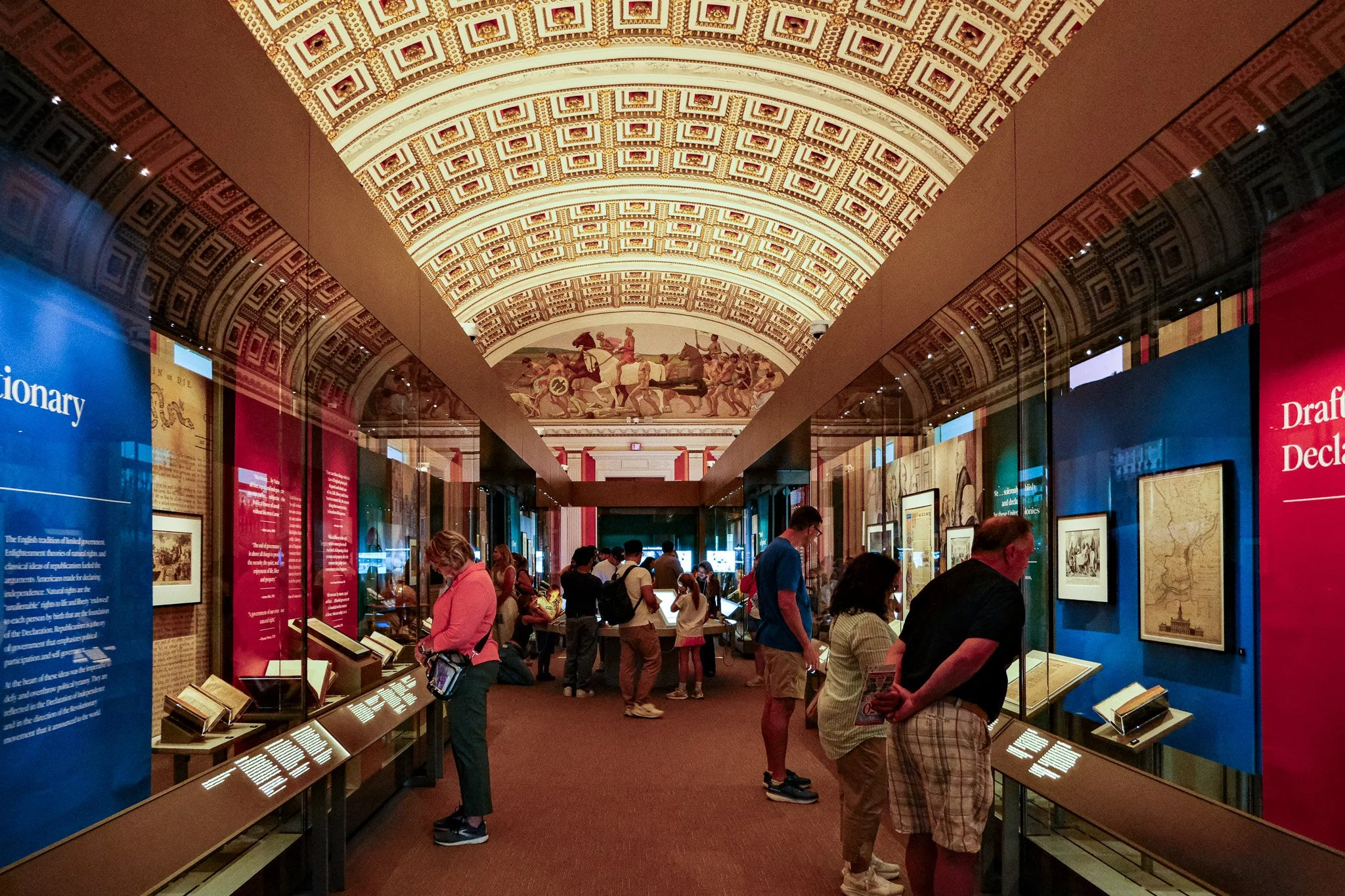
The Declaration's Promise: A Revolutionary Idea is both a high concept exhibition that frames the Declaration using phrases pulled from the document itself, while ALSO being ground level exploration of how Americans have used the Declaration to demand equal rights and establish a more democratic nation. Phrases like "Life, Liberty," "Created Equal," and "Consent of the Governed" act as headliners to the eight constituent sections of the exhibition. The sections alternate between presenting artifacts that speak to the crafting of the Declaration's language with presenting a 250 year survey of movements and shifts within the country that leveraged the promises of the document itself.
Four double-sided museum cases help create the eight sections of the exhibition:
Revolutionary Mind: Here the documents and objects highlight the influence of and eventual detachment from English ideas about self government. This detachment ultimately resulted in the Declaration's grievances and promises. The key document here is a Jefferson hand-written rough draft of the Declaration, likely the star document of this show.
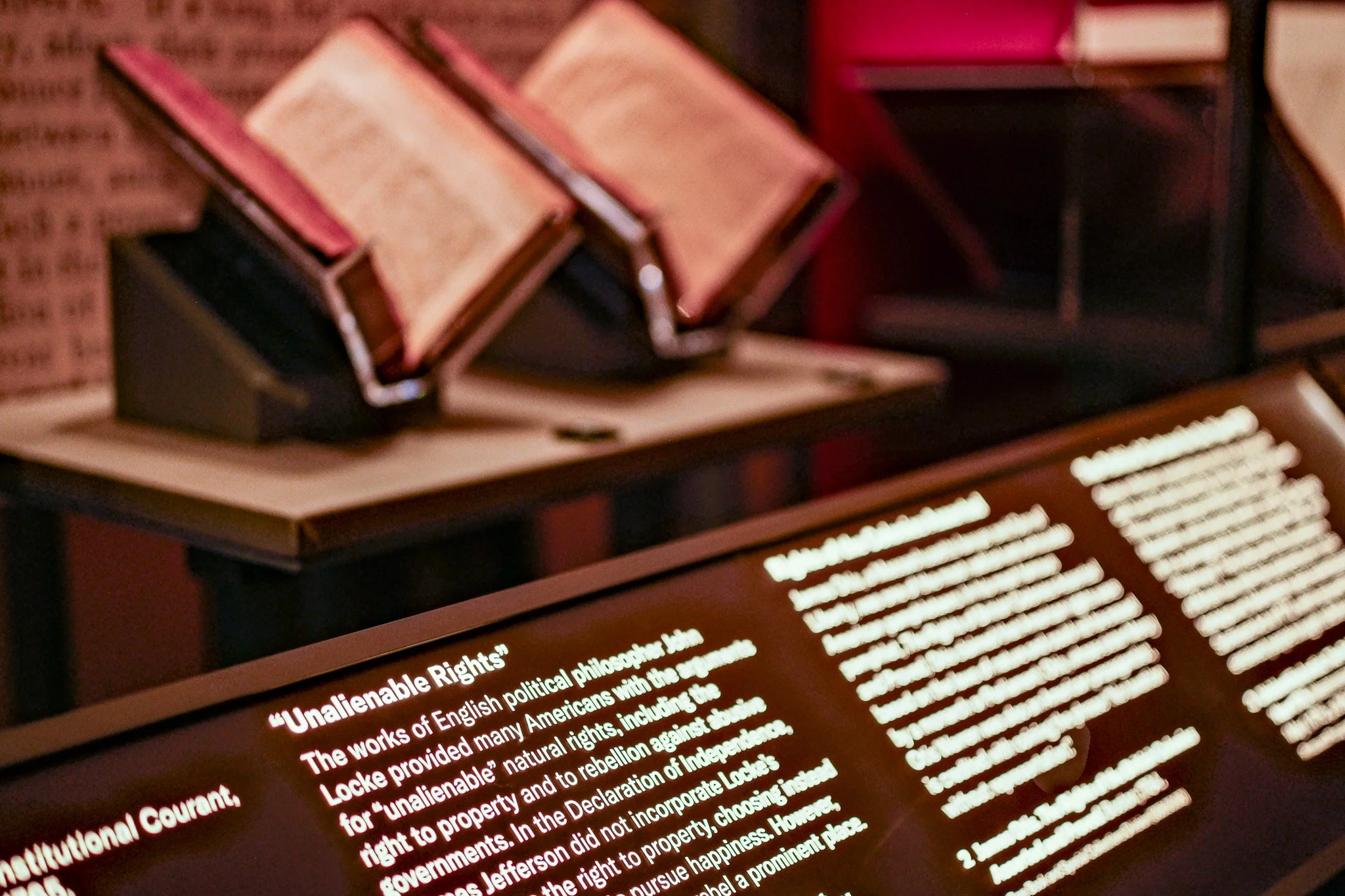
Drafting the Declaration: The story of how the Declaration was created is often glossed over. It was indeed a project by committee. A Committee that existed within a new, uncertain body full of disagreements and silos, the Second Continental Congress. There are some really great documents here including the Pennsylvania Evening Post from July 6, 1776, which was the first newspaper printing of the Declaration informing the citizens of Philadelphia of this seminal moment in time.
Rule by the People: Breaking away from monarchical rule was the first step. What came after… well, we’re still trying to figure it out 250 years later. How to best let the people rule? Constitutional conventions, state laws, local regulations – every level of government is built around a central idea: allowing the people to decide what happens next. Defining who “the people” are and how to instill the power to make government of themselves has been a 250 year experiment. Defining documents in this section include two that speak to the creation of state governments and constitutions in South Carolina and New Hampshire.
A New Birth of Freedom: From the moment of adoption, making sense of the promises in the Declaration have been central to life in the United States. The greatest stress test came “four score and seven years” later. This is perhaps the most compelling section of the exhibition and it focuses almost exclusively on the American Civil War and abolition of slavery. Incredible documents here including the “Nicolay” draft of the Gettysburg Address (the earliest known draft, named after Lincoln’s secretary), and Susan B. Anthony’s 1861 speech What is American Slavery?
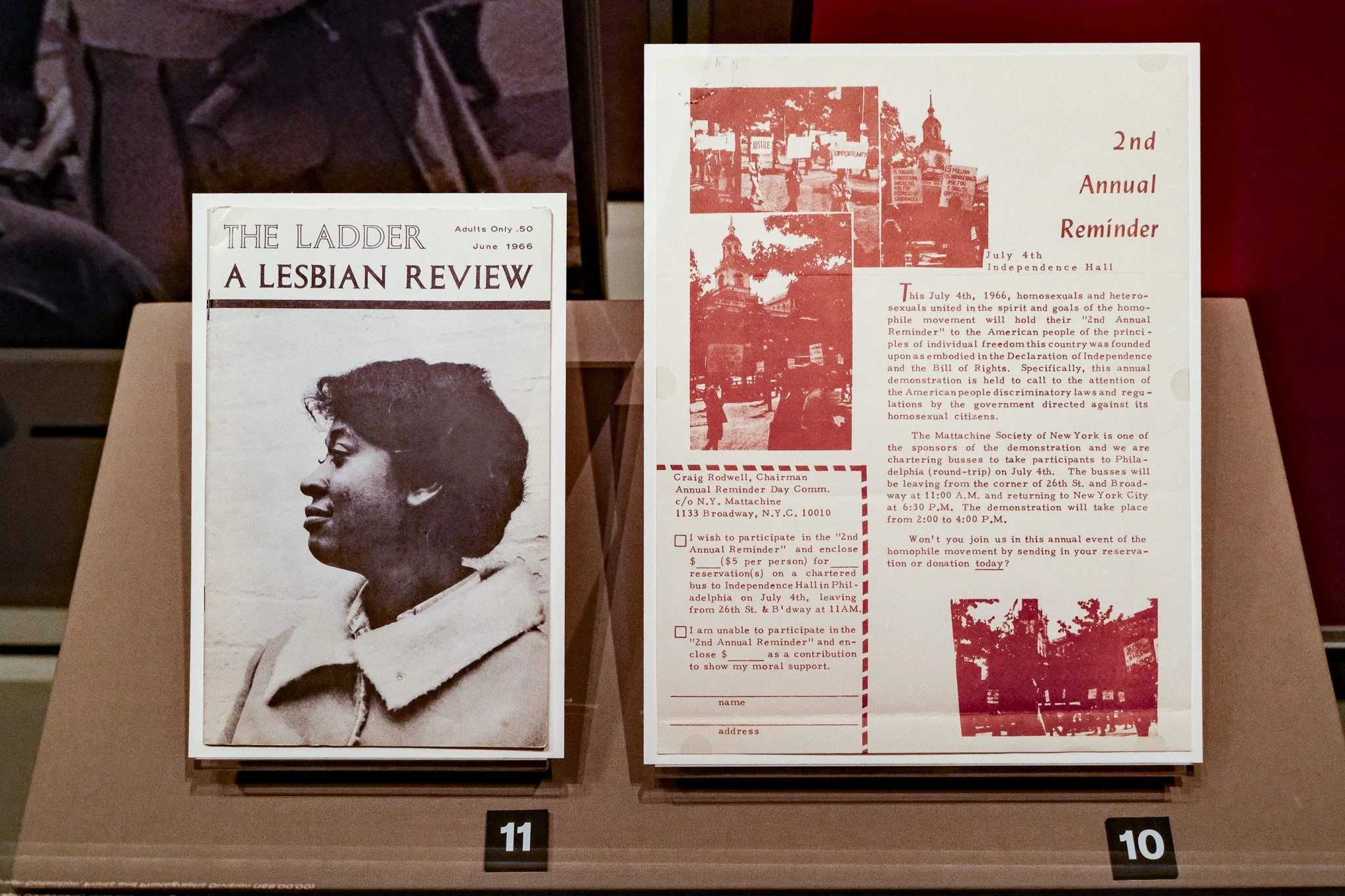
Created Equal: The phrase “...all men are created equal,” has always been replete with overwhelming contradictions. Even amongst men themselves, the populace wasn’t created equal. In South Carolina, the new 1778 state constitution limited voting to white men who were free, aged at least 21 years, who had resided in the state for at least one year, were Christian Protestant, and who owned 50 acres or more of land. Voting has been opened to more and more people over the past 250 years and we are still debating who gets to participate, and how. This section features an astonishing breadth of documents related to advancing equality across the eras of a post-Declaration U.S. Included is a 1966 issue of The Ladder, the first nationally distributed lesbian periodical in the U.S.; produced by the first lesbian rights group, The Daughters of Bilitis. As well as a 1977 photo of a man using a wheelchair to board a Metro rail train, signaling the work that helped move closer to equal rights for disabled people in the public arena, including transit.
Life, Liberty: If you asked any 10 Americans to define liberty, you very well may get 10 completely different answers. In July of 1776, generally it was thought of in political terms, essentially freedom to not live under tyranny. Today we tend to extend liberty to capture freedoms related to religion, speech, and generally being able to craft an identity outside of government interference. Documents in this section include a 1764 copy of The Koran (sic) owned by Thomas Jefferson, who was very much interested in world religions. As well as a 1917 poster print in Yiddish that targeted the patriotic spirit of newly arriving eastern European immigrants.
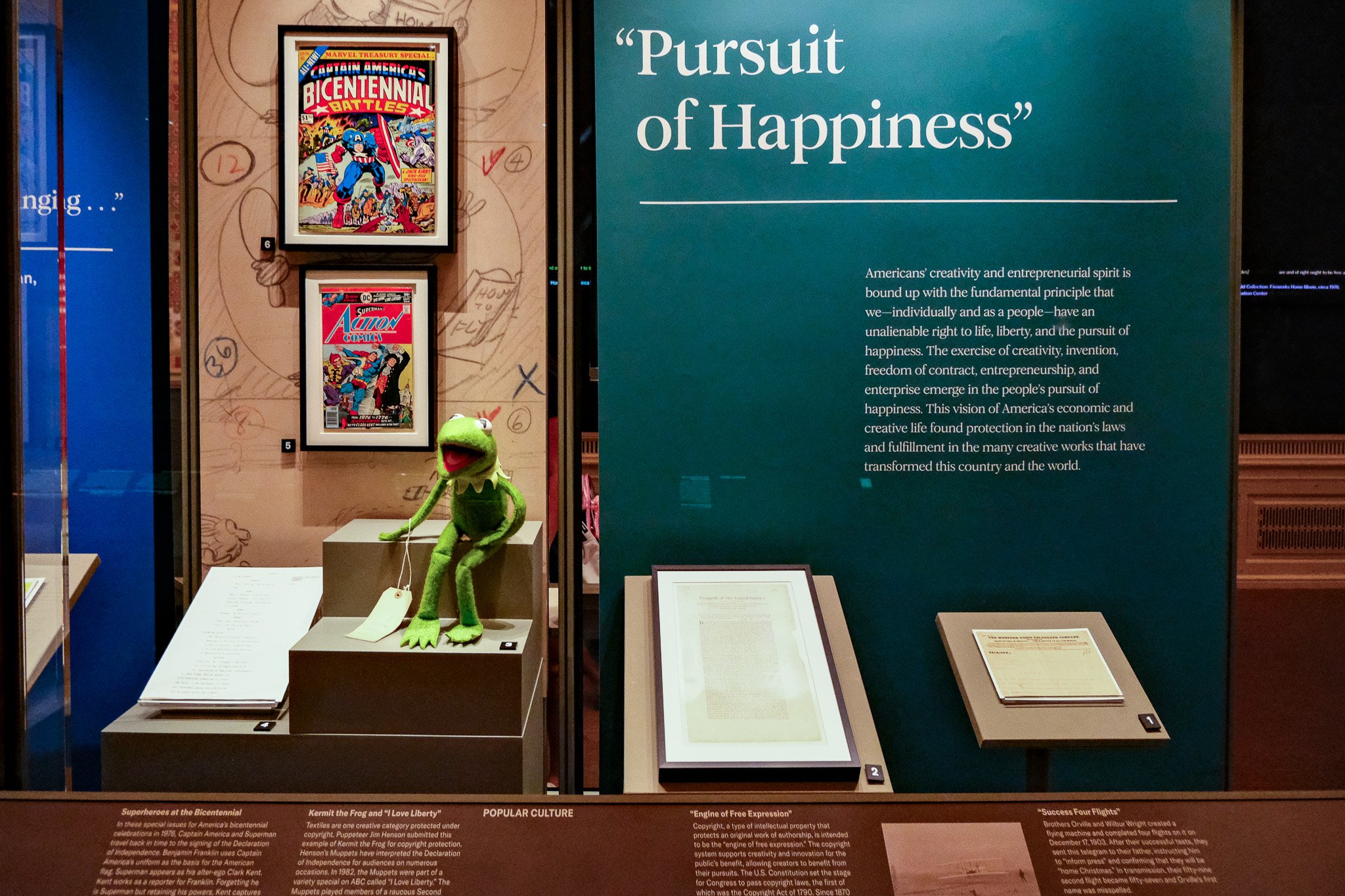
Pursuit of Happiness: Liberty is tied to the pursuit of happiness. Along with “life” itself, the pursuit of happiness is listed on the same line with liberty as an unreliable right. Happiness is not just defined as leisure, but freedom to associate as one wishes in entrepreneurship, individuality, personal and professional contracts, and enterprise. This section was somewhat nebulous, but the objects help give it definition – including a copy of the Copyright Act of 1790, establishing the copyright system here and an 1855 first edition of Leaves of Grass, a seminal work of poetry heavily inspired by the Declaration and its ideals.
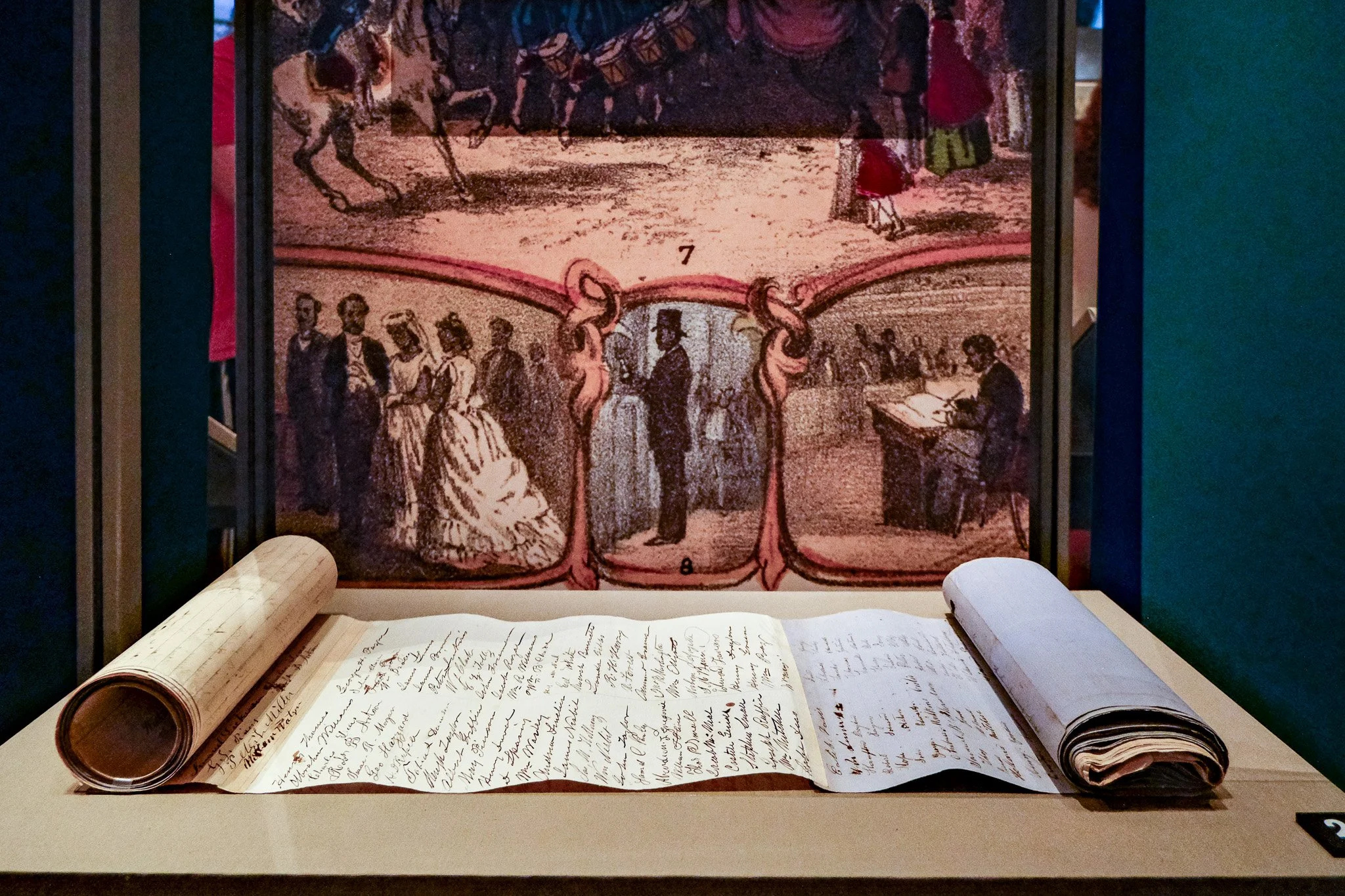
Consent of the Governed: If we are to associate with each other and govern ourselves, is that in and of itself complicit consent for the government to establish laws and mores guiding life in the states? Expansion of rights and freedoms has happened alongside the literal expansion of the nation itself. What started out as 13 colonies has grown into 50 states, a federal capital District, and multiple territories. On display here is a pre-statehood pamphlet appealing to those in favor of Hawaiian statehood and 1860 era 54 foot long petition signed by Black South Carolina residents demanding equal rights before the law as well as the right to vote.
Even against the unique stories showcased in The Two Georges, Declaration's Promise goes beyond a typical look at 250. The items showcased are often stunning looks at our attempt to move the nation forward at the behest of the words in the Declaration itself, while tacitly acknowledging that advancing rights has faced extensive challenge despite the promises on paper. I was expecting to see a rote and forced celebration of the Declaration. Perhaps --based on past exhibitions-- I should have anticipated a more nuanced approach.
This is not an exhibition that critiques the Declaration per se, nor does it explicitly acknowledge the limited scope of contributors to the document versus whom the promises were meant to apply. However, considering the role of the Library of Congress and their focus on highlighting the breadth and range of documents they possess for research purposes, I believe the exhibition is a success. It’s less of a celebration of 1776 and more of an exposition of the Declaration’s creation and impact. Worth it visit rating: 9.0/10